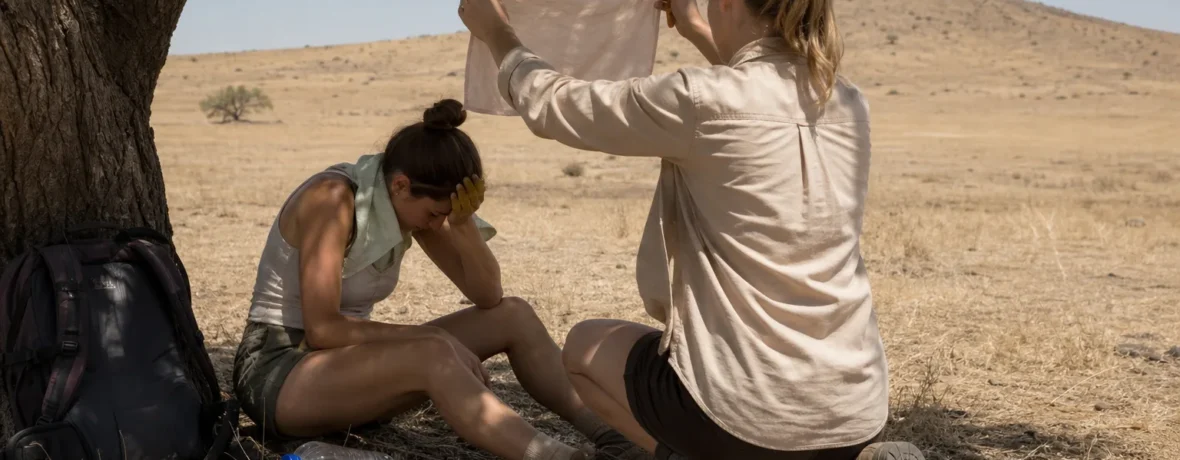
What are the symptoms of heat stroke? Watch for a body temperature near 103°F to 104°F [39.4°C to 40°C] or higher, confusion, slurred speech, fainting, seizure, hot red skin that may be dry or sweaty, rapid pulse, headache, nausea, and loss of consciousness. Yes—treat it as a 911 emergency.
What are the symptoms of heat stroke while hiking?
Heat stroke shows up as heat stress plus brain trouble.
That brain piece is the big red flag. A hiker who is simply hot and tired may still answer questions clearly, walk steadily, and complain in full sentences. A hiker sliding into heat stroke may act drunk, angry, blank, clumsy, or strangely quiet. They may insist they are fine when they are very much not fine.
The CDC heat-related illness guidance lists high body temperature of 103°F [39.4°C] or higher, hot red dry or damp skin, fast strong pulse, headache, dizziness, nausea, confusion, and loss of consciousness as heat stroke warning signs. The Mayo Clinic heatstroke first aid guide also flags 104°F [40°C] or higher, behavior changes, slurred speech, seizure, and coma.
On the trail, look for these signs:
- Confusion, agitation, odd behavior, or slurred speech
- Stumbling, poor coordination, collapse, or fainting
- Seizure or loss of consciousness
- Skin that is hot, flushed, dry, or soaked with sweat
- Fast, strong pulse and rapid breathing
- Pounding headache, dizziness, nausea, or vomiting
- Body temperature around 103°F to 104°F [39.4°C to 40°C] or higher if you can measure it
Do not wait for every symptom. Heat stroke can look messy. A person may be sweating hard, not dry. They may be sitting upright, not collapsed. If they are overheated and their thinking is off, act fast.
What are the signs of heat stroke you can spot without a thermometer?
You can spot the danger by watching the brain, the walk, the skin, and the pulse.
A thermometer helps, but hikers rarely have a reliable core thermometer in a hipbelt pocket. Skin temperature, forehead strips, and watch sensors can mislead you in wind, sun, sweat, and altitude. So use the field signs.
| Trail clue | What it may look like | Why it matters |
|---|---|---|
| Mental change | Confusion, anger, blank stare, slurred words | This is the most serious clue in an overheated hiker. |
| Movement change | Staggering, repeated falls, collapse | The person may no longer be able to self-rescue. |
| Skin change | Hot red skin, either dry or sweaty | Sweating does not rule out heat stroke. |
| Pulse and breathing | Fast strong pulse, rapid breathing | The body is under severe heat strain. |
How can you tell heat exhaustion from heat stroke?
Heat exhaustion is serious; heat stroke is life-threatening.
Heat exhaustion often comes with heavy sweating, weakness, cramps, headache, dizziness, nausea, and cool clammy skin. The hiker may feel awful but can usually talk clearly and follow directions. Heat stroke adds central nervous system trouble: confusion, slurred speech, seizure, passing out, or behavior that makes no sense.
MedlinePlus heat emergency guidance describes heat stroke as heat exhaustion symptoms combined with very high body temperature and significant neurologic symptoms. That matches what you should watch for on a climb, in a canyon, on exposed granite, or during a humid forest slog.
Use this quick split:
- Likely heat exhaustion: tired, sweaty, nauseated, dizzy, but alert and thinking clearly.
- Possible heat stroke: overheated plus confused, combative, fainting, seizing, or unable to walk normally.
- When unsure: treat it like heat stroke and start cooling while getting emergency help.
What should you do first if someone may have heat stroke?
Call 911, stop hiking, and cool the person immediately.
This is not a “push to the next overlook” problem. It is not a “sit for five minutes and see” problem. Heat stroke can damage the brain and other organs, and the clock matters. The Wilderness Medical Society’s 2024 guidance recommends active cooling for a hot patient with altered mental status when heat stroke is suspected, even if you do not know the exact core temperature.
- Call 911 or activate emergency help. If there is no cell service, send two capable people with exact location details if your group size allows.
- Move the hiker out of heat. Use shade, a tarp, a boulder shadow, a creek bank, or the coolest ground you can find.
- Remove excess layers and loosen tight clothing. Open packs, waist belts, gaiters, sun hoodies, and anything trapping heat.
- Cool the whole body fast. Use creek water, lake water, soaked shirts, a bandana, water poured over the body, fanning, ice packs if available, or wet clothing on the neck, armpits, groin, and torso.
- Do not force drinking. If the person is confused, vomiting, very drowsy, or unconscious, they can choke.
- Monitor breathing and responsiveness. Be ready to follow dispatcher instructions until help arrives.
The Wilderness Medical Society heat illness guidelines name ice-water or cold-water immersion as preferred cooling for heat stroke when available. On a trail, you may not have a tub. Fine. Use what you have. Soak. Fan. Pour. Repeat.
What trail conditions make heat stroke more likely?
Heat stroke is more likely when your body cannot dump heat fast enough.
That can happen on a desert trail at noon, but it can also happen in humid woods at 82°F [28°C] when sweat will not evaporate well. Steep climbing, heavy packs, low wind, reflected heat from rock, poor sleep, alcohol the night before, illness, and starting too fast all stack the deck.
Common trail setups include:
- Long exposed climbs with no shade
- Dry canyons where rock radiates heat back at you
- Humid routes where sweat drips but does not cool you
- Late starts that put the hardest climb in the hottest hours
- Big mileage days after travel, poor sleep, or illness
- Groups that ignore the slowest hiker’s pace and condition
The sneaky part? Heat stroke does not require a record-breaking heat wave. A strong hiker can get into trouble during hard exertion when heat, pace, clothing, hydration, and terrain line up badly.
How can you check your hiking partner for heat trouble?
Ask simple questions and watch how they move.
Do not ask, “Are you okay?” Overheated hikers often say yes because they want to keep up, do not want to be the problem, or are already confused. Ask questions that require a working brain.
- “What trail are we on?”
- “What day is it?”
- “Where is your water?”
- “Can you walk heel-to-toe for five steps?”
- “Can you sit down in the shade and stay there?”
If the answers are garbled, angry, slow, or wrong, stop the hike. If the person stumbles, refuses help, or seems out of character, treat that as a danger sign. Your goal is not to prove heat stroke. Your goal is to prevent a bad situation from getting worse.
When to see a doctor
Get emergency medical help right away for suspected heat stroke.
Call 911 if an overheated hiker has confusion, slurred speech, fainting, seizure, loss of consciousness, severe weakness, repeated vomiting, or trouble walking. Also call if symptoms do not improve quickly with rest and cooling, or if you are far from the trailhead and cannot safely get the person out.
After a serious heat illness, medical evaluation is the safe move before returning to hard hiking. Heat stroke can affect organs, and a hiker may look better before the risk is fully over. Do not diagnose the problem on the trail and then send someone home alone.
How can you reduce the risk before it becomes an emergency?
Start cooler, move slower, and stop earlier than your ego wants.
Prevention is not fancy. It is pacing, timing, shade, fluids, food, and honest group checks. The best heat stroke rescue is the one you never have to run.
- Start before sunrise when the forecast is hot.
- Plan exposed climbs for the coolest part of the day.
- Carry more water than your usual cool-weather amount.
- Use electrolytes or salty foods on long, sweaty hikes.
- Wear loose, light-colored, breathable clothing and a brimmed hat.
- Take real shade breaks with packs off.
- Turn around if someone becomes confused, stops sweating normally for them, vomits, or cannot keep pace safely.
Build a group habit: nobody gets mocked for calling a heat break. That one rule can save the day.
Related reading
- Heat Exhaustion vs Heat Stroke: How to Tell
- Lyme Disease Symptoms After a Hike
- Hypothermia Symptoms and Trail First Aid
- Heat Rash While Hiking
FAQ
Can you have heat stroke and still be sweating?
Yes. Sweating does not rule out heat stroke. A hiker with hot skin, confusion, collapse, or slurred speech needs emergency cooling and help even if their shirt is soaked.
What is usually the first symptom of heat stroke?
There is no single first symptom you can count on. On the trail, early warning may look like headache, dizziness, nausea, unusual fatigue, poor coordination, or strange behavior.
At what temperature does heat stroke happen?
Heat stroke is often linked with body temperature around 103°F to 104°F [39.4°C to 40°C] or higher. Do not wait for a number if the person is overheated and confused or collapsing.
Should you give water to someone with heat stroke?
Do not force water on someone who is confused, vomiting, fainting, seizing, or unconscious. Cooling and emergency help come first; drinking is only for someone alert enough to swallow safely.
How fast can heat stroke develop on a hike?
It can develop during a single hard push in heat, especially on exposed climbs or humid days. A hiker can move from struggling to unsafe quickly once thinking, balance, or responsiveness changes.
Can you recover from heat stroke on the trail and keep hiking?
No. If heat stroke is suspected, the hike is over. Cool the person, get emergency help, and have them medically evaluated rather than continuing deeper into the route.