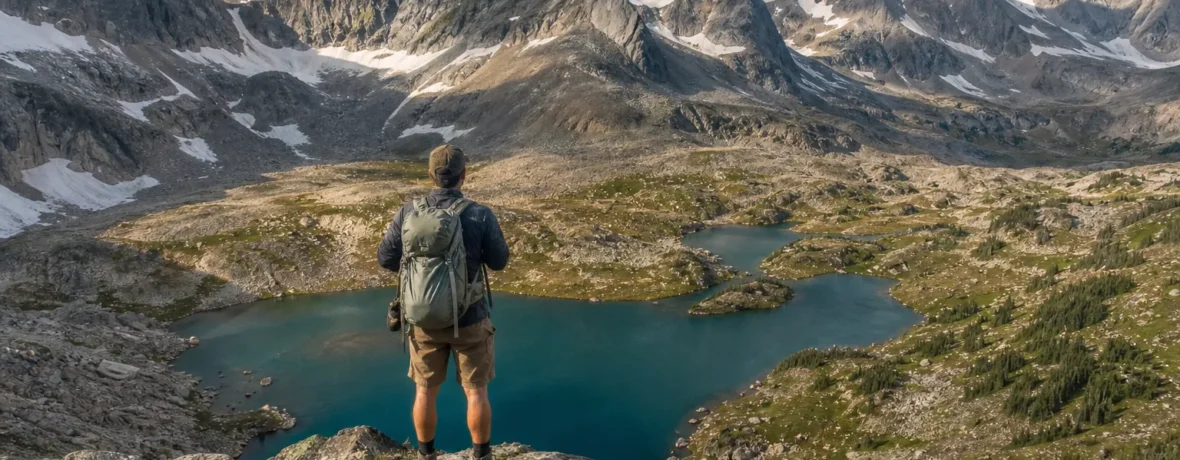
Start with 1 scenic drive, 1 lake hike, and 1 wildlife stop. For most first visits, that means Bear Lake Road, Trail Ridge Road when open, Sprague Lake or Emerald Lake, and an early start to beat parking pressure.
What to do in Rocky Mountain National Park if you only have one day?
Choose one side of the park and do it well.
Rocky Mountain National Park is not a place to “see everything” in a day. The elevations are high, the roads are slow, and trailhead parking can turn into a full-contact sport by mid-morning. Build your day around a tight route, not a wish list.
For a first visit from Estes Park, use this plan:
- Enter early. Aim for the Bear Lake Road corridor first, especially in summer and fall.
- Hike before you sightsee. Do Bear Lake, Nymph Lake, Dream Lake, Emerald Lake, Alberta Falls, or Mills Lake before the heat, crowds, and afternoon storms build.
- Ride the shuttle when it is running. It saves you from circling packed lots.
- Take a low-effort lake walk. Sprague Lake is a strong pick when legs are tired.
- Save Trail Ridge Road for the clearest part of the day. If the road is open, drive high, stop often, and turn around before fatigue hits.
- Watch wildlife from a distance. Moraine Park, Horseshoe Park, and meadow edges are classic places to scan for elk and deer.
If you are staying near Grand Lake, flip the script. Start on the west side with the Kawuneeche Valley, Coyote Valley, East Inlet, or a drive toward the high country if road conditions allow. The west side feels quieter and more forested. Less rush. More moose country. Still big mountains.
What are the best hikes in Rocky Mountain National Park?
The best hikes are the ones that match your lungs, timing, and tolerance for crowds.
Rocky is famous for lake hikes, and for good reason. You can link polished granite, cold water, krummholz trees, and big cirque walls in half a day. But don’t let the postcard names bully you into biting off too much. A 4-mile [6.4 km] hike at 9,500 feet [2,896 m] can feel very different from 4 miles at home.
Here are dependable choices for most hikers, using the Bear Lake corridor as the main hub. NPS lists Bear Lake-area trail distances and elevations on its Bear Lake Road corridor guide.
| Hike | Best for | Distance | Plain-English take |
|---|---|---|---|
| Bear Lake Loop | Easy scenery | 0.6 mi [1 km] loop | Quick, beautiful, crowded, and worth it early or late. |
| Alberta Falls | Families and short hikes | 1.6 mi [2.6 km] round trip from Glacier Gorge | A punchy waterfall hike with steady traffic. |
| Emerald Lake | Classic first big-view hike | 3.4 mi [5.4 km] round trip from Bear Lake | Nymph, Dream, and Emerald in one clean route. |
| Mills Lake | Longer lake day | 5.4 mi [8.6 km] round trip from Glacier Gorge | More effort, more space, and huge views into Glacier Gorge. |
Want something quieter? Look beyond Bear Lake. Lily Lake is gentle and pretty. Deer Mountain gives you a real summit feel without Longs Peak-level commitment. Wild Basin has waterfalls, forest, and a wilder mood, though it sits farther from the main Estes Park entrances.
Do you need a reservation for Rocky Mountain National Park?
Yes, during timed-entry season and during the posted hours.
As of November 2026, Rocky Mountain National Park used 2 timed-entry options during the 2026 peak season: Timed Entry and Timed Entry + Bear Lake Road. The NPS timed entry permit page said Timed Entry was required from 9 a.m. to 2 p.m. daily from May 22 through October 12, 2026, while Timed Entry + Bear Lake Road was required for the Bear Lake Road corridor from 5 a.m. to 6 p.m. daily from May 22 through October 18, 2026.
The short version:
- Going to Bear Lake, Glacier Gorge, Sprague Lake, or Moraine Park? Get Timed Entry + Bear Lake Road during required hours.
- Driving Trail Ridge Road or visiting Wild Basin, Lily Lake, Longs Peak, or the west side? Standard Timed Entry may be enough during required hours.
- Entering before or after the timed-entry window? You may not need a timed-entry reservation, but you still need a valid entrance pass.
- One reservation covers one vehicle for one day. It does not guarantee a parking spot.
As of November 2026, timed-entry reservations carried a non-refundable $2 Recreation.gov processing fee. That is separate from the park entrance pass.
How much does Rocky Mountain National Park cost?
Plan for an entrance pass, and possibly a timed-entry reservation fee.
As of November 2026, the NPS fees and passes page listed standard entrance passes from $15 to $35, depending on whether you enter as an individual, motorcycle, or private vehicle and whether the pass is valid for 1 day or 7 days. The 1-day private vehicle pass was $30, the 7-day private vehicle pass was $35, and the park-specific annual pass was $70.
The park also said it does not accept cash. Bring a card, buy ahead online, or use a valid annual or lifetime pass if you already have one.
One more detail that can surprise visitors: as of November 2026, non-U.S. residents age 16 and older had to pay an additional $100 per person fee unless admitted with an Annual or America the Beautiful Pass. Check the official fee page before you go, because fee rules can change.
Can you get around Rocky Mountain National Park without parking at Bear Lake?
Yes, use the park shuttle when it is operating.
Bear Lake and Glacier Gorge are two of the busiest trailheads in the park. If you roll in late and expect a front-row spot, good luck. The smarter move is often to park once at Park & Ride and use the shuttle system.
As of November 2026, the NPS shuttle bus page listed free Bear Lake and Moraine Park shuttle service from May 22 through October 18, 2026. The Bear Lake shuttle ran from 6:30 a.m. to 7:30 p.m., with buses every 10 to 15 minutes. The Moraine Park shuttle ran from 7 a.m. to 7:30 p.m., with buses every 60 minutes.
If you are staying in Estes Park, the Hiker Shuttle can connect the Estes Park Visitor Center to the Park & Ride transit hub, but it requires a reservation. As of November 2026, Hiker Shuttle tickets carried a $2 processing fee per reservation, and each passenger needed a ticket plus a valid park entrance pass.
Pack as if the shuttle will not rescue poor planning. Bring food, water, rain gear, sun protection, and enough warm clothing to stand around when the wind kicks up.
What scenic drives should you take in Rocky Mountain National Park?
Drive Bear Lake Road for lakes and Trail Ridge Road for big alpine drama.
Bear Lake Road is the easier scenic win from Estes Park. It climbs into the heart of the park’s most popular hiking country and gives you access to Sprague Lake, Bierstadt Lake, Glacier Gorge, and Bear Lake. Even if you do not hike far, the roadside views are sharp.
Trail Ridge Road is the high-country showpiece when open. It crosses tundra, climbs above treeline, and gives you huge pullout views without needing to hike hard. Wind can be fierce up there. So can weather. A sunny valley can mean sleet, graupel, or whiteout conditions higher up.
Old Fall River Road, when open, is a slower one-way dirt-road experience that feels older and rougher than Trail Ridge. It is not the choice for nervous drivers, oversized vehicles, or anyone trying to move fast. That is the charm.
Do not build your whole trip around one road being open. High-elevation roads can close from weather, snow, ice, rockfall, or maintenance. Check the official park road status close to your visit, then have a lower-elevation backup.
Where can you see wildlife in Rocky Mountain National Park?
Look in meadows at dawn and near dusk, then keep your distance.
Elk are the headline animals for many visitors, especially in fall. Moose are more often associated with wet willow areas, particularly on the west side, though they can appear elsewhere. Mule deer, marmots, pikas, bighorn sheep, coyotes, and black bears also live in the park.
Good wildlife-viewing habits are simple:
- Use binoculars or a zoom lens.
- Never feed wildlife.
- Do not block roads for photos.
- Give animals a clear escape route.
- Stay in your car if wildlife is close to the road.
- Back away if an animal changes direction, raises its head repeatedly, pins its ears, or moves because of you.
Moraine Park and Horseshoe Park are popular for elk watching. The Kawuneeche Valley on the west side is a good area to scan for moose. Around rockier alpine areas, watch for marmots and pikas. Small animals count. They are often the best show on the tundra.
What should you pack for a day in Rocky Mountain National Park?
Pack for sun, cold, wind, rain, and a slower hike than expected.
Rocky’s weather does not care what month is printed on your calendar. You can sweat on the climb, shiver at the lake, and race thunder back to the trailhead before lunch. Layers are not optional up here. They are the whole game.
- Daypack
- Water bottles or hydration reservoir
- Salty snacks and real food
- Rain jacket
- Warm layer or fleece
- Hat and gloves, even in summer for alpine hikes
- Sunglasses
- Sunscreen and lip balm
- Map downloaded for offline use
- Headlamp
- Small first-aid kit
- Trekking poles for steeper or snowy trails
- Traction devices in shoulder season or winter
- Trash bag for every wrapper, peel, and tissue
Pets are not a workaround here. Dogs are prohibited on park trails, tundra, and meadows. Leashed pets can go only in limited developed areas such as roads, parking areas, campgrounds, and picnic areas. If hiking with your dog is central to your trip, choose nearby national forest trails instead.
How do you handle altitude in Rocky Mountain National Park?
Slow down before your body forces you to.
Much of the park sits high enough to make sea-level visitors feel off. Headache, nausea, dizziness, unusual fatigue, and poor appetite can be signs of altitude illness after a fast ascent. The CDC guidance on high-altitude travel describes acute mountain sickness symptoms as similar to a hangover, often with headache plus dizziness, fatigue, nausea, or vomiting.
Smart pacing helps:
- Keep the first hike short if you arrived from low elevation the day before.
- Drink regularly, but do not force huge amounts of water.
- Eat even if your appetite is low.
- Avoid sprinting up stairs, overlooks, and trail climbs.
- Turn around if symptoms build instead of fade.
- Do not go higher if you already feel sick.
The mountain will still be there tomorrow. That sounds blunt because it is. Pushing higher with worsening symptoms is how a pretty hike turns ugly.
When to see a doctor
Get medical help fast for severe or worsening altitude symptoms.
If you have chest pain, severe shortness of breath, confusion, trouble walking straight, fainting, a severe headache that worsens, or symptoms that do not improve after descending, seek medical care right away. If someone seems confused, uncoordinated, or unusually breathless at rest, descend if safe and call for help.
Talk with a doctor before your trip if you have heart disease, lung disease, sleep apnea, sickle cell trait, a history of severe altitude illness, or a condition that affects breathing or oxygen levels. Do not self-diagnose on the trail. When symptoms are serious, treat the situation as urgent.
Related reading
- How to Get to Dry Tortugas National Park
- What to Do in Zion National Park: Hikes by Difficulty
- Where to Stay in Yosemite for Hikers
- Where to Stay in Glacier National Park
FAQ
What is the best month to visit Rocky Mountain National Park?
September is the best all-around month for many hikers. You get cooler temperatures, fall color, active wildlife, and a better chance of high roads still being accessible than later in the year.
Can beginners hike in Rocky Mountain National Park?
Yes, beginners can hike here if they choose short trails and pace for altitude. Bear Lake, Sprague Lake, Lily Lake, and Alberta Falls are good starting points.
Is Bear Lake worth visiting?
Yes, Bear Lake is worth visiting, especially early or late in the day. It is crowded because it gives you easy access to big mountain scenery with very little walking.
Can you visit Rocky Mountain National Park without hiking?
Yes, you can have a strong visit without hiking. Scenic drives, overlooks, picnic areas, visitor centers, wildlife watching, and short lake walks can fill a full day.
How many days do you need in Rocky Mountain National Park?
Two to three days is the sweet spot for most first-time visitors. That gives you one Bear Lake hiking day, one Trail Ridge or west-side day, and one flexible day for weather, wildlife, or a longer trail.
Can you drive through Rocky Mountain National Park?
Yes, when the connecting high road is open, you can drive between Estes Park and Grand Lake through the park. Seasonal and temporary closures happen, so check road conditions before committing to that route.