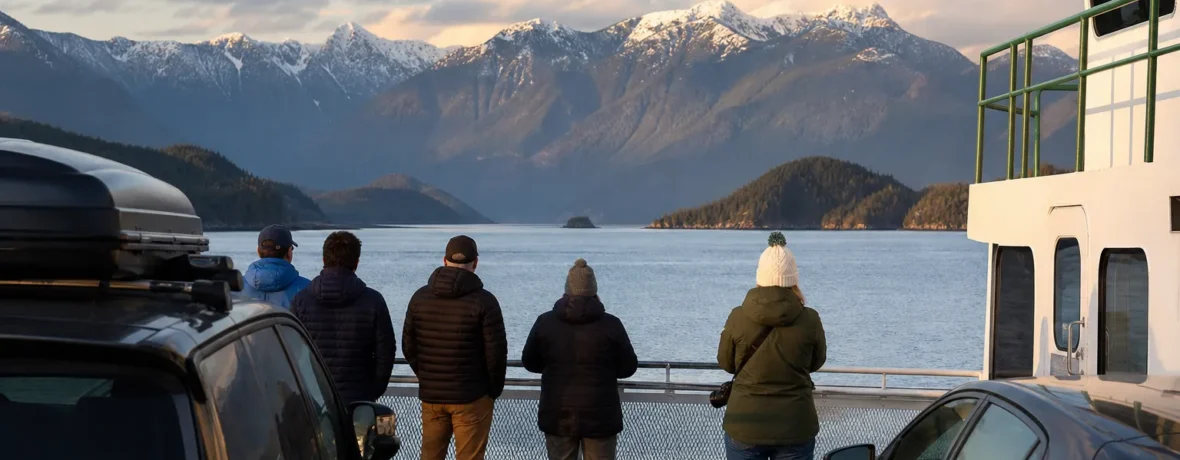
The Port Angeles visitor center is 76–82 miles [122–132 km] from downtown Seattle via the Bainbridge ferry and takes roughly 3 hours. Hurricane Ridge is 93–100 miles [150–161 km]. Hoh Rain Forest is 220–230 miles [354–370 km], a much longer haul.
How far is Olympic National Park from seattle by ferry or road?
The short answer: Seattle to the north side of Olympic National Park is a half-day travel move, not a quick hop.
Olympic is huge. That’s the detail that trips people up. There is no single front gate where every hike begins. Port Angeles, Hurricane Ridge, Lake Crescent, Sol Duc, Staircase, Hoh Rain Forest, Rialto Beach, and Kalaloch all sit in different corners of the peninsula. Your route from Seattle depends on which trailhead you want first.
For most hikers, “Seattle to Olympic National Park” means Seattle to Port Angeles, then on to Hurricane Ridge, Lake Crescent, or Sol Duc. Port Angeles is the cleanest first target because it has the main Olympic National Park Visitor Center, groceries, lodging, and quick access to Hurricane Ridge. The National Park Service reminds visitors that Olympic is “very big” and suggests choosing a home base based on the part of the park you plan to see, with Port Angeles working well for Hurricane Ridge, Lake Crescent, and Sol Duc; Forks working better for Hoh Rain Forest and the coast. See the park’s official Olympic National Park directions and transportation page.
| Route from Seattle | Best for | Typical time and distance | Trade-off |
|---|---|---|---|
| Seattle–Bainbridge ferry, then WA-305/WA-104/US-101 | Downtown Seattle to Port Angeles, Hurricane Ridge, Lake Crescent | 76–82 miles [122–132 km] to Port Angeles; plan on 3 hours | Scenic and direct, but ferry lines can add time |
| Edmonds–Kingston ferry, then WA-104/US-101 | North Seattle, Shoreline, Edmonds, Everett starts | 80–95 miles [129–153 km] to Port Angeles depending on start point; plan on 3 hours | Great from north of Seattle; less handy from downtown |
| Tacoma Narrows Bridge, then WA-16/WA-3/WA-104/US-101 | Sea-Tac, south Seattle, late-night arrivals, no-ferry plans | 135–145 miles [217–233 km] to Port Angeles; plan on 3.5–4 hours | No ferry wait, but more pavement |
| South via Olympia and US-101 | Staircase, Lake Cushman, Quinault, Kalaloch | Varies by trailhead; often 2.5–4.5 hours | Best for the park’s south side, not Port Angeles |
Which ferry should you take from Seattle to Olympic National Park?
Take the Seattle–Bainbridge ferry if you’re starting in downtown Seattle or staying near the waterfront.
This is the classic route. You roll onto the boat at Colman Dock, cross Puget Sound, then drive across Bainbridge Island and the Kitsap Peninsula toward the Hood Canal Bridge, Discovery Bay, Sequim, and Port Angeles. Washington State Ferries lists the Seattle–Bainbridge crossing at roughly 35 minutes; check the current sailing day on the official Seattle–Bainbridge ferry schedule before you build the rest of your day around it.
Choose Edmonds–Kingston if you’re north of Seattle. From Shoreline, Lynnwood, Edmonds, Mountlake Terrace, Everett, or the Eastside via north routes, this can beat the slog into downtown Seattle. Washington State Ferries lists the Edmonds–Kingston crossing at roughly 30 minutes; use the official Edmonds–Kingston ferry schedule for current sailing times and alerts.
Here’s the straight talk: the ferry is part transportation, part weather window, part patience test. On a clear morning it feels like a bonus mini-cruise. On a holiday Friday it can eat your hiking time.
Is there a ferry from Seattle directly to Olympic National Park?
No, there is no ferry that drops you inside Olympic National Park.
The ferries get you across Puget Sound to the Olympic Peninsula side of the water. After that, you still drive. From Bainbridge Island, you drive northwest toward Poulsbo, cross the Hood Canal Bridge, and continue to US-101. From Kingston, you drive west on WA-104, cross the Hood Canal Bridge, then pick up US-101 near Discovery Bay.
Think of the ferry as the first leg, not the whole transfer. Your hiking day still depends on the road miles after the boat. Port Angeles is close enough for a same-day hike at Hurricane Ridge. Hoh Rain Forest is not close in the same way. Rialto Beach, Second Beach, Ozette, and Kalaloch are all deeper into the peninsula and deserve more time.
What is the fastest route from Seattle to Olympic National Park?
The fastest route is usually the Bainbridge ferry from downtown Seattle, unless ferry waits are ugly or you’re starting near Sea-Tac.
If you’re in downtown Seattle, Belltown, Capitol Hill, Queen Anne, South Lake Union, or Pioneer Square, the Bainbridge ferry is usually the cleanest line to Port Angeles. You avoid the long drive south around Puget Sound and turn the water crossing into a built-in break.
If you’re landing at Sea-Tac, renting a car, and driving straight to the park, run the math before you commit to a ferry. The Tacoma Narrows Bridge route can be steadier because it skips ferry timing completely. It is longer in miles, but it removes the “Did we miss the boat?” problem.
If you’re starting north of Seattle, Edmonds–Kingston can be faster than fighting downtown traffic. That’s especially true if your lodging is in Edmonds, Lynnwood, Everett, Bothell, or north Seattle.
How do you get from Seattle to Olympic National Park step by step?
Pick your first trailhead, then choose your crossing.
- Choose the park zone first. For Hurricane Ridge, Lake Crescent, and Sol Duc, aim for Port Angeles. For Hoh Rain Forest, Rialto Beach, and Second Beach, aim for Forks. For Staircase, aim for Hoodsport and Lake Cushman. For Quinault or Kalaloch, approach from the south or west.
- Check ferry schedules before you leave. Sailing gaps, vessel changes, and terminal waits can shift your day fast. Do this before you buy coffee, not after you reach the tollbooth.
- Build in ferry buffer time. For day hikes, missing one sailing can turn a relaxed start into a rushed one. Add more buffer on Fridays, summer weekends, holidays, and sunny shoulder-season Saturdays.
- Check Olympic road conditions. Mountain roads, storm damage, seasonal gates, and construction can change your plan. As of November 2026, NPS posts current Olympic road status and daily road/weather phone information on its Olympic National Park current road conditions page.
- Pay or bring the right pass. As of November 2026, Olympic National Park charges entrance fees and does not accept cash; the NPS lists a 7-day private vehicle pass at $30 and an Olympic annual pass at $55 on its official fees and passes page.
- Load offline maps. Cell service fades outside towns. Download your driving map and trail map before you leave Seattle.
- Stop for fuel before the park road. Port Angeles, Sequim, Forks, Hoodsport, and Aberdeen are your practical resupply points. Do not assume gas or food will be close to the trailhead.
Can you visit Olympic National Park as a day trip from Seattle?
Yes, but choose one tight target and leave early.
A good Seattle day trip to Olympic should be simple: ferry, one park zone, one hike, food, return. Don’t try to stitch together Hurricane Ridge, Hoh Rain Forest, Rialto Beach, and Lake Crescent in one day. That looks possible on a map until you meet the actual peninsula.
The best day-trip picks are:
- Hurricane Ridge: The most dramatic mountain payoff from Port Angeles. Best when the road is open and weather is clear.
- Lake Crescent: Big water, forest trails, and easier logistics than the west side of the park.
- Staircase: A strong choice from south Seattle or Tacoma, with old-growth forest and river hiking.
- Dungeness Spit plus Port Angeles: Not inside the national park, but useful if Hurricane Ridge weather shuts you down.
Hoh Rain Forest can be done from Seattle in a single day by determined drivers, but it is a rough plan. You spend most of the day in the car. Save it for an overnight based in Forks, Lake Crescent, or Port Angeles if you want the rainforest to feel like a hike instead of a windshield errand.
Where should you enter Olympic National Park from Seattle?
Enter from the north if you want mountains and lakes; enter from the south or west if you want rainforest and coast.
Port Angeles is the easiest first base from Seattle. From there, Hurricane Ridge Road climbs into the mountains, Lake Crescent sits west on US-101, and Sol Duc branches off farther west. The NPS mileage table lists Lake Crescent/Storm King Ranger Station 39 miles [63 km] from the Olympic National Park Visitor Center in Port Angeles, Sol Duc 59 miles [95 km], and Hoh Rain Forest Visitor Center 72 miles [116 km] from Port Angeles. Those park miles come after your Seattle approach.
Forks is the better base for Hoh Rain Forest, Rialto Beach, La Push beaches, and the wild coast. You can reach Forks from Seattle via the Bainbridge or Edmonds ferries, but it turns into a longer road day. If your dream is moss, elk, sea stacks, and driftwood, stay west.
Staircase is the sleeper choice. It sits on the park’s southeast side near Lake Cushman and Hoodsport. From Seattle, you usually skip the ferry and drive south through Tacoma. It’s not the route for Hurricane Ridge, but it works beautifully for a forest-and-river day without crossing the whole peninsula.
What should hikers know before leaving Seattle?
Plan for wet roads, slow miles, and a park that changes character every 30 minutes.
Olympic is not one landscape. It’s saltwater, rainforest, river valley, alpine ridge, lake country, and temperate jungle packed into one huge peninsula. That variety is the whole reason you’re going. It also means the weather can be bright in Sequim, socked-in at Hurricane Ridge, and dripping at Hoh on the same day.
- Bring rain gear even in summer. A light shell earns its place here.
- Pack warm layers for Hurricane Ridge. The ridge is much cooler than Seattle and Port Angeles.
- Carry water and snacks. Trailhead services are limited once you leave town.
- Use real footwear. Boardwalks, roots, slick bridges, mud, and wet rock are standard Olympic terrain.
- Check tide tables for coastal hikes. Some beach routes are unsafe or impassable at high tide.
- Have a backup hike. If Hurricane Ridge is closed, pivot to Lake Crescent. If the west side is stormy, consider lower forest trails.
- Do not count on cell service. Download maps, permits, passes, and ferry info before leaving town.
Do you need reservations, permits, or park passes for Olympic?
For basic day hiking, you need an entrance pass where fees are collected, but you usually do not need a trail reservation.
As of November 2026, Olympic National Park’s entrance passes are valid for seven consecutive days, the park is cashless, and a private vehicle pass is listed at $30 by the National Park Service. If you already have an America the Beautiful pass, that works for entrance. Buy ahead if you want one less stop at the booth.
For overnight wilderness trips, the rules change. As of November 2026, the NPS states that wilderness camping permits are required for all overnight trips in the Olympic backcountry, with a permit fee structure listed on the park’s fees page. Popular backpacking areas can fill, and coastal itineraries may require tide planning plus bear canister use in specific zones. Day hiking is simpler. Backpacking needs homework.
What is the best route back to Seattle after hiking Olympic?
The best return route is often different from your morning route.
If you hiked Hurricane Ridge or Lake Crescent and you’re heading to downtown Seattle, the Bainbridge ferry makes a satisfying finish. You drive east across the peninsula, board at Bainbridge, and watch the Seattle skyline rise across the water. That view does a lot of work after a long trail day.
If you’re returning to north Seattle, Edmonds–Kingston can be cleaner. Just pay attention to Kingston vehicle boarding rules, ferry alerts, and weekend crowds. As of November 2026, WSDOT’s Edmonds–Kingston schedule notes a vehicle boarding pass requirement at Kingston on weekends and during holiday weeks in certain daytime hours, with ferry tickets sold separately.
If you are tired, late, or anxious about ferry waits, drive the long way through Tacoma. It is less romantic. It is also simple. No boat. No terminal line. No missed sailing. Sometimes that is exactly what you want after a wet 9-mile [14.5 km] hike.
Related reading
- Las Vegas to Zion: Distance, Drive and Day-Trip Plan
- Glacier to Yellowstone Road Trip: Distance and Route
- What to Do in Olympic National Park: Coast, Rainforest, Peaks
- Olympic National Park Pass Options
FAQ
How long is the ferry from Seattle to Olympic National Park?
The Seattle–Bainbridge ferry crossing is roughly 35 minutes, but it does not take you all the way to the park. After landing on Bainbridge Island, plan on another 1.5–2 hours of driving to Port Angeles.
Is it better to take the Bainbridge ferry or Edmonds ferry to Olympic National Park?
Take Bainbridge from downtown Seattle and Edmonds from north Seattle. Bainbridge is usually best for visitors staying near downtown; Edmonds–Kingston is usually better from Shoreline, Lynnwood, Everett, or north-side suburbs.
Can I get from Seattle to Olympic National Park without a car?
Yes, but your hiking choices shrink. You can ride the ferry as a walk-on and connect to bus service toward Port Angeles, but reaching many trailheads still requires a shuttle, tour, bike, taxi, or a very carefully timed local bus connection.
What part of Olympic National Park is closest to Seattle?
Staircase is one of the closest Olympic National Park areas by road from Seattle, especially from the south end or Sea-Tac. From downtown Seattle, Port Angeles and Hurricane Ridge are also practical because the Bainbridge ferry cuts across Puget Sound.
Is Hoh Rain Forest a good day trip from Seattle?
No, not for most hikers. Hoh Rain Forest is far enough from Seattle that a day trip becomes mostly driving, so it works better with an overnight in Forks, Port Angeles, Lake Crescent, or another west-peninsula base.
Do I need to reserve a ferry to Olympic National Park?
No reservation is used for the Seattle–Bainbridge or Edmonds–Kingston routes in the normal way travelers think of timed bookings. You still need to check WSDOT schedules, fares, alerts, and terminal procedures before you go, especially on weekends and holidays.