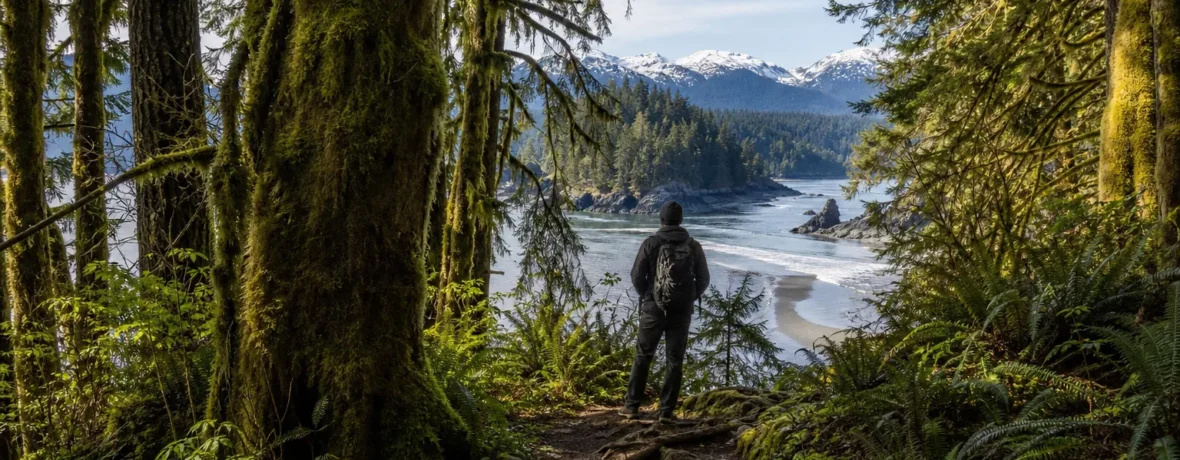
Build your trip around three zones: the Pacific coast, temperate rainforest, and alpine ridges. With 1 day, choose one zone. With 2-3 days, combine Hurricane Ridge, Lake Crescent, and a beach or rainforest hike, checking road and trail conditions first.
What to do in Olympic National Park if you have one day?
Pick one side of the park and do it well.
Olympic looks compact on a map. It is not. Highway 101 loops around the peninsula, and the park roads run inward like spokes. You do not cut across the middle. If you try to see Hurricane Ridge, Hoh Rain Forest, Rialto Beach, and Lake Quinault in one day, you will spend your best hours behind a windshield.
Use one of these tight, realistic one-day plans:
- Mountain day: Start in Port Angeles, drive to Hurricane Ridge if the road is open, walk the Meadow Loop Trails, then add Hurricane Hill if access and weather allow.
- Lake and waterfall day: Visit Lake Crescent, hike Marymere Falls, walk part of Spruce Railroad Trail, then finish with sunset near the lake.
- Coast day: Choose Rialto Beach, Ruby Beach, Beach 4, or the Ozette triangle area. Time your walk around the tide, not your lunch schedule.
- Rainforest day: Go to Hoh when open, or use the Quinault area as your rainforest base when Hoh access is closed or packed.
If you are visiting as of November 2026, check the park’s official alerts and conditions page before you commit to a route; storm damage and seasonal closures are affecting several roads and areas.
What are the best hikes in Olympic National Park?
The best hikes match your zone, weather, and daylight.
Olympic gives you beach ladders, mossy loops, lake paths, waterfall trails, and ridge walks. The smart move is to pick a hike near where you are already staying. Driving two extra hours for a “must-do” trail is rarely worth it when rain, fog, road closures, or a full parking lot can wipe out the plan.
| Hike | Best for | Distance | Watch for |
|---|---|---|---|
| Hall of Mosses | Classic rainforest | 0.8-mile [1.3 km] loop | Hoh access, crowds, wet boards |
| Spruce Nature Trail | River and rainforest | 1.2-mile [1.9 km] loop | Mud, slick roots |
| Marymere Falls | Lake Crescent waterfall | 0.9 mile [1.4 km] one way | Busy trailhead |
| Mount Storm King | Steep lake views | 2.1 miles [3.4 km] one way from the Marymere Falls turnoff | 2,100 feet [640 m] of climbing |
| Rialto Beach to Hole-in-the-Wall | Sea stacks and tidepools | 1.5 miles [2.4 km] one way | Tides, surf, driftwood |
| Ozette Triangle | Long coastal loop | 9 miles [14.5 km] | Tides, mud, boardwalks |
| Hurricane Hill | Big alpine views | 1.6 miles [2.6 km] one way | Road status, wind, snow |
Distances above come from the National Park Service’s Olympic day hiking guide. Treat them as planning distances, not promises. A 1.5-mile beach walk over cobbles and driftwood feels different from a 1.5-mile sidewalk stroll.
How do you visit the Olympic coast safely?
You plan around tides first.
The Olympic coast is wild, blunt, and beautiful. It also does not care that you booked a campsite or drove four hours. Headlands can become impassable. Waves can shove logs around. Storms can lift water higher than the printed tide chart makes you expect.
Before any coastal hike, read the park’s tide safety guidance and check NOAA tide predictions for your specific area. Carry the tide chart with you. A screenshot is fine until your phone dies or gets soaked; paper still wins in ugly weather.
Good coastal choices:
- Ruby Beach: Short access, sea stacks, dramatic driftwood, and a strong payoff for little walking.
- Beach 4: Tidepools when the tide is right, with a quick walk from Highway 101.
- Rialto Beach: A classic walk toward Hole-in-the-Wall, best timed for low tide.
- Second Beach: A forest approach to a wide, cinematic beach near La Push.
- Ozette Triangle: A bigger day with boardwalk, beach travel, and a 9-mile [14.5 km] loop.
Coast checklist:
- Tide chart and a map that marks tidal restrictions
- Rain shell and warm layer, even in summer
- Shoes with grip for wet rock and slick logs
- Headlamp if there is any chance you finish late
- Dry bag or zip bag for phone, keys, and layers
- Enough water; beach creeks are not a casual drinking source
Is the Hoh Rain Forest worth it?
Yes, when access is open and you have enough time.
The Hoh is the rainforest image most people carry into Olympic: moss-heavy maples, nurse logs, ferns, dripping branches, and a green so thick it feels like the trail has its own weather. Hall of Mosses is short and famous for a reason. Spruce Nature Trail adds river scenery and gives you a better sense of the valley.
But the Hoh is not the only rainforest in the park. If the Hoh road is closed, parking is jammed, or your route is already leaning south, look at Quinault. Maple Glade, Kestner Homestead, and short walks near Lake Quinault can scratch the rainforest itch with less backtracking.
As of November 2026, the park reports the Hoh Rain Forest area, including trails, parking areas, and restrooms, as closed; verify the current status on the NPS conditions page before driving there.
Where do you see mountain views in Olympic National Park?
Hurricane Ridge is the simplest high-country answer.
From Port Angeles, Hurricane Ridge gives you the cleanest shot at alpine scenery without a backpack. When the road is open, you can be standing in meadows with views toward jagged Olympic peaks and, on clear days, north toward the Strait of Juan de Fuca.
The catch is weather. Fog can erase everything. Wind can cut through a thin fleece. Snow can close the road. In shoulder season and winter, treat Hurricane Ridge as a possibility, not a guarantee.
Best mountain-view options:
- Meadow Loop Trails: Short loops from the Hurricane Ridge area for a quick alpine taste.
- Hurricane Hill: More effort, bigger views, and a steady climb when the road and trail access are open.
- Klahhane Ridge: A stronger hiker’s option from the Hurricane Ridge area, with exposure and weather to respect.
- Deer Park: A quieter high road in season, not suitable for RVs or trailers.
As of November 2026, Hurricane Ridge Road status is variable, while Hurricane Hill Road, Obstruction Point Road, and Deer Park Road are reported closed for the season or conditions on the park’s current road conditions page.
Do you need permits or reservations for Olympic National Park?
You need an entrance pass for the park and a wilderness permit for overnight backcountry trips.
For day hiking, most visitors deal with the entrance pass, parking, road status, and weather. For backpacking, you also need a wilderness camping permit before the trip. Do not expect to pick one up casually at a trailhead.
As of November 2026, the official Olympic fees and passes page lists a standard entrance pass at $15-$30, a private vehicle pass at $30 valid for seven consecutive days, and an Olympic annual pass at $55. Wilderness camping permits are listed at $8 per person per night plus a $6 permit fee.
For overnight wilderness trips, the park says permits must be obtained in advance and are reservable through Recreation.gov. Bear canisters are required for wilderness camping in Olympic National Park, and hanging food is not a substitute; see the park’s backpacking FAQ before you pack.
How many days do you need in Olympic National Park?
Three days is the sweet spot for a first visit.
One day gives you a taste. Two days lets you pair mountains with the coast or rainforest. Three days lets the park make sense: peaks, trees, water, and the long drives between them.
Try this 3-day layout:
- Day 1: Port Angeles and Hurricane Ridge. Visit the Olympic National Park Visitor Center, then head up Hurricane Ridge if the road is open. Walk a short meadow trail or Hurricane Hill in good conditions.
- Day 2: Lake Crescent and Sol Duc or nearby forest. Hike Marymere Falls, walk Spruce Railroad Trail, and add Sol Duc Falls only if the road is open and the day still has room.
- Day 3: Coast or rainforest. Choose Rialto, Ruby Beach, Beach 4, Ozette, Hoh, or Quinault based on closures, tides, and where you sleep that night.
If you have four or five days, slow down. Add a second beach. Stay near Lake Crescent. Give Quinault its own day. Olympic rewards travelers who stop chasing every pin on the map.
What should you pack for Olympic National Park hikes?
Pack for wet, cold, windy, and sunny in the same day.
Olympic weather flips fast because you are moving between ocean, rainforest, river valleys, and alpine ridges. Cotton hoodies and smooth-soled sneakers are a bad bet. Bring gear that handles rain and rough footing.
- Waterproof rain jacket
- Warm fleece or puffy layer
- Hiking pants or shorts that dry quickly
- Trail shoes or boots with real tread
- Map downloaded offline plus a paper backup for longer hikes
- Headlamp, not just a phone flashlight
- Water and a treatment method for longer routes
- Snacks with salt and quick calories
- Small first aid kit
- Sun hat, sunglasses, and sunscreen for beaches and ridges
- Gloves and beanie outside peak summer
- Tide chart for coastal hikes
Keep a dry set of clothes in the car. That one move can turn a soaked, shivering finish into a comfortable drive back to camp or town.
When to see a doctor
Get medical help right away for hypothermia signs, heat illness red flags, or injuries that stop you from bearing weight.
Rain, sweat, wind, and cold water can chill you faster than expected in Olympic. The CDC lists shivering, exhaustion, confusion, fumbling hands, memory loss, slurred speech, and drowsiness as signs of hypothermia and says to seek immediate medical attention for signs of hypothermia.
Heat can still be an issue on exposed beaches, road walks, and summer climbs. The CDC says heat stroke is the most serious heat-related illness and needs immediate care. For ankle or joint injuries, Mayo Clinic advises medical care when you cannot move or bear weight on the joint, have pain directly over bone, or have numbness.
This guide is not a diagnosis. If symptoms feel severe, strange, or are getting worse, stop the hike and get help.
Related reading
- Seattle to Olympic National Park: Routes and Ferries
- Olympic National Park Pass Options
- Olympic National Park Wilderness Permits
- How to Get to Dry Tortugas National Park
FAQ
What is the best month to visit Olympic National Park?
July through September usually gives you the best mix of open high roads, longer days, and drier hiking weather. Spring brings waterfalls and flowers at lower elevations, while fall and winter bring storms, closures, and a wilder coast.
Can you do Olympic National Park without hiking?
Yes, you can enjoy Olympic with short walks, viewpoints, beaches, lodges, and scenic drives. Lake Crescent, Ruby Beach, Madison Falls, and Hurricane Ridge viewpoints can work well for low-mileage days when access is open.
Are pets allowed on Olympic National Park trails?
Pets are not allowed on most park trails, but they are allowed on leash in specific places such as Rialto Beach to Ellen Creek, Kalaloch beaches, Spruce Railroad Trail, Madison Falls Trail, Peabody Creek Trail, campgrounds, parking areas, and roads. Check the current NPS pet rules before you go because nearby national forest and state lands can differ.
Do you need bear spray in Olympic National Park?
Most hikers focus more on food storage than bear spray in Olympic. For overnight wilderness camping, bear canisters are required, and all food, trash, and scented items should be secured so bears and smaller animals never get a reward.
What part of Olympic National Park should first-time visitors choose?
First-timers should choose Hurricane Ridge, Lake Crescent, and one coast or rainforest stop. That mix gives you the park’s three big personalities without forcing an exhausting loop in a single day.
Is Olympic National Park good in the rain?
Yes, if you dress for it and adjust your plans. Rain makes the rainforest glow and waterfalls run strong, but it also makes roots, boardwalks, beach logs, and steep trails slick, so choose shorter hikes and keep dry layers handy.