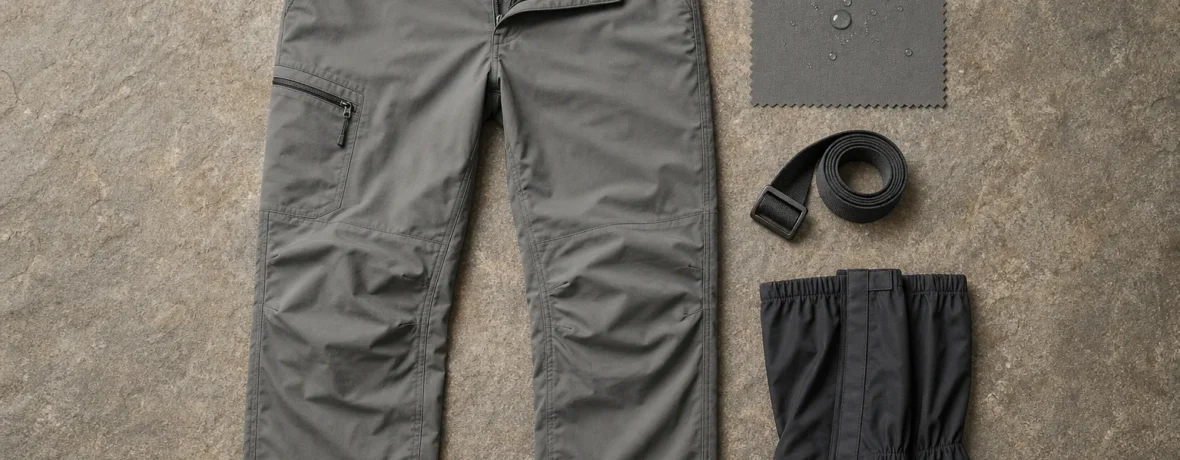
What are hiking pants? They are trail-focused pants made from quick-drying nylon or polyester blends, usually with 3–15% spandex for stretch. Good pairs protect your legs from sun, brush, bugs, wind, and light rain while moving better and drying faster than jeans or cotton chinos.
What Are Hiking Pants?
Hiking pants are pants built for walking long miles outside. They look simple, but the job is specific: keep your legs protected without trapping sweat, binding at the knees, or staying wet for hours after a creek splash.
The best pairs split the difference between workwear and athletic wear. They need enough structure to handle rock, bark, pack straps, and sitting on dirt, but enough give to step over logs and climb steep switchbacks without fighting the fabric.
Most hiking pants use synthetic fabric because it dries faster than cotton and holds its shape better during repeated movement. The label matters. In the U.S., textile labels must list generic fiber names and percentages by weight, so check the tag before trusting marketing copy. The FTC textile labeling guidance explains how those fiber disclosures work.
What Pants to Wear Hiking in Different Conditions?
Choose pants for the weather, trail surface, and how hard you run warm. A breezy summer ridge, a muddy forest trail, and a cold shoulder-season climb ask for different legs.
| Condition | Best pant choice | Features to look for |
|---|---|---|
| Hot, dry trail | Lightweight hiking pants or convertible pants | UPF rating, venting, thin nylon or polyester |
| Brush, rock, desert scrub | Midweight nylon pants | Abrasion resistance, tighter weave, reinforced cuffs |
| Cool, windy weather | Soft-shell hiking pants | Wind resistance, stretch, brushed interior if cold |
| Wet forecast | Hiking pants plus rain pants | DWR finish for drizzle, waterproof shell for steady rain |
If you came here wondering what pants to wear hiking, start with non-cotton, quick-dry pants that let you raise your knee comfortably to hip height. Then tune the weight and features to the route.
The National Park Service lists extra clothing and rain protection among its Ten Essentials, which is a good reminder: pants are not just comfort gear. They are part of your weather system.
What Fabrics Are Best for Hiking Pants?
Nylon, polyester, and spandex blends are the usual winners. Each fiber does a different job, and the blend tells you how the pants will feel on trail.
- Nylon: Tough, smooth, and strong for its weight. Pick nylon when the trail has granite, deadfall, sandstone, or scratchy vegetation.
- Polyester: Quick-drying and common in lighter pants. It often feels softer than nylon and works well for warm-weather hiking.
- Spandex or elastane: Adds stretch. A little goes a long way; 3–8% is common for trail pants, while stretchier jogger-style pants may run higher.
- Cotton blends: Comfortable around town, weak on wet trails. Cotton absorbs moisture and dries slowly, so save it for dry, low-risk walks close to home.
- Merino blends: Less common in pants than shirts. Useful in cold conditions, but pure wool pants usually lack the durability and stretch most hikers want.
Fabric weight matters too. Lightweight pants breathe well and pack small. Midweight pants handle mixed terrain. Heavy soft-shell pants shine in cold wind, snow travel, and off-trail abuse, but they can feel swampy in summer.
Should Hiking Pants Be Waterproof?
No, your regular hiking pants do not need to be fully waterproof. For most hikes, water-resistant and quick-drying beats waterproof.
Waterproof pants block rain, but they also trap more heat and moisture from sweat. That is fine during cold rain, alpine wind, snow, or long exposure above treeline. It is miserable on a warm climb through damp woods.
Look for a DWR finish if you hike in light drizzle or brush wet with dew. DWR helps water bead on the surface, but it is not the same as a waterproof membrane. Once rain gets steady, pull on rain pants or accept that your trail pants will get wet and rely on fast drying.
A smart system looks like this:
- Wear quick-dry hiking pants as your main layer for movement and comfort.
- Pack rain pants when the forecast calls for sustained rain, cold wind, or exposed terrain.
- Skip waterproof pants for hot hikes unless weather risk is real.
- Change into dry base layers at camp if you are backpacking in cold weather.
Do Hiking Pants Protect Against Sun, Bugs, and Brush?
Yes, the right pair can protect your legs from all three. Fabric coverage is simple, reliable protection, especially when shorts leave your shins open to everything.
For sun, look for a UPF rating. The Skin Cancer Foundation’s sun-protective clothing guidance rates UPF 30–49 as very good protection and UPF 50+ as excellent. Darker colors, tighter weaves, and less-stretched fabric usually block more UV than thin, loose knits.
For bugs, pants beat bare skin. In mosquito country, choose a looser fit so insects cannot bite through fabric pressed tight against your legs. For ticks, lighter colors make crawling ticks easier to spot, and cuffs that sit cleanly over socks reduce gaps.
For brush, weave and weight matter more than thickness alone. A tight nylon weave will shrug off grass seeds and light abrasion better than thin stretch fabric that snags easily.
What Features Actually Matter on Hiking Pants?
Fit, mobility, pockets, cuffs, and waist comfort matter more than flashy extras. The best features disappear while you walk.
- Gusseted crotch: A diamond-shaped fabric panel that reduces seam strain and improves high stepping.
- Articulated knees: Shaped panels that let the knees bend without pulling the whole pant leg upward.
- Stretch: Useful for scrambling, big steps, and steep climbs. Too much stretch can feel clingy and less durable.
- Secure pockets: Zippers or deep pockets keep a phone, map, lip balm, or permit from sliding out on slabs or logs.
- Low-profile waistband: A flat waist sits better under a hip belt than bulky buttons or thick belt loops.
- Adjustable cuffs: Helpful for keeping grit out, venting heat, or cinching over boots.
- Convertible legs: Great for changing temperatures, though zippers can rub some hikers under pack straps or while sitting.
Try pants on with the footwear and belt you plan to use. Squat. Step onto a chair or stair. Sit down. If the waistband digs, the thigh pulls, or the cuffs ride above your socks, the problem will feel worse after 6 miles [9.7 km].
How Should Hiking Pants Fit?
Hiking pants should fit close enough to stay put and loose enough to move. You want clean movement, not a sail and not a sausage casing.
At the waist, the pants should stay up without constant yanking. Under a backpack hip belt, a bulky waistband can create a hot spot, so flatter is better. If you use a belt, choose a thin one that will not stack pressure under your pack.
At the thighs and knees, test range of motion. You should be able to lift your knee high, take a long step, and crouch without fabric biting across the front of the thigh. At the hem, pants should cover the top of your footwear without dragging under your heel.
For cold-weather layering, leave room for a thin base layer underneath. For hot weather, a slightly relaxed cut improves airflow.
How Do You Choose Hiking Pants Before You Buy?
Use the trail first, then choose the pants. A desert day hike and a wet mountain backpacking trip do not need the same setup.
- Name the main condition. Heat, cold, rain, bugs, brush, or rock should drive the choice.
- Check the fabric tag. Look for nylon or polyester as the main fiber, with spandex if you want stretch.
- Pick the weight. Lightweight for heat, midweight for general use, soft-shell for cold wind.
- Test mobility. Squat, high-step, and sit before taking the tags off.
- Check pocket placement. Make sure pockets work with your pack hip belt and do not dump contents when you sit.
- Match rain protection to the forecast. DWR for passing moisture, rain pants for real storms.
Do not buy features you will not use. Zip-off legs, thigh vents, and reinforced panels can be excellent. They can also add bulk, noise, and failure points. Simple pants that fit well beat overbuilt pants that annoy you every mile.
Related reading
- What Pants Should Men Hike In?
- How Should Hiking Pants Fit?
- Best Hiking Pants
- How to Use a Compass for Hiking
FAQ
Are hiking pants better than leggings?
Yes, for brush, bugs, sun, and abrasion, hiking pants usually protect better than leggings. Leggings can be great for smooth trails and cool weather, but many snag easily and offer less pocket storage.
Can you wear jeans hiking?
Jeans are a poor choice for wet or cold hikes. Denim is cotton, and once soaked it gets heavy, stiff, and slow to dry; use quick-dry synthetic pants instead.
Are convertible hiking pants worth it?
Yes, if temperatures swing during the day. They give you pants and shorts in one piece, but the leg zippers can feel bulky, so try them on before a long trip.
What is the best fabric blend for hiking pants?
A nylon-spandex blend is the most versatile choice for many hikers. Nylon brings durability, and spandex adds stretch for climbing, stepping over logs, and sitting comfortably.
Do hiking pants need UPF?
UPF is useful on sunny, exposed trails. If you hike deserts, alpine routes, beaches, snowfields, or long ridges, UPF 50+ pants give stronger sun coverage than untreated thin fabric.
How many pairs of hiking pants do you need?
For day hiking, one good pair is enough. For backpacking, many hikers wear one pair and pack a dry base layer or rain pants instead of carrying a second full pair.