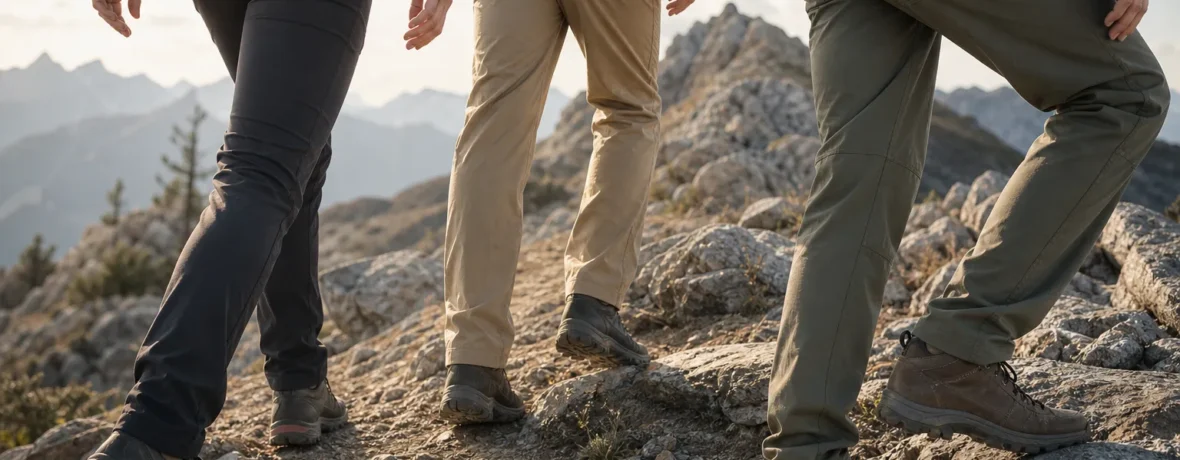
How should hiking pants fit? They should sit secure at your waist without pinching, allow a full squat and high step, leave 1–2 in [2.5–5 cm] of ease through the thighs, and land at boot tops without dragging. Choose slimmer for maintained trails, roomier for layers and scrambling.
How should hiking pants fit at the waist?
Your waistband should stay put without needing a death-grip belt.
Stand tall, then breathe deep. The waistband should feel snug, not sharp. You should be able to slide two fingers inside the waist when the pants are fastened. If you can fit a whole fist in there, they are too loose. If the button pulls, the fabric folds into your stomach, or you feel pressure when sitting, size up or try a different cut.
For backpacking, check the waist with your hip belt on. A bulky button, stiff snap, or thick belt loop can rub under a loaded pack. Pull-on waists and low-profile adjusters often feel cleaner under a hip belt.
How should hiking pants fit through the hips and seat?
The seat should follow your shape without pulling tight across your backside.
Look in a mirror from the side and back. If the fabric forms horizontal stress lines across the seat, the pants are too tight. If there is a saggy pouch under the rear, the rise or cut is wrong for you. You want enough room to step over deadfall, sit on rock, and climb steep switchbacks without fabric biting into your hips.
A good test: lift one knee toward your chest. If the waistband yanks down or the seat feels like it may split, those pants are not trail-ready.
Should hiking pants be tight or loose?
Hiking pants should be neither skin-tight nor baggy.
Think “athletic room.” Tight pants can limit stride length, trap sweat, and rub at the inner thighs. Loose pants can snag on brush, flap in wind, and bunch under a hip belt or harness. The sweet spot is a clean fit with stretch and enough space for movement.
| Fit | Best For | Watch Out For |
|---|---|---|
| Slim | Fast day hikes, maintained trails, mild weather | Can bind at knees and thighs |
| Regular | Most hikers, mixed terrain, travel | Needs stretch or gusset for big steps |
| Relaxed | Scrambling, cold layers, brushy routes | Can snag or feel sloppy if too wide |
How much room should hiking pants have in the thighs?
You want 1–2 in [2.5–5 cm] of extra fabric around the thigh.
Pinch the fabric at the front or side of your thigh while standing. A small fold is good. No fold means the pants may be too tight. A fistful of fabric means they may chafe, swish, or catch on branches.
Thigh fit matters most on steep trails. Big steps load the fabric differently than walking around your house. If you have strong quads or prefer a shorter stride, look for articulated knees, stretch nylon, or a gusseted crotch. REI’s hiking pants guide also points to fit, terrain, and features as key buying factors when choosing pants for the trail: REI Expert Advice on hiking pants.
How should hiking pants fit at the knees?
The knees should bend freely without pulling the cuffs upward too much.
Do five slow squats. Then kneel on one knee. The fabric should move with you, not lock above the kneecap. If the pants have articulated knees, the shaped panels should line up with your actual knees when standing. If those panels sit too low, the inseam may be too long. If they sit too high, the rise or size may be off.
On trail, stiff knees get annoying fast. You feel them every step uphill. Stretch fabric helps, but cut matters more. Even stretchy pants can feel wrong if the knee shaping lands in the wrong place.
What is the right hiking pants inseam?
The hem should touch the top of your hiking shoes or boots without dragging on the ground.
For low hiking shoes, a slight break at the ankle works well. For mid boots, the hem should cover the collar without bunching. For wet or muddy trails, shorter is cleaner. Fabric dragging under your heel gets shredded and soaks up water.
Try pants with the footwear you actually hike in. A 32 in [81 cm] inseam can look right barefoot and wrong with boots. Sit down, crouch, and climb one stair. If the hem shoots up and exposes several inches of sock, you may want a longer inseam or a cuff that cinches.
How do you check hiking pants fit before buying?
Use trail movements, not dressing-room poses.
- Fasten the pants and breathe deep. The waist should stay comfortable.
- Do five squats. No pinching, pulling, or crackling seams.
- Lift each knee high. The seat and crotch should not bind.
- Step onto a chair or bench. This mimics rocks, logs, and steep steps.
- Sit for 60 seconds. Tight waistbands show themselves when seated.
- Wear your pack hip belt. Check for button, belt, or seam pressure.
- Walk fast. Listen for loud swishing and feel for inner-thigh rub.
How should hiking pants fit for backpacking?
Backpacking pants should be slightly roomier than day-hiking pants.
A loaded pack changes everything. Your hip belt presses into the waistband. Long climbs make your thighs work harder. Weather can shift, so you may need a thin base layer underneath in cold conditions. The National Park Service includes extra clothing in its Ten Essentials system, which is a smart reminder that your pants need to work with layers, not fight them: NPS Ten Essentials.
For backpacking, favor:
- A flat waistband or soft internal drawcord
- Stretch fabric with nylon or polyester
- A gusseted crotch
- Thigh room for climbing
- Cuffs that clear your boots
- Pockets that do not sit directly under your hip belt
How should hiking pants fit over base layers?
They should slide over a thin base layer without squeezing your thighs or seat.
Put on the base layer you plan to wear, then try the pants again. If the pants were already snug, the extra layer will turn them restrictive. You should still be able to squat, step high, and sit without the waistband digging in.
Cold-weather pants can be 0.5–1 in [1.3–2.5 cm] roomier in the waist and thighs than summer pants, especially if you run cold or hike above treeline. Do not size up so far that the crotch drops or the cuffs drag. That trades warmth for tripping.
What fabric changes how hiking pants fit?
Stretch fabric gives more forgiveness, but it does not fix a bad cut.
Most hiking pants use nylon or polyester because they dry faster than cotton and handle abrasion better than casual pants. The Washington Trails Association recommends avoiding cotton for hiking because wet cotton insulates poorly and can leave you cold: WTA hiking clothing guidance.
Look for spandex or elastane if you want more give. Two-way stretch helps with walking. Four-way stretch feels better for scrambling, climbing over logs, and big uphill steps. Heavier fabric hangs straighter and blocks brush better. Lighter fabric feels cooler but can cling when sweaty.
What are signs your hiking pants do not fit?
If you notice them constantly, they probably fit wrong.
- The waistband slides down every few minutes.
- The button digs in under your pack belt.
- The thighs feel tight when climbing.
- The crotch seam pulls during high steps.
- The knees bind when squatting.
- The cuffs drag under your heels.
- The inner thighs rub after a short walk.
- The pockets flare open when standing.
- The fabric bunches behind the knees.
How should hiking pants fit for rain pants or convertible pants?
Rain pants need more room; convertible pants need careful zipper placement.
Rain pants go over your regular hiking pants, so they should not fit like everyday trousers. You need space at the thighs, seat, and knees, plus ankle openings wide enough to pull over shoes or boots. If rain pants are too slim, they restrict the pants underneath and trap sweat.
Convertible pants are trickier. The leg zipper should sit above or below the spot where your knee bends, not directly across it. Walk upstairs before buying. If the zipper rubs your kneecap, it will annoy you all day.
Related reading
- How Should Hiking Boots Fit? The Thumb Rule and Other Checks
- What Pants Should Men Hike In?
- How Should a Hiking Backpack Fit? Measuring Torso Length
- What Are Hiking Pants? Fabrics and Features That Matter
FAQ
Should I size up in hiking pants?
Size up only if the waist, hips, or thighs restrict movement. If sizing up makes the waistband loose or the crotch sag, try a different cut instead of a bigger size.
Should hiking pants cover my boots?
Yes, they should cover the top of your boots without dragging under your heel. For muddy trails or low hiking shoes, a slightly shorter hem can work better.
Are hiking pants supposed to be stretchy?
Stretch is not required, but it helps. Pants with some elastane or spandex usually feel better for steep climbs, scrambling, and long steps.
How do I know if hiking pants are too tight?
They are too tight if you see pulling lines, feel pinching, or cannot squat comfortably. Tight spots at the thighs, seat, crotch, or knees usually get worse on climbs.
Can hiking pants be too loose?
Yes, loose pants can snag, chafe, and bunch under a pack belt. You want enough room to move, not extra fabric swinging around your legs.