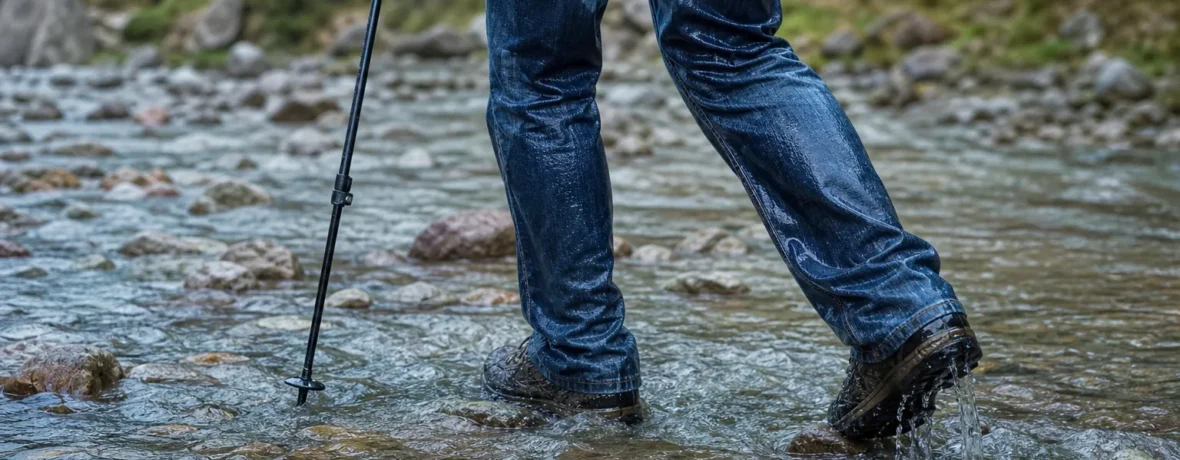
Are jeans good for hiking? Usually, no. Jeans are acceptable for dry, short, low-risk walks under 3 miles [4.8 km] near help, but they are a poor choice for wet, cold, hot, steep, or all-day hikes. Cotton denim holds moisture, dries slowly, restricts movement, and can raise your risk of chafing, blisters, overheating, or chilling.
Are jeans good for hiking?
No, not for most real trail hikes. Jeans can work for a mellow nature path, but they are not good hiking gear once weather, sweat, distance, elevation, or scrambling enters the picture.
Denim was built for durability, not trail comfort. It protects your legs from brush and casual wear, but it also gets heavy when wet, rubs at seams, and has limited stretch unless it is blended with spandex. That matters when you are stepping over logs, climbing rock stairs, or lifting your knee onto a ledge.
The biggest problem is cotton. Cotton absorbs moisture from sweat, rain, wet grass, stream spray, and snow. Once wet, it loses comfort fast and dries slowly compared with nylon, polyester, or wool hiking layers. The National Park Service recommends wool or synthetic clothing over cotton for winter conditions because staying dry helps reduce cold-weather risk.
National Park Service winter safety guidance also points hikers toward non-cotton clothing in cold or wet conditions. That advice is not fancy gear snobbery. It is practical trail safety.
Is hiking in jeans ever okay?
Yes, hiking in jeans is okay on short, dry, easy trails where a bad weather turn would not trap you. Think local park loops, flat dirt paths, scenic pullouts, and walks where your car is close.
Use this quick test before you go:
- Check the forecast for rain, thunderstorms, snow, high wind, or a sharp temperature drop.
- Look at the route length. Keep denim walks short, preferably under 3 miles [4.8 km].
- Check the trail surface. Avoid jeans for mud, stream crossings, boulder fields, and steep climbs.
- Ask what happens if you get wet. If the answer is “I have to hike for hours,” skip jeans.
- Pack a dry layer if temperatures could fall below 60°F [16°C] or if you will be out near sunset.
If all five points look friendly, jeans are not automatically terrible. They are just not the best tool. Trail pants still move better, dry faster, and feel better by mile 2.
Why is cotton risky on the trail?
Cotton is risky because wet fabric pulls comfort and warmth away from you when you need both. The trail problem is not cotton on a couch. It is cotton plus sweat, rain, wind, and time.
The CDC says hypothermia can happen even above 40°F [4°C] when a person is wet from rain, sweat, or cold water and becomes chilled. That is the exact scenario hikers create when they climb hard, sweat into cotton denim, stop for lunch, and then get hit by wind.
See the CDC’s cold-weather advice on preventing hypothermia and its reminder that wet clothing should be removed during hypothermia first aid. Mayo Clinic also lists wet clothing and wind as causes of faster body heat loss in its hypothermia symptoms and causes guide.
Wet cotton has another sneaky downside: it keeps rubbing. A soaked denim waistband, inner thigh seam, or cuff can grind against skin for miles. That can lead to hot spots, chafing, and blisters, especially when the jeans are tight or heavy.
What happens if jeans get wet while hiking?
Wet jeans get heavy, stiff, cold, and slow to dry. That turns a normal hike into a slog.
| Trail condition | What jeans do | Better choice |
|---|---|---|
| Rain or wet brush | Absorb water and cling to your legs | Nylon hiking pants with a water-resistant finish |
| Cold wind | Stay damp and pull heat from your body | Synthetic base layer plus softshell pants |
| Hot weather | Trap sweat and feel heavy | Lightweight polyester or nylon pants |
| Steep climbs | Restrict knee lift and hip movement | Stretch hiking pants or shorts |
If your jeans get wet and the temperature is mild, you may only be uncomfortable. If the weather is cool, windy, or dropping, you need to act early: add a dry insulating layer, keep moving if safe, shorten the hike, and get to shelter.
Are jeans bad for summer hikes?
Often, yes. Jeans can be too hot, too sweaty, and too abrasive for summer hiking.
Denim does not vent like lightweight hiking pants. It can trap sweat behind the knees, along the waistband, and between the thighs. In humid weather, that sweat may not evaporate well, so you feel sticky instead of cooler.
Heat stress is not just a cold-weather topic turned upside down. The CDC’s heat-related illness guidance lists heat exhaustion, heat cramps, heat rash, and heat stroke as heat-related illnesses. On hot hikes, clothing that holds sweat against your skin can add misery and friction, especially when you are climbing in full sun.
For summer, choose pants or shorts that are:
- Lightweight
- Quick drying
- Breathable
- Stretchy enough for high steps
- Smooth at the seams
- Comfortable under a hip belt
Are jeans okay for winter hiking?
No, jeans are a poor choice for winter hiking. Cold plus wet cotton is the wrong pairing.
Winter hiking layers should help you manage sweat, wind, snow, and stops. Jeans do the opposite. They soak up moisture, hold it near your skin, and do not layer cleanly over base layers unless they are oversized. Oversized jeans then bunch, sag, and rub.
A better winter leg system looks like this:
- Moisture-wicking base layer: polyester, nylon, or merino wool
- Softshell hiking pants: wind resistant and stretchy
- Waterproof shell pants: packed for wet snow, sleet, or long exposure
- Dry socks: at least one spare pair in your pack
If you are walking a plowed path for 20 minutes, denim may be fine. If you are hiking into snow, climbing above treeline, or heading away from quick shelter, leave the jeans at home.
What should you wear instead of jeans for hiking?
Wear quick-drying hiking pants, trail tights, or shorts made from nylon, polyester, wool blends, or softshell fabric. The goal is simple: move freely, manage sweat, and dry fast.
Good hiking bottoms have a few clear traits:
- Stretch: You should be able to step high without the fabric pulling across your thighs.
- Fast drying: Pants should handle sweat, drizzle, and wet plants without staying soaked for hours.
- Comfortable waistband: It should sit well under a backpack hip belt.
- Low-bulk seams: Less rubbing means happier skin.
- Useful pockets: Secure pockets beat deep cotton pockets that dump snacks when you sit.
For brushy trails, wear full-length hiking pants. For hot desert or forest hikes, lightweight pants often beat shorts because they add sun and scratch protection without denim’s weight. For wet climates, pack rain pants or choose hiking pants that dry quickly after a shower.
Can you make jeans safer if they are all you have?
Yes, you can reduce the risk, but you cannot turn jeans into technical hiking pants. If denim is your only option, keep the hike conservative.
- Choose the loosest, stretchiest pair you own.
- Avoid skinny jeans, rigid denim, and thick seams.
- Wear synthetic or wool underwear, not cotton underwear.
- Bring a rain shell or poncho that covers your upper legs.
- Pack dry socks and a warm top layer in a waterproof bag.
- Turn around early if rain starts, wind rises, or your legs get soaked.
- Do not wear jeans for snow travel, stream crossings, or remote routes.
This is the straight answer: jeans are better than no pants, but they are worse than basic hiking pants. Even budget trail pants usually beat denim for comfort and safety.
When to see a doctor
Get medical help right away for signs of hypothermia, heat illness, severe blisters, infection, or symptoms that do not improve after rest and getting dry. Do not try to diagnose yourself on the trail.
For cold exposure, watch for shivering that becomes intense or stops, confusion, slurred speech, unusual clumsiness, drowsiness, slow breathing, or skin that feels very cold. Move the person out of the cold, remove wet clothing if you can do so safely, and call emergency services.
For heat problems, stop hiking, get into shade, cool the body, and seek urgent care if there is confusion, fainting, vomiting, very high body temperature, or symptoms that worsen. If a blister becomes increasingly red, swollen, warm, painful, or drains pus, get medical care.
Related reading
- Is Merino Wool Good for Summer Hiking?
- Are Timberlands Good for Hiking? An Honest Trail Test
- Are Trail Running Shoes Good for Hiking? Pros, Cons and When to Switch
- Can You Hike in Running Shoes? What Actually Changes on the Trail
FAQ
Are jeans good for hiking short trails?
Yes, jeans can be okay for short, dry, easy trails near your car. Keep the route simple and avoid denim if rain, mud, cold wind, or steep climbing is in the plan.
Why do hikers say “cotton kills”?
They mean wet cotton can increase cold-weather danger because it holds moisture and dries slowly. The phrase is blunt, but the trail lesson is useful: stay dry, especially in cool or windy conditions.
Are stretch jeans better for hiking?
Yes, stretch jeans are better than rigid jeans for movement. They still usually contain cotton, so they remain a weak choice for wet, cold, hot, or long hikes.
Can I wear jeans with hiking boots?
Yes, you can wear jeans with hiking boots, but comfort may suffer. Cuffs can bunch above the boot, soak up mud or rain, and rub your ankles on longer trails.
What pants are best for beginner hikers?
Lightweight synthetic hiking pants are the best starting point for most beginners. Choose nylon or polyester pants with some stretch, a comfortable waistband, and a fit that lets you climb stairs without pulling.