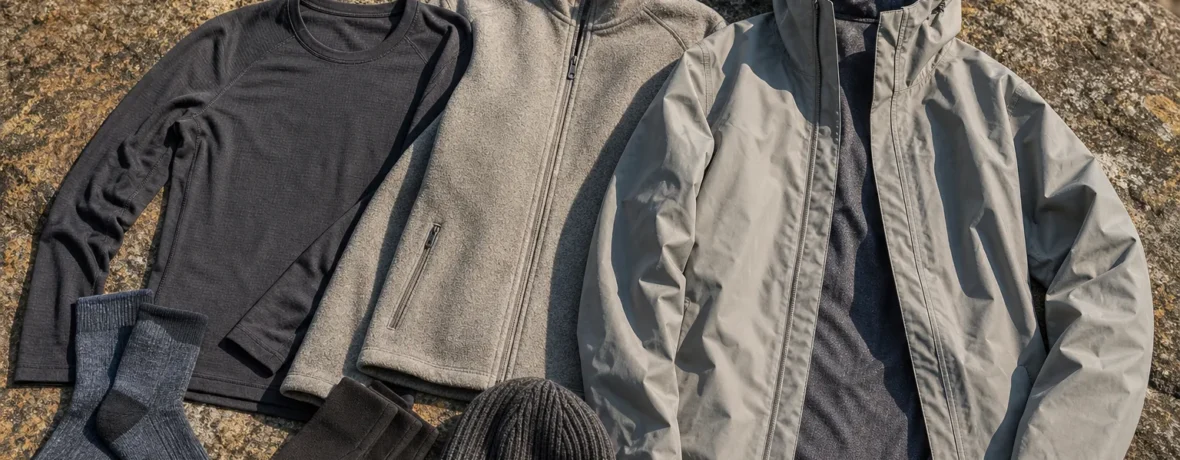
What is a base layer? It’s the next-to-skin shirt, leggings, or underwear that moves sweat off your skin so you stay drier and warmer. Yes, you need one in cool or cold weather; choose lightweight for hard hiking, midweight for colder stops, and avoid cotton when damp conditions are possible.
What is a base layer in hiking?
A base layer is your moisture-management layer.
It sits directly against your skin and has one main job: move sweat away before it chills you. That matters on steep climbs, windy ridges, lunch breaks, and slow descents when your body stops producing as much heat. The National Park Service Ten Essentials includes extra clothing and layers because weather can shift fast outside.
Base layers come as tops, bottoms, boxers, briefs, sports bras, liners, and sleep layers. For most three-season hikes, a long-sleeve lightweight top is the most useful piece. For winter, add base layer bottoms under hiking pants or snow pants.
Common fabric choices:
- Merino wool: Warm for its weight, less odor-prone, comfortable across changing temps.
- Synthetic polyester or nylon blends: Durable, quick-drying, often cheaper than merino.
- Silk: Very light and low bulk, better for mild cold than rough trail use.
- Cotton: Comfortable at home, poor on wet or cold trails because it holds moisture.
Fit matters. A base layer should skim your body without cutting off movement. Too loose, and it won’t wick well. Too tight, and it feels miserable under a pack belt after 6 miles [9.7 km].
What is a mid layer and when do you wear one?
What is a mid layer? It’s the insulation layer that traps warm air between your base layer and shell.
You wear it when your base layer alone is not warm enough. That may be at the trailhead, during breaks, above treeline, in camp, or on slow winter climbs. A mid layer can be fleece, synthetic insulation, down, wool, or a hybrid jacket with breathable side panels.
The trick is matching insulation to output. Hiking uphill in a thick puffy can soak your base layer with sweat. Standing still in a thin fleece at 28°F [-2°C] can leave you shivering. Carry options when the forecast is uncertain.
| Mid Layer Type | Best Use | Watch Out For |
|---|---|---|
| Light fleece | Active hiking in cool weather | Not windproof by itself |
| Grid fleece | High-output climbs and backpacking | Less warm during long stops |
| Synthetic puffy | Wet, cold, mixed weather | Bulkier than down for the warmth |
| Down puffy | Cold, dry breaks and camp | Loses performance when wet |
What does an outer layer do?
An outer layer blocks wind, rain, and snow.
This is your shell. It does not need to be heavily insulated. In fact, many hikers are better served by an uninsulated rain jacket or wind shell that can fit over a base layer and mid layer. That gives you more control.
There are three common shell types:
- Rain shell: Waterproof or waterproof-breathable, built for rain and wet snow.
- Wind shell: Light, packable, and excellent for breezy ridges, but not full rain protection.
- Softshell: Stretchy, breathable, and weather-resistant, but usually not waterproof.
A shell should cover your wrists, seal at the hood, and fit over your warmest mid layer without crushing it. If a puffy jacket is compressed flat under your rain shell, it will not insulate as well.
How do base, mid and outer layers work together?
They work by moving moisture out, trapping warmth, and blocking weather.
Think of your clothing as a system, not three random garments. Your base layer handles sweat. Your mid layer handles warmth. Your outer layer handles wind and precipitation. The whole setup should breathe well enough while you move and protect well enough when the weather turns.
The REI layering guide uses the same basic structure: base layer, middle layer, and outer layer. That simple system works because each piece has a clear job.
- Start slightly cool. If you feel perfectly warm at the trailhead, you may overheat 10 minutes into the climb.
- Vent before you sweat hard. Open pit zips, chest zips, cuffs, and pockets before moisture builds up.
- Add insulation before you stop. Put on a fleece or puffy as soon as you pause, not after you get cold.
- Protect insulation from rain. Throw the shell over your mid layer before steady rain soaks it.
- Adjust often. Layering only works if you actually add, remove, and vent layers during the hike.
Which base layer weight should you choose?
Choose lightweight for movement, midweight for cold, and heavyweight for low-output winter use.
Base layer “weight” refers to fabric thickness and warmth, not just the number on a scale. Brands use different naming systems, so treat labels as a guide rather than a law.
- Lightweight: Best for 40-60°F [4-16°C], fast hiking, backpacking, and shoulder-season starts.
- Midweight: Best for 20-45°F [-7-7°C], slower hiking, snowshoeing, and cold camps.
- Heavyweight: Best for very cold days, hunting, ice fishing, belay-style stops, or sleeping in winter.
If you run hot, go lighter than you think. If you stop often, hike slowly, or spend time taking photos in exposed spots, go warmer or carry a dedicated stop layer.
Is merino wool or synthetic better for a base layer?
Merino is better for odor control and comfort; synthetic is better for durability, fast drying, and price.
Neither is perfect. Merino can feel great for multi-day trips because it smells less funky after repeated wear, but it usually costs more and can wear faster under pack straps. Synthetic base layers dry quickly and take abuse well, but they can hold odor sooner.
| Fabric | Strength | Best For |
|---|---|---|
| Merino wool | Comfort, warmth, odor control | Backpacking, travel, cool-weather hiking |
| Synthetic | Drying speed, durability, lower cost | Hard hiking, wet climates, frequent washing |
| Blend | Balanced comfort and toughness | Most hikers who want one do-it-all layer |
For a first hiking base layer, a lightweight synthetic or merino-synthetic blend is the safest buy. It works across more seasons and won’t roast you on climbs.
How should hiking layers fit?
Each layer should fit over the one below it without squeezing your movement or insulation.
Base layers should sit close. Mid layers should allow a full arm swing, high steps, and pack straps without bunching. Outer layers should fit over your warmest expected insulation and still let you reach overhead.
Check these details before buying:
- Sleeves stay down when you use trekking poles.
- Hem stays under your hip belt or harness.
- Hood moves with your head, not over your eyes.
- Zippers are usable with gloves.
- No tight spots across shoulders when wearing a pack.
- Shell cuffs fit over gloves or under gauntlets, depending on your setup.
What should you wear for different hiking conditions?
Dress for the coldest, wettest realistic conditions, then vent as you move.
Weather is not just temperature. Wind and moisture change everything. The NOAA wind chill guide explains that wind can make conditions feel colder than the air temperature, which is exactly why a thin shell can feel warmer than a thick fleece in exposed terrain.
| Conditions | Layering Setup |
|---|---|
| Cool, dry, 45-60°F [7-16°C] | Light base layer, wind shell in pack |
| Cold, dry, 25-45°F [-4-7°C] | Light or midweight base, fleece, shell or puffy in pack |
| Cold rain | Synthetic or wool base, light fleece, rain shell |
| Winter hiking | Midweight base, active fleece, shell, warm puffy for stops |
Wet clothing pulls heat away fast. The CDC cold stress guidance recommends multiple loose layers and staying dry in cold conditions. On trail, that means changing layers before sweat soaks them and keeping a dry backup in your pack.
What layering mistakes should you avoid?
The biggest mistake is wearing too much while moving and too little while stopped.
Most hikers learn this the damp way. You leave the trailhead bundled up, heat up on the climb, sweat through your shirt, hit a breezy overlook, and suddenly that warm outfit feels icy. Fix it early.
- Do not hike hard in your big puffy. Save it for breaks unless conditions are severe.
- Do not rely on cotton in cold rain. It holds moisture and dries slowly.
- Do not pack a shell that barely fits. It needs room over insulation.
- Do not ignore vents. Zippers are temperature controls.
- Do not wait until you are chilled. Add layers before your hands shake or your pace drops.
What is a simple hiking layer checklist?
A simple checklist is one base layer, one insulating layer, and one weather-blocking shell.
For most day hikes in cool or uncertain weather, pack this:
- Lightweight long-sleeve base layer
- Fleece or light synthetic mid layer
- Rain shell or wind shell, depending on forecast
- Warm hat or buff
- Light gloves
- Dry spare socks
- Warm puffy for cold stops, winter, or exposed terrain
Backpackers should also consider a dry sleeping base layer that never gets worn during the sweaty hiking day. That one choice can make a damp camp feel much less grim.
Related reading
- How to Layer for Hiking: Base, Mid and Shell
- What Is Base Weight in Backpacking?
- How to Train for the Everest Base Camp Trek
- How to Use a Compass for Hiking
FAQ
Can you wear a base layer by itself?
Yes, you can wear a base layer by itself in mild or high-output conditions. Pick one with enough durability and coverage for sun, brush, pack straps, and your comfort level.
Should a base layer be tight or loose?
A base layer should be close-fitting, not restrictive. It needs contact with your skin to move sweat, but you should still be able to bend, reach, and breathe easily.
Do you wear anything under a base layer?
Usually, underwear goes under base layer bottoms, and nothing goes under a base layer top except a sports bra if you wear one. For cold backpacking, choose moisture-wicking underwear instead of cotton.
Is a fleece a mid layer?
Yes, fleece is one of the most common mid layers. It works well for active hiking because it breathes better than many insulated puffies, though it usually needs a shell in wind.
Do you need all three layers for hiking?
No, not on every hike. In warm dry weather you may only need a sun shirt, but in cool, wet, windy, or mountain conditions, carrying base, mid, and outer layers gives you much better control.
What should your outer layer be for rain?
Your rain outer layer should be a waterproof or waterproof-breathable shell with a hood. For hiking, an uninsulated rain jacket is usually more versatile than a lined raincoat because you can change warmth with your mid layer.