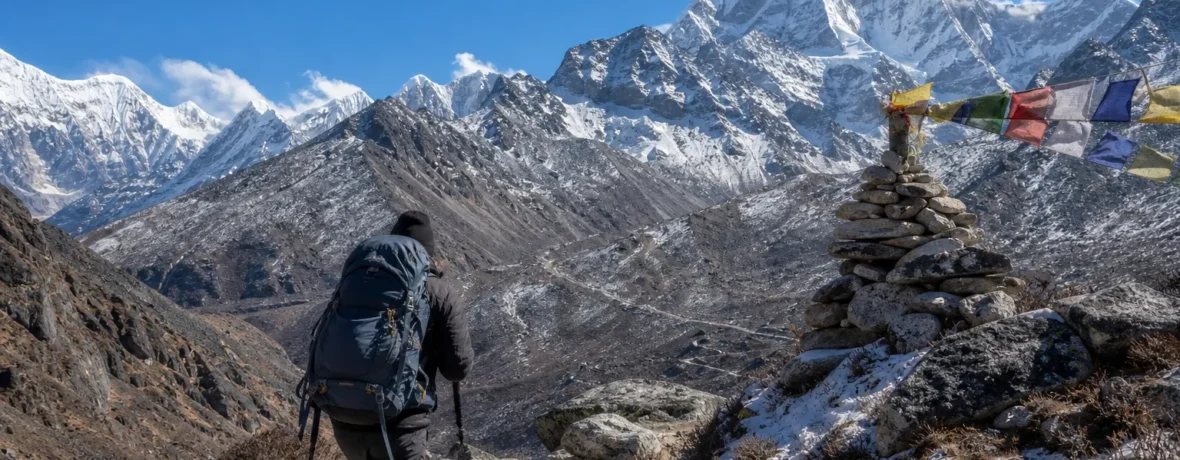
Spend 12–16 weeks building uphill endurance, leg strength, and loaded hiking comfort. Aim for 3–5 cardio sessions weekly, 2 strength sessions, and weekend hikes that reach 6–8 hours with a 15–25 lb [7–11 kg] pack. Yes, beginners can do it with consistency.
How fit do you need to be for Everest Base Camp?
You need strong hiking fitness, not elite mountaineering fitness. The classic Everest Base Camp trek is a long walk at high altitude, with repeated climbing days, uneven stone steps, cold mornings, dust, and thin air doing their best to slow you down.
You are not climbing Everest. You are trekking to base camp, which sits near 17,600 ft [5,364 m]. The CDC lists Everest Base Camp, Nepal, at approximately 17,700 ft [5,400 m], and warns that some Nepal trekking itineraries push the limits of acclimatization for many travelers. Read the CDC’s high-altitude travel guidance before you go.
Your goal is simple: arrive with legs that can climb for hours, lungs that recover well, and feet that already know what long days in boots feel like.
A solid benchmark before you leave:
- You can hike 6–8 hours on rolling or steep terrain.
- You can climb 2,000–3,000 ft [610–914 m] in a day without feeling wrecked the next morning.
- You can walk back-to-back hiking days with a 15–25 lb [7–11 kg] pack.
- You can climb stairs or hills for 45–60 minutes at a steady pace.
- You have no new boot rubs, knee pain, or hot spots after long training hikes.
How long does it take to train for Everest Base Camp?
Most hikers should train for 12–16 weeks. If you already hike every weekend and do regular cardio, 8–10 focused weeks may work. If you are starting from the couch, give yourself 20–24 weeks and build slowly.
The mistake is trying to cram fitness into the final month. That leads to sore knees, angry Achilles tendons, and panic-buying gear you have not tested. Start early. Add stress, recover, then add more.
| Starting point | Training time | Main focus |
|---|---|---|
| Regular hiker | 8–12 weeks | Longer hikes, pack weight, hill repeats |
| Active but not hiking | 12–16 weeks | Uphill endurance, leg strength, trail time |
| New to fitness | 20–24 weeks | Walking base, joint durability, gradual climbing |
How to train for Everest base camp in 12–16 weeks?
Build your training around hiking, hills, strength, and recovery. The trek rewards steady engines, durable legs, and hikers who can repeat moderate efforts day after day.
- Build a weekly walking base. Start with 3–5 walks per week. Keep most of them easy enough that you can speak in full sentences.
- Add hills twice per week. Use trails, stairs, treadmill incline, bridges, or parking garages. Uphill work matters more than flat speed.
- Strength train twice per week. Train legs, hips, calves, core, and upper back. You need control on descents as much as power on climbs.
- Hike long once per week. Extend your weekend hike until you can handle 6–8 hours. Add pack weight gradually.
- Practice back-to-back days. Once or twice per month, hike Saturday and walk or hike again Sunday. This is trek-specific gold.
- Recover on purpose. Take at least 1 full rest day per week. Sleep, eat enough, and reduce training if pain changes your gait.
What cardio should you do for Everest Base Camp?
The best cardio is uphill hiking. If you cannot reach trails during the week, use incline treadmill walking, stair climbing, cycling, rowing, or steady jogging.
Keep most cardio easy to moderate. You are training for long, controlled days, not a 5K finish-line kick. One harder session per week is enough for many hikers, especially once weekend hikes get long.
A simple weekly cardio structure:
- 1 long hike: 3–8 hours, depending on your training phase.
- 1 hill session: 45–75 minutes of sustained climbing or repeats.
- 1 steady cardio day: 45–60 minutes easy to moderate.
- 1 optional short recovery walk: 30–45 minutes easy.
Do not chase speed. On the trek, the smartest pace often feels almost too slow at first. That is the point. Slow is smooth. Smooth gets you higher.
What strength exercises help most for Everest Base Camp?
Train single-leg strength, glutes, calves, core, and downhill control. Your legs need to lift you uphill and brake you downhill on stone steps, loose dirt, suspension bridges, and rough trail.
Use controlled reps. No sloppy bouncing. If you are new to strength work, start with body weight and light dumbbells before loading heavier.
- Step-ups: Best all-around move for trekking. Use a box or bench close to knee height.
- Reverse lunges: Build climbing strength without as much knee stress as forward lunges.
- Split squats: Excellent for single-leg control.
- Goblet squats: Train legs and trunk together.
- Romanian deadlifts: Strengthen hamstrings, glutes, and back-side support.
- Calf raises: Help prepare feet, ankles, and lower legs for long climbs.
- Planks and side planks: Keep your torso stable under a pack.
- Farmer carries: Build grip, posture, and loaded walking strength.
Two strength days per week is plenty. During the final month, keep strength work crisp but reduce heavy soreness. You want fresh legs on the plane, not gym pride.
How much pack weight should you train with?
Train with the weight you expect to carry, then add a small buffer. Many guided trekkers carry a daypack with water, layers, snacks, camera, rain shell, sun gear, and personal items, while duffels go with porters or pack animals.
Start with 8–10 lb [4–5 kg]. Add 2–3 lb [1–1.5 kg] every 1–2 weeks until your long hikes use 15–25 lb [7–11 kg], depending on your real trekking setup. Do not jump straight to a heavy pack. That is how shoulders, knees, and feet revolt.
Pack training also teaches you small things that matter:
- Where your hip belt rubs
- How often you need water
- Which snacks you can eat while breathing hard
- Whether your rain jacket is easy to reach
- How your knees feel after long descents
Can a beginner train for Everest Base Camp?
Yes, a beginner can train for Everest Base Camp if they start early and build steadily. You need patience more than heroics.
If you are new to hiking, spend the first 4–6 weeks building a walking habit before you worry about big climbs. Walk 30–60 minutes most days. Add gentle hills. Then add weekend hikes, light pack weight, and basic strength training.
Beginners should be extra careful with three things: footwear, downhill conditioning, and recovery. New hikers often focus on the climb, but descents can be harder on knees and quads. Train downhills before Nepal, not during Nepal.
How do you prepare for altitude on the Everest Base Camp trek?
You cannot fully train for altitude at sea level. You can arrive fit, pace yourself, follow a gradual itinerary, and know when symptoms are warning signs.
Fitness helps you handle the work of walking, but it does not make you immune to altitude illness. The Wilderness Medical Society says acute mountain sickness usually occurs after ascent above 8,200 ft [2,500 m] in an unacclimatized person, often within several hours to 3 days. See the Wilderness Medical Society altitude illness guidelines for medical detail.
Smart altitude habits:
- Choose an itinerary with acclimatization days, especially around Namche Bazaar and higher villages.
- Walk slowly enough that you can keep your breathing controlled.
- Tell your guide early if you develop headache, nausea, dizziness, unusual fatigue, or poor coordination.
- Do not hide symptoms to protect your summit photo.
- Discuss altitude medication and personal risk with a travel medicine clinician before the trip.
The CDC’s Travel to High Altitudes page says people with heart or lung disease should talk with a doctor familiar with high-altitude medicine before travel. Take that seriously.
What should a weekly Everest Base Camp training plan look like?
A good week has 3–5 cardio sessions, 2 strength sessions, 1 long hike, and 1 rest day. The exact layout depends on your job, local terrain, and recovery.
| Day | Workout | Goal |
|---|---|---|
| Monday | Rest or easy walk | Recover from the weekend |
| Tuesday | Strength training | Legs, hips, calves, core |
| Wednesday | Hill workout or incline treadmill | Uphill endurance |
| Thursday | Easy cardio 45–60 minutes | Aerobic base |
| Friday | Strength training or mobility | Durability and balance |
| Saturday | Long hike with pack | Trek-specific stamina |
| Sunday | Easy hike or long walk | Back-to-back fatigue practice |
Every fourth week, cut the long hike and total volume by 25–40 percent. That lighter week lets your body absorb the work. Training is not just piling on more. Training is stress plus recovery.
What should you practice before the trek?
Practice the exact small routines that will keep you comfortable on trail. Fitness gets you moving; systems keep you moving.
- Boots and socks: Test them on long hikes, wet walks, and descents.
- Layering: Practice changing layers without stopping for 15 minutes.
- Hydration: Learn whether bottles or a bladder work better for you in cold weather.
- Snacking: Find foods you can eat when appetite drops.
- Poles: Train with trekking poles before the trip if you plan to use them.
- Bathroom kit: Carry hand sanitizer, toilet paper, and a small trash bag during training hikes.
- Sun protection: Use sunglasses, lip balm, sunscreen, and a brimmed hat on bright training days.
If you are traveling through Sagarmatha National Park, permits are part of the trip logistics. As of November 2026, the official Sagarmatha National Park brochure from Nepal’s Department of National Parks and Wildlife Conservation states that entering the park without a permit is illegal; check current requirements through the official Sagarmatha National Park brochure or your licensed trekking operator before departure.
When to see a doctor
See a doctor before training hard if you have heart, lung, blood pressure, blood, neurologic, or significant joint issues. Also book a travel medicine visit if you have had altitude illness before, take regular medications, or are unsure how high altitude may affect a condition.
During training, get medical advice for chest pain, fainting, unexplained shortness of breath, severe headaches, swelling, persistent joint pain, or pain that changes how you walk. Do not train through sharp pain to prove toughness. That is not toughness. That is gambling with your trek.
For altitude symptoms, the NIH’s MedlinePlus page on acute mountain sickness describes more severe warning signs that can progress to high-altitude pulmonary edema or high-altitude cerebral edema. On the trek, worsening symptoms, confusion, trouble walking straight, breathlessness at rest, or a wet cough need urgent guide attention and descent planning.
What should you do in the final two weeks?
Taper your training and arrive rested. The final two weeks are for sharpening, not cramming.
Keep walking. Keep light hills. Keep mobility. But cut your longest hike distance and avoid heavy leg workouts that leave you sore for days. Sleep more. Break in no new boots. Test no mystery socks. Do not try a new diet.
Your final checklist:
- One moderate hike with your trek pack
- Two easy cardio sessions per week
- Light strength and mobility only
- Toenails trimmed
- Blister kit packed
- Travel insurance and evacuation coverage reviewed
- Medications and prescriptions organized with your clinician’s guidance
- Gear packed, weighed, and tested
Related reading
- How to Train for a Long-Distance Hike
- How to Train for High-Altitude Hiking at Sea Level
- How to Train for Backpacking With a Loaded Pack
- How to Train for Kilimanjaro
FAQ
Is Everest Base Camp hard for beginners?
Yes, it is hard, but it is realistic for prepared beginners. The challenge comes from altitude, repeated trekking days, cold, rough trails, and recovery demands rather than technical climbing.
Can you train for Everest Base Camp without mountains?
Yes, you can train without mountains. Use incline treadmills, stair machines, stadium steps, bridges, parking garages, weighted walks, and back-to-back long walks to build climbing fitness.
How many miles should I hike before Everest Base Camp?
Focus on time and climbing more than mileage. Before departure, you should be comfortable hiking 6–8 hours with a loaded daypack and repeating another moderate walk the next day.
Should I run to train for Everest Base Camp?
Running can help your cardio, but hiking uphill is more specific. If running bothers your knees or shins, swap it for incline walking, cycling, rowing, or stair climbing.
Do I need to train with trekking poles?
Yes, if you plan to use poles in Nepal, train with them before the trip. Poles can help on descents and rough sections, but only if your hands, rhythm, and pack setup already feel natural.
What is the biggest training mistake?
The biggest mistake is doing too little trail-specific work. Gym fitness helps, but long hikes, hills, pack weight, descents, and back-to-back days are what prepare you for the actual trek.