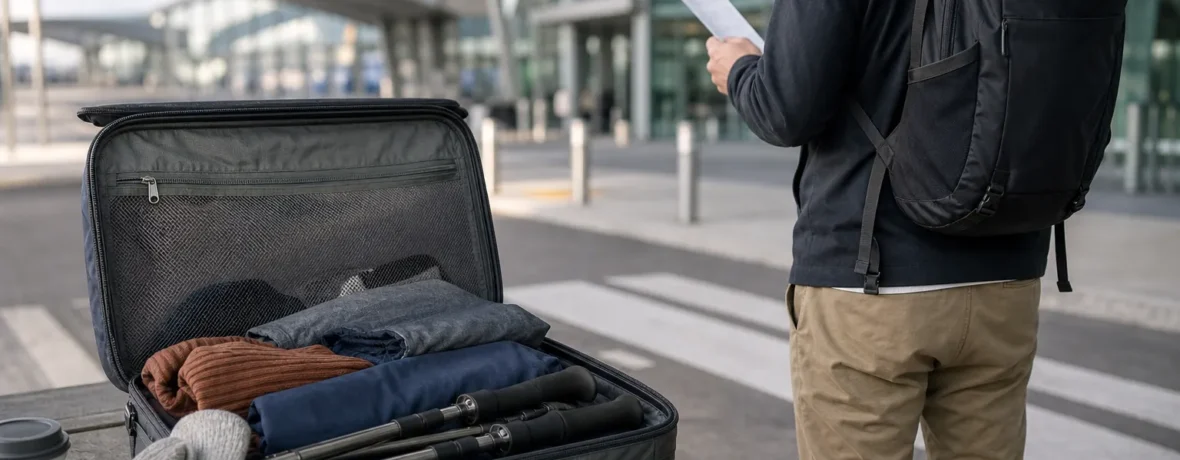
Yes: in the U.S., blunt-tipped hiking poles can go in carry-on or checked bags. Sharp-tipped poles cannot go in carry-on; pack them in checked luggage. TSA officers still make the final call at the checkpoint, as of November 2026.
Can you bring hiking poles on a plane in the U.S.?
Yes, if the tips are blunt.
That is the cleanest answer for U.S. flights, as of November 2026. TSA’s current hiking pole rule allows blunt-tipped hiking poles in carry-on and checked bags, but sharp-tipped hiking poles are not allowed in carry-on. That sharp-versus-blunt detail is the whole fight.
Most trail poles are sold with carbide or steel points. Those bite into dirt, rock, ice, and packed snow. Great on trail. Not great at a checkpoint. Rubber tip covers can help protect your gear and make the end look less aggressive, but TSA does not give a detailed measurement for what counts as “blunt.” So if your poles still look like little spears, don’t gamble with your favorite pair.
Can you take hiking poles on a plane in a carry-on?
Yes, but only blunt-tipped poles have a real shot.
For carry-on, your poles need to pass two tests: TSA screening and airline stowage. TSA is looking at the item’s safety. The airline is looking at whether it fits in the overhead bin or under the seat. A folding Z-pole usually packs smaller than a telescoping pole, but folded length alone does not make it carry-on safe.
If you want the least drama, put blunt-tipped folding poles inside your bag, not strapped to the outside like a tiny weapon rack. Remove mud, dry the joints, and cap the ends. If a TSA officer asks, say plainly that they are blunt-tipped hiking poles and be ready to show the tips.
| Pole type | Carry-on? | Checked bag? | Best move |
|---|---|---|---|
| Blunt-tipped folding poles | Allowed by TSA, subject to screening | Allowed | Pack inside your carry-on with tips capped |
| Sharp carbide-tipped poles | No | Yes | Check them, ship them, rent, or buy at destination |
| Telescoping poles too long for your bag | Only if airline stowage works | Yes | Collapse fully and check airline limits |
| Poles used as mobility aids | May be screened as mobility aids | Allowed | Tell TSA before screening if you need them for walking |
Are trekking poles carry on-friendly if they collapse?
Sometimes, but collapse length is not the main rule.
The phrase “trekking poles carry on” sounds simple until you reach security. Folding poles can fit neatly in a pack, but TSA still cares about the tip. A collapsed sharp-tipped pole is still a sharp-tipped pole.
For carbon poles, protect them from crushing. For aluminum poles, lock the sections so they do not rattle loose inside your bag. For twist-lock poles, clean the shafts before flying; grit in the locks is a fast way to start your trip with stuck sections and bad language.
Should you pack hiking poles in checked luggage instead?
Checked luggage is the safer choice for sharp-tipped poles.
If your poles have exposed carbide or metal points, checked baggage is the straightforward answer. Wrap the tips so they cannot poke through fabric or jab baggage handlers. TSA also says sharp objects in checked bags should be sheathed or securely wrapped; that same common-sense packing applies here.
Use this checked-bag setup:
- Collapse the poles fully.
- Put rubber tip protectors over the ends.
- Wrap the tips in a sock, foam sleeve, or small towel.
- Place poles along the side of your pack or suitcase, not across the middle.
- Tighten straps so sections do not bang around.
- Keep baskets off if they make the poles bulky.
How do you pack hiking poles for airport security?
Pack them so the tips are obvious, covered, and not threatening.
Here is the low-stress routine:
- Check the current TSA hiking poles rule before you leave for the airport.
- Decide carry-on or checked based on the tip, not your optimism.
- Remove dirt, snow baskets, and loose accessories.
- Cap the ends with rubber protectors.
- Pack poles inside your bag where an officer can inspect them without unpacking your entire kit.
- Give yourself enough time to check the bag if security says no.
That last step matters. The final checkpoint decision belongs to the TSA officer. If you show up with five minutes to board and your poles get rejected, your choices shrink fast.
What about hiking poles used as a cane or mobility aid?
Tell the TSA officer before screening.
If you need a pole for walking support, treat that conversation differently from “this is backpacking gear.” TSA’s disabilities and medical conditions guidance says mobility aids such as canes, crutches, walkers, and similar devices must be screened by X-ray or inspected if they do not fit.
Do not hide the need. Say you use it for mobility and need it returned right after screening. If you need help, TSA Cares can provide screening information before your trip.
What other hiking gear causes trouble at TSA?
Sharp and fuel-related gear causes the most problems.
Your poles are only one piece of the airport puzzle. Backpacking kits are full of items that look normal at a trailhead and suspicious under an X-ray machine.
- Tent stakes: TSA says tent stakes must go in checked bags, as of November 2026, on its tent spikes guidance.
- Tent poles: Generally allowed in carry-on or checked bags, but still subject to officer judgment.
- Knives and multitools with blades: Check them.
- Stove fuel: Do not pack fuel canisters for passenger flights.
- Power banks: Spare lithium batteries and power banks must stay in carry-on bags, not checked luggage, under FAA passenger battery rules, as of November 2026.
What should you do if you want to fly carry-on only?
Have a backup plan before you reach security.
Carry-on-only hiking trips are slick when they work. No baggage claim. No lost poles. No waiting. But if your route needs poles and your pair is sharp-tipped, you need Plan B.
- Use truly blunt-tipped folding poles and cap them.
- Bring an inexpensive pair you can afford to lose.
- Ship sharp-tipped poles to your first hotel or trail-town pickup point.
- Rent poles near the trailhead if rental shops are available.
- Buy poles after landing and donate them before flying home.
- Check one small cardboard tube or duffel with poles and other sharp gear.
For a big hiking trip, checking one small bag often beats arguing at security. Put poles, stakes, knife, repair tools, and other pointy odds and ends in that bag. Keep your boots, rain shell, medications, documents, and must-have layers in your carry-on.
Related reading
- Can You Bring a Lighter on a Plane? Camping Fire Rules
- Can You Bring a Pocket Knife on a Plane?
- How to Choose Hiking Poles: Length, Locks and Materials
- How to Use Trekking Poles Properly Uphill and Downhill
FAQ
Can hiking poles go through TSA?
Yes, blunt-tipped hiking poles can go through TSA screening. Sharp-tipped hiking poles cannot go in carry-on bags, so pack those in checked luggage.
Do rubber tips make trekking poles TSA-approved?
Rubber tips help, but they are not a magic pass. TSA uses the blunt-tipped versus sharp-tipped distinction, and the officer at the checkpoint makes the final decision.
Can I bring collapsible hiking poles in my backpack?
Yes, if they are blunt-tipped and fit within your airline’s carry-on limits. Pack them inside the backpack with the tips capped so they are easy to inspect.
Can I check hiking poles in a suitcase?
Yes, checked luggage is the best place for sharp-tipped hiking poles. Collapse them, cover the tips, and pad the ends so they do not punch through the suitcase.
Are hiking poles allowed on international flights?
Rules can change by country and airport security agency. TSA rules apply to U.S. screening, but your return flight from another country will be screened under that country’s rules.
What happens if TSA rejects my hiking poles?
You will not be allowed to take them through the checkpoint in that carry-on bag. Your practical options are to check the bag, hand the poles to someone outside security, mail them if the airport has that service, or surrender them.