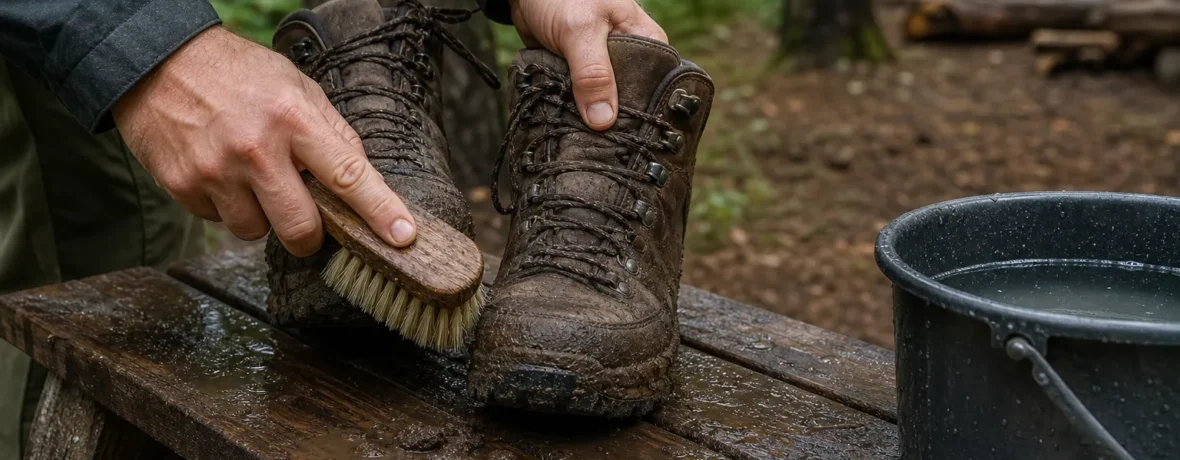
How to clean hiking boots without wrecking them: remove the laces and insoles, brush off dry mud, scrub with lukewarm water and boot cleaner, rinse lightly, then air-dry at room temperature for 24–48 hours. Do not use a washing machine, harsh detergent, direct heat, or heavy oils on waterproof membranes.
How to clean hiking boots step by step?
Clean them by hand with water, a soft brush, and footwear-safe cleaner.
Mud is not harmless. It holds grit against stitching, dries leather out, blocks breathability, and can grind away at fabric panels every time the boot flexes. Salt, trail chemicals, animal waste, and fine volcanic dust are worse. The fix is simple: clean your boots before the mess becomes part of the boot.
- Soft boot brush or old toothbrush
- Clean sponge or microfiber cloth
- Lukewarm water, not hot water
- Footwear cleaner made for leather, suede, nubuck, or waterproof footwear
- Newspaper, paper towels, or a boot dryer with no heat
- Leather conditioner or waterproofing treatment matched to the upper material
- Remove the laces. Pull them all the way out so you can clean the tongue, eyelets, and lace hooks. Wash laces separately in warm water with mild soap, then rinse and hang them to dry.
- Take out the insoles. Insoles trap sweat and trail funk. Remove them before cleaning so the boot dries faster and the inside does not sour.
- Let heavy mud dry, then knock it loose. If the boots are caked, let the mud firm up first. Bang the soles together outside and brush off the chunks. Wet, sticky clay just smears deeper into seams.
- Brush the outsole. Dig pebbles and packed dirt out of the lugs with a stiff brush or the blunt end of a tent stake. Clean tread grips better. Simple.
- Dampen the upper. Use lukewarm water and a sponge. You want the surface wet enough to lift grime, not soaked like a bucket sponge.
- Apply boot cleaner. Use a cleaner designed for outdoor footwear. REI’s boot-care guidance recommends avoiding bar soap and detergents because additives can harm leather and waterproof membranes; see its hiking boot cleaning guide.
- Scrub gently. Work in small circles. Use a toothbrush around stitching, rand edges, lace hooks, and the welt. Don’t attack nubuck or suede with a wire brush.
- Rinse with clean water. Wipe away cleaner with a damp cloth or sponge. Do not blast the boot under a pressure washer or force water into the collar.
- Clean the inside only if needed. If the lining smells rough, wipe it with a damp cloth. For waterproof boots, avoid flooding the interior unless the manufacturer says it is safe.
- Dry slowly. Stuff the boots with newspaper or paper towels and swap the paper after a few hours. Keep the boots at room temperature with airflow.
- Recondition or reproof. Once the boots are clean and slightly damp or fully dry—follow the product label—apply the right conditioner or waterproofing treatment.
The whole job takes 15–25 minutes of hands-on work for a pair that saw normal trail mud. Drying takes longer. Give leather boots 24–48 hours before you hike in them again.
Can you wash hiking boots in the washing machine?
No, you should not wash hiking boots in a washing machine.
A washer is too rough for most hiking boots. The drum can beat up midsoles, bend shanks, loosen glue, crease leather, and force water deep into places that dry slowly. Hot water and detergent add more trouble. Even if the boots survive one cycle, the damage may show up later as delamination, cracked leather, peeling rands, or a waterproof boot that suddenly feels swampy.
This is the better rule: hand wash the outside, wipe the inside, and dry the boots slowly. If the care label inside the tongue says something different, follow that label. The boot maker wins every argument.
| Cleaning method | Use it? | Why |
|---|---|---|
| Soft brush + lukewarm water | Yes | Safe for leather, fabric, rubber, and most membranes |
| Footwear-specific cleaner | Yes | Cleans grime without stripping finishes when used as directed |
| Washing machine | No | Can damage glue, midsoles, leather, and waterproof construction |
| Pressure washer | No | Can drive water and grit into seams and linings |
How to wash hiking boots without damaging leather?
Wash leather boots gently, then replace the moisture you removed.
Full-grain leather is tough, but it is still skin. If you strip it, bake it, or drown it in the wrong product, it gets stiff and cracks. Clean leather with a damp cloth, a soft brush, and leather-safe cleaner. Skip dish soap, laundry detergent, saddle soap unless the boot maker approves it, and household degreasers.
After cleaning, let the leather dry until it is damp or dry according to the conditioner label. Then apply a thin, even coat of leather conditioner or wax made for hiking footwear. Thin matters. A heavy coat can soften the boot too much, reduce breathability, and attract grit.
What should you use on full-grain leather boots?
Use leather cleaner and a boot conditioner or wax made for outdoor leather footwear.
Full-grain leather can usually handle a little more conditioning than nubuck or suede, but it still does not need to look greasy. Work product into flex points, seams, and the toe crease. Wipe off extra. If the boot looks wet and oily 10 minutes later, you used too much.
What should you use on nubuck or suede hiking boots?
Use a nubuck-safe cleaner and a spray-on waterproofing treatment.
Nubuck and suede have a brushed surface. Heavy waxes and oils can flatten that texture and darken the boot permanently. Use a suede or nubuck brush after drying to lift the nap. If color matters to you, test any cleaner or spray on a hidden spot first.
How do you clean waterproof hiking boots with a membrane?
Clean waterproof boots by treating the outer material gently and protecting breathability.
The waterproof membrane sits inside the boot, usually behind leather, fabric, or a mixed upper. You are not scrubbing the membrane directly when you clean the outside. Still, the wrong cleaner can clog the upper, leave residue, or weaken the materials that protect the membrane.
GORE-TEX recommends removing laces, shaking out debris, cleaning the exterior with lukewarm water and a cloth or brush, and checking the footwear manufacturer’s care instructions before applying treatments; see the official GORE-TEX footwear care instructions.
- Do use lukewarm water.
- Do use a cleaner labeled safe for waterproof footwear.
- Do rinse away cleaner residue.
- Do dry boots at room temperature.
- Do not use bleach.
- Do not use heavy oils or animal fats.
- Do not put waterproof boots next to a campfire, heater, or wood stove.
If water no longer beads on the outside, the boot may not be “leaking.” The face material may just be wetting out. When the upper soaks up water, the boot feels colder and breathes worse. Clean it first. Then reapply a waterproofing treatment made for the boot’s material.
How do you clean hiking shoes?
Clean hiking shoes the same way as boots, but go lighter on structure and drying time.
Low-cut hiking shoes often use more mesh, welded overlays, and lighter foam than backpacking boots. That makes them quick to clean, but also easier to damage with heat or rough scrubbing. Remove laces and insoles, brush off dry dirt, wash the upper with a damp sponge and footwear cleaner, rinse with a clean cloth, and air-dry.
For mesh-heavy shoes, spend extra time flushing grit out of flex points near the forefoot. Sand hides there. Every step bends that sand into the fabric like a tiny file.
If your hiking shoes are waterproof, treat them like waterproof boots. If they are non-waterproof trail shoes, they can handle more interior rinsing, but they still should not go in the dryer. Heat can warp foam midsoles and loosen adhesives.
What is the best cleaner for hiking boots?
The best cleaner is one made for the boot’s upper material.
A good boot cleaner removes mud, sweat, and trail residue without stripping leather or clogging waterproof-breathable fabrics. Nikwax gives separate footwear care recommendations for fabric/leather combinations and leather footwear; its footwear care advice is a useful match-the-product-to-the-material reference.
| Boot material | Best cleaner | Best follow-up |
|---|---|---|
| Full-grain leather | Leather footwear cleaner | Leather conditioner or wax, thin coat |
| Nubuck or suede | Nubuck/suede-safe cleaner | Spray-on waterproofing, suede brush after drying |
| Fabric and synthetic | Technical footwear cleaner | Fabric-safe water-repellent treatment |
| Waterproof membrane boots | Membrane-safe footwear cleaner | Material-specific DWR or waterproofing treatment |
What should you avoid? Bleach, solvents, gasoline, harsh degreasers, scented laundry detergent, fabric softener, and thick grease unless the boot maker specifically calls for it. If a cleaner smells like it belongs in a garage, keep it away from your boots.
How do you dry hiking boots after cleaning?
Dry hiking boots slowly with airflow and no direct heat.
This is where many good boots get ruined. Wet leather near a heater can shrink, harden, and crack. Glue can soften. Rubber can deform. A campfire can cook one side of a boot before the inside is even close to dry.
- Open the tongue wide.
- Remove the insoles and dry them separately.
- Stuff the boots with newspaper or paper towels.
- Replace the paper after 2–4 hours if it feels wet.
- Set the boots in a ventilated room, shaded porch, or gear area.
- Use a no-heat boot dryer if you have one.
Do not rush this. A damp boot in the morning is annoying. A cracked boot is expensive. If you hike often in wet country, owning two pairs of trail footwear can save your boots and your feet.
How often should you clean hiking boots?
Clean them after muddy, salty, sandy, or manure-heavy hikes, and brush them after dry hikes.
You do not need a full wash after every mellow walk on clean dirt. You do need to remove grit before it settles into seams and flex zones. After a dry hike, knock the soles together and brush the uppers. After a wet or muddy hike, do the full cleaning routine before the boots dry into bricks.
Salt deserves fast action. Winter road salt, coastal salt spray, and dried sweat can pull moisture from leather and leave stains. Wipe salt off with clean water the same day if you can.
- Dry dust: brush after the hike.
- Sticky mud: dry, knock off, then wash.
- Sand: brush seams, tongue folds, and outsole edges.
- Salt: wipe with clean water as soon as possible.
- Odor: remove insoles, air out, and wipe the lining.
Should you waterproof hiking boots after cleaning?
Yes, if water no longer beads on the upper or the leather looks thirsty.
Cleaning removes grime, but it can also remove some surface water repellency. Once the boots are clean, check the upper. Sprinkle a little water on it. If the water beads and rolls away, you can wait. If it darkens the leather or soaks into fabric, reproof the boots.
Use the right product for the material. A wax made for smooth leather is not the right choice for mesh hiking shoes. A spray made for fabric may not condition leather. LOWA’s official boot care tips also warn against using oils and fats that can make leather too soft and reduce breathability.
How to apply waterproofing without overdoing it
Apply one light coat, let it absorb, then wipe off extra.
More product does not mean more protection. Too much wax or conditioner can soften leather, clog pores, collect dust, and change the way the boot supports your foot. Read the label and match the treatment to clean leather, nubuck, suede, fabric, or mixed-material footwear.
What mistakes ruin hiking boots during cleaning?
The big mistakes are heat, harsh chemicals, soaking, and over-conditioning.
Most boot damage comes from trying to clean faster. Fast is the enemy here. Boots are layered: upper, lining, membrane, midsole, outsole, rand, glue, stitching. Treat them like a piece of gear, not a dirty plate.
- Using a washing machine: too much force, too much water, too little control.
- Drying by fire: cracks leather, melts glue, and can warp rubber.
- Using hot water: rough on leather, finishes, and adhesives.
- Scrubbing suede with a stiff wire brush: damages the nap.
- Leaving mud on for weeks: lets grit and salts sit against the boot.
- Smearing on heavy oil: can soften leather and reduce breathability.
- Storing boots damp: invites odor, mildew, and material breakdown.
Storage matters after cleaning, too. Keep boots in a cool, dry place away from sun and heaters. Do not store them in a sealed plastic tote while damp. Do not leave them in a hot car all summer. Open the tongues, loosen the laces, and let the boots breathe.
Related reading
- How to Clean a Tent (Including Mold and Mildew)
- Hiking Shoes vs Hiking Boots: Which Should You Buy?
- How Should Hiking Boots Fit? The Thumb Rule and Other Checks
- How to Break In Hiking Boots (and How Long It Takes)
FAQ
Can I use dish soap to clean hiking boots?
No, dish soap is not the best choice for hiking boots. It can strip leather oils and leave residues that interfere with water repellency, so use a footwear cleaner matched to your boot material.
Can I soak my hiking boots in a bucket?
No, do not soak leather or waterproof hiking boots unless the manufacturer specifically allows it. A full soak can saturate leather, linings, foam, and glue layers, which makes drying slow and raises the risk of damage.
How long do hiking boots take to dry after cleaning?
Most hiking boots need 24–48 hours to dry at room temperature. Heavy leather boots, cold rooms, and soaked interiors can push drying beyond 48 hours.
Can I put hiking boots in the dryer?
No, do not put hiking boots in a dryer. Dryer heat can shrink leather, warp midsoles, loosen adhesives, and damage waterproof construction.
How do I get smell out of hiking boots?
Remove the insoles, air the boots fully, and wipe the lining with a damp cloth. Let everything dry completely before storage, and replace worn insoles if odor stays trapped in the foam.
Do waterproof boots still need cleaning?
Yes, waterproof boots still need cleaning. Dirt and oils can reduce breathability and stop the outer material from shedding water, even when the internal membrane still works.