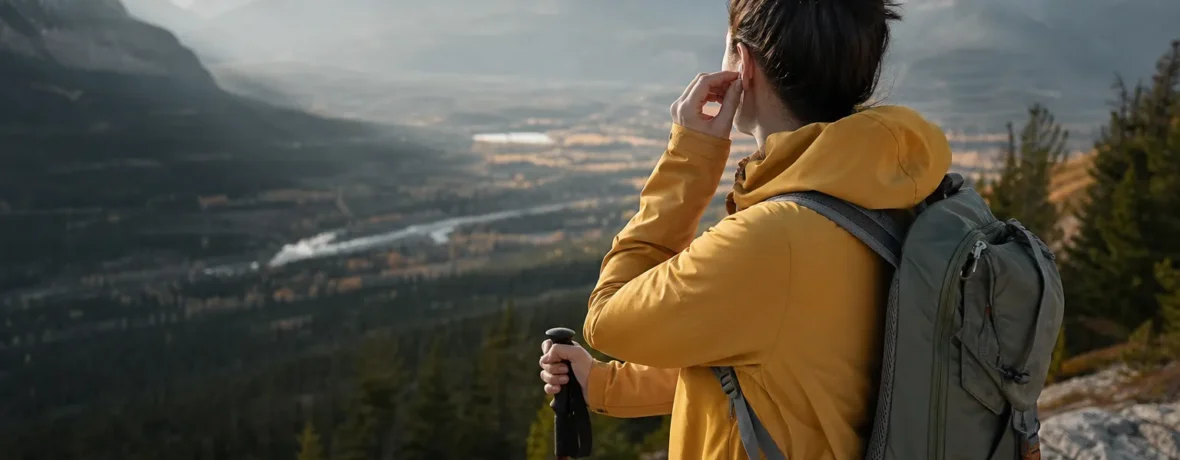
Should you hike with headphones? Yes, but only with limits: use one earbud, low volume, and no noise cancellation. Skip them entirely in bear country, on road walks, near bikes or horses, in storms, and anywhere you need full hearing. Speakers are worse. Keep your soundtrack private.
The trail is not a monastery. You do not have to hike in noble silence with only your thoughts and a suspicious granola bar for company. Music, podcasts, audiobooks, language lessons, voice memos—fine. You are still allowed to be a modern human in the woods.
But here is the line: your entertainment cannot make you less aware, less courteous, or less safe. That means headphones can work on some trails, in some conditions, at some volumes. They are a bad idea in others. The adult answer is not “never.” It is “earn the privilege.”
Should you hike with headphones on every trail?
No.
Headphones belong on low-risk trails where you can still hear what matters: other hikers, bikes, horses, thunder, water, wind, a rattlesnake, a loose dog, a falling branch, or someone behind you saying, “On your left.” If your audio blocks those cues, it is not background sound anymore. It is a blindfold for your ears.
As of November 2026, the National Park Service’s bear-safety messaging tells visitors to stay alert, make noise in low-visibility areas, hike in groups when possible, and avoid headphones on trails in bear country. That is not fussy ranger talk. That is field-tested common sense. If you are moving through brush, near loud water, around blind corners, or anywhere animals might be surprised at close range, your ears are part of your safety system. Read the NPS guidance on being bear aware.
On a sunny, popular, open trail with clear sightlines? One earbud at low volume is usually reasonable. On a narrow multi-use trail where bikes come fast? Pull it out. On a road walk? Pull it out. During a thunderstorm? Pull it out and get serious.
Is it safe to hike with one earbud?
Usually, yes.
One earbud is the best compromise because it leaves one ear open to the world. You still get your playlist. You still hear footsteps, voices, moving water, wind shifts, and the crunch of tires on gravel. It is not perfect, but it is far better than sealing both ears and pretending the trail is your living room.
Use the “conversation test.” If someone walking 10 ft [3 m] behind you speaks in a normal voice and you cannot understand them, your audio is too loud or too isolating. Lower the volume or take the earbud out.
Here is the simple hierarchy:
| Setup | Trail awareness | Best use |
|---|---|---|
| No headphones | Best | Bear country, road walks, storms, technical terrain |
| One earbud, low volume | Good | Easy trails, solo motivation, quiet podcasts |
| Bone-conduction headphones | Good to fair | Open trails where you want both ear canals uncovered |
| Two earbuds with noise cancellation | Poor | Treadmills, airports, not trails |
Are noise-canceling headphones bad for hiking?
Most of the time, yes.
Noise cancellation is built to erase the exact thing hikers need: ambient sound. That is wonderful beside a leaf blower. It is dumb on a trail where useful information arrives as noise.
Do not use active noise cancellation on trails shared with mountain bikes, horses, runners, hunters, or vehicles. Do not use it in wildlife habitat where surprise encounters are a concern. Do not use it when water, wind, or terrain already makes hearing harder. If your device has transparency mode, that is better than cancellation, but it is not magic. Electronics can distort distance and direction. Your naked ears still win.
Also think about hearing health. The CDC’s hearing-loss prevention guidance says to turn the volume down and move away from loud noise when possible. The National Institute on Deafness and Other Communication Disorders lists listening to music players at high volume through earbuds or headphones as a recreational risk for noise-induced hearing loss. Trail miles can stack up into hours of listening, so low volume is not just polite. It protects your ears.
What is the best way to hike with headphones safely?
Use a simple system.
Do not make a fresh judgment every 12 minutes. Set your rules before you start, then follow them when you are tired, hungry, or chasing the last mile [1.6 km] back to the trailhead.
- Start with one ear open. One earbud only, or bone-conduction headphones at low volume.
- Keep volume under conversation level. If you cannot hear a hiker behind you, it is too loud.
- Pause audio at junctions. You need your brain for signs, maps, cairns, and route choices.
- Go silent in higher-risk zones. Road walks, creek crossings, talus, ladders, cliffs, exposed ridges, storms, hunting areas, and dense brush get full attention.
- Remove headphones when passing others. A quick “Hey, how’s it going?” solves more trail friction than any etiquette lecture.
- Tell your group what you are doing. If you are hiking with others, do not disappear into audio without saying so.
- Set phone controls before moving. Fumbling with a screen on rocky trail is how ankles get betrayed.
Is it rude to play music out loud while hiking?
Yes.
A Bluetooth speaker on a trail is the worst of both worlds: it annoys people and still does not make you meaningfully safer. The National Park Service’s Leave No Trace guidance says to be considerate of other visitors and let nature’s sounds prevail. See the NPS page on the Leave No Trace Seven Principles.
That does not mean every trail has to sound like a cathedral. People talk. Kids yell. Trekking poles click. Someone’s snack wrapper performs a full drum solo in the wind. Normal human noise is part of public land.
Speakers are different. They spread your taste across switchbacks, campsites, overlooks, and everyone else’s hard-earned quiet. You may love your playlist. Good. Wear one earbud. The rest of the trail did not subscribe.
Can headphones make solo hiking safer?
Sometimes, but not by blocking sound.
For some hikers, audio helps with pace, confidence, and nerves. A podcast can make a long forest road feel less eerie. Music can help you keep moving on a dull climb. That mental benefit is real.
But safety does not come from zoning out. It comes from staying alert enough to notice changes. If audio keeps you calm while you remain aware, fine. If it makes you miss trail users, weather, wildlife, or your own fatigue, it is working against you.
Solo hikers should be more conservative, not less. You have no partner listening while you disappear into a chapter. Keep one ear open, check behind you now and then, and go silent when the setting asks for it.
When should you never hike with headphones?
Skip them when hearing is part of the plan.
Leave headphones in your pack in these situations:
- Bear country, especially dense brush, berry patches, salmon streams, or loud creeks
- Road walks and trailheads with vehicle traffic
- Multi-use trails with bikes, horses, or fast runners
- Hunting areas or seasons where legal hunting may occur
- Storms, high wind, falling branches, or poor visibility
- Scrambles, steep snow, talus, cliffs, ladders, chains, or exposed ridges
- Group hikes where others need to communicate with you
- Any moment when your gut says, “Pay attention”
When to see a doctor
Get medical help right away for sudden hearing loss.
Headphones on one hike are not the usual cause of a medical emergency, but hearing symptoms deserve respect. The Mayo Clinic’s hearing-loss guidance says sudden hearing loss, especially in one ear, needs prompt medical attention. Do not wait for it to “clear up” on its own.
Make an appointment with a healthcare professional if ringing, muffled hearing, ear pain, dizziness, or trouble understanding speech sticks around after loud exposure. This article is trail advice, not a diagnosis. If your ears are sending warning signals, listen to them.
Related reading
- Off-Leash Dogs on Trails: A Debate
- Should National Parks Charge More?
- Should You Geotag Your Hiking Photos?
- Why Uphill Hikers Have the Right of Way
FAQ
Should beginners hike with headphones?
Beginners should hike without headphones at first. You are still learning trail sounds, foot placement, pacing, and how other users pass, so give yourself full awareness until those habits feel automatic.
Are AirPods okay for hiking?
AirPods can be okay if you use one earbud, low volume, and no noise cancellation. Take them out near traffic, bikes, horses, wildlife habitat, storms, or tricky footing.
Are bone-conduction headphones better for hiking?
They are often better than sealed earbuds because they leave your ear canals open. Still, keep the volume low; loud audio can mask subtle sounds even when your ears are uncovered.
Should I wear headphones in bear country?
No, not in active bear country. Stay alert, make human noise in low-visibility areas, and keep your hearing free so you are less likely to surprise wildlife at close range.
Is hiking with a speaker better than headphones?
No. A speaker is worse trail etiquette and does not replace alert hiking, especially around wildlife; use one earbud if you want audio and keep it to yourself.
What is the bottom line on hiking with headphones?
Use headphones as a light layer, not a wall. One earbud, low volume, and situational judgment make sense; two sealed ears and noise cancellation do not.