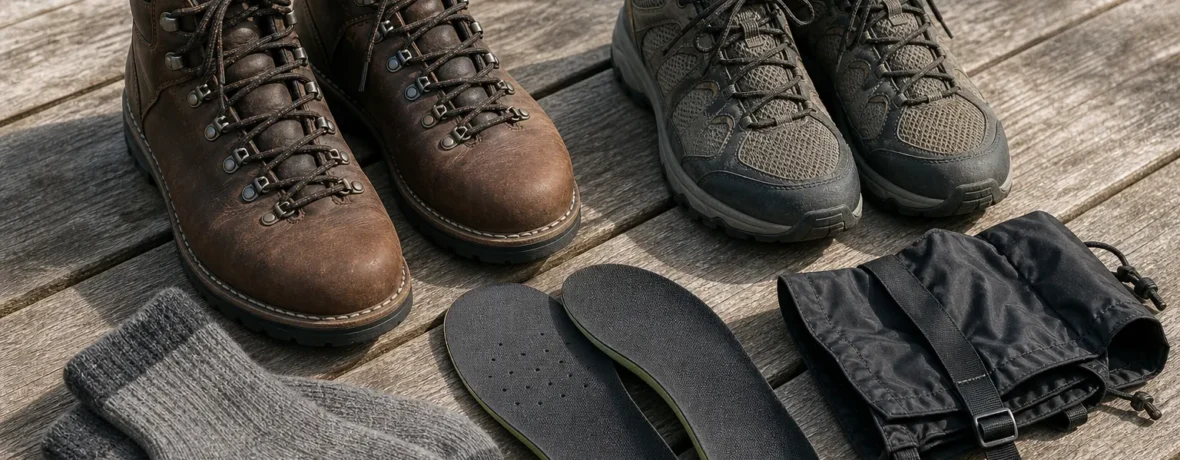
No, you do not always need hiking boots. For most maintained trails under 10 miles [16 km] with a light daypack, good trail shoes or trail runners work well. You do need boots when you carry heavy loads, hike off-trail, cross snow, deal with sharp rock, or need extra protection.
That is the straight answer to “do you really need hiking boots.” The longer answer is where hikers waste money, wreck their feet, and repeat old advice that stopped being useful years ago.
Boots are not magic. Trail runners are not reckless. Your feet do not care what the catalog says. They care about fit, traction, load, terrain, weather, and how your body moves after mile 7 [11 km]. Pick for the hike in front of you, not for the picture in your head.
Do you really need hiking boots for day hikes?
Usually, no.
If you are walking a dry, maintained trail with a small daypack, hiking boots are optional. A grippy pair of trail shoes can be lighter, cooler, faster to dry, and less tiring over a moderate day. That matters. Every ounce on your feet gets lifted thousands of times.
The National Park Service tells hikers to avoid heels, open-toed shoes, and flip-flops, and to wear sturdy footwear with good traction for hiking conditions. That does not mean every hiker needs a stiff leather boot for every trail. It means your shoes should match the surface and the risk. See the NPS Hike Smart guidance for its plain advice on proper footwear and planning.
For day hikes, the better question is not “boots or no boots?” It is this: will your footwear keep you stable, comfortable, and protected for the whole route?
Choose trail shoes for:
- Maintained dirt trails
- Warm, dry weather
- Daypacks under 15 pounds [7 kg]
- Fast-paced hiking
- Feet that blister in stiff boots
- Stream crossings where quick drying matters
Choose boots for:
- Rocky trails that beat up your soles
- Cold, wet, or muddy routes
- Heavy packs over 25 pounds [11 kg]
- Off-trail travel
- Snow travel with traction devices
- Long descents where toe protection helps
Simple. Not fashionable. Useful.
Are hiking boots better than trail runners?
Sometimes, but not by default.
Boots are better when protection matters more than agility. Trail runners are better when comfort, speed, breathability, and ground feel matter more than armor. That is the trade.
| Footwear | Best for | Tradeoff |
|---|---|---|
| Hiking boots | Heavy packs, rough trails, mud, cold, sharp rock | Heavier, hotter, slower to dry |
| Trail runners | Day hikes, fast hiking, warm weather, maintained trails | Less underfoot protection and shorter lifespan |
| Low hiking shoes | Moderate trails, mixed terrain, hikers who want structure without height | Less ankle coverage than boots |
There is a stubborn myth that boots automatically prevent ankle injuries. The truth is less neat. A tall collar can give some hikers a feeling of support, and a stiff sole can reduce foot fatigue under a load. But if a boot fits poorly, slips at the heel, or makes you clumsy, it can create problems instead of solving them.
For ankle sprains, medical guidance puts heavy emphasis on function, rehab, and support when needed. The NIH’s StatPearls overview of acute ankle sprain discusses braces, taping, and rehabilitation for injury management. It does not hand hikers a free pass to assume tall boots make ankles invincible.
So no, hiking boots are not “better.” They are better for some hikes and some feet. That is the answer most gear debates try to avoid.
What shoes should you wear hiking if you do not wear boots?
Wear trail shoes with traction, structure, and enough protection for the route.
Not gym sneakers with smooth soles. Not old running shoes with blown-out foam. Not sandals unless the trail and conditions make that choice sensible and you accept the exposure.
A good non-boot hiking shoe should have:
- A lugged outsole that grips dirt, gravel, and rock
- A secure heel with minimal slipping
- Enough toe room for descents
- A midsole that does not fold like cardboard under your foot
- A rock plate or firm underfoot feel for rocky trails
- Breathable uppers for warm weather
- A fit that works with your hiking socks
The big advantage of trail runners is freedom. They flex. They breathe. They dry faster after creek crossings. Many hikers feel fresher in them because they are not dragging heavy footwear up every switchback.
The downside? They wear faster. They can let sharp rocks bruise your feet. They do not block mud, snow, cactus, scree, or ankle-biting debris as well as boots. If you hike in them like they are mountaineering boots, you will be disappointed.
That is not a shoe problem. That is a judgment problem.
When are hiking boots actually necessary?
Hiking boots are necessary when the conditions punish lightweight footwear.
Think rough, wet, cold, steep, loose, or loaded. Boots shine when your feet need protection more than they need ventilation.
Boots make sense in these situations:
- You are carrying a heavy backpack. A stiffer boot can help under a load, especially on uneven ground.
- You are hiking off-trail. Brush, talus, deadfall, and hidden holes are harder on feet and ankles than packed dirt.
- The trail is rocky for miles. A protective sole can save your feet from repeated impact.
- You expect mud, slush, or shallow snow. A higher upper helps keep debris and moisture out longer.
- You need compatible traction. Some traction devices and snow travel setups work better with stiff footwear.
- Your feet fatigue in soft shoes. Some hikers need more structure. No shame in that.
There are also park- and route-specific cases where boots are strongly recommended. For example, Denali National Park’s off-trail ranger-led hikes recommend supportive boots with rugged tread and ankle support because the uneven terrain adds strain to feet and ankles. The park says this in its Discovery Hikes guidance.
That is the kind of advice worth listening to. It is tied to terrain, not tradition.
Do hiking boots prevent blisters?
No, fit and friction control prevent blisters better than boot height does.
Boots can prevent blisters if they fit well, are broken in, and work with your socks. They can also cause savage blisters if they are stiff, narrow, too loose in the heel, or too short on descents.
Blisters usually come from friction, pressure, heat, and moisture. Mayo Clinic’s blister first-aid guidance points to rubbing inside shoes as a common cause and recommends steps such as dry socks and protective padding to reduce friction.
Here is the practical blister checklist:
- Try hiking shoes on late in the day, when feet are slightly swollen.
- Wear the socks you actually hike in.
- Check for heel lift before buying.
- Leave enough toe room for downhill walking.
- Use moisture-wicking socks, not thick cotton socks.
- Stop early when you feel a hot spot.
- Carry blister tape or moleskin on hikes longer than a short local loop.
Breaking in boots still matters, but do not romanticize it. A boot that needs pain to become tolerable is probably the wrong boot. Stiff leather boots may soften. Bad fit rarely becomes good fit.
How do you choose between hiking boots and trail shoes?
Start with the trail, then the load, then your feet.
Do not start with brand. Do not start with what your friend wears. Do not start with the most expensive boot on the wall.
Use this simple process:
- Look at the surface. Smooth dirt points toward trail shoes. Sharp rock, snow, mud, and off-trail travel point toward boots.
- Weigh your pack. A light daypack gives you options. A heavy overnight pack pushes you toward more structure.
- Check the weather. Hot and dry favors breathable shoes. Cold and wet favors protective footwear.
- Think about your injury history. If you have recurring ankle problems, talk with a medical professional and consider braces or rehab, not just taller boots.
- Test the fit on a slope. Your toes should not slam forward. Your heel should not pump up and down.
- Walk before you commit. Wear new footwear on short local hikes before taking it deep into the backcountry.
If you are between sizes, prioritize downhill comfort. Toenails lose arguments with tight toe boxes. Every time.
When to see a doctor
See a doctor when foot or ankle pain is severe, persistent, worsening, or tied to an injury.
Gear advice has limits. If you roll an ankle and cannot bear weight, if swelling is significant, if numbness or deformity appears, or if pain does not improve with rest, get medical care. For blisters, seek care if you see signs of infection such as increasing redness, warmth, swelling, pus, or worsening pain. Mayo Clinic’s blister guidance also recommends avoiding puncturing most blisters unless necessary and keeping the area clean and protected.
If you have diabetes, circulation problems, neuropathy, immune suppression, or a history of foot ulcers, treat foot problems more seriously and speak with a clinician before pushing through pain on trail.
So, should you buy hiking boots?
Buy hiking boots if your hiking demands boots.
That is the position. Not because boots look outdoorsy. Not because someone at a gear shop says “real hikers wear boots.” Not because your first scoutmaster said cotton socks and leather boots were the only way to survive a 5-mile [8 km] loop.
If you mostly hike local trails, carry a light pack, and move better in flexible shoes, skip the boots. Buy good trail shoes. Spend the saved weight on better socks, blister care, rain gear, or gas money to the trailhead.
If you backpack, hike in rough mountains, travel off-trail, or beat up lightweight shoes in one season, buy boots. Get real protection. Get a fit that does not punish you. Accept the weight because the terrain justifies it.
The smartest hikers are not loyal to boots or trail runners. They are loyal to their feet.
Related reading
- Best Waterproof Hiking Boots
- Best Hiking Boots for Women
- Best Hiking Boots for Wide Feet
- Best Hiking Boots for Seniors
FAQ
Do beginners need hiking boots?
No, beginners do not need hiking boots for easy, maintained trails. Beginners need footwear with good traction, a secure fit, and enough comfort to finish the hike without hot spots.
Can you hike in regular sneakers?
Yes, on short, dry, easy trails, regular sneakers can work. But smooth soles, weak support, and poor wet traction make them a bad choice for steep, rocky, muddy, or longer hikes.
Are waterproof hiking boots a good idea?
Yes, waterproof boots are useful in cold rain, mud, shallow snow, and wet brush. In hot weather or repeated stream crossings, they can trap sweat and dry slowly, which raises blister risk.
How much ankle support do hiking boots give?
Some, but not as much as many hikers think. A boot collar can add structure and confidence, but fit, strength, balance, terrain, fatigue, and pack weight matter too.
Should hiking boots feel tight at first?
No, hiking boots should feel secure, not tight. Your heel should stay mostly in place, your toes should have room on descents, and no spot should pinch or burn in the store.
What is the best footwear for most day hikes?
For most day hikes, the best footwear is a lightweight trail shoe or trail runner with good tread and a comfortable fit. Move up to boots when the route gets rough, wet, cold, or loaded.