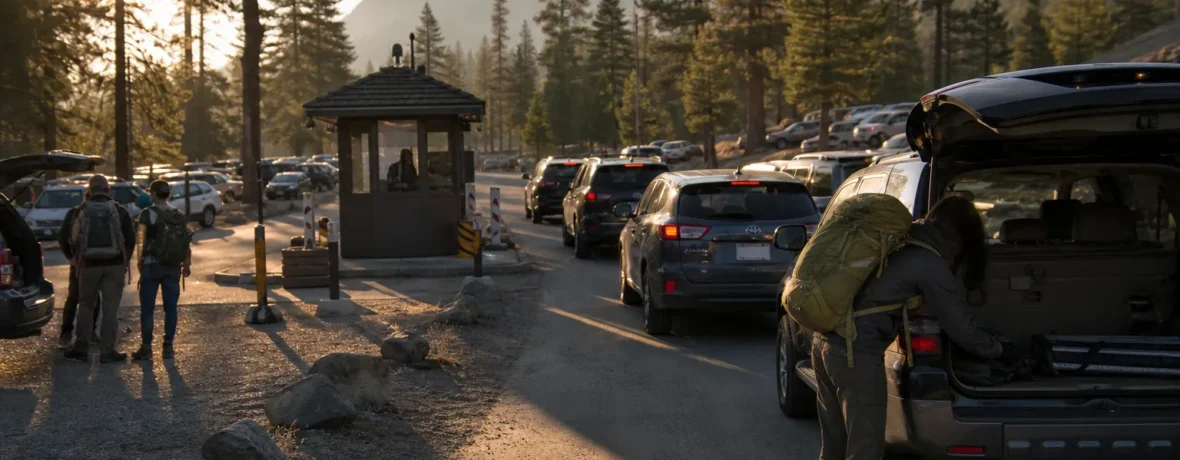
Should national parks charge more? Yes—but not across the board. Keep the resident annual pass at $80, charge more at the busiest parks and peak times, keep kids and need-based access protected, and make every added dollar visible on trails, toilets, shuttles, and ranger staffing.
Should national parks charge more?
Yes, national parks should charge more in the right places, not everywhere.
A blanket price hike would be lazy. It would punish the family driving to a quiet battlefield, the hiker visiting a lesser-known monument, and the local who uses a park as a backyard trailhead. That is not the fix.
The fix is targeted pricing. Busy, high-demand parks in peak season should cost more than quiet sites with open parking lots and empty picnic tables. A sunrise permit at a jammed trailhead is not the same product as a winter walk through a lightly visited historic site. Treating them the same makes no sense.
As of January 2026, the National Park Service lists common private-vehicle entrance fees of $30 to $35 at several marquee parks, with some parks charging less or nothing at all through its official entrance-fee list. (home.nps.gov) That is still cheap when you split it across a carload for a week. It is cheaper than many ski-lift tickets, theme-park parking lots, and one mediocre dinner near the interstate.
But cheap is not the same as fair. The fee should match pressure. If a park is bursting at the seams, the price should help manage demand and pay for the damage that demand creates.
Why do national parks charge entrance fees?
National parks charge entrance fees to help pay for visitor services and park improvements.
Your fee is not supposed to vanish into a foggy federal vault. Under the Federal Lands Recreation Enhancement Act, the National Park Service says at least 80% of recreation-fee funding stays in the park where it is collected, while the remaining share helps parks that collect little or no fee revenue; NPS explains this on its Your Fee Dollars at Work page. (nps.gov)
That matters. A fee increase is easier to swallow when you can see the result under your boots. A rebuilt footbridge. A safer overlook. Clean vault toilets. A shuttle that keeps 300 cars out of a canyon. A trail crew cutting drainage before the next thunderstorm turns your route into a trench.
If higher fees just patch unrelated budget holes, hikers should push back hard. If higher fees rebuild trails and keep rangers in the field, that is a different story.
How much do national parks cost as of November 2026?
As of November 2026, costs vary widely by park, pass type, residency, and vehicle.
| Fee type | Verified amount | Best use |
|---|---|---|
| Resident America the Beautiful annual pass | $80 as of January 2026 | U.S. residents visiting multiple federal sites |
| Non-resident America the Beautiful annual pass | $250 as of January 2026 | International visitors making a multi-park trip |
| Typical private vehicle fee at many major parks | Often $30-$35 as of January 2026 | One park visit by car |
| Nonresident fee at 11 listed national parks | $100 per non-U.S. resident age 16+ as of July 2026 | High-demand icon parks without a non-resident annual pass |
The National Park Service says the resident annual pass is $80 and the non-resident annual pass is $250 through its official entrance pass page. (nps.gov) NPS also states that, as of July 2026, non-U.S. residents age 16 and older pay a $100 nonresident fee at 11 listed parks unless covered by an eligible annual pass; those details appear on its nonresident fees page. (home.nps.gov)
That nonresident split is blunt, but the basic idea is defensible. U.S. taxpayers already support the system. International travelers are flying across oceans to see Yosemite, Yellowstone, Zion, and Grand Canyon. Asking them to pay more at the most strained places is reasonable.
Would higher park fees make hiking less accessible?
They could, unless the increase is designed with access protections from the start.
This is the strongest argument against raising fees. Public land should not become a velvet-rope playground. If the price goes up and nothing else changes, some hikers get squeezed out. That is a real problem.
So do not raise fees blindly. Build guardrails:
- Keep the resident annual pass affordable.
- Keep children admitted free where current policy allows it.
- Protect free or reduced-cost passes for eligible groups.
- Keep fee-free days for residents.
- Use timed-entry reservations only where crowding truly demands it.
- Make walk-in, bike-in, and shuttle access cheaper than private-vehicle access where practical.
Pricing should push behavior, not punish people. If the park wants fewer cars, charge more for cars and less for buses, shuttles, bikes, and feet. If the park wants less noon-time gridlock, charge less for early, late, and shoulder-season visits. If a place is empty in February, do not price it like July.
The public-land promise is not that every trip is free. It is that the system remains open, fair, and worth caring for.
What should higher national park fees pay for?
Higher fees should pay for the parts of a park you actually use and the resources your visit strains.
NPS reported more than 323 million recreation visits in 2025, including more than 13 million overnight stays, and 26 parks set visitation records that year. (nps.gov) That many boots, tires, tents, and snack wrappers do not float through a landscape without cost.
The National Park Service also says its infrastructure includes more than 70,000 assets, nearly 6,200 miles [9,978 km] of paved roads, more than 19,000 miles [30,578 km] of trails, and 24,000 buildings; those figures appear on its deferred maintenance and repairs page. (nps.gov) That is not a cute little trail club with a chainsaw and a bake sale. That is a national-scale maintenance machine.
Here is what higher fees should fund first:
- Trail drainage, tread repair, bridges, signs, and erosion control.
- Restrooms, water systems, trash handling, and wastewater fixes.
- Seasonal rangers, wilderness staff, and visitor-safety teams.
- Shuttles and parking systems that reduce roadside chaos.
- Accessible trails, overlooks, exhibits, and visitor information.
- Habitat protection around over-loved routes and viewpoints.
Skip the vanity projects. Hikers do not need shinier branding. They need passable trails, working toilets, honest signage, and enough staff on the ground to keep the place from turning into a theme park with worse plumbing.
How should the National Park Service raise fees without pricing people out?
The National Park Service should raise fees with a scalpel, not a shovel.
- Start with the busiest parks. Raise peak-season private-vehicle fees first at parks with chronic congestion, trail damage, and full lots.
- Protect the annual resident pass. Keep the $80 resident pass as the pressure valve for hikers who visit often.
- Price cars higher than people. Reward shuttles, bikes, and walk-ins where those options exist.
- Publish the receipts. Every park that raises a fee should post a plain-language list of completed projects paid for by that increase.
- Review the fee every three years. If the crowding eases or the project backlog shrinks, hold the line instead of ratcheting up forever.
This is where trust gets built or broken. A hiker paying $10 more at the gate should not need a policy degree to find out where the money went. Put it on the park website. Put it on a sign at the trailhead. Say it plainly: this bridge, this toilet, this shuttle, this trail crew.
The parks also need to be honest about demand. Some places are already rationed by parking at dawn, hotel prices in gateway towns, and permit lotteries. Pretending low entrance fees alone keep them accessible is fantasy. If a $5 or $10 increase funds a shuttle that lets more people reach a trail without circling for 90 minutes, that can improve access, not reduce it.
Who should pay more at national parks?
The heaviest users of the most crowded parks should pay more.
That means peak-season visitors at icon parks, private vehicles adding to congestion, commercial users profiting from public scenery, and international visitors at the most in-demand sites. It does not mean every casual visitor at every quiet park should get hit with a higher gate fee.
Residents should still carry a meaningful share. These are public lands, not someone else’s bill. But the pricing should recognize who already pays through taxes, who uses the system heavily, and where the strain is worst.
A fair system asks more from the visits that cost the park more. Simple.
Related reading
- Why National Parks Matter
- Underrated National Parks Worth Your Time
- How National Parks Began
- Are National Parks Too Crowded?
FAQ
Should national parks charge more for entrance?
Yes, but only at crowded parks, peak times, and high-impact access points. A flat nationwide increase would be unfair to hikers visiting quieter sites.
Should the America the Beautiful pass cost more?
Not for U.S. residents right now. As of January 2026, the resident annual pass is $80, and that price should stay as the affordable option for frequent public-land users. (nps.gov)
Do national parks keep the entrance fees?
Mostly, yes. NPS says at least 80% of recreation-fee funding stays with the collecting park, while the rest supports parks that collect little or no fee revenue. (nps.gov)
Would higher fees reduce overcrowding?
Sometimes, but fees alone will not fix crowding. The better tools are targeted peak pricing, shuttles, timed entry where needed, better trail design, and clear visitor information.
Are national parks still affordable?
For many visitors, yes, especially when a car fee is split among several people or when a resident annual pass is used often. For lower-income visitors, affordability depends on keeping free days, discount passes, and low-cost access options intact.