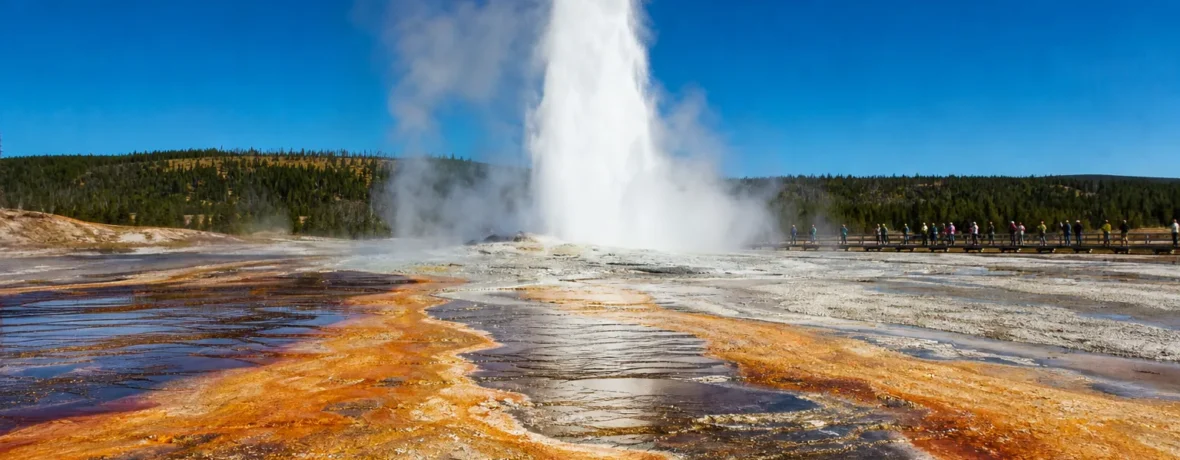
Start your Yellowstone trip with 3-5 classic stops: Old Faithful, Grand Prismatic Spring, Grand Canyon of the Yellowstone, Lamar or Hayden Valley, and one real hike. With 1 day, keep it tight. With 3 days, add Mount Washburn, Mammoth Hot Springs, and Yellowstone Lake.
What is the best way to plan what to do in Yellowstone national park?
Build your trip by region, not by wish list.
Yellowstone is huge, and the map can trick you. The Grand Loop looks simple until bison traffic, road work, parking crunches, snow, and a geyser eruption schedule chew up your day. Pick one major area each day, then stack nearby hikes and sights around it.
As of November 2026, Yellowstone’s standard entrance pass is listed by the National Park Service at $20-$35, depending on how you enter, and vehicle reservations are not required. Check the official Yellowstone fees and passes page before you go because fees and pass rules can change.
Road access is seasonal. As of October 2026, the NPS announced that most park roads and the West, South, and East entrances close to regular vehicle traffic on November 1 for winter operations, while the North Entrance to Northeast Entrance route remains open year-round, weather permitting. Before you drive, check the official Yellowstone road closure notice or current road status.
- Choose your base. West Yellowstone works well for geyser basins. Gardiner fits Mammoth and Lamar Valley. Canyon Village is best for waterfalls and central access.
- Pick one anchor sight per day. Old Faithful, Grand Prismatic, the canyon, Lamar Valley, Mammoth, or Yellowstone Lake.
- Add one hike nearby. Do not zigzag across the park for one trail unless you have time to burn.
- Start early. Wildlife is more active, parking is easier, and afternoon thunderstorms are less likely to catch you high on a ridge.
- Carry layers and bear spray. Yellowstone hiking is not a city-park stroll. Many trails sit above 7,000 feet [2,134 m].
What to see in Yellowstone National Park if you have one day?
See Old Faithful, Grand Prismatic Spring, and the Grand Canyon of the Yellowstone.
That is the strongest one-day trio for a first visit. It gives you geysers, color, steam, waterfalls, and canyon views without trying to “do” the whole park. You will still drive plenty. Keep your stops sharp.
A smart one-day route from the West Entrance looks like this:
- Morning: Old Faithful and Upper Geyser Basin boardwalks.
- Late morning: Midway Geyser Basin for Grand Prismatic Spring.
- Afternoon: Grand Canyon of the Yellowstone, including Artist Point and one rim walk.
- Evening: Hayden Valley if you still have daylight and patience for wildlife traffic.
If you enter from Gardiner, flip the script. Start with Mammoth Hot Springs, drive toward Norris, then choose either Old Faithful or the canyon. Not both unless you enjoy eating snacks in the car more than standing on trails.
What are the best easy hikes in Yellowstone?
The best easy hikes are short, scenic, and close to major sights.
Yellowstone is loaded with boardwalks, basin paths, lake trails, and waterfall walks. Easy does not mean careless. Thermal crust can break. Wildlife can appear near crowded parking lots. Weather can turn cold fast, even in summer.
| Hike | Distance | Best for | Area |
|---|---|---|---|
| Observation Point Trail | 1.6-2.2 miles [2.6-3.5 km] | Old Faithful from above | Upper Geyser Basin |
| Lone Star Geyser Trail | 4.8 miles [7.7 km] | Quiet geyser hike | Old Faithful area |
| Mystic Falls | Roughly 2.4 miles [3.9 km] out and back | Waterfall and creek scenery | Biscuit Basin |
| Storm Point Trail | 2.3 miles [3.7 km] | Lake views and meadows | Yellowstone Lake |
Observation Point is a fine first Yellowstone hike because it starts right behind one of the busiest spots in the park, then quickly gives you a little breathing room. Go after watching Old Faithful erupt, climb the switchbacks, and look back across the Upper Geyser Basin.
Lone Star Geyser is longer but mellow. The path follows the Firehole River and reaches a backcountry geyser that erupts on a rough natural rhythm. The NPS lists it as a 4.8-mile [7.7 km] easy there-and-back hike or bike route, with biking limited near the geyser. For current trail choices and conditions, use the official Yellowstone hiking page.
Mystic Falls is a crowd-pleaser. You start at Biscuit Basin, pass thermal features, then follow the creek to a 70-foot [21 m] waterfall. If you want more punch, add the overlook loop when conditions are dry and storms are not building.
What are the best hikes in Yellowstone for big views?
Mount Washburn, Bunsen Peak, and Seven Mile Hole deliver the biggest views.
These hikes are stronger medicine. More climbing. More exposure. More weather. More reward.
Mount Washburn
Mount Washburn is one of Yellowstone’s classic summit hikes. The trail climbs to broad views over forest, canyon country, and distant peaks. On a clear day, it feels like the whole park opens up under your boots.
Choose the route based on what is open and where you are already traveling. The Dunraven Pass side and Chittenden Road side are both popular when accessible. Snow can linger high into summer, and closures happen, so do not treat this hike as guaranteed until you check conditions.
Bunsen Peak
Bunsen Peak rises south of Mammoth Hot Springs and gives you a stout climb without taking the whole day. The round trip is commonly listed at 4.6 miles [7.4 km], with a climb of roughly 1,300 feet [396 m]. It is a good fit if you want a summit but do not want to commit to an all-day sufferfest.
The views stretch over Mammoth, Swan Lake Flat, the Gallatin Range, and the Yellowstone River country. Start early. The upper sections can feel hot and exposed in summer, then windy five minutes later. Yellowstone loves mood swings.
Seven Mile Hole
Seven Mile Hole is the canyon hike for strong hikers who want more than viewpoints. It drops from the rim toward the Yellowstone River, passing canyon views and thermal areas along the way. The full round trip is strenuous, and the return climb is the bill you pay for the descent.
Do this only if your group is fit, equipped, and honest about time. Carry more water than you think you need. Turn around if storms build. The canyon is no place to test your luck.
Where should you go for geysers and hot springs?
Go to Upper, Midway, Norris, and Mammoth for the best thermal variety.
Old Faithful gets the fame, but it is only one piece of the Upper Geyser Basin. Give yourself time to walk the boardwalks beyond the viewing benches. You will pass pools, vents, smaller geysers, and strange mineral edges that look painted by someone with no interest in subtlety.
Grand Prismatic Spring at Midway Geyser Basin is the color bomb. The boardwalk puts you close to the steam and runoff channels, while the Fairy Falls overlook trail gives the better elevated view. If you only see it from the boardwalk on a cold morning, steam may hide the full color. That is normal. Annoying, but normal.
Norris Geyser Basin feels more raw. More acidic. More restless. The Porcelain Basin boardwalk is short and surreal, while Back Basin takes you deeper into the weirdness. Stay on the boardwalk. Not next to it. Not “just for a photo.” On it.
Mammoth Hot Springs is different again. Terraces, steps, white mineral formations, and orange streaks. It is near the North Entrance, so it pairs well with Gardiner, Lamar Valley, or Bunsen Peak.
Where is the best place to see wildlife in Yellowstone?
Lamar Valley is the best wildlife area, with Hayden Valley close behind.
Lamar Valley is famous for wolves, bison, pronghorn, bears, coyotes, and long sightlines. It sits in the park’s northeast, so it takes commitment if you are based near Old Faithful. Go at dawn or near dusk. Bring binoculars. A spotting scope is even better.
Hayden Valley is easier to fold into a central Yellowstone trip, especially if you are visiting the canyon or Yellowstone Lake. Expect bison. Expect slow traffic. Expect people to stop in places that make no sense. Stay calm and do not block the road for a blurry phone photo.
The National Park Service tells visitors to stay at least 100 yards [91 m] from bears and wolves and at least 25 yards [23 m] from other wildlife. For bear country, each person should carry bear spray where it can be reached fast, not buried in a pack. Review the official Yellowstone safety guidance before hiking.
How many days do you need in Yellowstone?
You need 3 days for a strong first trip, and 5 days is better.
One day gives you highlights. Two days gives you a taste. Three days lets you breathe. Five days lets you hike, watch wildlife, and handle a weather delay without losing the trip.
| Trip length | Best plan | What you skip |
|---|---|---|
| 1 day | Old Faithful, Grand Prismatic, canyon | Long hikes and Lamar Valley |
| 2 days | Geysers day, canyon/wildlife day | Most summit hikes |
| 3 days | Add Mammoth or Yellowstone Lake | Deep backcountry |
| 5 days | Hike, wildlife watch, and slow down | Very little for a first visit |
A good 3-day plan looks like this: Day 1 for Old Faithful, Upper Geyser Basin, Grand Prismatic, and Fairy Falls overlook. Day 2 for Grand Canyon of the Yellowstone, Hayden Valley, and a rim hike. Day 3 for Mammoth Hot Springs, Lamar Valley, and Bunsen Peak or a shorter trail nearby.
What should you pack for hiking in Yellowstone?
Pack for bears, cold, sun, storms, and slow miles.
Yellowstone weather can flip fast. A sunny trailhead can turn into sleet higher up. Boardwalk sightseeing can feel casual until the wind starts cutting across an open basin. Bring the boring stuff. It saves the day.
- Bear spray for each adult, carried where you can grab it instantly
- Daypack with water, snacks, map, and headlamp
- Rain shell and warm layer, even in summer
- Sun hat, sunglasses, and sunscreen
- Sturdy hiking shoes or boots with traction
- Binoculars for wildlife watching
- Offline maps; cell service is limited
- Small first-aid kit
- Extra socks for muddy or wet trails
- Patience for bison jams
Day hiking does not require a permit in Yellowstone, but overnight backcountry camping does. If you plan to sleep away from frontcountry campgrounds, use the official Yellowstone backcountry camping permit information and reserve through the proper system.
When to see a doctor
Get medical help right away for severe cold, heat, burn, breathing, or injury symptoms.
Yellowstone is high, remote, and often cold near water or after storms. The CDC says hypothermia can happen when a person is chilled from rain, sweat, or cold water, and signs such as confusion, shivering, exhaustion, or slurred speech need immediate attention. Review CDC guidance on recognizing hypothermia before shoulder-season or winter travel.
Call 911 where service exists, contact a ranger, or get to the nearest clinic if someone has a serious burn from a thermal feature, chest pain, severe shortness of breath, fainting, confusion, suspected broken bone, or symptoms that worsen after rest, cooling, warming, food, or water. Do not try to diagnose the problem on the trail.
Related reading
- Glacier to Yellowstone Road Trip: Distance and Route
- How Big Is Yellowstone National Park?
- What Is Yellowstone Known For?
- How to Get to Dry Tortugas National Park
FAQ
What is the number one thing to do in Yellowstone?
See Old Faithful and the Upper Geyser Basin first if you have never been. It is the most classic Yellowstone stop, and the surrounding boardwalks make the visit much richer than watching one eruption and leaving.
Can you hike in Yellowstone without a guide?
Yes, you can day hike without a guide. Stay on marked trails, carry bear spray, check conditions, and avoid hiking alone in remote areas.
Is Yellowstone better for hiking or sightseeing?
Yellowstone is excellent for both, but sightseeing is easier for a short first trip. Add hikes once you have chosen your main region for the day, instead of driving across the park for every famous stop.
What is the best month to visit Yellowstone for hiking?
July through September is usually the best window for hiking. Snow can linger into early summer on higher trails, while September brings cooler air, thinner crowds, and a more serious need for warm layers.
Do you need bear spray in Yellowstone?
Yes, bear spray is strongly recommended for hiking in Yellowstone. Carry it where you can reach it fast, know how to use it, and never treat it as a reason to approach wildlife.
Can you see Yellowstone in one day?
Yes, you can see a strong sample in one day. Focus on Old Faithful, Grand Prismatic Spring, and the Grand Canyon of the Yellowstone instead of trying to cover the whole park.