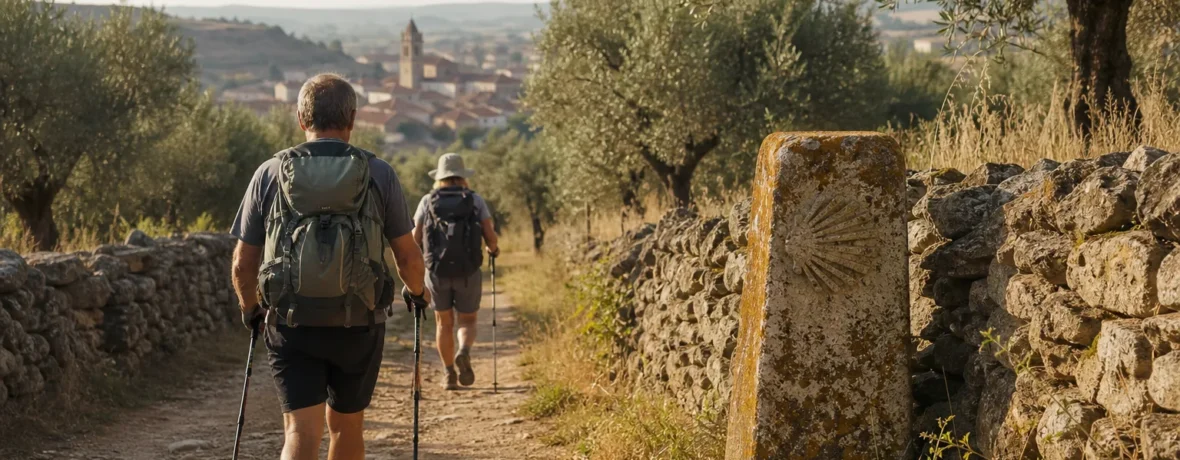
What is the Camino de Santiago? It is a network of Christian pilgrimage routes across Europe, mainly Spain, that lead to the Cathedral of Santiago de Compostela in Galicia. You can walk a final 62 miles [100 km] for the Compostela certificate, but the fuller Camino is a cultural, physical, and spiritual journey.
What is the Camino de Santiago, exactly?
It is not one trail; it is a web of routes with one famous finish.
The Camino de Santiago, or Way of St. James, points toward Santiago de Compostela in northwest Spain, where tradition holds that the remains of the apostle Saint James are buried. The best-known route is the Camino Francés, but there are many others: the Portuguese Way, Northern Way, Primitive Way, English Way, and more.
Here is the position worth taking: the Camino is not a thru-hike in the American wilderness sense. Treat it that way and you may miss the point. Yes, you walk day after day. Yes, your feet matter. But the Camino is built around villages, churches, cafés, shared tables, public squares, and the old rhythm of moving through settled country on foot. It is a pilgrimage corridor, not an escape hatch from civilization.
Parts of the Camino Francés and northern routes are listed by UNESCO as Routes of Santiago de Compostela, which tells you something: this is cultural infrastructure as much as hiking terrain.
Why do people walk the Camino de Santiago?
People walk it for faith, grief, reset, adventure, culture, or no clean reason at all.
That variety is the Camino’s engine. You may meet a retiree walking after a spouse’s death, a college student between chapters, a Catholic pilgrim going to Mass, a fast walker chasing miles, and a tired office worker who just needs the road to be simple for a month.
The Camino works because it strips your day down to a few useful questions: Where is the next town? Is there water? Are my feet okay? Who am I walking with today? That is not mystical fluff. That is what happens when your phone, inbox, and car stop running the show.
How long is the Camino de Santiago?
The length depends on your route and starting point.
The classic Camino Francés is often described as roughly 500 miles [800 km] across northern Spain from the French side of the Pyrenees to Santiago. Many first-timers, though, walk the final section from Sarria, because it clears the 62-mile [100 km] walking minimum for the Compostela.
The official Galicia Camino site lists O Cebreiro, the French Way’s entry into Galicia, at roughly 94 miles [152 km] from Santiago, and Tui, on the Portuguese Way, at roughly 75 miles [120 km] from Santiago. Those are two practical starting points if you want a shorter Camino with a real arc, not just a weekend stroll.
| Route | Common appeal | Best fit |
|---|---|---|
| Camino Francés | Most classic, strong infrastructure, many pilgrims | First-timers who want the iconic Camino |
| Portuguese Way | Gentler feel, popular from Porto or Tui | Walkers wanting towns, food, and a shorter plan |
| Northern Way | Coastline, hills, less of the Sarria rush | Fit hikers who want more climbing and ocean air |
| Primitive Way | Older, hillier, more rugged in character | Walkers who want effort over ease |
Which Camino route should you choose first?
Choose the Camino Francés if you want the clearest first Camino.
That may sound predictable. It is also good advice. The French Way has frequent towns, strong waymarking, a deep pilgrim culture, and more lodging options than quieter routes. If you are nervous about language, logistics, or being alone, that matters.
Choose the Portuguese Way if you want a softer landing and like the idea of walking from Portugal into Spain. Choose the Northern Way if you want scenery and are fine with harder days. Choose the Primitive Way if you already hike and want a Camino that asks more of your legs.
Do not pick a route only because someone online called it “authentic.” The most authentic Camino is the one you can actually walk with the time, body, and budget you have.
Is the Camino de Santiago hard?
Yes, but it is usually hard through repetition, not technical difficulty.
Most Camino routes are walking routes, not mountaineering routes. The challenge is waking up and doing it again. Then again. Then again. Pavement, gravel, farm tracks, stone lanes, stairs, heat, rain, snoring roommates, and one blister in the wrong place can make 13 miles [21 km] feel very long.
For most walkers, a realistic daily range is 10 to 15 miles [16 to 24 km]. Strong hikers may walk farther, but the Camino punishes ego. If you race through every village, skip the conversations, and treat the whole thing like a fitness spreadsheet, you can finish and still somehow lose.
How do you get the Compostela certificate?
You need the pilgrim credential, enough distance, and stamps that prove your route.
As of November 2026, the official Galicia tourism site says pilgrims can receive the Compostela after completing at least 62 miles [100 km] on foot or horseback, 124 miles [200 km] by bicycle, or the stated sailing requirement followed by the final walk into Santiago, with the pilgrim credential stamped along the way. Check the official credential and Compostela requirements before you go, because certificate rules can change.
The credential is your pilgrim passport. You collect stamps, called sellos, from hostels, churches, cafés, tourist offices, and other stops. As of November 2026, the Pilgrim Office guidance says walkers covering the minimum distance need at least two stamps per day in the final 62 miles [100 km].
How do you plan your first Camino?
Start with your available days, then work backward from Santiago.
- Pick your time window. Count travel days honestly. A “two-week trip” may give you only 10 walking days.
- Choose a route. If you are unsure, pick the Camino Francés or Portuguese Way.
- Set a daily mileage range. Plan shorter days at the beginning, especially if you are coming from a desk-heavy life.
- Decide your lodging style. Albergues are the classic pilgrim option; small hotels and guesthouses buy privacy.
- Book the pinch points. Busy final sections can fill, especially near holidays and peak walking seasons.
- Train with your shoes and pack. Do not let Spain be the first place your feet meet your footwear.
What should you pack for the Camino de Santiago?
Pack lighter than your fear tells you to.
You pass through towns often on the main routes, so you do not need a remote-expedition load. The better Camino kit is boring, tested, and easy to dry overnight.
- Comfortable trail shoes or light hiking boots already broken in
- Two or three pairs of quality hiking socks
- Rain jacket or poncho, depending on season
- Warm layer for mornings and cool albergues
- Small first-aid kit for foot care
- Credential, passport, bank card, and some cash
- Earplugs for shared sleeping rooms
- Phone charger and plug adapter
- Quick-dry clothes, not a fresh outfit for every day
A loaded pack around 10% of body weight is a common target, but comfort beats formulas. If you are miserable by day two, mail items ahead or leave them behind. Pride weighs more than spare pants.
When to see a doctor
Get medical help when pain, infection signs, illness, or an existing condition stops being manageable.
Blisters are common on long walks, but they deserve respect. Mayo Clinic advises seeking care if a blister looks infected, with signs such as spreading color change, increasing pain, pus, or warmth around the skin; read its blister first-aid guidance before building your foot-care kit.
If you are traveling from the United States, review the CDC traveler health page for Spain before departure, especially if you have prescriptions, chronic conditions, or vaccine questions. The Camino is friendly, but it is still international travel plus repeated physical stress.
Related reading
- How Long Is the Camino de Santiago? Routes and Stages
- Why Do People Walk the Camino?
- Thru-Hiking vs the Camino: Two Different Journeys
- Type 2 Fun: Why Hard Hikes Feel Good Later
FAQ
Here are the straight answers.
Do you have to be religious to walk the Camino de Santiago?
No. Many walkers are religious, but many are not. You should still respect churches, pilgrim traditions, and the fact that this route exists because of pilgrimage.
How many days do you need for the Camino de Santiago?
You can walk a qualifying final section in roughly a week if you are fit and organized. A full Camino Francés typically takes several weeks, depending on your pace, rest days, and starting point.
Can beginners walk the Camino?
Yes, beginners can walk the Camino if they choose a sensible route and train first. Start with moderate days, keep your pack light, and do not treat the first 48 hours like a race.
What is the best Camino route for first-timers?
The Camino Francés is the best default for first-timers. It has the strongest infrastructure, the clearest pilgrim culture, and plenty of services when your plan changes.
Is the Camino de Santiago safe for solo walkers?
Generally, the main Camino routes are well traveled, especially the French and Portuguese Ways. Use normal travel judgment: watch your belongings, tell someone your plan, avoid road walking in poor visibility, and trust your gut around people.
What is the biggest mistake first-time pilgrims make?
They carry too much and hurry too hard. The Camino rewards steady walking, open attention, and humility more than perfect gear or big-mile ambition.