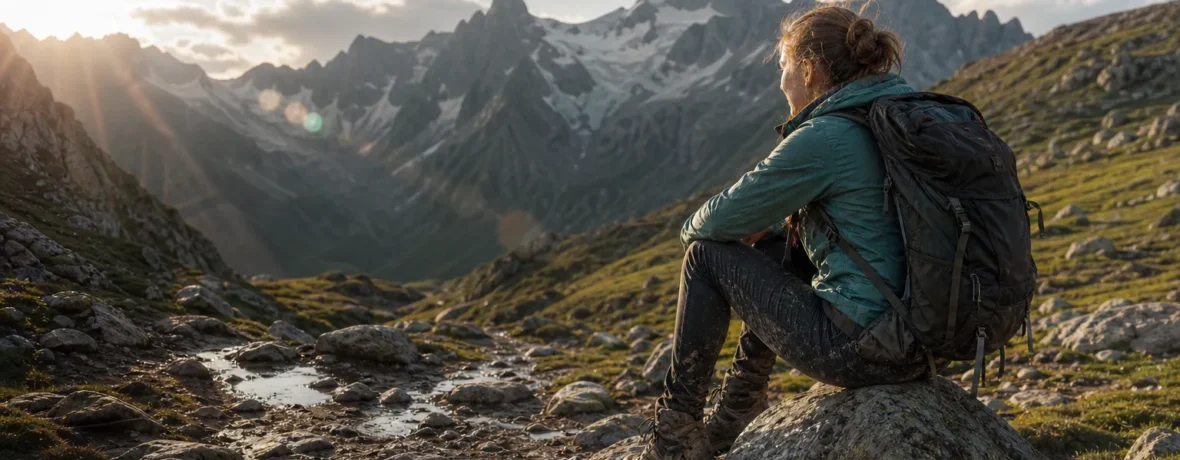
Type 2 fun is a hike that feels miserable while you’re doing it but rewarding after you’re safe, fed, and dry. It works when the hardship is voluntary, controlled, and survivable: a brutal climb, bad weather, or tired legs. If risk outruns skill, gear, or judgment, it stops being fun.
What is type 2 fun?
Type 2 fun is pain now, pleasure later. On trail, it’s the steep, wet, windy, calf-burning day you swear you’ll never repeat, then describe with a grin two days later.
The key word is “later.” Type 1 fun feels good while it’s happening: a bluebird ridge walk, a warm swim, an easy lunch with your boots off. Type 2 fun can feel irritating, exhausting, or grim in the moment. But once the stress ends, your brain edits the story. The suffering becomes texture. The summit photo becomes proof. The cold rain becomes comedy.
That does not mean every bad hike is secretly good. A hard hike earns the label only if you had enough skill, margin, and agency to get through it without serious harm. Getting lost without water is not type 2 fun. That’s poor planning with a better nickname.
| Type | How it feels during | How it feels after | Trail example |
|---|---|---|---|
| Type 1 fun | Good | Good | Easy miles, clear views, perfect snacks |
| Type 2 fun | Rough | Rewarding | Long climb, safe storm, hard-earned pass |
| Type 3 fun | Bad | Still bad | Injury, panic, exposure, preventable danger |
Why do hard hikes feel good later?
Hard hikes feel good later because effort changes the meaning of the memory. You don’t just remember the discomfort; you remember choosing it, managing it, and finishing anyway.
A miserable climb gives you a clean story arc. There was a problem: the grade kicked up, the weather turned, your legs got loud. There was conflict: you wanted to quit. There was resolution: you kept moving, adjusted layers, ate something, found the pass, or turned around wisely. That structure sticks.
Exercise also changes mood chemistry. Research hosted by the National Institutes of Health has found that acute exercise can raise circulating endocannabinoids, compounds linked with mood and stress regulation, though the response varies by person, intensity, and timing. Read the review in PMC on exercise and the endocannabinoid system.
But chemistry is only part of it. The bigger reason is identity. You become the kind of person who can keep thinking while uncomfortable. That matters. A hard trail teaches you that distress is not always danger, fatigue is not always failure, and slow is still forward.
Is type 2 fun good for you?
Yes, if the risk is managed and the recovery is real. The useful version of type 2 fun builds confidence, fitness, patience, and mountain judgment.
Hard hiking gives you feedback you cannot fake. You learn if your shoes rub after mile 9 [14.5 km], if your rain shell actually vents, if your snack plan fails when your hands are cold, and if your pacing falls apart on the third climb. A treadmill cannot teach all of that.
Still, soreness is not a badge you need to chase. Muscle pain that follows hard effort can be normal, especially after steep descents or a heavier pack, but pain has limits. Mayo Clinic advises prompt medical care for muscle pain linked with trouble breathing, dizziness, extreme weakness, high fever, a stiff neck, or swelling and redness around a sore muscle; see Mayo Clinic’s muscle pain guidance.
The position here is simple: type 2 fun is valuable when it sharpens you. It is dumb when it becomes a costume for ego. If the only reason you keep going is to protect your pride, turn around. The mountain does not care. Your knees do.
How do you plan a hard hike without making it dangerous?
Plan the suffering, not the emergency. A hard hike should have predictable difficulty and multiple off-ramps.
- Pick one main stressor. Distance, elevation, heat, cold, altitude, rough footing, and pack weight all stack. Choose one or two. Do not max out all six.
- Set a turnaround time. Decide before you start. If you hit that time below the pass, you turn around without courtroom arguments in your own head.
- Carry a real buffer. Bring extra calories, water capacity, insulation, light, navigation, and first-aid basics. “It’s only a day hike” is how many dumb stories start.
- Use effort pacing. Start slower than your excitement wants. If you cannot speak in short sentences, you are probably spending too hard too early.
- Check your exits. Know where you can bail, filter water, drop below treeline, or shorten the loop.
- Debrief afterward. Write down what worked, what failed, and what you would change next time. That is how suffering becomes skill.
Where is the line between type 2 fun and unsafe hiking?
The line is crossed when you lose control of the outcome. If your plan depends on luck, daylight, perfect weather, or someone else fixing your mistake, you are past the useful edge.
Here are warning signs that a hard hike has stopped being productive:
- You are cold and cannot get warm while moving.
- You are hot, confused, nauseated, or no longer sweating normally.
- Your pace has collapsed and you still have major terrain ahead.
- You are rationing water because the route plan was wrong.
- You keep missing obvious trail markers or making sloppy decisions.
- You feel pressure to continue because of sunk costs, social media, or group pride.
Heat and cold are not character tests. The CDC lists heat stroke as a medical emergency and describes symptoms that can include confusion, altered mental status, slurred speech, loss of consciousness, and seizures; review CDC guidance on heat-related illness. In cold conditions, CDC hypothermia signs include shivering, exhaustion, confusion, fumbling hands, memory loss, slurred speech, and drowsiness; see CDC guidance on recognizing hypothermia.
How do you make type 2 fun feel better next time?
You make it better by shrinking the chaos. Keep the challenge, remove the stupid.
Most hard hikes go sideways through small leaks, not grand disasters. You leave late. You under-eat. You wait too long to add a layer. You push the first climb like a race. You ignore a hot spot until it becomes a blister with a personality.
Use this checklist before your next suffer-fest:
- Start early enough to finish with daylight to spare.
- Eat before you feel hollow.
- Drink steadily and know where the next reliable water is.
- Adjust layers before you are soaked, chilled, or overheated.
- Fix hot spots the minute you feel them.
- Keep the group together at junctions and in bad weather.
- Turn around while turning around is still easy.
The best hard hikes are not reckless. They are cleanly executed. You come home tired, dirty, and proud, not lucky.
When to see a doctor
See a doctor when symptoms are severe, unusual, or not improving. Trail toughness should never override medical red flags.
Get urgent help if muscle pain comes with dark urine, marked weakness, or swelling after hard exertion. The CDC describes muscle pain, dark urine, and weakness or tiredness as key signs of rhabdomyolysis and says to seek medical treatment right away; read the CDC rhabdomyolysis symptom guidance.
Also seek immediate care for confusion, fainting, slurred speech, chest pain, trouble breathing, signs of heat stroke, or suspected hypothermia. Do not self-diagnose on trail. Stop, cool or warm the person as conditions require, call for help when needed, and let a medical professional make the call.
Related reading
- Hiking as a Family: Kids’ Boots, Realistic Distances and Keeping It Fun
- The Seven Summits Explained
- What Is Geocaching?
- What Is Hiking, Really? A Definition Worth Arguing About
FAQ
What does type 2 fun mean in hiking?
Type 2 fun means a hike feels hard or unpleasant while you are doing it but satisfying afterward. Think steep climbs, cold rain, long miles, and tired legs that become a good story once you are safe.
Is type 2 fun the same as being miserable?
No. Misery alone is not the point. Type 2 fun has purpose, control, and a safe finish; plain misery has no lesson except “don’t do that again.”
Why do hikers like suffering?
Most hikers do not like suffering by itself. They like the result: confidence, sharper skills, stronger legs, better stories, and the deep calm that can follow a hard effort.
Can beginners have type 2 fun?
Yes, but beginners should keep the margin wide. Choose a shorter route, modest elevation gain, stable weather, and a clear turnaround plan before adding bigger distance or tougher conditions.
When does type 2 fun become type 3 fun?
It becomes type 3 fun when the risk is no longer controlled. Injury, exposure, panic, getting lost, or continuing because of ego are signs the experience has crossed the line.
How do I recover after a hard hike?
Eat, hydrate, sleep, and walk easily the next day if your body tolerates it. If pain is sharp, worsening, paired with dark urine, or linked with heat or cold illness symptoms, seek medical care.