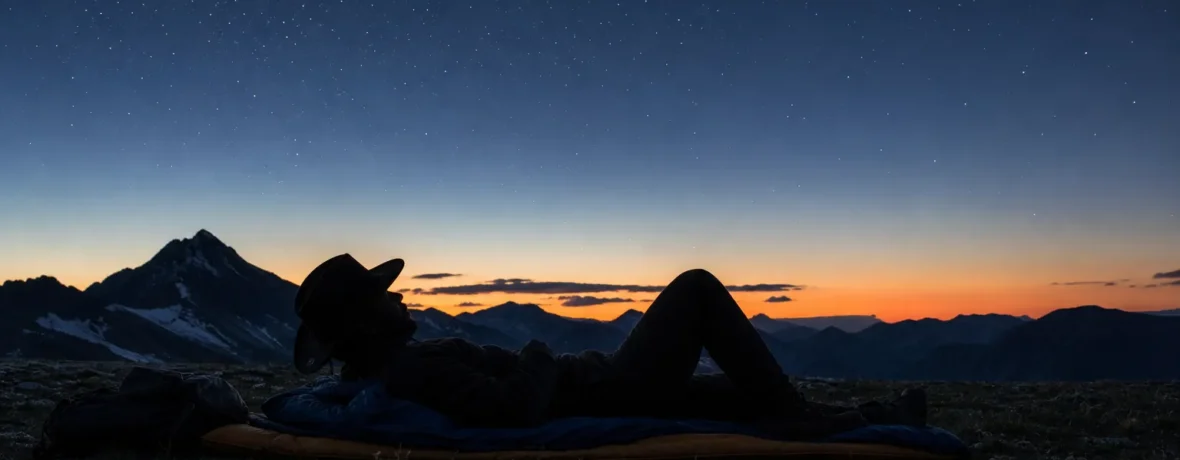
What is cowboy camping? It is sleeping outside without a tent, tarp, or enclosed shelter: just you, your sleeping pad, sleeping bag or quilt, and the open sky. Yes, it works well in dry, calm weather, but only if you pick a safe site and have backup shelter ready.
What is cowboy camping in backpacking?
Cowboy camping is the simplest overnight setup on trail.
You spread out a groundsheet, inflate your sleeping pad, crawl into your bag, and sleep under the stars. No poles. No vestibule. No zippers. No condensation dripping on your forehead at 3 a.m.
The name comes from the old image of range riders sleeping beside a fire with a blanket and saddle. Modern hikers do the same basic thing with lighter, warmer gear: a foam or inflatable pad, a sleeping bag rated for the expected low, and often a thin groundsheet to protect the pad from grit, pine needles, and sharp rock.
It is popular with thru-hikers, desert hikers, fastpackers, and anyone who wants a quicker camp. If the sky is clear and bugs are quiet, cowboy camping can be the fastest way to go from walking to sleeping.
Is cowboy camping safe?
Yes, cowboy camping can be safe when the forecast, terrain, wildlife situation, and your backup plan all line up.
The big mistake is treating it like magic. It is not. You are more exposed than you are inside a tent. Wind hits you harder. Dew can soak your quilt. Mosquitoes can ruin the night. A storm can turn a dreamy camp into a scramble.
Before you commit, check three things:
- Weather: No incoming rain, snow, high wind, or lightning risk.
- Site: No dead limbs overhead, no drainage channel under you, no exposed ridge in storm country.
- Backup: A tarp, bivy, tent, or nearby shelter option you can set up fast.
If you hear thunder, move to safer shelter. The National Weather Service says there is no safe place outside during a thunderstorm, and a substantial building or hard-topped vehicle is the safer choice when available; read their lightning safety guidance before you gamble with a ridgeline bivouac.
What gear do you need for cowboy camping?
You need the same sleep system you would use in a tent, minus the tent body.
Start with your normal overnight kit, then trim carefully. The goal is not to be heroic. The goal is to sleep well and wake up dry enough, warm enough, and not full of regret.
- Sleeping pad: Use an inflatable or foam pad with enough insulation for the overnight low.
- Sleeping bag or quilt: Choose a comfort range that matches the forecast, not just the daytime temperature.
- Groundsheet: Polycryo, Tyvek, or a tent footprint protects your pad from punctures and grime.
- Head net or bug bivy: Tiny weight, huge morale boost when mosquitoes show up.
- Backup shelter: A tarp, poncho tarp, bivy, or tent fly gives you an escape plan.
- Warm layers: Hat, dry socks, and a puffy jacket help when radiational cooling drops the temperature after sunset.
- Food storage system: Use the method required where you are hiking: bear canister, locker, hang, or approved bag.
Food storage matters even when you are not in classic bear country. The National Park Service gives clear camp cooking and storage basics in its food storage guidance, and local land managers may set stricter requirements for specific parks, forests, and wilderness areas.
How do you choose a cowboy camping spot?
Choose a flat, durable, protected spot where water will not flow through your bed.
A perfect-looking patch of sand can become a cold puddle. A meadow can hold dew like a sponge. A low wash can flash with water long after rain falls upstream. Slow down for five minutes before you unpack.
Look for these traits:
- Durable surface: Rock, gravel, sand, dry pine duff, or an already-used campsite.
- Slight rise: Sleep above drainages, puddle lines, and dry creek beds.
- Wind break: A low shrub, boulder, or stand of trees can cut gusts without putting you under dead branches.
- Clear overhead space: Avoid dead trees, cracked limbs, leaning trunks, and loose rock above you.
- Distance from trails and water: Give other hikers, wildlife, and water sources room.
For low-impact campsite choices, follow the Leave No Trace 7 Principles, especially durable surfaces, waste disposal, wildlife respect, and being considerate of other visitors.
How do you cowboy camp step by step?
Set up before dark and keep your escape plan within arm’s reach.
- Check the sky again. Look at clouds, wind direction, temperature drop, and any updated forecast you saved earlier.
- Scan the ground. Remove only loose sticks, cones, and sharp stones. Do not scrape vegetation to make a bed.
- Lay down your groundsheet. Keep it just under your pad footprint if dew is likely, so it does not collect water like a tray.
- Set your pad and bag. Point your head slightly uphill if the ground has a gentle slope.
- Stage your backup shelter. Keep tarp, stakes, rain jacket, and headlamp where you can grab them half-asleep.
- Secure food and scented items. Store them away from your sleep spot using the required local method.
- Protect small gear. Put shoes, socks, electronics, and maps in a pack liner, stuff sack, or under your pack lid.
- Do a bug and tick check. Check socks, waistline, sleeves, and hairline before crawling into your bag.
The CDC recommends preventing tick bites with steps such as avoiding brushy high grass, treating clothing and gear with permethrin when appropriate, using EPA-registered repellents, and checking your body after being outdoors; see the CDC’s tick bite prevention advice.
Cowboy camping vs tent camping: which is better?
Cowboy camping is better for speed and sky views; tent camping is better for storms, bugs, and privacy.
| Factor | Cowboy camping | Tent camping |
|---|---|---|
| Setup time | Fast: pad, bag, done | Slower: poles, stakes, fly, guylines |
| Weather protection | Low unless you add a tarp or bivy | High with a properly pitched shelter |
| Bug protection | Low without a head net or bug bivy | High with mesh inner doors closed |
| Condensation | Often lower, but dew can still soak gear | Can build inside the fly or tent walls |
| Best use | Dry climates, clear nights, fast camps | Wet, buggy, windy, crowded, or colder trips |
If you are new to this style, carry your tent and cowboy camp beside it first. If the night turns ugly, you can move fast. That first low-risk night teaches more than a dozen gear debates.
What are the downsides of cowboy camping?
The downsides are exposure, moisture, insects, wildlife curiosity, and less privacy.
Exposure is the main one. Even on a clear night, cold air can settle into basins and make your bag feel underpowered. Dew can form on your quilt, especially in meadows, near lakes, or under open sky with calm air. Wind can push dust into your face. Ants can find your hip belt snack if you were lazy with crumbs.
Then there is the mental side. Some hikers sleep better with fabric walls. That is fine. A tent is not weakness. Sleep is part of performance, and if a thin nylon wall lets you sleep, use it.
Common mistakes include:
- Sleeping in a wash because the sand feels soft.
- Skipping a groundsheet on sharp desert gravel.
- Leaving shoes open, then finding condensation, spiders, or grit inside.
- Trusting a clear sunset without checking the overnight forecast.
- Camping under dead limbs because the tree looks cozy.
When is cowboy camping a bad idea?
Cowboy camping is a bad idea when weather, bugs, wildlife rules, or your own comfort say no.
Skip it during lightning risk, heavy dew, strong wind, freezing rain, snow, or any forecast you do not trust. Skip it when mosquitoes are thick enough to whine through dinner. Skip it where land managers require enclosed shelters or specific camping areas. Skip it if you feel too uneasy to sleep.
It is also a poor choice in crowded campsites where people need privacy and space. The best cowboy camp is quiet, low-impact, and nearly invisible once you pack up.
When to see a doctor
See a doctor if a bite, rash, fever, allergic reaction, or injury gets worse after a night outside.
For tick exposure, contact a healthcare professional if you develop a rash or fever within several weeks of removing a tick. If you have trouble breathing, swelling of the lips or throat, confusion, chest pain, a serious fall, or signs of hypothermia, seek emergency help right away.
Do not diagnose yourself on trail. Take notes on when symptoms started, where you were hiking, what bit you if you know, and any first aid you used. That information helps medical staff make better decisions.
Related reading
- How to Plan a Camping Trip
- How to Start Camping: A Beginner's Guide
- Dispersed Camping in Colorado: Best Areas and Rules
- Camping Checklist: What to Bring
FAQ
Do you need a tent for cowboy camping?
No, the point of cowboy camping is sleeping without a tent. You should still carry backup shelter when rain, wind, bugs, or cold could make an exposed night unsafe or miserable.
Can you cowboy camp in the rain?
No, not comfortably without extra shelter. If rain is possible, pitch a tarp, use a bivy, or set up a tent before your sleep system gets wet.
What do you sleep on when cowboy camping?
You sleep on a sleeping pad placed over a small groundsheet. The pad gives comfort and insulation, while the groundsheet helps protect the pad from dirt, sap, needles, and punctures.
How do you keep bugs away while cowboy camping?
Use a head net, bug bivy, long sleeves, treated clothing, and a campsite away from standing water when possible. If mosquitoes are relentless, a tent or fully enclosed bug shelter is the better call.
Is cowboy camping legal everywhere?
No, access rules vary by park, forest, wilderness area, state land, and private property. Check the official land manager’s camping rules before your trip, especially in national parks, permit zones, and fragile desert areas.
Will animals bother you while cowboy camping?
Usually no, if you keep a clean camp and store food correctly. Cook and store scented items away from your sleep spot, follow local wildlife requirements, and never sleep with snacks in your bag.