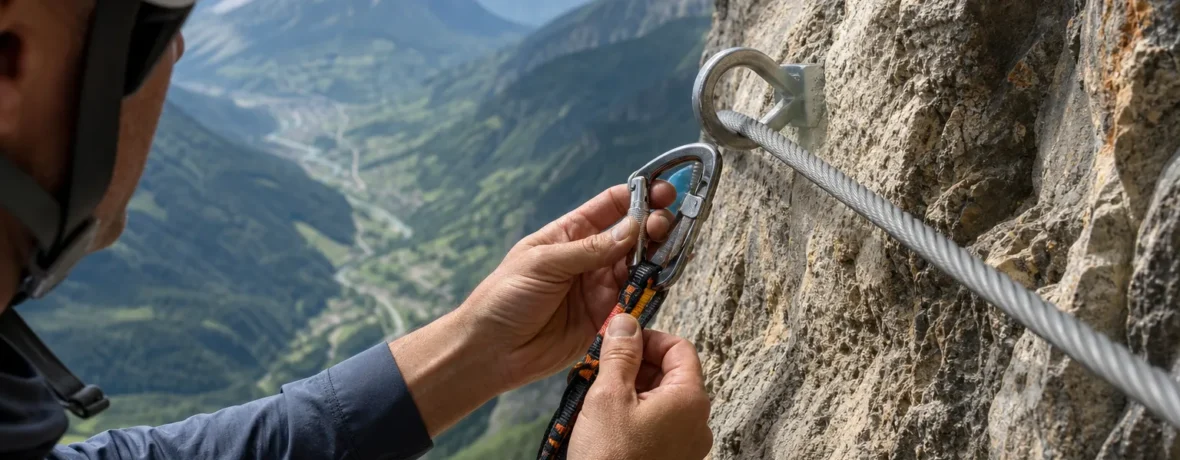
What is a via ferrata? A via ferrata is a protected mountain route with fixed steel cables, rungs, ladders, or bridges attached to rock. You climb while clipped to the cable with a harness and energy-absorbing lanyard. Yes, hikers can try one, but only with proper gear, instruction, and a head for exposure.
A via ferrata sits in the awkward, thrilling space between hiking and rock climbing. My position is simple: treat it as climbing, not spicy hiking. The cable can make steep terrain accessible, but it does not make the mountain harmless. If you would not step onto a cliff edge without a system you understand, do not step onto a via ferrata casually.
What is a via ferrata route?
A via ferrata route is a fixed-protection climbing route built into mountain terrain.
The phrase means “iron way” in Italian, and the name is literal. The route uses fixed equipment such as steel cables, metal rungs, stemples, ladders, bridges, and anchor points to help you move through terrain that would otherwise require roped climbing skill. The UIAA describes via ferrata routes as permanently equipped lines where climbers use a harness, helmet, and ferrata kit.
That last part matters. The fixed cable is not a handrail at a theme park. It is part of a climbing protection system. You are still responsible for clipping correctly, managing your distance from other people, reading weather, and knowing when to turn around.
How does a via ferrata work?
You climb while attached to a steel cable with two locking via ferrata carabiners.
A typical setup uses a climbing harness, helmet, and a Y-shaped via ferrata lanyard with an energy absorber. Both lanyard arms clip to the cable. When you reach an anchor point, you move one carabiner past the anchor, then the other. That way, at least one carabiner stays clipped during the transition.
The energy absorber is the critical piece. A short fall on a static sling can generate brutal force. A purpose-built via ferrata lanyard is designed to help reduce that force in a fall. Petzl’s technical guidance explains why a special energy-absorbing lanyard is used for this activity, and why regular slings are the wrong tool.
- Put on your helmet before you stand below the route.
- Check your harness, lanyard attachment, carabiners, and partner’s setup.
- Clip both via ferrata carabiners to the cable before climbing.
- At each anchor, move one carabiner first, then the second.
- Keep one person on each cable span between anchors.
- Rest only where you can do so securely and without blocking the route.
- Exit before storms, darkness, fatigue, or fear turn manageable exposure into bad decision-making.
Is via ferrata hiking or climbing?
Via ferrata is climbing with fixed protection, even when the approach feels like a hike.
This is the hill to stand on. If the terrain requires a harness and an energy absorber, you have left normal hiking. That does not mean you need to be a gym climber pulling hard moves on tiny holds. Many beginner routes are designed for fit hikers. But the consequences are climbing consequences: exposure, fall potential, rockfall, weather, route crowding, and gear failure if used incorrectly.
Calling it hiking can make people underprepare. Calling it climbing makes people ask better questions: Do I know this system? Can I downclimb if I freeze? Can I keep my group moving? Do I have the right gear, not just gear that looks close enough?
What gear do you need for a via ferrata?
You need a helmet, climbing harness, and purpose-built via ferrata lanyard.
Those are the non-negotiables. Gloves are strongly recommended because steel cable can chew up bare hands. Sticky approach shoes or light hiking shoes with precise edging beat floppy trail runners. A small pack should sit close to your body so it does not pull you backward on ladders or overhanging steps.
As of November 2026, the UIAA safety standards list includes UIAA 128 for energy absorbing systems and UIAA 171 for via ferrata construction. That does not mean every route is equal. It means you should use certified equipment and still inspect what is in front of you.
- Climbing helmet, not a bike or construction helmet
- Climbing harness that fits snugly over your layers
- Via ferrata lanyard with two appropriate carabiners and energy absorber
- Gloves with enough dexterity for clipping
- Footwear with firm soles and good grip
- Weather layers, water, snacks, headlamp, and small first-aid kit
- Guide, class, or experienced partner if you are new
How hard is a via ferrata?
Difficulty ranges from protected walking to steep, exposed climbing.
Do not judge a route by photos alone. A smiling person on a bridge tells you nothing about the crux, the descent, the spacing between rungs, or how your legs will feel halfway up a vertical wall. The UIAA notes several grading systems and, in 2016, adopted the Italian scale as its international reference for via ferrata difficulty.
| Grade | Plain-English feel | Best for |
|---|---|---|
| F | Easy equipped path with low exposure | Fit beginners with instruction |
| PD | Shorter route with some vertical sections | Confident beginners |
| D | Longer, steeper, more physical terrain | Experienced users |
| TD / ED | Very exposed, technical, and demanding | Strong climbers and trained teams |
US routes may use local rating systems instead of European grades. Read the route description from the operator or land manager, then look for the unglamorous details: approach, descent, escape options, height gain, exposure, and weather sensitivity.
Is via ferrata safe for beginners?
Yes, if the route is beginner-appropriate and you use the system correctly.
The danger is not that beginners exist. The danger is beginners pretending this is a ladder walk with better views. A guided first outing is money well spent. So is practicing clipping on the ground until the motion feels automatic.
Fear also deserves respect. Exposure can hit fast. You might feel fine at the base and stiffen up 80 ft [24 m] above the ground. That is not weakness. That is your brain noticing gravity. Pick a short route first, leave the ego in the parking lot, and do not let a faster group pressure you into rushing clips.
What should you check before doing a via ferrata?
Check the route, the weather, your gear, and your exit plan before you clip in.
Bad decisions usually start before the cable. A storm forecast, loose group plan, poor footwear, or late start can turn a moderate route into a mess. If a route is managed by a resort, town, park, forest, concessionaire, or guide service, use that official source for current access information.
- Current route status from the managing organization
- Thunderstorm risk, wind, heat, cold, and wet rock
- Required reservation, waiver, guide, or rental rules
- Approach and descent distance
- Escape points or commitment level
- Group size and pace
- Clear turnaround time
Here is the blunt test: if you do not know how you will get off the route if someone freezes, gets tired, or weather moves in, you are not ready for that route without professional help.
Related reading
- Type 2 Fun: Why Hard Hikes Feel Good Later
- The Seven Summits Explained
- What Is Geocaching?
- What Is Hiking, Really? A Definition Worth Arguing About
FAQ
Can you fall on a via ferrata?
Yes, you can fall, and falls can still injure you. The lanyard system is designed to reduce force, not make falling harmless.
Do you need climbing experience for a via ferrata?
No, not for every route. You do need instruction, proper gear, and a beginner-rated route if you have no climbing background.
Can kids do a via ferrata?
Sometimes, but only on routes and with equipment suitable for their size, weight, and maturity. Use a qualified guide for children unless you already have the technical skills to manage them safely.
Are via ferrata routes free?
Some are free to access, and some require reservations, guide services, rental gear, or access fees. Check the official route manager for current requirements before you go.
What should you wear on a via ferrata?
Wear flexible hiking clothes, sturdy shoes, gloves, a climbing helmet, harness, and via ferrata lanyard. Avoid loose straps or bulky packs that can snag on cables and ladders.
What is the biggest mistake beginners make?
The biggest mistake is treating the cable like a guarantee. A via ferrata rewards calm clipping, honest route choice, and respect for exposure; it punishes rushing and guesswork.