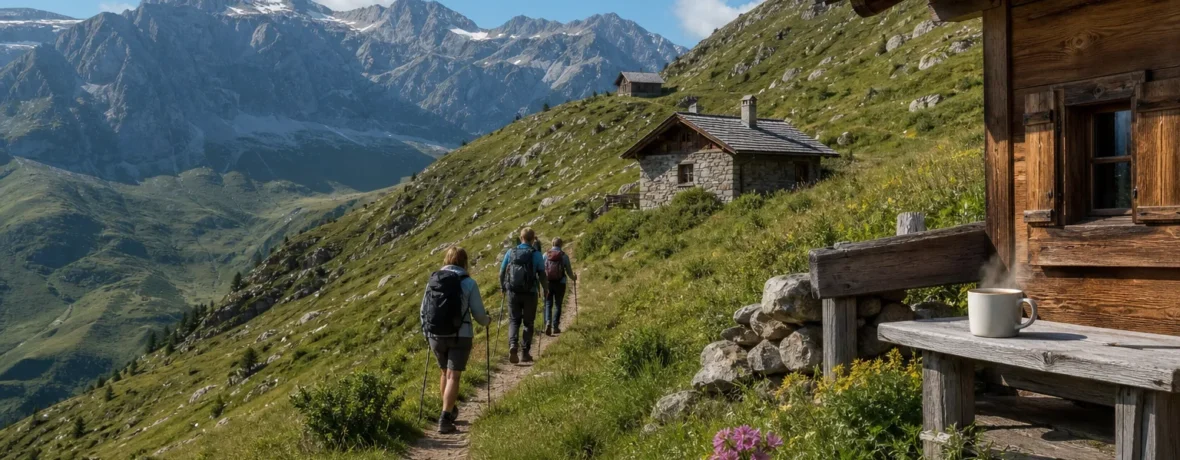
Hut to hut hiking is a multi-day walk where you sleep in staffed or self-service mountain huts instead of carrying a full camp. Yes, Europe does it better if you want reliable beds, meals, reservations, and connected routes: the Alps, Norway, and other regions have mature hut systems built for trips of 2 to 14 days.
The American backpacking reflex is simple: carry your home. Tent, stove, food, pad, bear system, the works. That has its own rugged beauty. But for hut to hut hiking, Europe has the stronger argument. Not because the mountains are automatically better. They are not. The U.S. has huge wilderness, sharper solitude, and long trails that can crack you open in the best way. Europe wins because it treats walking from shelter to shelter as a normal, supported, public good.
That changes everything. Your pack gets lighter. Your route choices widen. Your evenings have soup, dry socks, and a table full of tired strangers. You still earn every pass. You just do not have to haul your whole kitchen over it.
What is hut to hut hiking?
Hut to hut hiking is backpacking with fixed overnight stops.
Instead of camping wherever rules allow, you walk from one mountain hut, lodge, refuge, rifugio, or cabin to the next. Some huts are staffed and serve dinner and breakfast. Some are self-service cabins with bunks, a stove, and stocked food. Some are plain shelters that give you a roof and not much else.
The best version sits between backpacking and travel. You still move under your own power. You still carry layers, rain gear, first aid, water, snacks, and a liner or sleep sack. But you often leave the tent, full stove setup, and several days of food at home. That is the magic. The trail becomes less of a logistics problem and more of a walk.
Why is hut-to-hut hiking better in Europe than in the US?
Europe has denser hut networks, easier booking, and a deeper hut culture.
That is the blunt answer. In many European mountain regions, the hut is not an oddity. It is part of the trail system. The Swiss Alpine Club tells hikers to book ahead, carry a hut sleeping bag, bring cash, and treat huts as shared mountain spaces; its hut guidance reads like a practical handbook for a system that expects walkers to use it. Norway’s DNT says, as of November 2026, that its standard key gives members access to hundreds of unstaffed and self-service cabins, with specific hut details checked before each trip through DNT or UT.no via its DNT key information.
The U.S. has excellent exceptions. The Appalachian Mountain Club operates eight high mountain huts in New Hampshire’s White Mountains, accessible only on foot, with bunks and meals at many of them. That is the closest American match to an Alpine hut chain. It is also the exception that proves the rule. You can build a hut-to-hut trip there, but you cannot repeat that pattern across most U.S. mountain ranges.
On the Appalachian Trail, the shelter system is useful, but it is not the same thing. The Appalachian Trail Conservancy says, as of November 2026, the A.T. has more than 250 backcountry shelters, most first-come, first-served, and hikers should still carry their own personal shelter according to its camping and shelter guidance. That is backpacking infrastructure. Good infrastructure, yes. But not hut culture.
| Feature | Europe | United States |
|---|---|---|
| Typical overnight setup | Bookable huts, refuges, rifugi, cabins | Tents, shelters, dispersed or designated campsites |
| Food | Often available at staffed huts | Usually carried by the hiker |
| Reservations | Common and expected on popular routes | Limited to specific parks, huts, or permit areas |
| Best strength | Connected walking with lighter packs | Wildness, space, and self-reliance |
Does Europe have better trails, or just better huts?
Europe has better hut systems, not automatically better trails.
This matters. The American West can give you bigger silence. Alaska can make the Alps feel tidy. The Sierra, Rockies, Cascades, and Appalachians do not need to apologize to anyone. But the column’s argument is not “Europe has prettier mountains.” It is “Europe has made multi-day mountain walking easier to access without making it soft.”
A hut system lets more people walk farther with less gear. It lets older hikers, newer hikers, families, and travelers without a garage full of backpacking equipment do a real multi-day route. That is not a downgrade. That is smart design.
The U.S. often protects wild land by keeping infrastructure minimal, especially in designated wilderness. The National Park Service explains that the Wilderness Act generally bars permanent roads and structures in wilderness except under narrow conditions; see the NPS wilderness FAQ. That value is defensible. It is also one reason America will never have an Alpine-style hut web across its wildest ranges. Both things can be true.
How do you book mountain huts in Europe?
You book early, hut by hut, and you confirm every rule before you walk.
There is no single magic button for all of Europe. That is the annoying part. Switzerland, Austria, Italy, France, Norway, Spain, and Slovenia all have different club systems, private huts, national park rules, seasonal openings, and cancellation policies. Even within one country, neighboring huts may use different booking tools.
Use this process:
- Choose a region first. Pick the Dolomites, Haute Route, Swiss Via Alpina, Tour du Mont Blanc area, Jotunheimen, the Pyrenees, or another defined range.
- Build the route around huts, not wishful mileage. A 10-mile [16 km] day with 4,000 feet [1,219 m] of climbing is not the same as a 10-mile valley walk.
- Check each hut’s official page. Look for opening dates, meal options, payment methods, bedding rules, and arrival deadlines.
- Reserve the popular nights first. Friday and Saturday nights, famous huts, and classic routes fill fastest.
- Carry proof of booking. Save confirmations offline. Mountain reception is a liar.
- Call or email if conditions look messy. Snow, storms, washed-out bridges, and late-season closures can change the whole plan.
The hard truth: hut trips reward planners. If you want total freedom, carry a tent where camping is legal. If you want a bed and dinner at 7 p.m., book.
What should you pack for hut-to-hut hiking in Europe?
Pack like a hiker, not a hotel guest.
A hut is shelter, not room service. You still need mountain judgment and the gear to handle weather, delays, and a long day between buildings. Your pack can be lighter, but it cannot be lazy.
- Hut sleeping bag liner or sleep sheet
- Rain jacket and rain pants
- Warm midlayer and hat, even in summer
- Broken-in hiking shoes or boots
- Headlamp with spare power
- Offline maps and a backup navigation method
- Water bottles or reservoir
- Snacks for the trail
- Small first-aid kit and personal medications
- Earplugs for shared rooms
- Cash, card, passport, and booking confirmations
- Light hut shoes or clean socks, if the hut expects indoor footwear
- Trash bag for packing out your own waste
Leave the giant camp chair fantasy behind. Leave the speaker behind, too. Shared huts run on thin walls and basic courtesy.
Is hut-to-hut hiking expensive?
It can be, but it is not the same cost as a hotel-based vacation.
You are paying for a bed in a remote place, often with food carried, driven, or flown in under difficult conditions. A staffed alpine hut is not a cheap motel that happens to have a view. It is a mountain outpost with limited water, limited power, limited waste capacity, and a crew trying to feed hungry hikers before weather pins everyone indoors.
Compared with camping, hut trips cost more per night. Compared with renting cars, booking valley hotels, eating restaurant meals, and arranging transfers, they can be efficient. The better question is not “Is it cheap?” The question is “What weight, risk, and logistics does the hut remove?” For many hikers, the answer is enough to justify the bill.
What is the etiquette in European mountain huts?
Be clean, quiet, punctual, and easy to host.
Huts work because everyone accepts the bargain. You get shelter and food in a hard place. In return, you do not act like the place exists only for you.
- Arrive when you said you would, or contact the hut if you are delayed.
- Check in before claiming a bunk.
- Take boots off where required.
- Use your assigned sleeping space.
- Keep your gear tight and tidy.
- Do not spread wet clothing across every surface.
- Respect quiet hours.
- Pack out trash unless the hut gives other instructions.
- Use water and electricity sparingly.
- Cancel early if your plans change.
This is where Europe really shines. The system expects you to behave like part of a mountain community for one night. That is good for the trail, good for the hut keeper, and good for the next soaked hiker coming through the door.
Who should choose a European hut-to-hut trip?
Choose Europe if you want big walking with less camping burden.
It is a strong fit if you like daily movement, mountain scenery, shared meals, and a lighter pack. It is also ideal if you are traveling from the U.S. and do not want to fly with a full backpacking kit.
Skip it, or choose carefully, if you hate shared rooms, snoring, fixed schedules, or booking ahead. Hut trips trade some freedom for comfort and connection. That trade is the whole point.
So yes, Europe does hut-to-hut hiking better. Not because American hikers lack grit. Not because U.S. trails fall short. Europe simply built the missing middle: harder than inn-to-inn walking, lighter than backpacking, and more social than sleeping alone in a tent. For many hikers, that is the sweet spot.
Related reading
- Guides, Rangers and Hut Wardens: The People Who Keep Hiking Working
- Type 2 Fun: Why Hard Hikes Feel Good Later
- The Seven Summits Explained
- What Is Geocaching?
FAQ
Do you need a sleeping bag for hut-to-hut hiking?
Usually you need a sleeping bag liner, not a full sleeping bag. Many staffed European huts provide mattresses and blankets, but rules vary by hut, so check the official hut page before packing.
Can beginners do hut-to-hut hiking in Europe?
Yes, fit beginners can do easier hut routes with conservative planning. Choose short stages, modest elevation gain, staffed huts, and routes with bail-out options to villages or transit.
What is the best country for a first hut-to-hut hike?
Switzerland, Austria, Italy, and Norway are strong first choices. Pick Switzerland or Austria for classic alpine huts, Italy for rifugio culture and food, and Norway for cabin networks and wilder-feeling terrain.
Do European huts take credit cards?
Some do, but you should carry cash. Remote huts may have unreliable card machines or no connection, and small purchases can be easier with local currency.
Is hut-to-hut hiking safer than backpacking?
It can reduce some risks, such as heavy packs and exposed camping in bad weather. It does not remove mountain hazards, so you still need fitness, navigation, weather awareness, and the discipline to turn around.