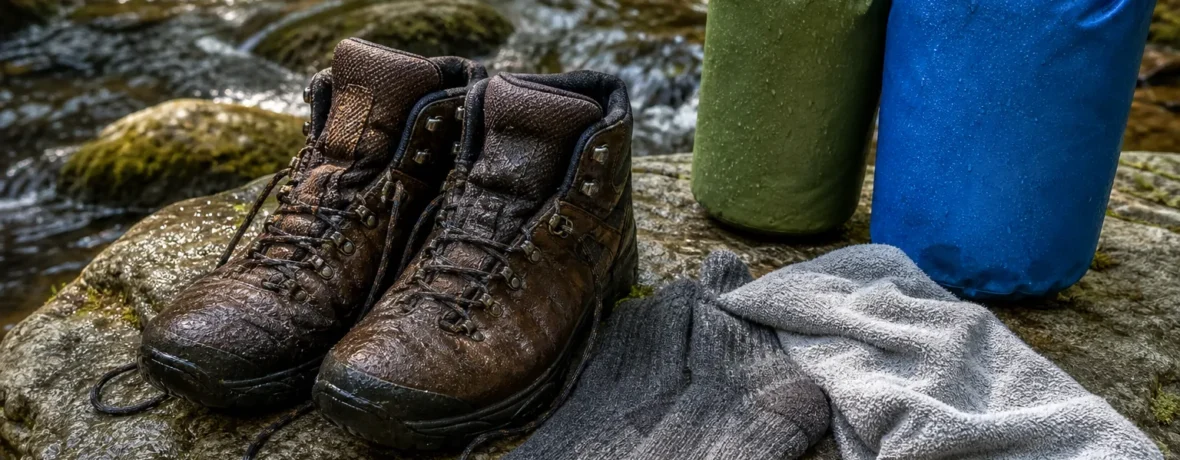
What is trench foot? Trench foot, also called immersion foot, is a non-freezing cold injury caused by feet staying wet and cold for hours. It can happen at temperatures up to 60°F [16°C] when socks and boots stay soaked. Early signs include numbness, tingling, swelling, pain, and skin color changes.
You do not need snow, ice, or a dramatic survival story to get into trouble. A rainy shoulder-season hike, wet grass, creek crossings, sweat-soaked socks, tight boots, and long breaks in cold wind can be enough. Your feet sit in a damp little cave. Circulation slows. Nerves get irritated. Skin softens. Then a “my feet are just wet” problem turns into an injury.
What is trench foot, exactly?
Trench foot is a wet-and-cold injury to the feet that happens without the skin freezing. The CDC describes trench foot as an injury from prolonged exposure to wet and cold conditions, and says it can occur at temperatures as high as 60°F [16°C] if the feet are constantly wet.
That last part surprises hikers. You can be above freezing and still be at risk. Water pulls heat from your feet much faster than air does, and your body responds by narrowing blood vessels to save heat. Less blood flow means less oxygen and fewer nutrients reaching the tissues. Add pressure from boots, swelling inside tight footwear, and hours of walking, and your feet are having a bad day.
The medical bucket is “non-freezing cold injury,” often shortened to NFCI. The Wilderness Medical Society guidelines on non-freezing cold injuries group trench foot and immersion foot under this category and warn that these injuries can cause long-lasting pain and cold sensitivity.
How do wet socks turn into trench foot?
Wet socks become trench foot when moisture, cold, time, and pressure gang up on your feet. One soaked mile is usually just annoying; many soaked hours can be different.
Here is the chain reaction:
- Your socks get wet. Rain, sweat, stream crossings, slush, or leaking footwear saturate the fabric.
- Your feet lose heat faster. Wet skin cools quickly, even when the air temperature feels manageable.
- Blood vessels tighten. Your body reduces blood flow to the feet to conserve core heat.
- Skin macerates. The outer skin gets pale, wrinkled, soft, and easier to damage.
- Boot pressure adds stress. Swelling inside snug footwear can squeeze tissues and worsen pain.
- Nerves and tissues get irritated. Tingling, numbness, burning, swelling, and color changes can follow.
Standing around in wet socks is often worse than moving steadily, because your feet stay cold while circulation and heat production drop. Long breaks, wet camp shoes, and sleeping in damp socks can stretch the exposure from “uncomfortable” to “injury risk.”
What are the symptoms of trench foot?
Trench foot symptoms often start with numbness, tingling, heaviness, swelling, or pain. The CDC’s public guidance on preventing trench foot lists painful, swollen, heavy-feeling feet as key warning signs.
Watch for these changes during a wet hike or at camp:
- Numbness, tingling, prickling, or “pins and needles”
- Burning pain or aching after rewarming
- Swelling in the feet or toes
- Pale, waxy, blotchy, red, blue, purple, or gray skin
- Skin that looks wrinkled, soggy, or waterlogged
- Blisters, ulcers, bleeding under the skin, or open areas
- Feet that feel unusually heavy or clumsy
Do not use pain as your only gauge. Numb feet can feel “fine” while the injury is building. Then, once they warm, the pain can roar in. That is one reason wet-foot checks matter on cold, sloppy trips.
Is trench foot the same as frostbite?
No. Trench foot is a non-freezing injury, while frostbite means tissue has frozen. Both can be serious, but field care differs.
| Problem | Main trigger | Common clues | Field priority |
|---|---|---|---|
| Trench foot | Wet, cold feet for hours without freezing | Numbness, swelling, heavy feet, blotchy or pale skin, pain after warming | Remove wet footwear, dry, elevate, protect, avoid aggressive heating |
| Frostbite | Freezing of skin and deeper tissue | Waxy skin, hard tissue, loss of feeling, blisters after rewarming | Prevent refreezing and seek urgent medical care |
| Friction blister | Rubbing, heat, moisture, poor sock or boot fit | Hot spot, clear fluid blister, localized tenderness | Reduce friction, pad the area, keep it clean and dry |
The difference matters. The CDC Yellow Book’s cold injury table describes trench foot as a non-freezing injury in wet settings from 32°F to 59°F [0°C to 15°C] and lists dry passive rewarming and elevation as management steps, while frostbite care involves different rewarming decisions.
What should you do if you think trench foot is starting?
Stop the wet-cold exposure first. You are not trying to “toughen up” your feet; you are trying to keep a small problem from becoming a trip-ending one.
- Get out of the wet setup. Move to shelter, block wind, and stop standing in water, slush, or soaked footwear.
- Remove boots and wet socks. Loosen anything tight around the ankles or feet.
- Dry the feet gently. Pat them dry. Do not rub hard, scrub, or massage damaged skin.
- Put on dry socks if you have them. If not, use the driest layer available and keep the feet protected from more cold.
- Elevate the feet. This can reduce swelling and throbbing.
- Avoid unnecessary walking. The CDC warns that walking on affected feet may cause tissue damage.
- Do not use direct high heat. Skip fireside baking, hot rocks, stove-warmed bottles against numb skin, or chemical warmers pressed on injured areas. Numb skin burns easily.
- Plan for medical help. If symptoms are more than mild, worsening, or not improving after drying and warming, cut the trip short.
If you are deep in the backcountry, the practical move is boring and smart: dry, insulate, elevate, protect, and exit. Pride has never saved a toe.
How can hikers prevent trench foot?
Keep your feet as dry, warm, and uncompressed as the trip allows. Perfectly dry feet are not always realistic, but routine foot care works.
Use this trail checklist:
- Pack dedicated dry sleep socks. Keep them sealed in a waterproof bag and do not hike in them.
- Change socks before your feet go numb. On wet cold days, swap socks during a real break, not after camp chores.
- Air your feet when conditions allow. Ten calm minutes with bare feet under shelter can help more than ignoring wet socks for six hours.
- Loosen tight footwear at breaks. Pressure plus swelling is a bad combo.
- Manage sweat, not just rain. Overbuilt waterproof boots can trap moisture from the inside.
- Use gaiters when they make sense. They help with wet brush, slush, and rain running down your legs.
- Keep moving, but do not ignore numbness. Movement helps warmth; numbness is still a warning sign.
- Protect feet at camp. Do not shuffle around in soaked trail socks all evening.
The Wilderness Medical Society recommends limiting cold-wet exposure, keeping feet as dry as possible, using insulating non-constricting clothing, and changing into dry socks 2 or 3 times daily in wet conditions. That is not fancy. It is basic foot discipline.
When to see a doctor
Seek medical care right away if you suspect trench foot. The CDC says to get medical attention if trench foot is suspected, and that advice fits hikers because symptoms can hide the severity of tissue injury.
Get urgent help if you notice any of these:
- Severe pain, swelling, or loss of feeling
- Blue, purple, gray, black, or rapidly changing skin color
- Blisters, ulcers, open wounds, bleeding, or drainage
- Signs of infection such as spreading redness, warmth, pus, fever, or red streaks
- Symptoms that do not improve after the feet are dried, protected, and gently warmed
- Diabetes, circulation problems, immune suppression, or reduced sensation in the feet
This article cannot diagnose your feet from a description, photo, or hunch. If your feet look wrong, feel wrong, or stay numb, get checked.
Related reading
- Blister Prevention and Foot Care for Hikers: The Complete Method
- Lyme Disease Symptoms After a Hike
- Hantavirus and Camping: Cabins, Shelters and Risk
- Electrolytes for Hikers: What They Are and How Much You Need
FAQ
Can you get trench foot in warm weather?
Yes, wet feet can still be injured in cool-to-mild conditions, especially during long exposure. Classic trench foot is tied to cold wet conditions, but hikers should treat long-lasting wet, numb, painful feet as a warning sign even when the day does not feel brutally cold.
How long does trench foot take to develop?
It can develop after prolonged exposure over hours, especially when feet stay wet and cold inside boots. Risk rises when you combine wet socks, tight footwear, low temperatures, poor circulation, and long periods without drying your feet.
Will trench foot heal on its own?
Mild irritation from wet feet may settle after drying and warming, but suspected trench foot needs medical guidance. Non-freezing cold injuries can cause lasting pain, cold sensitivity, and nerve symptoms, so do not treat it like a normal blister.
Should you sleep in wet socks to keep them warm?
No. Do not sleep in wet socks if you can avoid it. Put on dry sleep socks, keep damp socks out of your sleeping bag insulation when possible, and give your feet a dry, warm recovery window overnight.
Are waterproof boots the best way to prevent trench foot?
Not always. Waterproof boots can block rain and puddles, but they can also trap sweat inside, especially during hard hiking. Prevention is the system: sock changes, drying breaks, proper fit, gaiters when useful, and dry socks reserved for camp or sleep.