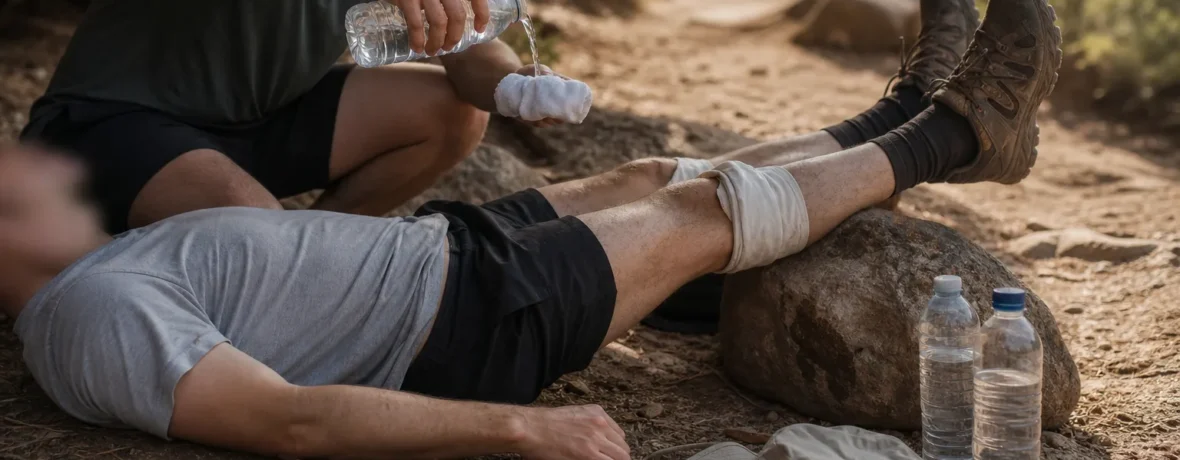
How to treat heat exhaustion: stop hiking, move to shade, remove extra layers, cool the skin with water or wet cloths, and sip fluids if you’re fully alert and not vomiting. If symptoms worsen, confusion appears, or you don’t improve within 60 minutes, call 911 or start evacuation.
How do you know it’s heat exhaustion and not just being tired?
Heat exhaustion feels like your body is losing the fight against heat, not like normal trail fatigue.
You may be hot, sweaty, weak, dizzy, nauseated, cranky, or moving slower than usual. A headache may build. Your legs may feel heavy. You might get cramps, chills, goosebumps, or that hollow “I need to sit down now” feeling. The CDC lists heat exhaustion symptoms such as headache, nausea, dizziness, weakness, irritability, thirst, heavy sweating, and elevated body temperature.
The tricky part is that hikers often explain it away. Bad sleep. Heavy pack. Big climb. Not enough snacks. All of those can be true and still leave you with heat exhaustion.
Watch for a change from your normal pace and attitude. If you or your hiking partner suddenly stops talking, stumbles on easy ground, gets unusually annoyed, or needs repeated breaks in exposed terrain, treat it as heat stress early. Waiting for a dramatic collapse is how a manageable problem turns ugly.
| Condition | Common trail signs | What you do first |
|---|---|---|
| Heat cramps | Painful muscle spasms, often in legs or abdomen | Stop, rest in shade, gently stretch, replace fluids |
| Heat exhaustion | Heavy sweating, dizziness, weakness, headache, nausea, fast pulse | Stop hiking, cool aggressively, sip fluids if alert |
| Heat stroke | Confusion, seizure, fainting, altered behavior, very hot body | Call 911, cool immediately, do not wait |
How to treat heat exhaustion on the trail: step-by-step
Stop the heat load first, then cool the person and rehydrate only if they can drink safely.
This is not the time to push for the pass, the overlook, or the car “just one mile away.” Heat exhaustion can progress to heat stroke, which is a medical emergency. The Mayo Clinic’s first aid guidance centers on stopping activity, moving to a cooler place, loosening clothing, cooling the body, and drinking cool fluids when appropriate.
-
Stop hiking now. Say it clearly: “We’re stopping.” Drop packs. Sit or lie down. Do not let pride set the pace.
-
Get out of direct sun. Move to shade, a breezy ridge pocket, a creek corridor, a large boulder shadow, or the north side of dense brush. If there is no shade, make it with a tarp, rainfly, emergency blanket held above the person, or a pack propped against trekking poles.
-
Remove heat traps. Take off the pack. Loosen the hip belt, collar, cuffs, gaiters, and tight socks. Remove extra layers, dark sun hoodies if they are holding heat, and rain shells. Keep sun protection in mind, but cooling comes first.
-
Cool the skin fast. Pour clean water on the head, neck, shirt, armpits, and groin area. Fan the person with a hat, map, sit pad, or shirt. Put wet bandanas on the neck and underarms. If you have enough water and the person is awake and stable, soak clothing to turn it into a swamp cooler.
-
Use creek water safely. If a stream, lake, or snowmelt pool is nearby and access is safe, wet clothing and cloths there. Do not send a dizzy hiker scrambling down a slick bank. Bring water to them instead.
-
Give small sips, not a chugging contest. If the person is alert, sitting up, and not vomiting, give frequent small sips of water or an electrolyte drink. If they are confused, fainting, very drowsy, or unable to swallow normally, do not give fluids by mouth.
-
Feed lightly only if nausea settles. Salty snacks can help a sweaty hiker who can tolerate food, but do not force food. Cooling is the priority.
-
Monitor for 30 to 60 minutes. You want clear improvement: steadier speech, less dizziness, better color, less nausea, and the ability to sit or stand without wobbling. If symptoms get worse or do not improve, end the hike and seek medical help.
-
Turn around. Once someone has heat exhaustion, the summit is off the menu. Take the easiest shaded route out, move slowly, and keep cooling during breaks.
What to do for heat exhaustion while hiking?
Cool first, hydrate second, and cancel the objective.
If you remember only one trail rule, make it this: heat exhaustion is treated by removing heat faster than the body is gaining it. Shade matters. Wet skin matters. Air movement matters. Rest matters. A bottle of water alone will not fix a hiker who is still grinding uphill under a hot pack in full sun.
Use the gear you already carry:
- Bandana or buff: soak it and place it on the neck, temples, or armpits.
- Extra shirt: wet it, wring it lightly, and use it as a cooling cloth.
- Sit pad: use it to get the person off scorching rock or sand.
- Trekking poles and rainfly: build quick shade.
- Water filter: refill before cooling uses up your drinking supply.
- Satellite messenger or phone: contact help if red flags appear or evacuation is uncertain.
Do not pack the person in ice-cold snow if it makes them shiver hard. Shivering creates heat. Aim for steady cooling: wet skin, airflow, shade, rest, and safe fluids.
What are the warning signs of heat stroke?
Confusion, fainting, seizure, or abnormal behavior means you should treat it as heat stroke and call 911.
Heat stroke is different from heat exhaustion because the brain is involved. The hiker may be combative, strangely quiet, unable to answer simple questions, stumbling like they’re drunk, or insisting they are fine when they clearly are not. The CDC says heat stroke can involve body temperature rising to 106°F [41°C] or higher within 10 to 15 minutes and can cause death or permanent disability without emergency treatment.
Call for emergency help if you see any of these signs:
- Confusion, agitation, slurred speech, or bizarre behavior
- Fainting or inability to stay awake
- Seizure
- Repeated vomiting
- Loss of coordination or collapse
- Symptoms that get worse despite shade and cooling
- Hot skin with or without sweating
While waiting for help, cool the person immediately. Move them to shade, remove extra clothing, soak them with water, fan hard, and use cold water immersion if you have a safe way to do it. The Wilderness Medical Society heat illness guidance identifies cold water immersion as the gold standard for rapid cooling in heat stroke. On a hiking route, that may mean a safe creek pool, stock tank, lake edge, or repeated dousing with every container you have.
Do not delay cooling because you are waiting for rescue. Cool first. Keep cooling. Get help moving.
Should you drink water or electrolytes for heat exhaustion?
Use small sips of water or an electrolyte drink only if the person is awake, alert, and not vomiting.
Water is usually the easiest thing to give on trail. Electrolyte drinks or salty snacks can help replace salt lost through sweat, especially during long, hot hikes. But the answer is not “drink as much as possible.” Overdrinking plain water can create another dangerous problem, and nausea plus forced fluids is a bad mix.
Keep it simple:
- Give small, frequent sips instead of one huge drink.
- Use an electrolyte drink if you have it and the person can tolerate it.
- Pair water with salty food once nausea improves.
- Stop oral fluids if vomiting starts.
- Never give food or drink to someone who is confused, fainting, having a seizure, or not swallowing normally.
The NIH MedlinePlus heat emergencies guide warns to seek emergency help for severe symptoms such as decreased alertness, seizure, or loss of consciousness. In those cases, drinking is not the fix. Cooling and evacuation are.
How long does heat exhaustion last after hiking?
Mild heat exhaustion should start improving within 30 to 60 minutes after cooling and rest.
If the hiker is still dizzy, nauseated, weak, or foggy after an hour in shade with cooling and careful fluids, the day is done and medical help is the right move. MedlinePlus advises contacting a health care provider or going to the emergency department if signs of heat exhaustion do not improve within 1 hour after getting away from heat and drinking fluids.
Even after symptoms improve, the body is not reset to fresh-start mode. Heat illness can leave a hiker wiped out for the rest of the day and more vulnerable if they head back into heat too soon. That means a slow exit, shaded breaks, wet clothing, and no side quests.
For group trips, assign one person to stay with the affected hiker and another to manage the plan: route, water, communication, and turnaround timing. People recovering from heat exhaustion make poor navigators and poor decision-makers until they are fully clear again.
When to see a doctor
Get medical care if symptoms are severe, last longer than 60 minutes, or return after cooling.
Trail first aid is not a diagnosis. You are managing a heat illness in the field until the person improves or gets professional care. Call 911 or activate emergency response if the hiker has confusion, fainting, seizure, chest pain, trouble breathing, repeated vomiting, or worsening symptoms.
You should also seek medical advice if the person has a heart condition, kidney disease, diabetes, is pregnant, is an older adult, is taking medications that affect heat tolerance, or had a previous serious heat illness. Heat can stress the whole body, not just the legs.
If you evacuate by car, do not blast back onto a remote road without a plan. Keep cooling during the drive. Use air conditioning, wet cloths, and frequent checks. If the person becomes confused or less responsive, pull over where emergency services can reach you and call 911.
How can you prevent heat exhaustion on your next hike?
Start early, slow down before you feel cooked, and build cooling into the day.
Prevention is not glamorous. It works anyway. Most heat problems on trail start with a stack of small mistakes: late start, exposed climb, dark clothes, dry mouth, no shade breaks, salty sweat, and a group pace that ignores the slowest person.
Use this hot-weather checklist before you leave the trailhead:
- Check the forecast and heat alerts. Pay attention to temperature, humidity, sun exposure, and overnight lows.
- Start before sunrise when the route is exposed. Put the hardest climbing in the coolest hours.
- Choose shade over bragging rights. Forested routes, canyon bottoms with airflow, and water-adjacent trails can be safer than open ridges.
- Wear light-colored, breathable clothing. A sun shirt helps only if it lets heat escape.
- Carry more water capacity than you expect to need. Also carry a way to treat natural water if the route has reliable sources.
- Bring electrolytes or salty food. Sweaty hikes need more than sweet snacks.
- Schedule shade breaks. Do not wait until someone feels awful.
- Turn around early. A hot hike gets harder on the way out, especially on climbs back to the trailhead.
- Watch each other. A solo hiker has to self-monitor; a group should actively check speech, balance, pace, and mood.
Acclimatization helps too. If you fly from a cool climate to desert trails or start hiking during the first heat wave of the season, your body has not caught up. Take shorter hikes, carry extra water, and keep the ego leashed for the first several hot days.
What should be in a heat-safety kit for hikers?
Carry items that help you create shade, cool skin, replace fluids, and call for help.
You do not need a separate suitcase of medical gear. You need smart overlap: gear that already belongs in a hiking pack and becomes useful fast when heat hits.
- Water bottles or reservoir with enough capacity for the route
- Water filter, purifier, or treatment tablets
- Electrolyte packets or salty snacks
- Bandana, buff, or small pack towel for cooling
- Wide-brim hat or sun cap
- Lightweight long-sleeve sun shirt
- Emergency blanket, tarp, or rainfly for shade
- Map, offline navigation, and turnaround plan
- Phone plus backup battery
- Satellite messenger or personal locator beacon for remote routes
The best item is the one you use early. A soaked bandana at the first signs of overheating beats a perfect first-aid kit buried under a sleeping bag.
Related reading
- Heat Exhaustion vs Heat Stroke: How to Tell
- How to Treat a Snake Bite in the Wild
- How to Treat a Bee or Wasp Sting on the Trail
- Heat Rash While Hiking
FAQ
Can heat exhaustion go away on its own?
Yes, mild heat exhaustion can improve with rest, shade, cooling, and fluids. If symptoms do not clearly improve within 60 minutes, or if they worsen at any point, get medical help.
Should you keep hiking after heat exhaustion?
No. Turn around or end the hike once heat exhaustion appears. The goal changes from finishing the route to getting the person cooled, stable, and safely out.
Is sweating a good sign during heat exhaustion?
Sweating means the body is still trying to cool itself, but it does not mean the hiker is safe. Heavy sweating with dizziness, nausea, weakness, or headache still needs immediate cooling and rest.
What is the fastest way to cool someone on trail?
Move them to shade, remove extra layers, soak skin and clothing with water, and fan hard. If heat stroke signs appear and safe cold water immersion is available, use it while emergency help is being contacted.
When should you call 911 for heat illness?
Call 911 for confusion, seizure, fainting, collapse, repeated vomiting, or symptoms that worsen despite cooling. Also call if you cannot safely evacuate the person or you are unsure whether it is heat exhaustion or heat stroke.