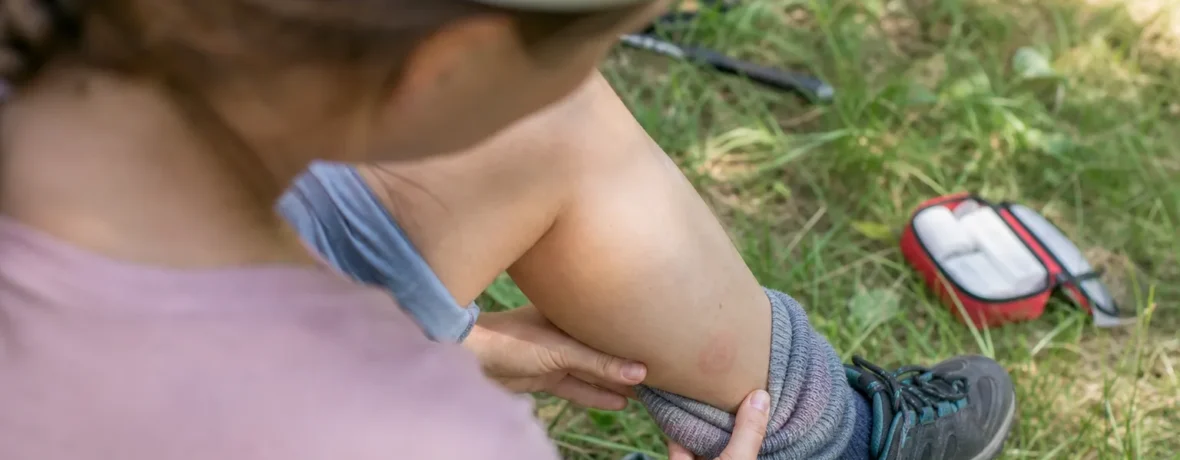
Lyme disease symptoms can start 3 to 30 days after an infected tick bite. Watch for an expanding rash, fever, chills, headache, fatigue, muscle or joint aches, and swollen lymph nodes. Yes, Lyme disease can occur without the classic bull’s-eye rash, so flu-like symptoms after tick exposure deserve a call to a clinician.
What are the first Lyme disease symptoms after a hike?
The first signs are usually a spreading rash or flu-like symptoms. According to the CDC’s Lyme disease symptom guidance, early symptoms can appear 3 to 30 days after a tick bite and may include fever, chills, headache, fatigue, muscle aches, joint aches, and swollen lymph nodes.
That timing matters. If you hiked through brush, tall grass, leaf litter, deer trails, or the edge of a campsite, then felt “off” a week later, don’t shrug it off as trail fatigue. A rough climb can make your quads sore. Lyme can make your whole body feel like you’re getting the flu.
Early Lyme disease can show up with:
- An expanding red, pink, or purplish rash
- Fever or chills
- Headache
- Heavy fatigue that feels out of proportion
- Muscle and joint aches
- Swollen lymph nodes
You may not remember a tick bite. Ticks can be tiny, bites are often painless, and the best hiding places are exactly where you don’t glance after a long day: behind knees, waistline, armpits, groin, hairline, belly button, and under pack straps.
What does a Lyme disease rash look like?
A Lyme rash usually expands over several days and is often not itchy or painful. The medical name is erythema migrans, and the CDC says it occurs in roughly 70% to 80% of infected people.
Forget the idea that it must look like a perfect bull’s-eye. Sometimes it does. Many times it doesn’t. It may look like a solid oval, a round red patch, a bruise-like purple area on darker skin, or a warm expanding blotch that keeps getting wider.
| Skin change | More like Lyme rash | More like simple bite irritation |
|---|---|---|
| Timing | Starts days after the bite, often within 3 to 30 days | Shows up right away or within hours |
| Size | Expands over several days and may reach 12 inches [30 cm] or more | Stays small and fades in 1 to 2 days |
| Feel | May feel warm, but is rarely itchy or painful | Often itchy, tender, or mosquito-bite-like |
A smart trail move: outline the edge of the rash with a pen and take a clear photo with a date stamp or a coin beside it for scale. If the border moves outward, that’s useful information for your healthcare provider.
How soon after a tick bite do symptoms start?
Early symptoms can start 3 to 30 days after the bite. Later signs can show up days to months later if Lyme disease is untreated.
Here’s the hiker’s timeline to keep in your head:
- Same day to 2 days: Small redness or a bump can be normal bite irritation.
- Days 3 to 30: Watch for an expanding rash, fever, chills, headache, fatigue, muscle aches, joint aches, or swollen glands.
- Days to months: Watch for severe headache, neck stiffness, facial droop, irregular heartbeat, dizziness, shortness of breath, nerve pain, numbness, tingling, or swollen painful joints.
The later symptoms are not “wait and see” territory. The Wilderness Medical Society tick-borne illness guidelines flag systemic or higher-risk symptoms after suspected tick-borne illness as reasons to get to a higher level of medical care.
Can you have Lyme disease without a bull’s-eye rash?
Yes, you can have Lyme disease without a bull’s-eye rash. Some people get a rash that is not target-shaped, and some do not notice a rash at all.
This is where hikers get tripped up. You check your calf, see no dramatic red ring, and decide you’re fine. But Lyme disease symptoms can also feel like a summer virus: fever, chills, headache, deep tiredness, and body aches. If those symptoms arrive after a hike in tick country, connect the dots.
A rash can also hide under socks, sports bras, waistbands, underwear lines, watch straps, and hair. Do the awkward mirror check. Use your phone camera. Ask a trail partner or family member to check your back and scalp if you can.
What should you do right after finding a tick?
Remove the tick as soon as you can. The CDC’s tick bite removal advice recommends clean, fine-tipped tweezers and steady upward pressure.
- Grab the tick as close to your skin as possible with fine-tipped tweezers.
- Pull upward with steady, even pressure. Don’t twist, crush, burn, or smother it.
- Clean the bite area and your hands with soap and water or alcohol-based sanitizer.
- Save a photo of the tick if you can. A clear shot may help with identification.
- Write down the date, trail location, and where on your body it was attached.
- Check the rest of your body and your clothing. One tick is your warning siren, not the whole story.
After a hike, toss dry trail clothes in a dryer on high heat for 10 minutes to kill ticks on clothing, and shower soon after coming indoors. The CDC also recommends EPA-registered repellents and 0.5% permethrin-treated clothing or gear for tick bite prevention; permethrin goes on gear and clothing, not skin, per CDC prevention guidance.
When to see a doctor
See a doctor if you develop an expanding rash or flu-like symptoms after a tick bite or time in tick habitat. Don’t wait for a perfect bull’s-eye.
Call a healthcare provider if any of these show up within days to weeks after a hike:
- Expanding rash anywhere on your body
- Fever, chills, headache, or unusual fatigue
- Muscle or joint aches that feel different from normal post-hike soreness
- Swollen lymph nodes
- Multiple rashes
- Severe headache or stiff neck
- Facial droop or weakness on one side of the face
- Heart palpitations, dizziness, fainting, chest discomfort, or shortness of breath
- Severe joint swelling, especially in a knee or other large joint
- Numbness, tingling, shooting pain, or nerve pain
Seek urgent care for facial droop, chest symptoms, fainting, severe headache with neck stiffness, shortness of breath, or neurologic symptoms. For testing questions, the CDC explains Lyme disease diagnosis and testing: blood tests look for antibodies, and they can be negative during the first few weeks of infection. A clinician will weigh symptoms, exposure, exam findings, and timing.
Do not start leftover antibiotics, guess at treatment, or use online-only testing to make the call. Lyme disease is treatable, but the right next step depends on your symptoms, where you hiked, the type of tick if known, and how long it may have been attached.
How can hikers tell Lyme symptoms from normal post-hike soreness?
Normal soreness improves with rest; Lyme-type symptoms often come with rash, fever, chills, headache, swollen glands, or unusual fatigue. Sore calves after a steep descent are ordinary. A spreading rash plus fever is not.
Use this simple trail-brain filter:
- Likely normal: Tender quads after downhill miles, hot spots from boots, mild sun fatigue, stiffness that improves after a day.
- Pay attention: A bite site that expands after several days, flu-like symptoms, fatigue that feels heavy and strange, or aches not tied to one hard effort.
- Get medical help fast: Facial droop, heart palpitations, dizziness, shortness of breath, severe headache, stiff neck, or swollen painful joints.
Your job is not to diagnose yourself in the garage while unpacking trekking poles. Your job is to notice patterns, document them, and get help when the pattern points beyond ordinary trail wear.
Related reading
- Hypothermia Symptoms and Trail First Aid
- Heat Stroke Symptoms on the Trail
- Hantavirus and Camping: Cabins, Shelters and Risk
- Electrolytes for Hikers: What They Are and How Much You Need
FAQ
What are the most common Lyme disease symptoms?
The most common early Lyme disease symptoms are an expanding rash, fever, chills, headache, fatigue, muscle aches, joint aches, and swollen lymph nodes. The rash may be bull’s-eye shaped, but it does not have to be.
How long should I watch for symptoms after a hike?
Watch closely for 30 days after a known tick bite or likely tick exposure. Later symptoms can occur after that, but the classic early window for rash and flu-like symptoms is 3 to 30 days.
Does every tick bite cause Lyme disease?
No, every tick bite does not cause Lyme disease. Risk depends on the tick species, where you were hiking, whether the tick was infected, and how long it was attached.
Should I get tested right after a tick bite?
Usually, testing right after a tick bite is not helpful because antibodies may not be detectable yet. If symptoms develop, contact a healthcare provider and tell them the bite date, hiking location, and what symptoms you have.
Can Lyme disease symptoms go away on their own?
Some early symptoms may fade, but untreated Lyme disease can lead to later problems involving joints, nerves, the heart, or other systems. If symptoms appear after tick exposure, get medical advice rather than waiting it out.