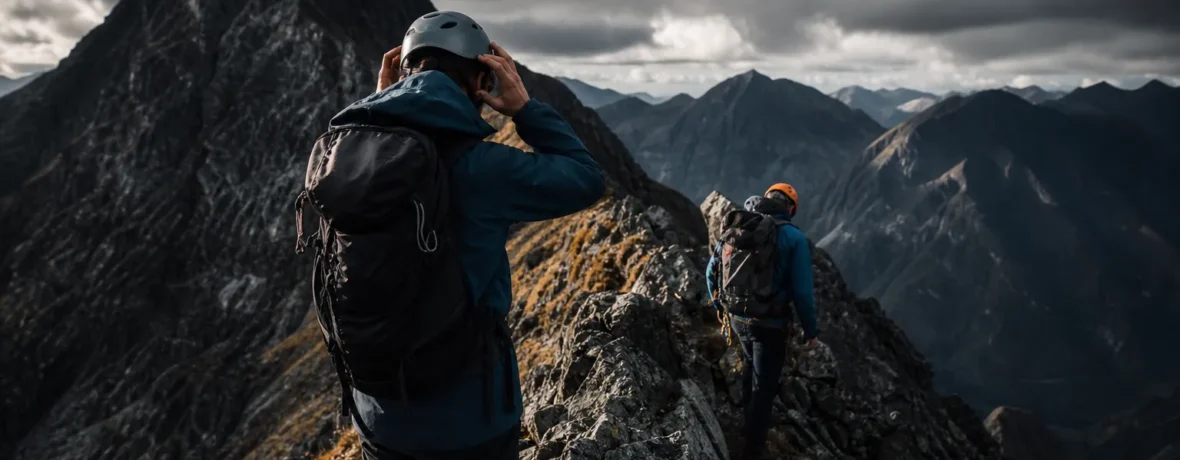
Summit fever is the urge to keep climbing when the safe move is turning around. Turn around if you miss your preset time, weather is building, visibility drops, anyone has worsening symptoms, water or daylight won’t cover the descent, or your group can’t move steadily. The summit is optional. Getting down is not.
What is summit fever in hiking?
Summit fever is goal fixation with a better view and worse judgment.
It shows up when you start treating the top like a debt you are owed. You drove hours. You trained. You bought the permit, packed the food, checked the forecast, got up in the dark, and suffered through the climb. Now the summit feels close enough to cash in.
That is the trap. The mountain does not care what you invested. The trail does not grade on effort. Once your brain starts saying, “We came this far,” you need a colder voice in the room: “Can we get back down safely?”
Here is the position: turning around is not failure. Pushing past obvious warning signs is failure. A summit photo is nice. A clean descent is the real objective.
How do you know when to turn around on a hike?
You turn around when the descent is no longer clearly within your time, energy, weather, and health margins.
Do not wait for drama. Good turnaround decisions usually feel early. That is why they work. If you wait until someone is stumbling, the storm is overhead, or the headlamps are out with 4 miles [6.4 km] left, you are no longer making a smart call. You are managing a mistake.
Use these triggers before you leave the trailhead:
| Trigger | What it means | Move |
|---|---|---|
| Hard turnaround time passes | You are behind the pace needed for a safe descent | Turn around, even if the summit is visible |
| Weather changes fast | Wind, thunder, graupel, heat, or whiteout risk is rising | Leave exposed terrain and descend |
| Someone is getting worse | Symptoms are trending the wrong way | Stop ascent; descend if symptoms do not improve |
| Descent resources are thin | Not enough daylight, water, food, warmth, or battery | Choose the safest exit now |
What are the signs of summit fever?
The clearest sign is when you start making excuses for risk you would normally reject.
Summit fever rarely sounds reckless inside your own head. It sounds reasonable. It says, “Just 20 more minutes.” Then it says that again. It shrinks bad signs and inflates good ones.
Watch for these mental tells:
- Bargaining: “We’ll go to the next ridge and decide there.”
- Sunk-cost thinking: “We already did the hard part.”
- Social pressure: “Everyone else is still going.”
- Selective weather reading: “Those clouds might miss us.”
- Dismissal of symptoms: “It’s just a headache.”
- Rushing: moving faster because you are late, not because you are strong.
When those thoughts appear, slow the group down. Say the quiet part out loud. A spoken concern has weight. A private worry often gets buried under boot noise.
What is a safe turnaround time?
A safe turnaround time is the latest time you can stop ascending and still descend with daylight, weather, and energy to spare.
Set it at home, not on the ridge. The trailhead is already too late for emotional math, and the summit push is the worst place to negotiate with yourself.
A simple rule works: estimate your total hiking time, then give the descent a protected cushion. If the route is steep, loose, snowy, technical, hot, or unfamiliar, make the cushion bigger. Descending tired legs on loose rock is not a victory lap. It is where many bad choices collect.
- Pick a latest summit time. Write it down or put it in your phone.
- Pick a latest turnaround time. This is earlier than your latest summit time.
- Check progress at fixed points. Use trail junctions, lakes, passes, ridges, or elevation markers.
- Protect the descent. Save water, calories, layers, battery, and patience for the way down.
- Obey the time. If you hit the cutoff, turn around without a debate.
The magic is not in the exact minute. The magic is in deciding before your ego gets a vote.
When should altitude symptoms stop a summit attempt?
Altitude symptoms should stop ascent when they appear and should trigger descent when they worsen, are severe, or do not improve with rest.
Above 8,000 feet [2,438 m], altitude illness becomes a real planning factor. The CDC guidance on high-altitude travel says people with altitude illness should not travel higher until symptoms are gone, and worsening symptoms at rest call for moving to a lower elevation.
Do not play tough with altitude. Headache plus nausea, dizziness, unusual fatigue, or vomiting is not just “having an off day” when you are high. Confusion, loss of coordination, extreme fatigue, shortness of breath at rest, weakness, or cough can point to severe altitude illness. The Wilderness Medical Society altitude illness guidelines support descent for severe acute mountain sickness and immediate descent for suspected high-altitude cerebral edema in remote settings.
Plain trail rule: no one with worsening altitude symptoms goes higher. No summit is worth arguing with low oxygen.
What should your group do when one person wants to keep going?
The group should follow the safest person’s limit, not the most ambitious person’s appetite.
This is where hiking groups either get solid or get stupid. A strong hiker can still be wrong. A tired hiker can still be the smartest voice on the mountain. If one person is done, the plan changes.
Use a no-blame rule before the hike starts:
- Anyone can call a turnaround.
- No one has to defend that call like a courtroom case.
- The group does not split unless it was planned, safe, and equipped from the start.
- The slowest safe pace sets the group pace.
- The descent gets the same attention as the climb.
If someone mocks the turnaround call, that person is telling you they are a liability. Believe them.
How do weather and terrain change the turnaround decision?
Bad weather and exposed terrain should move your turnaround point earlier.
A blue-sky trail through trees gives you more margin than a windy ridge above treeline. A dry dirt path is not the same as wet slabs, loose talus, corn snow, or a knife-edge scramble. Terrain changes the cost of every mistake.
Turn around early when you see:
- Thunderheads building while you are above treeline
- Wind strong enough to affect balance
- Visibility dropping across the route behind you
- Snow softening underfoot on steep slopes
- Ice forming on rock, roots, or steps
- Heat forcing longer breaks and heavier water use
Heat deserves respect, too. The CDC describes heat stroke as a medical emergency, with warning signs that can include confusion, altered mental status, and slurred speech. If heat is changing how someone thinks, talks, or walks, the hike is over. Start cooling, get help, and stop chasing the top.
When to see a doctor
Get medical help after a hike if symptoms are severe, worsening, unusual, or do not resolve with rest, food, water, warmth, cooling, and descent.
Call 911 or seek emergency care for confusion, loss of coordination, fainting, chest pain, severe shortness of breath, seizure, loss of consciousness, suspected heat stroke, or suspected hypothermia. For cold exposure, Mayo Clinic hypothermia first aid lists red flags such as slurred speech, shallow breathing, weak pulse, clumsiness, drowsiness, confusion, and loss of consciousness.
This column is not a diagnosis. It is a decision tool. If your body or your hiking partner’s body is acting wrong, stop ascending and get qualified help.
What is the best way to beat summit fever?
The best way to beat summit fever is to make the turnaround decision before desire takes over.
You need a plan that is stronger than your mood. Build it while you are calm, fed, warm, and sitting under a roof.
- Name the real goal: everyone back at the trailhead.
- Set hard cutoffs: time, weather, water, symptoms, and daylight.
- Assign a skeptic: one person must challenge the push-on logic.
- Check the descent: ask, “Would we be happy descending this right now?”
- Use simple language: “We are turning around” beats “Maybe we should consider…”
The summit will still be there. Your knees, lungs, fingers, and friends deserve to be there too.
Related reading
- What Is a False Summit?
- Can Dehydration Cause a Fever?
- Valley Fever: Desert Hiking Risk
- Rocky Mountain Spotted Fever: Symptoms for Hikers
FAQ
Is summit fever only a problem on big mountains?
No. Summit fever can happen on any hike with a tempting objective. A 4,000-foot [1,219 m] peak, desert overlook, waterfall, or winter ridge can all pull you past good judgment.
Should I turn around if I can see the summit?
Yes, if any preset safety trigger has been hit. Seeing the summit does not prove you have enough time, energy, weather, or health margin to reach it and descend safely.
Is turning around worse when I have a permit?
No. A permit gives access; it does not guarantee safe conditions or a safe body on that day. Treat the money and effort as spent the moment you leave the trailhead.
What if the group disagrees about turning around?
Default to the safer call. If one person has symptoms, is scared, is slowing sharply, or sees a hazard others are ignoring, the group should stop the summit push and reassess from a place of safety.
Can I keep hiking with a mild altitude headache?
Do not ascend higher with altitude symptoms. Rest, hydrate, eat if you can, and monitor closely; if symptoms worsen or do not improve, descend and seek medical guidance when needed.
What is the one rule that prevents most summit fever mistakes?
Protect the descent. Before every push higher, ask whether you can still get back down safely with the weakest hiker, current weather, remaining daylight, and supplies you have right now.