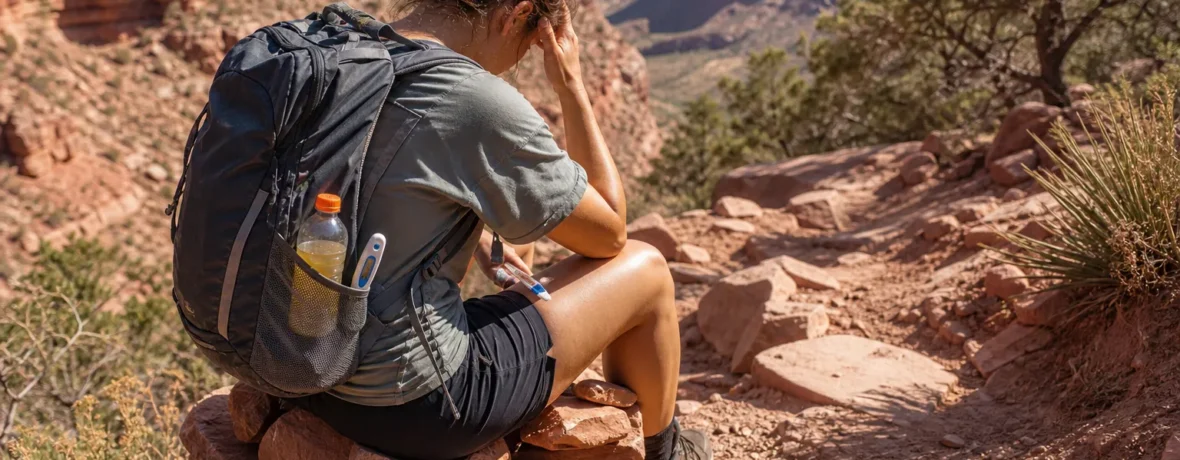
Yes, dehydration can raise your body temperature, especially during hard hiking in heat, but it usually does not cause a true infection-style fever by itself. If your temperature hits 103°F [39.4°C] or higher, or you’re confused, fainting, or vomiting, treat it as urgent heat illness.
Can dehydration cause fever on a hike?
Yes, dehydration can cause fever-like overheating on trail.
If you’re asking “can dehydration cause fever,” the clean answer is this: dehydration makes it harder for your body to cool itself. You sweat less effectively, your blood volume drops, your heart works harder, and your core temperature can climb. That can look and feel like a fever: hot skin, chills, headache, weakness, nausea, and a thermometer reading above normal.
But there’s a useful split here. A true fever is usually your immune system raising your body’s temperature set point because of infection, inflammation, or another medical trigger. Heat illness is different. Your body is gaining more heat than it can dump. On a climb with a full pack, no shade, high humidity, and low fluid intake, that difference matters fast.
The CDC heat illness guidance says heat exhaustion is the body’s response to excessive loss of water and salt, usually through heavy sweating, and symptoms can include thirst, heavy sweating, weakness, headache, nausea, dizziness, decreased urine output, and elevated body temperature.
What temperature is dangerous if you are dehydrated?
A temperature of 103°F [39.4°C] or higher is a red flag.
On trail, don’t play thermometer lawyer. A lower number can still be serious if the person looks wrong: confused, staggering, faint, unable to keep fluids down, or not acting like themselves. The CDC’s heat-related illness chart lists heat stroke warning signs including body temperature of 103°F [39.4°C] or higher, confusion, loss of consciousness, fast strong pulse, and hot red skin that may be dry or damp.
Heat stroke is the big one. The CDC states that during heat stroke, body temperature can rise to 106°F [41.1°C] or higher within 10 to 15 minutes. That is not “walk it off” territory. That is call 911, cool aggressively, and stop the hike.
| What you see | More likely | Trail response |
|---|---|---|
| Thirst, dark urine, dry mouth, headache | Dehydration | Rest in shade, sip fluids, eat salty food if tolerated |
| Heavy sweating, weakness, dizziness, nausea, elevated temperature | Heat exhaustion | Stop hiking, cool the person, sip water, monitor closely |
| Confusion, fainting, seizure, very high temperature, collapse | Heat stroke | Call 911, cool fast with cold water, do not continue hiking |
What are the symptoms of dehydration with a fever?
Watch for heat plus dehydration signs together.
A hiker who is getting dehydrated may have a dry mouth, dizziness, rapid heartbeat, rapid breathing, irritability, confusion, or very dark yellow to amber urine. MedlinePlus dehydration guidance also lists not urinating, sunken eyes, listlessness, and shock as possible signs in more severe cases.
On a hot trail, the combo that should snap your attention into focus is simple:
- Hot body plus headache
- Dizziness or fainting
- Nausea or vomiting
- Muscle cramps that keep coming back
- Dry mouth and very dark urine
- Fast pulse or fast breathing
- Confusion, slurred speech, or strange behavior
- Temperature at or above 103°F [39.4°C]
That last cluster—confusion, collapse, very high temperature—is the line you do not cross. Stop. Cool. Call for help.
Can dehydration cause chills or make you feel cold?
Yes, you can feel chilled even while overheating.
That sounds backward, but hikers know the feeling: you’re sweating hard, the wind hits your wet shirt, and suddenly you’re shivering on a sunny ridge. Chills can also happen when your body is under stress, your skin is wet, or your temperature regulation is getting messy.
Do not use chills as proof you are “not hot.” A person with heat illness may sweat heavily, feel clammy, or complain of feeling cold. Look at the whole picture: pace, mental status, urine output, nausea, dizziness, and temperature if you can check it safely.
What should you do if dehydration is raising your temperature?
Stop hiking and cool down now.
This is not the moment to push for the pass, the lake, or the car. Your first job is to lower heat load and replace fluids without creating a new problem.
- Get out of the heat. Move to shade, a breezy spot, a creekside, or an air-conditioned vehicle if one is close.
- Drop effort to zero. Sit or lie down. Take off the pack. Loosen tight clothing.
- Cool the body. Wet the shirt, hat, neck, arms, and legs. Fan the person. Use cold water from bottles, a stream, or a soaked bandana.
- Sip fluids if alert. Use small, steady sips of water or an electrolyte drink. Do not force fluids into someone who is confused, fainting, or vomiting repeatedly.
- Eat something salty if tolerated. Crackers, pretzels, jerky, trail mix, or a salty bar can help replace sodium lost through sweat.
- Recheck symptoms after 15 minutes. If the person is worse, not improving, confused, or too weak to walk safely, get emergency help.
The Wilderness Medical Society heat illness guidelines recommend minimizing dehydration in heat illness and using oral fluid replacement first for mild and moderate cases when the person can safely drink. For suspected heat stroke, cooling comes first. Cold water immersion is preferred when it can be done safely.
How much water should you drink to prevent dehydration fever?
Drink to thirst, but plan enough water to make that possible.
There is no single bottle count that works for every hiker. A 120 lb [54 kg] hiker on a shaded 50°F [10°C] trail does not need the same amount as a 210 lb [95 kg] hiker grinding up sun-baked switchbacks at 95°F [35°C]. Sweat rate changes with heat, humidity, altitude, pace, pack weight, fitness, clothing, and acclimatization.
The Wilderness Medical Society recommends a drink-to-thirst approach that prevents more than 2% body weight loss during activity. For a 180 lb [82 kg] hiker, 2% is 3.6 lb [1.6 kg]. Since 1 quart [0.95 L] of water weighs about 2.1 lb [1 kg], that loss can happen sooner than you think on a hot climb.
Use this trail check instead of guessing:
- You are peeing every few hours.
- Your urine is pale yellow, not dark amber.
- You are thirsty but not desperate.
- You can eat without feeling queasy.
- Your pace feels sustainable, not weirdly crushing.
- You are not getting dizzy when you stand.
Do not overcorrect by chugging plain water nonstop for hours. Too much water without enough sodium can contribute to low blood sodium, which can also cause headache, nausea, confusion, and worse. Balance matters.
When to see a doctor
Get medical help when symptoms are severe, strange, or not improving.
For adults with fever, Mayo Clinic fever first aid says to seek medical care when fever comes with symptoms such as trouble breathing, chest pain, severe headache or stiff neck, confusion, repeated vomiting, dehydration signs, rash, trouble swallowing fluids, or pain with urination or back pain.
On trail, call 911 or activate emergency help if any of these show up:
- Confusion, slurred speech, seizure, or loss of consciousness
- Temperature of 103°F [39.4°C] or higher
- Vomiting that prevents drinking
- Symptoms that get worse after cooling and rest
- No improvement after 1 hour of rest, cooling, and careful sipping
- Signs of heat stroke, including collapse or altered mental status
- Chest pain, trouble breathing, or severe weakness
Do not diagnose the cause of a fever in the backcountry. Dehydration, heat exhaustion, infection, altitude illness, stomach illness, medication effects, and low blood sodium can overlap in ugly ways. Treat what you can see: stop exertion, cool the person, replace fluids if safe, and get help when the situation is not clearly turning around.
Related reading
- Can Dehydration Cause High Blood Pressure?
- Can Dehydration Cause Dizziness?
- Can Dehydration Cause Headaches?
- Can Dehydration Cause Chest Pain?
FAQ
Can dehydration cause a low-grade fever?
Yes, dehydration can contribute to a mild rise in body temperature, especially during heat and exertion. A true low-grade fever can also come from infection, so look for other symptoms and monitor whether cooling and fluids help.
Can dehydration cause a fever of 102°F [38.9°C]?
It can happen with heat illness, but 102°F [38.9°C] should get your attention. Stop hiking, cool down, sip fluids if you can, and seek medical advice if symptoms are severe, worsening, or tied to vomiting, confusion, stiff neck, rash, or trouble breathing.
Can kids get a fever from dehydration faster than adults?
Yes, kids can dehydrate and overheat faster because they have smaller fluid reserves and may not speak up early. Treat heat, vomiting, diarrhea, no urination, unusual sleepiness, or confusion in a child as a bigger deal, not a wait-and-see trail problem.
Does drinking water bring down a dehydration fever?
Sometimes, if the problem is mild dehydration and heat strain. But cooling the body matters too: shade, rest, wet clothing, airflow, and cold water on the skin can lower heat faster than drinking alone.
Can dehydration cause fever without sweating?
Yes, but no sweating with high heat is dangerous. If someone is hot, confused, faint, or has a temperature near 103°F [39.4°C] or higher, treat it as possible heat stroke and call 911 while cooling them fast.