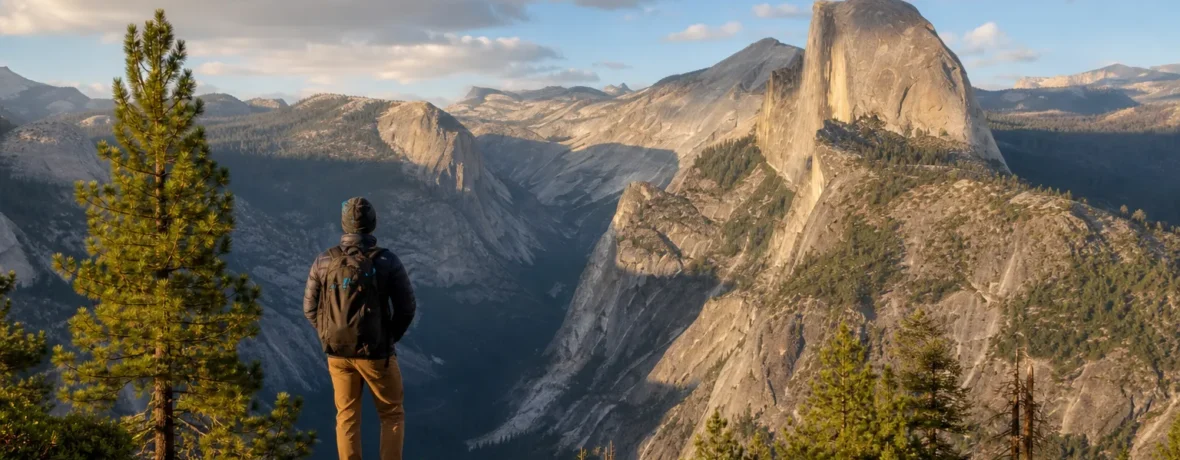
Yes: Yosemite is a U.S. national park in California’s Sierra Nevada. It protects nearly 1,200 square miles [3,108 sq km] of cliffs, waterfalls, Sequoia groves, meadows, rivers, and high country, with federal rules for fees, permits, camping, pets, wildlife, and trail use.
Is Yosemite a national park or a state park?
Yosemite is a national park, not a state park. That means it is managed by the National Park Service, not California State Parks.
Yosemite’s story has a twist, though. Yosemite Valley and the Mariposa Grove were first protected under the Yosemite Grant in 1864, then Congress designated Yosemite as a national park in 1890. Today, visitors usually mean the full federal park when they say “Yosemite.” The National Park Service says Yosemite protects nearly 1,200 square miles [3,108 sq km] of the Sierra Nevada, including Yosemite Valley, Tuolumne Meadows, Hetch Hetchy, Wawona, Glacier Point, and the Mariposa Grove area. See the official Yosemite National Park FAQ from the National Park Service for the current park overview, as of November 2026.
What does national park status mean for you?
It means you’re entering federally protected land with recreation rules that can change by season, safety conditions, fire danger, snow, and crowding.
For hikers, that matters. You can day hike many trails without a hiking permit, but you still need to follow park rules: stay on trails where required, pack out trash, store food correctly, keep pets only where they’re allowed, and check road and trail conditions before committing to a plan. Yosemite is not a theme park with granite scenery. It is wild land with paved access in some places and serious backcountry just beyond the trailhead.
As of November 2026, Yosemite is open 24 hours per day, 365 days per year, but the Hetch Hetchy area is open only from sunrise to sunset except for permitted backpackers. Tioga Pass Road, the high east-side entrance on Highway 120, typically closes around November and reopens in late May or June depending on snow. The official Yosemite basic information page is the place to verify hours, seasonal road access, and entrance details before you drive.
Do you need a reservation to enter Yosemite?
As of November 2026, you do not need an entrance reservation to enter Yosemite in 2026.
That does not mean every Yosemite trip is reservation-free. You still need a place to sleep if you are staying overnight, and lodging and campground spots are separate from park entry. You also need certain permits for specific hikes or overnight wilderness travel. The National Park Service states on its Yosemite permits and reservations page that no entrance reservation is required in 2026, while wilderness permits and Half Dome permits still apply in the situations described below.
How much does it cost to enter Yosemite?
As of November 2026, Yosemite charges a standard entrance fee unless you enter with a valid federal pass or qualify for a fee-free option.
The official Yosemite fee table lists $35 for a private vehicle, $30 for a motorcycle, and $20 per person for visitors entering on foot, bicycle, horse, or non-commercial bus or van; those passes are valid for seven consecutive days. Yosemite also lists a $70 annual Yosemite pass. Check the current fee table on the park’s basic information page before you go, because fees are exactly the kind of thing you do not want to learn at the entrance station with cars stacked behind you.
| Trip type | What you usually need | As of November 2026 |
|---|---|---|
| Drive in for the day | Entrance pass | No 2026 entrance reservation required |
| Day hike most trails | Entrance pass | No wilderness permit for ordinary day hikes |
| Hike Half Dome when cables are up | Entrance pass plus Half Dome permit | Permit required seven days per week |
| Backpack overnight | Entrance pass plus wilderness permit | Permit required year-round |
Do you need a permit to hike in Yosemite?
For ordinary day hikes, no wilderness permit is required; for overnight wilderness trips, yes, a permit is required year-round.
That split trips up fast. A day hike to many viewpoints, lakes, waterfalls, or meadows can be simple: pay the entrance fee, park legally, carry the right gear, and hike. But if you sleep in the Yosemite Wilderness, backpack to a backcountry camp, or spend the night on a big wall climb, you need a wilderness permit.
As of November 2026, Yosemite says wilderness permits are required all year for backpacking, overnight climbing, or any other overnight stay in the Yosemite Wilderness. During the busy season from late April through October, reservations are required for many popular trailheads. The park releases 60% of each trailhead quota by lottery 24 weeks in advance, with the remaining 40% becoming available seven days in advance. Verify dates and quotas on the official Yosemite wilderness permits page.
Do you need a permit for Half Dome?
Yes, you need a Half Dome permit when the cables are up.
Half Dome is the big exception that catches strong day hikers. As of November 2026, the National Park Service says permits are required seven days per week when the cables are up, with a daily limit of 300 hikers beyond the base of the subdome. The hike is listed by the park as 14 miles [22.5 km] round trip with about 5,000 feet [1,524 m] of elevation gain, and the summit stands 8,800 feet [2,682 m] above sea level. Day hikers use the lottery system; backpackers request Half Dome access with eligible wilderness permits. Check the Half Dome details through the park’s permits page before planning around it.
Can you camp anywhere in Yosemite?
No, you cannot camp just anywhere in Yosemite.
Frontcountry camping belongs in designated campgrounds, and backpacking camps must follow wilderness permit rules. Sleeping in a vehicle is not allowed unless you are in a campsite registered to you, and Camp 4 does not allow sleeping in vehicles because it is a walk-in campground. As of November 2026, Yosemite’s campground reservation system runs through Recreation.gov for reservable campgrounds, and summer demand is fierce.
If your plan is “we’ll figure it out when we get there,” tighten it up. Yosemite Valley is not a good place to improvise sleep after dark. Book a legal campsite or lodging, hold a valid wilderness permit for a backcountry night, or stay outside the park.
What rules should hikers know before visiting Yosemite?
Know the food, wildlife, pet, permit, and trail rules before your boots hit dirt.
Yosemite’s rules are not decoration. They protect bears, keep traffic moving, reduce trail damage, and prevent avoidable rescues. Here is the short version:
- Store food correctly. As of November 2026, Yosemite requires proper storage for food, drinks, trash, toiletries, and other scented items; hanging food is illegal throughout the park. Use an allowed bear-resistant container or food locker. See the official Yosemite food storage while backpacking page.
- Do not feed wildlife. Feeding or approaching animals is illegal and dangerous.
- Keep pets where pets are allowed. As of November 2026, pets are allowed in developed areas, on fully paved roads, sidewalks, and bicycle paths unless signed otherwise, and in most campgrounds. They are not allowed on most hiking trails. Leashes may not exceed 6 feet [1.8 m]. Check the official Yosemite pets page before bringing a dog.
- Skip the drone. The National Park Service generally prohibits launching, landing, or operating drones in national parks, including Yosemite.
- Stay on trail. Shortcuts scar switchbacks, crush plants, and can put you above cliffs or loose rock faster than you expect.
- Check current conditions. Snow, rockfall, fire impacts, construction, and high water can close roads or trails.
How should you plan a first Yosemite hiking trip?
Start with the season, then build the hike around permits, roads, daylight, and fitness.
- Pick your month. Spring brings waterfalls and possible snow. Summer opens more high-country trails. Fall is cooler. Winter is quieter but limits access.
- Choose your base area. Yosemite Valley is best for first-timers who want classic views. Tuolumne Meadows is higher, cooler, and more seasonal. Wawona and Mariposa Grove suit sequoia-focused trips.
- Check whether your hike needs a permit. Half Dome and all overnight wilderness trips are the big ones.
- Reserve your sleep legally. Campsites, lodging, or a wilderness permit must come before the drive if you plan to stay overnight.
- Pack for mountain weather. Even paved trailheads can sit near cold water, slick granite, and fast weather shifts.
- Recheck conditions the week you go. A plan made in January can get wrecked by a June snowpack, a September fire, or a sudden road closure.
Related reading
- How Big Is Yosemite National Park?
- Where to Stay in Yosemite for Hikers
- What to Do in Yosemite: Hikes for Every Level
- National Park Pass Changes for 2026
FAQ
Is Yosemite in California?
Yes, Yosemite National Park is in California’s Sierra Nevada. The park spans parts of Mariposa, Tuolumne, and Madera counties.
Is Yosemite open all year?
Yes, Yosemite National Park is open year-round, 24 hours per day, as of November 2026. Some areas and roads are seasonal, including Tioga Road, and Hetch Hetchy has sunrise-to-sunset access for day visitors.
Can you visit Yosemite without a permit?
Yes, many visitors can enter and day hike without a special hiking permit, as long as they pay the required entrance fee or use a valid pass. You need permits for Half Dome when the cables are up and for overnight wilderness travel.
Are dogs allowed on Yosemite trails?
Usually no. As of November 2026, pets are allowed in developed areas and on many paved roads, sidewalks, and bike paths, but not on most hiking trails.
Can you sleep in your car in Yosemite?
Only in a campsite registered to you, and not in walk-in Camp 4. Sleeping in a vehicle along roadsides, at trailheads, or in parking lots is not allowed.
Why is Yosemite protected as a national park?
Yosemite is protected for its granite cliffs, waterfalls, giant sequoias, wilderness, wildlife habitat, rivers, meadows, and cultural history. National park status keeps those resources protected while still allowing public recreation under clear rules.