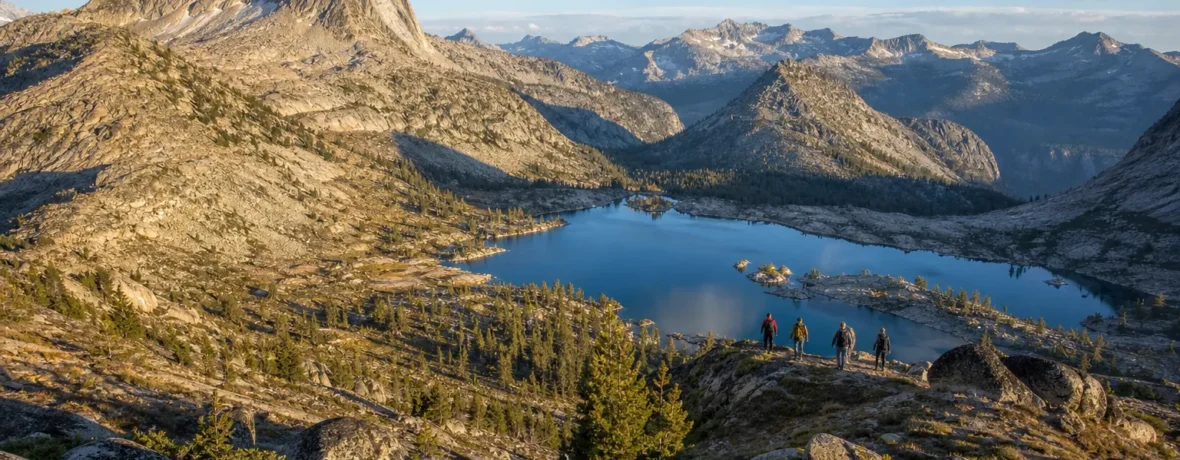
Yosemite National Park is 759,620 acres, or 1,187 square miles [3,074 sq km]. The answer to how big is Yosemite National Park: bigger than most visitors can cover in one trip, with 704,624 acres of designated wilderness, 800 miles [1,288 km] of trails, and elevations from 2,000 to 13,000 feet [600 to 4,000 m].
How big is Yosemite National Park in acres and square miles?
Yosemite is 759,620 acres, or 1,187 square miles [3,074 sq km]. That’s the official land mass listed by the National Park Service in its Yosemite park statistics, verified as of November 2026. (home.nps.gov)
Numbers help, but boots understand scale better. Yosemite is not just Yosemite Valley, Half Dome, and a few waterfall trails. It reaches across a huge slab of the central Sierra Nevada in California: deep canyons, polished granite domes, giant Sequoia groves, high country basins, snowbound passes, and long stretches where the road noise disappears completely.
The park’s famous Valley is only one piece of the map. Yosemite Valley is roughly 7 miles long and 1 mile wide, based on the National Park Service brochure description. That narrow corridor gets much of the attention because it holds icons like El Capitan, Yosemite Falls, and the Merced River corridor. But the full park spreads far beyond it. (nps.gov)
| Yosemite feature | Official size or count | What it means for you |
|---|---|---|
| Total park land | 759,620 acres; 1,187 sq mi [3,074 sq km] | Plan by region, not by “seeing Yosemite” in one day. |
| Designated wilderness | 704,624 acres; 1,101 sq mi [2,852 sq km] | Most of the park is backcountry, not roadside sightseeing. |
| Trails | 800 miles [1,288 km] | You have everything from flat strolls to hard alpine trips. |
| Paved roads | 214 miles [344 km] | Driving connects regions, but it does not shrink the park. |
How much of Yosemite is wilderness?
Most of Yosemite is wilderness. The park has 704,624 acres of designated wilderness, which is 92.8% of its total land area, based on the official NPS acreage figures. (home.nps.gov)
That matters the second you start planning a hike longer than a casual Valley walk. Roads reach Yosemite Valley, Wawona, Glacier Point when open, Hetch Hetchy, Mariposa Grove access, and the Tioga Road corridor when open. After that, your feet do the work.
Yosemite’s wilderness is why a short-looking line on the map can turn into a serious day. Granite steps, exposed slabs, snow patches, creek crossings, altitude, and summer heat all change the math. Mileage alone does not tell the truth here.
Where is Yosemite’s land spread out?
Yosemite spreads across the Sierra Nevada, with elevations from 2,000 feet to 13,000 feet [600 to 4,000 m]. The National Park Service lists that elevation range on its Yosemite weather page, and that vertical relief is one reason the park can feel like several parks stitched together. (nps.gov)
Down low, you get oak woodland, river corridors, and warm shoulder-season hiking. In Yosemite Valley, the floor sits at 4,000 feet [1,220 m], and the walls rise hard above you. Higher up, Tuolumne Meadows sits at 8,575 feet [2,614 m], and the park’s tallest point, Mt. Lyell, reaches 13,114 feet [3,997 m], according to NPS natural resource statistics. (nps.gov)
That range changes your packing list. A sunny morning in the Valley can still mean snow or cold wind in the high country. In winter and spring, many upper-elevation routes can hold snow while lower trails are open and dry.
How many miles of trails are in Yosemite?
Yosemite has 800 miles [1,288 km] of trails. That official NPS trail count gives you the clearest hiker’s answer to the park’s size: Yosemite is big enough to return for years and still leave whole drainages untouched. (home.nps.gov)
Some trails are short and friendly. Lower Yosemite Fall is a classic quick walk. Others bite back. The Half Dome route, Yosemite Falls Trail, Four Mile Trail, Snow Creek, and long high-country routes ask for fitness, early starts, water planning, and honest pacing.
Use this quick planning filter before choosing a route:
- First Yosemite visit: Start with Yosemite Valley, Glacier Point viewpoints when accessible, and a waterfall hike that matches your legs.
- Hot summer day: Start early, carry more water than you think you want, and avoid exposed granite during peak heat.
- High-country trip: Check snow, road, and trail conditions before you commit.
- Backpacking route: Treat permits, bear storage, and exit logistics as part of the hike, not paperwork you can handle later.
Do you need a reservation or permit to visit Yosemite?
You do not need an entrance reservation to enter Yosemite in 2026, as of November 2026. The entrance fee still applies, and the official Yosemite permits and reservations page says lodging, camping, wilderness, and Half Dome permits are separate from simply entering the park. (home.nps.gov)
For fees, the National Park Service lists the standard private vehicle pass at $35, valid for seven consecutive days, as of November 2026. A motorcycle pass is $30, and entry on foot or bicycle is $20 per person for visitors age 16 and older. Yosemite does not accept cash for entrance fees, according to the official Yosemite fees and passes page. (nps.gov)
Permits are where Yosemite’s size meets crowd control. As of November 2026, a wilderness permit is required year-round for backpacking, overnight climbing, or any other overnight stay in Yosemite Wilderness. Day hikes do not need wilderness permits, except that Half Dome requires a permit when the cables are up. (nps.gov)
- Choose your Yosemite region first: Valley, Wawona, Hetch Hetchy, Mariposa Grove, Glacier Point, or Tioga Road high country.
- Check whether your plan is a day hike, campground stay, lodging stay, or wilderness overnight.
- Read the current NPS page for that permit or reservation type.
- Book early if your trip involves camping, lodging, backpacking, or Half Dome.
- Recheck conditions before leaving home, especially for roads, smoke, snow, and trail closures.
What rules matter most because Yosemite is so big?
Food storage rules matter everywhere in Yosemite. As of November 2026, the National Park Service says food and scented items must be stored properly throughout the park; backpackers must use an allowed bear-resistant food container or food locker, and hanging food is illegal throughout Yosemite. See the official Yosemite bear canister rules. (nps.gov)
That means your “food” list is wider than sandwiches. It includes trash, toiletries, drinks, cosmetics, soaps, and anything with a scent. In campgrounds, use the food locker. In the wilderness, carry an allowed bear canister. In picnic areas and on day hikes, keep food within arm’s reach while you are awake and using it.
As of November 2026, the NPS states that failure to store food properly can result in impoundment of food or car, removal from a campsite or lodging facility, or a fine up to $5,000. That is not a scare line. It is a rule built to protect bears from human food and people from bear problems. (nps.gov)
How should you plan a trip around Yosemite’s size?
Pick one main area per day. Yosemite punishes overstuffed itineraries with traffic, full parking lots, long drives, and tired legs.
If you only have one day, stay focused: Yosemite Valley plus one strong hike or one scenic add-on. If you have two or three days, split the park into zones. Valley one day. Glacier Point or Wawona another. Tioga Road and Tuolumne Meadows on a separate day when the road is open. Hetch Hetchy is also its own outing, not a quick detour from the Valley.
Pack like distances are real. Because they are.
- Carry layers for elevation swings.
- Bring a headlamp, even for day hikes.
- Start early for popular trailheads.
- Use a paper or offline map; cell service is not something to bet on.
- Check current NPS road, trail, and weather updates before you drive.
Related reading
- How Big Is Yellowstone National Park?
- How Big Is Kruger National Park?
- Is Big Sur a National Park?
- Is Yosemite a National Park?
FAQ
Is Yosemite bigger than Yellowstone?
No. Yosemite is 1,187 square miles [3,074 sq km], while Yellowstone is larger. Yosemite still feels huge on foot because most of its land is steep, mountainous wilderness.
How many acres is Yosemite National Park?
Yosemite National Park is 759,620 acres. That figure is the official NPS land mass listed in the park statistics, verified as of November 2026. (home.nps.gov)
How many square miles is Yosemite National Park?
Yosemite is 1,187 square miles [3,074 sq km]. The park also contains 1,101 square miles [2,852 sq km] of designated wilderness. (home.nps.gov)
Can you see all of Yosemite in one day?
No, not all of it. In one day, you can see a focused slice, usually Yosemite Valley plus a short hike or viewpoint, but the full park is far too large and spread out for a complete visit.
How big is Yosemite Valley compared with the whole park?
Yosemite Valley is only a small part of the park. The Valley is roughly 7 miles long and 1 mile wide, while the whole park covers 1,187 square miles [3,074 sq km]. (nps.gov)
Do you need a permit to hike in Yosemite?
For most day hikes, no wilderness permit is required. You do need a permit for Half Dome when the cables are up, and you need a wilderness permit year-round for backpacking or any overnight stay in Yosemite Wilderness, as of November 2026. (nps.gov)