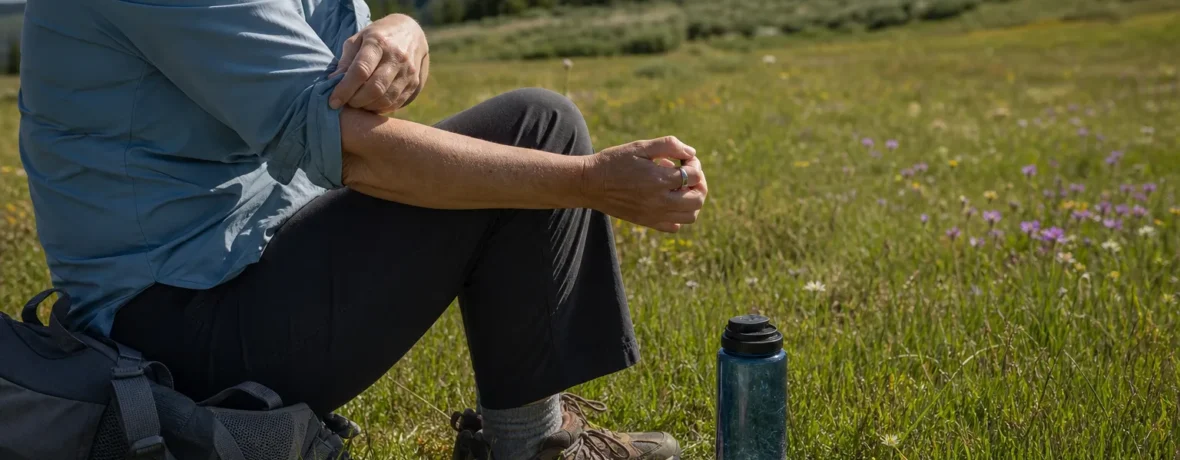
Swollen hands while hiking are usually caused by blood pooling, arm position, heat, and fluid shifts during steady exercise. Yes, mild puffiness is usually normal if both hands swell evenly and improve within 1-2 hours after stopping. Get help fast if swelling comes with chest pain, confusion, severe headache, or one-sided symptoms.
Why do my hands swell when I hike?
Your hands swell because hiking changes where blood and fluid collect in your body.
When you walk for miles, your leg muscles act like pumps. They squeeze blood back toward your heart with every step. Your hands do not get that same pumping action, especially if your arms hang low at your sides or you grip trekking poles loosely for hours. Blood vessels in your hands can widen during exercise and warm weather, which lets more fluid move into the surrounding tissues.
That fluid buildup is called edema. MedlinePlus describes edema as swelling caused by fluid trapped in body tissues, and Mayo Clinic notes that swelling can show up as puffiness and stretched or shiny skin. On trail, you may notice tight rings, sausage-like fingers, or hands that feel heavy when you make a fist.
Common trail triggers include:
- Hands hanging below your heart for long stretches.
- Warm temperatures, which widen blood vessels near the skin.
- A snug pack pressing on shoulder straps and limiting easy arm swing.
- Salt and fluid changes during long, sweaty efforts.
- Tight rings, gloves, or watch bands that leave less room for normal swelling.
- Repetitive gripping of trekking poles, camera gear, or phone straps.
Is hand swelling while hiking dangerous?
Most hand swelling on hikes is annoying, not dangerous.
If both hands puff up gradually, you feel otherwise fine, and the swelling eases after you rest, loosen gear, raise your hands, or finish the hike, it is usually a normal response to exercise and heat. The problem is context. Swelling by itself tells one story. Swelling plus other symptoms tells another.
| What you notice | Likely meaning on trail | What to do |
|---|---|---|
| Both hands mildly puffy | Common fluid pooling during walking | Move fingers, raise hands, loosen straps |
| Rings feel tight | Normal swelling made worse by jewelry | Remove rings early, before swelling builds |
| Swelling with nausea, headache, confusion, or bloating | Possible fluid or heat problem | Stop, cool down, assess, seek medical help if severe |
| One hand suddenly swollen, painful, numb, or discolored | Not typical hiking puffiness | End the hike and get medical care |
What causes swollen hands while hiking in hot weather?
Heat makes swollen hands more likely because your body sends more blood toward the skin to dump heat.
That cooling system is useful. It helps keep your core temperature in a safer range. But it can also make your fingers look like little balloons, especially on exposed climbs, humid days, and hikes where you are sweating hard but moving at a steady pace.
Heat also increases sweat loss. If you replace sweat with plain water only, overdo fluids, or ignore food for hours, you can feel off. The CDC lists heat exhaustion symptoms such as heavy sweating, weakness, dizziness, headache, nausea, vomiting, cramps, and fainting. Hand swelling alone is not heat exhaustion. Hand swelling plus those symptoms deserves attention.
Do not try to “push through” heat symptoms to reach a summit. Shade, rest, cooling, and a smart turnaround beat a rough evacuation every time.
Can drinking too much water make your hands swell on a hike?
Yes, drinking far beyond thirst during long exertion can contribute to dangerous low sodium levels.
This is not a reason to avoid water. Dehydration is real, and hikers need fluids. The risk comes from forcing down large amounts of plain water for hours while sweating and not eating enough. The Wilderness Medical Society’s exercise-associated hyponatremia guidelines describe a potentially life-threatening condition where sodium concentration drops during or after prolonged activity, often tied to excess total body water.
Early symptoms can overlap with heat illness: headache, nausea, vomiting, weakness, confusion, and unusual fatigue. Puffiness in the hands, feet, or belly can be another clue, but you cannot diagnose sodium trouble by looking at your fingers. That belongs in medical hands.
For normal day hiking, a practical approach is simple: drink to thirst, eat salty snacks or regular trail food on longer hikes, and do not treat clear urine as a trophy. If you feel bloated, nauseated, confused, or progressively worse, stop hiking and get help.
How do I stop my hands from swelling while hiking?
You can often reduce hiking hand swelling by improving circulation, loosening pressure points, and managing heat.
Try these steps before your fingers get tight:
- Take off rings before the hike. Do it at the trailhead, not halfway up the climb when your knuckles already look angry.
- Loosen your shoulder straps slightly. Your pack should ride securely, but straps should not bite into your shoulders or armpits.
- Use trekking poles with a relaxed grip. Avoid clenching. Let the straps support part of the motion if you know how to use them safely.
- Raise your hands every few minutes. Hook your thumbs under your shoulder straps, lift your hands above your heart, or make gentle fists overhead.
- Pump your fingers. Open and close your hands 20-30 times during breaks or slow stretches.
- Cool down early. In heat, stop in shade, wet a bandana, slow your pace, and vent layers before symptoms stack up.
- Eat on longer hikes. Regular snacks help replace some sodium and energy without turning your hydration plan into guesswork.
Why do my fingers feel tight after hiking?
Your fingers feel tight because fluid has collected in small tissues that do not have much extra space.
Hands are full of small joints, tendons, and soft tissue. Even mild swelling can make your fingers feel stiff when you bend them. That tight feeling usually fades after you stop walking, remove constricting gear, raise your hands, and cool down.
Post-hike tightness can also come from gripping poles too hard, using gloves that pinch, or letting rings stay on too long. If a ring is stuck, do not keep yanking until the skin breaks. Cool and elevate the hand, use a slippery lubricant if available, and seek urgent care if the finger becomes blue, numb, very painful, or increasingly swollen.
How can I prevent puffy hands on long hikes?
Prevent puffy hands by planning for swelling before it starts.
Pack fit matters more than hikers think. A pack that rides too low can pull on your shoulders and change your arm swing. A chest strap cinched too tight can make your upper body feel locked down. You want stable, not shrink-wrapped.
Use this quick checklist before you leave the trailhead:
- Rings off and stored somewhere safe.
- Watch band loose enough to slide one finger underneath.
- Gloves roomy at the knuckles.
- Pack shoulder straps snug but not cutting in.
- Hip belt carrying most of the pack weight.
- Easy-access snacks for hikes longer than a short stroll.
- Enough water to drink to thirst, not a plan to force a fixed amount every few minutes.
During the hike, change hand position often. Hands at your sides for 3 straight hours will swell more than hands that move, grip, release, and occasionally rise above your heart. Small habits work.
When to see a doctor
See a doctor if hand swelling is severe, one-sided, painful, recurrent, or paired with symptoms that do not fit normal trail puffiness.
Mild, even swelling that goes away soon after hiking is usually not a medical emergency. But you should get medical advice if swelling keeps happening on easy hikes, lasts into the next day, or appears with shortness of breath, chest discomfort, fainting, new weakness, or swelling in your face, legs, or feet. Those patterns can point to issues that need proper evaluation.
Get urgent help on trail or call emergency services if the hiker has confusion, loss of consciousness, severe headache, repeated vomiting, trouble breathing, chest pain, hot skin with altered mental state, or symptoms that worsen despite rest and cooling. The CDC treats heat stroke as a medical emergency and advises immediate emergency care for signs such as confusion, loss of consciousness, or very high body temperature.
If you take medications for blood pressure, heart disease, diabetes, kidney disease, or inflammation, ask your clinician whether swelling during exertion could relate to your medical history or prescriptions. Do not stop prescribed medicine on your own because your fingers got puffy during a hike.
Related reading
- How to Prevent Tick Bites While Hiking
- How Long Does a Sprained Ankle Stay Swollen?
- Hiking While Pregnant: Safety by Trimester
- How to Protect Against Insects While Hiking: Ticks, Mosquitoes and More
FAQ
Are swollen hands while hiking normal?
Yes, mild swelling in both hands is common during hiking. It usually comes from fluid pooling, heat, and hands hanging below the heart for long periods.
How long should hand swelling last after a hike?
It should usually improve within 1-2 hours after you stop, cool down, and elevate your hands. If swelling lasts into the next day, is painful, or keeps returning, talk with a healthcare professional.
Should I hike with rings on?
No, it is smarter to remove rings before hiking. Fingers can swell quickly, and a tight ring can become painful or difficult to remove.
Do trekking poles help swollen hands?
Yes, trekking poles can help if you use a relaxed grip and move your hands rhythmically. They can also make swelling worse if you clench the handles for miles.
Can dehydration cause swollen hands?
Dehydration can contribute to fluid and circulation stress, but hand swelling during hiking is often more tied to heat, arm position, and blood flow. Drink to thirst and eat normally on longer hikes rather than forcing large amounts of plain water.
When is hand swelling an emergency?
It can be an emergency if swelling comes with chest pain, trouble breathing, confusion, fainting, severe headache, repeated vomiting, or hot skin with altered mental state. Sudden one-sided swelling, numbness, blue color, or severe pain also needs urgent medical care.