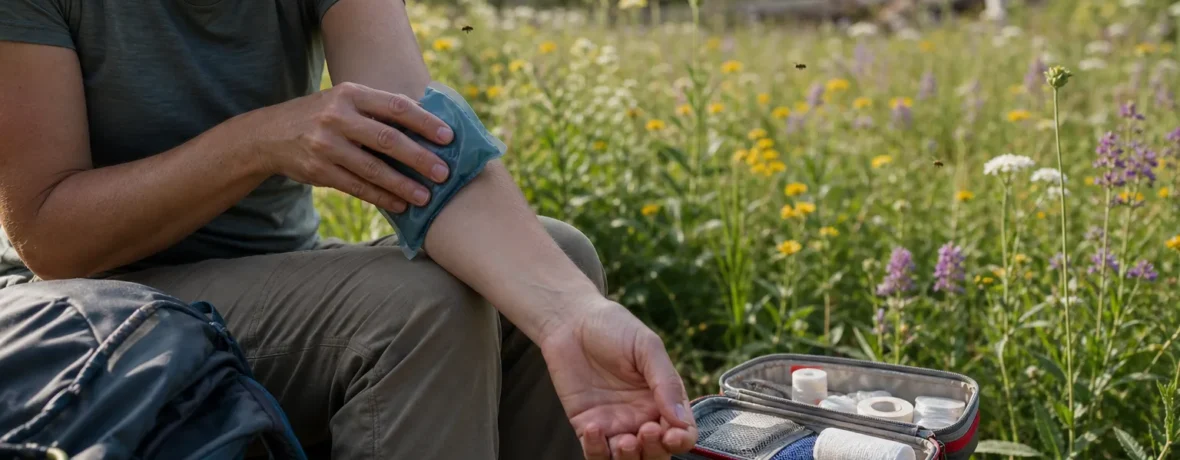
To treat a bee sting on the trail, move away from the insect, scrape out any visible stinger, wash the spot, apply a cold pack for 10-20 minutes, and monitor for allergic symptoms. Call 911 or use prescribed epinephrine if breathing trouble, throat swelling, faintness, or widespread hives appear.
How do you know if it is a bee sting or a wasp sting?
You often cannot know for sure, but a visible stinger points toward a honey bee.
On trail, the difference matters less than the reaction in your body. Bees, wasps, hornets, and yellow jackets can all cause sharp pain, redness, swelling, itching, and—rarely—a severe allergic reaction. Honey bees may leave a barbed stinger in the skin. Wasps, hornets, and yellow jackets usually do not, and they can sting more than once.
If you saw a fuzzy bee and there is a tiny dark sliver in your skin, treat it like a bee sting and remove the stinger. If you got hit by a sleeker insect near a nest, log, picnic area, or trash can and there is no stinger, treat it the same way, minus stinger removal.
| Clue | Bee sting | Wasp, hornet, or yellow jacket sting |
|---|---|---|
| Stinger left behind | Possible, especially honey bees | Usually no |
| Can sting again | Honey bee usually cannot after leaving stinger | Yes |
| Trail hangouts | Flowers, water sources, meadows | Logs, ground nests, food, trash, campsites |
| First aid | Remove stinger, clean, cold pack, monitor | Clean, cold pack, monitor |
How to treat a bee sting on the trail step by step
Treat it fast, keep it clean, and watch the whole person—not just the sting.
- Move away from the sting area. Walk calmly at least several yards away from the insect, nest, log, or food source. Do not swat wildly. That turns one sting into a bad scene.
- Check for danger signs first. Before digging through your kit, ask: Can the person breathe normally? Are they lightheaded? Is there swelling of the lips, tongue, face, or throat? Are hives spreading beyond the sting site? If yes, treat it as a medical emergency.
- Remove the stinger if you see one. Scrape it away with a fingernail, credit card edge, knife spine, or tweezers if that is what you have. Speed matters more than the tool. The CDC guidance for stinging insects advises removing the stinger as quickly as possible.
- Wash the area. Use clean water and soap if you have it. If you are carrying limited water, rinse what you can and clean it properly when you reach camp, a trailhead, or a restroom.
- Use a cold pack. Wrap ice, a cold water bottle, snow in a bandana, or an instant cold pack in a thin cloth and hold it on the sting for 10-20 minutes. Do not put bare ice directly on skin.
- Take off tight items near the sting. Rings, watches, bracelets, and snug sleeves can become a problem if swelling builds. Remove them early, especially for hand and finger stings.
- Control scratching. Scratching opens skin and invites infection. Cover the spot with a clean bandage or clothing layer if the hiker cannot leave it alone.
- Keep monitoring for several hours. Mild local swelling is common. A fast-moving whole-body reaction is different. Check breathing, voice, skin, alertness, and swelling every few minutes at first.
The Mayo Clinic first aid advice for bee stings lines up with this trail plan: remove the stinger, wash the area, apply a cold compress, and watch for a severe reaction.
Should you pull out or scrape out a bee stinger?
Remove the stinger quickly; scraping is fine, and speed beats perfection.
Old trail lore says you must never pinch a bee stinger because you will squeeze more venom into the skin. Do not waste time hunting for the perfect method. If you can scrape it, scrape it. If tweezers are the only clean tool in your kit, use them carefully. If your fingernail gets it out in two seconds, that is a win.
Look for a tiny dark dot, splinter-like barb, or small venom sac sitting on the skin. Once it is out, do not keep gouging. You will only irritate the sting site and make the area hurt more.
What should be in your hiking first aid kit for bee and wasp stings?
Carry simple sting supplies plus any allergy medicine prescribed specifically for you.
You do not need a pharmacy in your hip belt. You do need clean basics that work when your hands are dusty, the wind is up, and your hiking partner is getting nervous.
- Soap sheets, biodegradable soap, or alcohol-free cleansing wipes
- Clean water for rinsing
- Gauze pads and adhesive bandages
- A small roll of medical tape
- Instant cold pack on longer group hikes, or a plan to use a cold bottle
- Tweezers or a small multitool
- A card, knife spine, or other flat edge for scraping
- Disposable gloves
- Any antihistamine or pain reliever your clinician has told you is safe for you
- Prescribed epinephrine autoinjectors if you have a known risk of anaphylaxis
- A paper copy of your allergy action plan if you have one
If you have a known venom allergy, talk with your clinician before hiking season about exactly what to carry and when to use it. The NIH MedlinePlus insect bites and stings resource is a solid place to start for general health background, but your personal allergy plan should come from your own medical professional.
How do you reduce swelling after a bee sting while hiking?
Cold, elevation, and removing tight gear are the most useful trail moves.
Swelling around the sting can build over the next few hours. A hand sting may make trekking poles miserable. An ankle sting may rub inside your sock and shoe. That does not automatically mean an emergency, but it does mean you should manage the swelling early.
- Cold pack: Use 10-20 minute sessions with a cloth barrier.
- Elevation: If you stop for a break, raise the stung hand or foot above heart level when practical.
- Loosen pressure points: Open boot laces, loosen watch bands, remove rings, and adjust pack straps.
- Protect from rubbing: Cover the sting with gauze if clothing, sock cuffs, or pack straps are irritating it.
- Hydrate and rest: Pain feels worse when you are overheated, dehydrated, and rushing.
Do not cut the skin, suck out venom, apply mud, or crush plants onto the sting. Trail dirt is not medicine. It is just dirt.
What are the signs of an allergic reaction to a bee or wasp sting?
Breathing trouble, throat or tongue swelling, faintness, and widespread hives are emergency warning signs.
A normal local reaction stays near the sting: pain, redness, itching, warmth, and swelling. A severe allergic reaction can involve body systems far away from the sting. That is the shift you are watching for.
Seek emergency help right away if any of these appear after a sting:
- Trouble breathing, wheezing, or chest tightness
- Swelling of the lips, tongue, face, mouth, or throat
- Dizziness, fainting, confusion, or a sudden weak feeling
- Hives, flushing, or itching spreading beyond the sting area
- Nausea, vomiting, cramps, or diarrhea with other allergic symptoms
- A fast drop in energy, gray color, or sense that something is very wrong
The CDC describes anaphylaxis as a severe, potentially life-threatening allergic reaction that needs immediate emergency care. The Wilderness Medical Society anaphylaxis guidance emphasizes prompt recognition and field treatment, especially when help is far away.
What should you do for a bee sting allergic reaction on the trail?
Use prescribed epinephrine for suspected anaphylaxis, call 911, and start evacuation.
If the person has a prescribed epinephrine autoinjector and their allergy plan says to use it, do not wait for symptoms to become dramatic. Follow the instructions on the device and the person’s medical plan. Then call 911 as soon as you have service, send a hiker for help if needed, and prepare to move toward emergency care if it is safe to do so.
After epinephrine, the person still needs medical evaluation. Symptoms can return, and a backcountry delay can be serious. Keep the person lying down if that is comfortable, protect them from cold ground, and avoid giving food or drink if they are having breathing trouble or seem drowsy.
If you hike with someone who has a known severe allergy, do the awkward-but-smart talk at the trailhead:
- Where are your autoinjectors?
- Do you carry one or two?
- What symptoms mean you want it used?
- Who in the group knows how to help?
- Where is your written action plan?
That conversation takes 60 seconds. It can save a life miles from the parking lot.
When to see a doctor
Get medical help immediately for any breathing problem, throat swelling, faintness, or fast-spreading reaction.
Call 911 or activate emergency response if the hiker has signs of anaphylaxis, needed epinephrine, was stung many times, or has symptoms that are worsening quickly. Do not try to “walk it off” when breathing, circulation, or alertness changes.
Contact a healthcare professional for a sting that keeps getting worse after the first day, has spreading redness, increasing warmth, pus, fever, or severe pain. Also get advice for stings inside the mouth, near the eye, or on a finger with tight swelling that threatens circulation.
If you have ever had a whole-body reaction after a sting, ask your clinician about allergy testing, venom immunotherapy, and carrying epinephrine on hikes. That is a medical plan, not a gear preference.
Can you keep hiking after a bee or wasp sting?
Yes, if symptoms stay mild and local, but keep checking the hiker.
A single sting on the arm with pain and mild swelling does not automatically end the hike. Clean it, cool it, and reassess. If the route is short, the weather is stable, and the person feels normal, you may be able to continue at an easier pace.
Turn around or shorten the hike if swelling affects walking, the sting is on the hand needed for scrambling, the person feels shaky, or you are heading farther from help. Your best decision is often the boring one: hike out early, eat the lost summit, and keep the day from becoming a rescue.
Group leaders should be more conservative. One person’s sting can change the plan for everyone, especially on remote trails, exposed ridges, desert routes, winter hikes, or trips with kids.
How can you prevent bee and wasp stings on the trail?
You cannot prevent every sting, but you can stop inviting them in.
Most trail stings happen because a hiker steps near a nest, grabs a log or rock without looking, leaves sweet food open, or swats at an insect until it fights back. A little attention goes a long way.
- Watch for ground nests around logs, roots, banks, and trail edges.
- Do not put your hand blindly into rock cracks, hollow logs, or brush.
- Keep snacks sealed, especially fruit, candy, energy chews, and sweet drinks.
- Check bottle openings before drinking.
- Move away calmly from buzzing insects instead of swatting.
- Avoid strong fragrances from lotions, sprays, and scented hair products.
- Wear shoes around camp; yellow jackets and bees can be on the ground.
- Shake out clothing and packs before putting them on.
- Give nests a wide berth and warn hikers behind you.
If a swarm or nest is disturbed, move away quickly and steadily. Cover your face if insects are around your head. Do not jump into water; stinging insects may wait near the surface, and now you have two problems.
What should you not do for a bee sting?
Do not use dirty folk remedies, delay emergency care, or ignore whole-body symptoms.
Trail myths hang around because they sound rugged. They are not better than clean first aid. Skip anything that adds dirt, delays treatment, or makes the skin angrier.
- Do not apply mud, chewed plants, tobacco, or unknown “trail remedies.”
- Do not cut the sting site.
- Do not try to suck out venom.
- Do not keep digging after the stinger is gone.
- Do not put bare ice directly on skin.
- Do not let a hiker with allergic symptoms continue deeper into the backcountry.
- Do not give someone medication they have not agreed to or cannot safely take.
- Do not assume a mild past sting means every future sting will be mild.
Clean, simple, fast care beats dramatic care. Every time.
Related reading
- How to Treat a Snake Bite in the Wild
- How to Treat Heat Exhaustion While Hiking
- Lyme Disease Symptoms After a Hike
- Hantavirus and Camping: Cabins, Shelters and Risk
FAQ
How long does a bee sting hurt?
Pain is often sharp at first and then fades, but tenderness and itching can last longer. Swelling may build for several hours, so keep checking the site during the hike and after you get home.
Is swelling after a bee sting normal?
Yes, swelling near the sting is common. Swelling that spreads fast with breathing trouble, throat tightness, faintness, or hives away from the sting needs emergency care.
Can a wasp leave a stinger in your skin?
Usually no. Wasps, hornets, and yellow jackets typically keep their stingers and can sting more than once, while honey bees may leave a stinger behind.
Should you take antihistamines for a bee sting on a hike?
Only take medicine that is safe for you and that your clinician or product label allows. Antihistamines may help itching for some people, but they are not a substitute for epinephrine or emergency care during anaphylaxis.
When should you call 911 after a bee sting?
Call 911 for trouble breathing, swelling of the mouth or throat, faintness, confusion, widespread hives, or any use of prescribed epinephrine. If you have no signal, send someone for help and start moving toward emergency access if it is safe.
Can you be allergic to bee stings even if you were not before?
Yes, reactions can change over time. If you have a whole-body reaction after a sting, talk with a healthcare professional before your next hike.