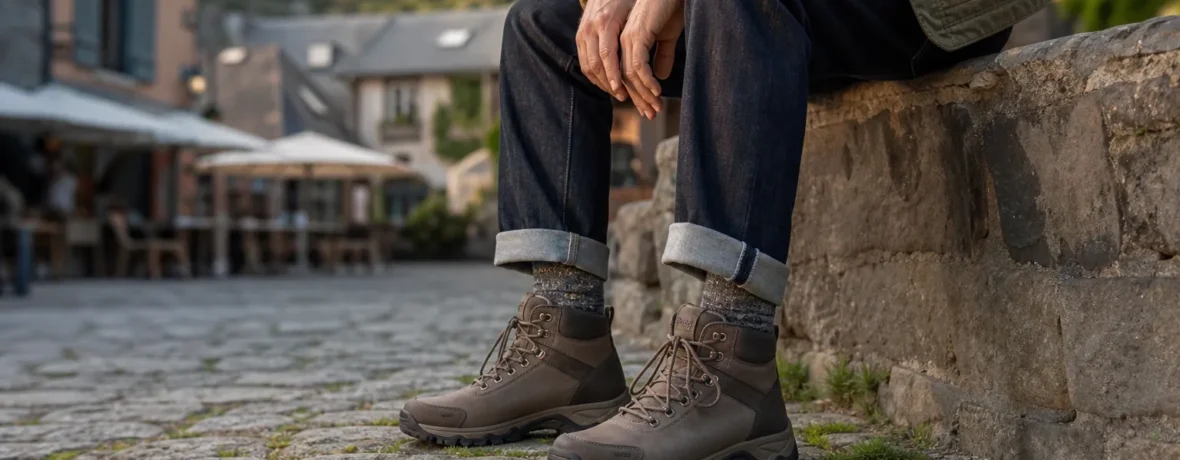
To style hiking boots off the trail, treat them like rugged ankle boots: keep pants tapered, show 1-2 in [2.5-5 cm] of sock when it helps, balance bulky soles with structured layers, and choose clean leather, suede, or muted synthetic uppers for daily wear.
Trail boots can look sharp in town. Not precious. Not costume-y. The trick is control: clean boots, intentional cuffs, fabrics with enough weight, and an outfit that makes the boots look chosen instead of forgotten in the trunk.
How to style hiking boots off the trail?
Start with clean boots and slim, sturdy clothes.
Hiking boots already carry visual weight. The lug sole, padded collar, metal hooks, thick laces, and reinforced toe all say “built for bad ground.” That is useful. You just need the rest of the outfit to answer back with texture and shape.
- Clean the boots first. Brush off dried mud, wipe the rand, and knock debris out of the tread. Dirty can look rugged on trail; in town it usually looks lazy.
- Pick pants with structure. Denim, canvas, twill, corduroy, wool, and duck cloth work better than flimsy joggers or thin dress trousers.
- Control the hem. Cuff, crop, or taper the pant so it does not puddle over the boot. A single 1.5-2 in [3.8-5 cm] cuff is a safe starting point.
- Match the boot’s mood. Leather boots pair well with chore coats and flannels. Technical boots pair better with fleece, puffers, rain shells, and nylon overshirts.
- Use color deliberately. Brown, black, olive, gray, navy, and tan are easy. Bright red laces or neon panels need one other small color echo, not a whole matching outfit.
If your boots are huge mountaineering-style stompers, keep the rest simple. Straight jeans, a plain tee, and a wool overshirt beat an outfit with six competing outdoor pieces.
What to wear with hiking boots?
Wear clothes that can visually handle the sole.
The easiest answer to what to wear with hiking boots is: sturdy bottoms, textured layers, and socks that look intentional. Hiking boots rarely work with thin, shiny, or overly formal pieces because the contrast feels accidental.
| Boot style | Best off-trail pairings | Skip it with |
|---|---|---|
| Classic leather hikers | Straight jeans, flannel shirts, chore coats, wool sweaters | Sharp suits, thin dress pants |
| Lightweight technical boots | Nylon pants, fleece, rain jackets, simple tees | Formal coats, shiny fabrics |
| Suede or nubuck boots | Corduroy, denim, knitwear, waxed cotton | Muddy errands unless protected |
| Black hikers | Black denim, gray wool, workwear jackets, monochrome layers | Pale summer outfits with no dark anchor |
Use this quick checklist before you leave the house:
- Pants hit at the top of the boot or break lightly over it.
- Socks are clean, tall enough, and not sagging.
- The boot color appears somewhere else, even subtly.
- The outfit has at least one rugged fabric: denim, canvas, wool, fleece, or twill.
- The boots are not carrying yesterday’s trail mud into today’s coffee shop.
Can hiking boots look good with jeans?
Yes, jeans are the easiest match.
Go for straight, relaxed-straight, or slim-straight denim. Skinny jeans can make large boots look oversized, while very wide jeans can swallow the shaft and create a sloppy stack. The cleanest hem options are a single cuff, a double cuff, or a cropped inseam that lands just above the boot collar.
Light-wash jeans work with tan suede, taupe, gray, and lighter brown boots. Dark indigo works with almost everything, especially brown leather. Black jeans pair best with black, charcoal, olive, or dark brown boots.
For the top half, keep it direct:
- Casual: white tee, open flannel, straight jeans, brown hikers.
- Cold weather: thermal shirt, wool sweater, dark denim, leather hikers.
- City rain: black jeans, waterproof shell, dark technical boots.
- Weekend errands: crewneck sweatshirt, denim jacket, cuffed jeans, suede hikers.
Avoid denim that drags under the heel. Lug soles already collect grit; a wet, shredded hem makes the whole outfit look neglected.
Can you wear hiking boots with chinos?
Yes, if the chinos are not too dressy.
Chinos sit in the middle: cleaner than jeans, softer than work pants. That can be good. Choose heavier twill chinos with a straight or tapered leg. Stone, khaki, olive, navy, and charcoal all work with hiking boots.
The cuff matters more here than it does with denim. A clean cuff tells the eye that the boots are part of the outfit. Letting slim chinos bunch around padded collars can look like you changed shoes in a parking lot.
Try olive chinos with brown leather boots and a gray sweatshirt. Or navy chinos with black boots and a canvas overshirt. If the boots are heavily technical, add one sportier layer up top, such as a fleece vest or matte rain jacket, so the shoes are not alone in the outfit.
Can you wear hiking boots with dresses or skirts?
Yes, use contrast on purpose.
Hiking boots can ground dresses and skirts, especially in fall and winter. The key is making the contrast feel deliberate: rugged boot, soft fabric, maybe a wool sock, and a jacket with some structure.
Midi skirts are the easiest length because they leave space between hem and boot. Mini skirts can work with taller socks or tights. Maxi dresses are trickier; if the hem hides the boot and catches on the lace hooks, pick another shoe.
Good combinations include:
- Knit midi dress, wool socks, brown leather hikers, long coat.
- Denim skirt, ribbed tights, black hiking boots, chunky sweater.
- Cotton shirt dress, tan boots, field jacket.
- Pleated skirt, fleece pullover, low-profile trail boots.
Keep the boot clean. Muddy lugs with a dress can look cool in an editorial photo and messy in real life.
How do you wear hiking boots to work without looking like you got lost?
Choose polished boots and quiet colors.
Work styling depends on your workplace. In a casual office, leather or suede hikers can pass as rugged ankle boots. In a formal office, they usually cannot. If the dress code includes blazers, pressed shirts, or polished loafers, save the trail boots for the commute and change shoes at your desk.
For casual workplaces, build around neat, durable pieces:
- Dark straight jeans, brown leather hikers, oxford shirt, chore coat.
- Charcoal chinos, black hikers, merino sweater, wool overshirt.
- Olive pants, tan boots, tucked tee, unstructured jacket.
Fit comes before fashion here. The American Podiatric Medical Association’s shoe-fit guidance recommends choosing shoes that fit your foot rather than chasing a size number, since sizing varies by brand. That matters with hiking boots because thick socks, stiff uppers, and heavy soles can hide a poor fit until you are halfway through the day.
How to style hiking shoes instead of boots?
Treat low-cut trail footwear like rugged sneakers.
If you are wondering how to style hiking shoes, keep the outfit lighter and sportier than you would with boots. Low-cut trail shoes do not have the same ankle height, so they work better with cropped pants, joggers, utility shorts, and clean technical layers.
Trail runners and approach shoes can look good with tapered nylon pants, a plain tee, and a wind shell. They also work with shorts when the sock choice is clean: no-show socks for a sneaker look, crew socks for a trail look, merino socks for cooler weather.
The danger zone is business-casual clothing. Low-cut hiking shoes with slim chinos and a tucked button-down can read like “commuter shoe,” not style choice. If you want them to look intentional, add one casual outdoor piece up top: fleece, overshirt, vest, or shell.
Which hiking boot colors are easiest to style?
Brown is the most flexible color.
Medium brown leather or suede works with blue denim, black denim, olive pants, khaki chinos, gray wool, and cream knits. It has enough warmth to look casual but enough depth to handle winter layers.
Black is clean and useful, especially with city outfits. It looks best with black, gray, navy, and olive. Tan is great with denim and workwear but can look dusty fast. Olive is underrated; it pairs with denim, gray, brown, cream, and black without shouting.
Bright technical colors can work, but they need restraint. If your boots have orange lace loops or blue panels, repeat that color once in a hat, jacket detail, or sock stripe. Once. More than that starts to look like a team uniform.
What socks look best with hiking boots off the trail?
Clean crew socks usually look best.
Socks are small, but they can make or break the outfit. A hiking boot exposes more sock than a sneaker, especially when you sit down or cuff your pants. Choose socks with enough height to clear the collar and enough thickness to fill the boot without bunching.
Merino wool is a strong everyday pick because it handles moisture and temperature swings well. Cotton can feel fine for short casual wear, but it holds moisture longer. For comfort, match sock thickness to boot volume: thick socks for roomy leather hikers, lighter socks for snug technical boots.
Color is easy. Gray, oatmeal, navy, forest green, burgundy, and black all look natural with trail boots. White socks can work with shorts or sportier outfits, but with jeans and leather boots they often look too gym-like.
How do you keep hiking boots clean enough for town?
Brush them after every muddy wear.
You do not need museum-level cleaning. You need visible care. Knock the soles together outside, brush the welt and tread, wipe the upper with a damp cloth, and let the boots dry away from direct heat.
For waterproof footwear, follow the maker’s care directions. The official GORE-TEX footwear care instructions recommend removing laces, shaking out debris, brushing off dirt, and using lukewarm water for cleaning. For reproofing leather and mixed-material boots, REI’s boot waterproofing guide explains that different materials need different treatments, so check the boot label before adding wax, spray, or conditioner.
A simple town-ready boot kit looks like this:
- Stiff brush for dried mud.
- Soft cloth for uppers.
- Old toothbrush for lace hooks and seams.
- Material-appropriate cleaner.
- Waterproofing treatment that matches leather, suede, nubuck, or synthetic fabric.
- Cedar shoe trees or loosely packed paper for drying shape.
Do not bake boots near a heater. Heat can damage adhesives, dry leather, and warp materials. Airflow beats force.
What mistakes make hiking boots look bad off trail?
Most mistakes come from sloppy proportions.
Hiking boots are not subtle, so they punish lazy styling. Too much fabric over the top looks bulky. Pants that are too tight make the boots look clownish. Boots that are too dirty pull the eye down for the wrong reason.
Avoid these common misses:
- Over-stacking pants: Hem fabric bunching on top of the boot makes your legs look shorter.
- Pairing heavy boots with thin pants: Lightweight dress chinos and big hikers usually clash.
- Ignoring laces: Frayed, stained, or neon laces change the whole read of the boot.
- Wearing trail gaiter marks in town: Scuffed, salt-stained, or crusty uppers need a wipe-down.
- Going full costume: Boots, cargo pants, expedition fleece, giant pack, and a compass-print hat can feel staged when you are just getting groceries.
If something feels off, simplify. Plain pants, plain top, clean boots. That solves most of it.
Can hiking boots be stylish year-round?
Yes, but they are strongest in cool weather.
Fall and winter are hiking boot seasons in normal clothes. The fabrics get heavier, the colors get deeper, and waterproofing actually makes sense. Think denim, wool, flannel, fleece, waxed cotton, canvas, and puffer jackets.
Spring works too, especially with lighter suede, canvas pants, cropped denim, and rain shells. Summer is harder. Full-height boots can feel hot and look heavy with shorts unless the setting is outdoorsy or the boot is light-colored and low-profile. If the day is above 80°F [27°C], trail shoes or sandals may look and feel better.
For shorts, keep the inseam practical and the socks intentional. A 5-7 in [13-18 cm] inseam with low boots can look balanced. Tall boots with long cargo shorts can look dated fast unless you are actually heading into brush.
Related reading
- How to Clean Hiking Boots Without Ruining Leather or Membranes
- Hiking Shoes vs Hiking Boots: Which Should You Buy?
- How Should Hiking Boots Fit? The Thumb Rule and Other Checks
- How to Break In Hiking Boots (and How Long It Takes)
FAQ
Start with the quick answers.
Are hiking boots fashionable?
Yes, when they are clean, well-fitted, and paired with sturdy clothing. They look best with denim, canvas, wool, fleece, and other fabrics that match their rugged build.
Should jeans go over or inside hiking boots?
Jeans should usually go over the boot or be cuffed above it. Tucking jeans into hiking boots works only with slim pants and a clear purpose, such as snow, mud, or a specific outdoor look.
Can I wear hiking boots every day?
Yes, if they fit well and feel comfortable for your daily walking. Heavy boots can fatigue your legs on pavement, so lighter hikers or trail shoes may be better for long city days.
Do hiking boots look good with leggings?
Yes, especially with longer tops and structured outerwear. Pair leggings with crew socks, a tunic-length fleece or oversized sweater, and a jacket that gives the outfit shape.
What pants work best with hiking boots?
Straight jeans, relaxed-straight denim, canvas pants, utility pants, and heavier chinos work best. Aim for a hem that sits cleanly at the boot instead of bunching around the collar.
Can hiking boots be smart casual?
Sometimes, but only the cleaner leather or suede styles. Pair them with dark denim or neat chinos, a sweater or button-down, and a simple jacket; avoid technical neon boots for smart-casual settings.