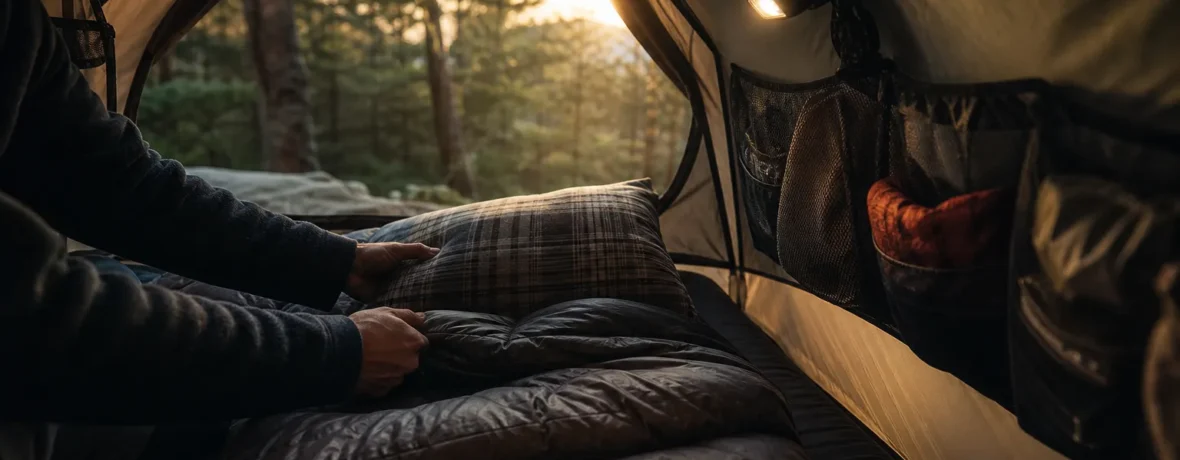
How to sleep comfortably in a tent: choose a level campsite, use an insulated sleeping pad with the right R-value, pack a sleeping bag rated at least 10°F [6°C] colder than the forecast, wear dry sleep clothes, and bring a real pillow. Vent the tent, pee before bed, and never cook inside.
How do you learn how to sleep comfortably in a tent step by step?
Build your sleep system before you crawl in tired.
A good night in a tent is not luck. It is a stack of small choices made before dark, before the temperature drops, and before every root under your tent floor feels like a railroad spike.
- Pick the flattest legal tent site you can find. Sleep with your head slightly uphill if the ground is not perfectly level. Avoid low spots where cold air and water collect.
- Clear only loose debris. Move sticks, cones, and sharp stones by hand. Do not trench, scrape vegetation, or remodel the site.
- Set your tent tight. Stake corners evenly, tension the rainfly, and open vents. Saggy fabric flaps, drips, and brushes your face at 2 a.m.
- Inflate your pad, then fine-tune it. Many people overinflate air pads. Lie down, let out small bursts of air, and stop when your hips and shoulders feel supported but not bounced.
- Loft your sleeping bag early. Pull it from the stuff sack at least 20 minutes before bed so insulation can expand.
- Change into dry sleep layers. Sweat-soaked hiking clothes steal heat. Dry socks make a bigger difference than they should.
- Lock down the small stuff. Put your headlamp, water, beanie, earplugs, and spare layer in the same place every night.
- Use the bathroom before you zip in. You sleep colder when your body is holding extra fluid, and nobody enjoys boot wrestling in the dark.
That is the whole rhythm. Site, shelter, pad, bag, clothes, routine. Nail those, and the tent starts feeling less like a nylon cave and more like a small bedroom with better stars.
What gear helps you sleep better in a tent?
Your sleeping pad matters more than your sleeping bag.
The ground pulls heat from your body fast. A huge sleeping bag on a weak pad still feels cold because compressed insulation under you does almost nothing. Spend your first comfort dollars on the pad, then match the bag or quilt to the season.
| Gear | Best choice | Why it helps |
|---|---|---|
| Sleeping pad | Air pad or self-inflating pad with season-appropriate R-value | Insulates you from cold ground and cushions hips, shoulders, and knees |
| Sleeping bag or quilt | Rated colder than the expected low | Gives a buffer for wind, damp air, altitude, and tired metabolism |
| Pillow | Inflatable pillow, foam pillow, or jacket in a soft stuff sack | Keeps your neck neutral so you do not wake up stiff |
| Tent footprint | Correct-size footprint or groundsheet tucked under the tent body | Protects the tent floor without funneling rain underneath |
For summer backpacking, many hikers sleep well on lighter pads with lower insulation. For cold shoulder-season trips, choose a warmer pad instead of trying to fix everything with thicker socks. In freezing conditions, some campers stack a closed-cell foam pad under an inflatable pad for extra warmth and backup if the air pad leaks.
Pillow height is personal, but the goal is simple: keep your spine straight. Side sleepers usually need more loft. Back sleepers need less. Stomach sleepers often do best with a thin pillow or none at all, though stomach sleeping inside a mummy bag can feel like trying to roll a burrito from the inside.
What camping sleeping tips actually work for cold nights?
Stay dry, eat enough, and protect your insulation from the ground.
Cold sleep usually starts before bedtime. You hike hard, sweat into your base layer, stop moving, then sit around camp while your body cools. By the time you crawl into the tent, your bag has to fight wet fabric, low calories, and cold ground at the same time.
- Change clothes before you get chilled. Dry base layers, dry socks, and a beanie do real work.
- Eat a solid dinner. Your body needs fuel to stay warm through the night.
- Use a warm pad. A warmer bag cannot fully compensate for a cold pad.
- Shake out your bag. Give insulation room to loft before you climb in.
- Close drafts, not vents. Cinch the sleeping bag collar, but keep tent vents cracked to reduce condensation.
- Put tomorrow’s clothes near your core. Keep damp or icy clothes out of your bag, but tuck dry next-day layers nearby so morning hurts less.
If you go to bed cold, do 20 squats, brisk arm swings, or a short walk before climbing in. Do not sweat. Just generate heat, then trap it. A sleeping bag is not a furnace; it is a thermos. You supply the warmth.
How do you make a tent floor more comfortable?
Smooth the site, soften pressure points, and stop sliding.
First, pitch on durable, even ground. Then deal with the tiny annoyances that turn into sleep wreckers: a pine cone under your hip, a pad sliding downhill, a pillow escaping every time you roll over.
If your pad slides on the tent floor, put spare clothing, a thin foam sit pad, or your empty pack under the low side. Some campers use a few thin lines of silicone seam sealer on older tent floors and sleeping pads to add grip, but test that at home and let it cure fully before a trip.
Side sleepers often need more pressure relief. Try these fixes:
- Let a little air out of the pad after lying on it.
- Put a folded fleece or puffy jacket under your hip.
- Use a pillow between your knees.
- Choose a wider pad if your elbows keep falling off the sides.
- Use a rectangular bag or quilt if mummy bags feel too tight.
Back sleepers should check heel pressure. A stuff sack with soft clothing under the knees can reduce lower-back tension for some people. If that creates strain, skip it. Comfort is not a rulebook; it is feedback from your body.
What should you wear to sleep in a tent?
Wear clean, dry layers that match the overnight low.
The best sleep outfit is boring: dry base layer, dry socks, and a hat or hood when it is cold. Skip bulky layers that crush your sleeping bag insulation or make you sweat. Damp clothing turns a decent night into a clammy one.
For mild nights, underwear and a light base layer may be enough. For colder nights, add midweight long underwear, warm socks, and a beanie. In real cold, use a puffy jacket over dry layers if your bag has enough room to loft around it.
Avoid sleeping in the same socks you hiked in. Feet sweat, socks hold moisture, and moisture chills. Pack one dedicated sleep pair in a dry bag or zip bag. That small luxury earns its place.
How do you keep your sleeping bag dry inside a tent?
Vent your shelter and keep wet gear away from insulation.
Condensation is sneaky. You breathe warm, moist air into a cold shelter for hours. If the tent is sealed tight, that moisture collects on the fly or walls, then transfers to your bag when you brush against it.
- Open roof vents unless wind-driven rain is coming through them.
- Leave a small gap at the vestibule when conditions allow.
- Do not sleep with your mouth and nose buried inside the bag.
- Keep wet rain gear in the vestibule or in a waterproof bag.
- Pull your sleeping bag away from tent walls before you sleep.
- Dry your bag in sun or moving air whenever you get the chance.
If your tent is too small for you and your gear, moisture problems get worse. Your bag touches the walls, your wet jacket ends up near your feet, and every movement wipes condensation onto insulation. A slightly larger tent can sleep warmer simply because it keeps dry things dry.
How can you sleep in a tent when it is noisy or bright?
Control what you can and soften the rest.
Camp is never silent. Wind snaps fabric. Leaves skitter. Someone coughs three sites away with the force of a chainsaw. Your brain also treats unfamiliar sounds as possible threats, so the first night outside can feel jumpy even when nothing is wrong.
Pack soft foam earplugs. They weigh almost nothing and help with wind, snoring, traffic near roadside campgrounds, and early-rising neighbors. If you use a phone for white noise, download audio before the trip and keep the volume low enough that you can still hear weather or urgent voices.
For light, use a buff, beanie, or soft sleep mask. In summer, sunrise can hit your tent long before your body wants to move. A darker tent fabric helps, but an eye mask is cheaper and works in any shelter.
What should you eat and drink before sleeping in a tent?
Eat enough, hydrate early, and stop chugging water right before bed.
A warm dinner helps you settle down, especially after a long hiking day. Heavy, greasy food right before lying down can backfire for some people, so give your body time to digest. If you run cold, a small snack before bed can help you feel warmer through the night.
Drink steadily during the afternoon and evening instead of slamming a full bottle at bedtime. Then pee right before you crawl into your bag. Yes, even if you just got comfortable. Future-you will be grateful.
Caffeine is personal, but it has a long tail. If you sleep badly after afternoon coffee at home, the same thing will happen in a tent, only now you also have owls, wind, and a root under your left shoulder.
What safety mistakes ruin sleep in a tent?
Cooking inside the tent is the big one: do not do it.
Carbon monoxide has no smell or color, and fuel-burning gear can create deadly conditions in enclosed spaces. The CDC carbon monoxide guidance lists headache, dizziness, weakness, upset stomach, vomiting, chest pain, and confusion as common symptoms. The U.S. Consumer Product Safety Commission camping equipment warning says not to use portable heaters, lanterns, or stoves inside tents, campers, or vehicles unless the product is specifically designed and instructed for that enclosed use.
Cook outside, away from tent doors, with plenty of ventilation. Store food according to the rules where you are camping, especially in bear country. If you do not know the local food-storage rules, check the land manager’s official site before you go.
Cold is another sleep killer that can turn serious. The CDC hypothermia guidance lists shivering, exhaustion, confusion, fumbling hands, memory loss, slurred speech, and drowsiness as warning signs in adults. Wet clothing, wind, fatigue, and not eating enough can stack the odds against you even when the forecast does not look dramatic.
When to see a doctor
Get medical help fast for severe cold symptoms, carbon monoxide symptoms, or pain that does not behave normally.
Call emergency services or seek urgent care if someone has signs of hypothermia, confusion, fainting, chest pain, trouble breathing, or suspected carbon monoxide exposure. Move the person to fresh air or a warmer place if you can do so safely, but do not delay medical help for serious symptoms.
For sleep problems that continue beyond the trip, talk with a healthcare professional. The CDC sleep guidance says adults need at least 7 hours of sleep per night, and a provider can evaluate possible sleep disorders. If back pain persists, spreads down the leg, follows a fall, or comes with bladder changes, fever, unexplained weight loss, or weakness, use the Mayo Clinic back pain guidance and get medical care rather than trying to tough it out.
Related reading
- How to Waterproof a Tent: Seams, Rainfly and Floor
- How to Set Up a Tent Step by Step (Even Alone)
- How to Clean a Tent (Including Mold and Mildew)
- How to Choose a Tent: Capacity, Seasons and Weight
FAQ
Why can’t I sleep in a tent?
Your body is dealing with unfamiliar noise, light, temperature swings, and a different mattress. Fix the physical problems first: level site, warmer pad, dry clothes, pillow, earplugs, and a predictable bedtime routine.
Is it warmer to sleep with clothes on in a sleeping bag?
Yes, if the clothes are dry and not so bulky that they compress the bag’s insulation. A dry base layer, socks, and a beanie usually work better than piling on damp hiking clothes.
Should I sleep with the tent vents open?
Yes, keep vents open when conditions allow. Ventilation reduces condensation, which helps keep your sleeping bag drier and warmer through the night.
What is the most comfortable thing to sleep on while camping?
A wide insulated sleeping pad is the best comfort upgrade for most campers. Choose enough thickness for pressure relief and enough R-value for the coldest ground temperature you expect.
How do I stop sliding around in my tent?
Pitch on level ground first. If you still slide, slightly deflate your pad, put clothing under the low side, and keep your tent floor clean and dry so your pad has more grip.
Can you sleep comfortably in a tent without an expensive setup?
Yes, if conditions are mild and you choose your site well. A budget pad, properly rated bag, dry layers, earplugs, and a stuffed-jacket pillow can beat pricey gear used poorly.