To relieve sore muscles after hiking, start with 10-20 minutes of easy walking, drink fluids, eat protein plus carbs within 2 hours, use cold for sharp or swollen areas during the first 24-48 hours, use heat for stiffness later, and rest hard hiking until pain is clearly fading.
You finish the trail, peel off your boots, and suddenly the stairs look steeper than the summit. That deep thigh ache, tight calves, and cranky hips usually come from muscles doing more braking, climbing, and stabilizing than they do on normal days. Downhill miles are the big offender because your quads lengthen while working, which is a classic setup for delayed-onset muscle soreness, often called DOMS.
The goal is not to punish soreness out of your legs. The goal is to calm it down, keep blood moving, refill the tank, and spot the difference between normal post-hike soreness and pain that needs medical help.
How do you know if your legs hurt after hiking from normal soreness or an injury?
Normal soreness is usually broad, dull, and shows up hours later.
If your legs hurt after hiking, pay attention to timing, location, and function. DOMS often develops 6-24 hours after hard or unfamiliar exercise, peaks around 24-72 hours, and generally fades within 5-7 days, according to exercise physiology research available through the National Institutes of Health. Hiking loads your calves, quads, glutes, hip flexors, and small stabilizer muscles in your feet and ankles. Add a heavy pack, rough footing, and a long descent, and soreness is no surprise.
Normal soreness often feels like:
- A dull ache on both sides, especially quads, calves, or glutes
- Stiffness when you stand after sitting
- Tenderness when pressing the muscle
- Discomfort that eases once you move gently
- No major swelling, bruising, numbness, or joint instability
Possible injury feels different. A pulled muscle, sprain, tendon flare, stress injury, or joint problem may show up as sharp pain, one-sided pain, pain that started suddenly on trail, visible swelling, bruising, weakness, or pain that changes your walking stride. Mayo Clinic lists rest, ice, compression, and elevation as early self-care for muscle strains, but sharp or worsening pain deserves more caution than ordinary soreness in its muscle strain guidance.
| What you feel | More likely | What to do next |
|---|---|---|
| Both thighs ache the next morning | Typical post-hike soreness | Easy movement, food, fluids, sleep |
| Sharp calf pain during the hike | Possible strain or other injury | Stop hard activity and monitor closely |
| Swollen ankle after a twist | Possible sprain | Protect, rest, ice, compress, elevate |
| Cramping with heat, heavy sweat, nausea, or dizziness | Possible heat-related illness | Cool down, hydrate, and seek help if symptoms persist |
How to relieve sore muscles after hiking step by step?
Use a simple recovery sequence: move, refuel, cool or warm, elevate, sleep, then ease back in.
-
Walk easy for 10-20 minutes after the hike.
Do not finish a hard descent, drive 3 hours, and expect your legs to love you. A short cooldown walk around the trailhead, campground, or neighborhood keeps your joints moving and helps your nervous system downshift. Keep it easy enough that you can talk in full sentences.
-
Take your boots off and check your feet.
Hot spots, swollen toes, bruised toenails, and tight laces can make your whole lower body tense up. Dry your feet, change socks, loosen anything restrictive, and treat blisters before they change how you walk the next day.
-
Drink fluids and replace salt through food.
You do not need to chug until your stomach sloshes. Drink steadily, and eat a real meal or salty snack if you sweated hard. The CDC says heat cramps can involve muscle pain or spasms after intense sweating and recommends stopping activity, moving to a cool place, and drinking water or a sports drink in its heat illness guidance.
-
Eat protein and carbohydrates within 2 hours.
Your muscles need raw materials. Aim for a meal or snack with protein for repair and carbs to refill energy stores. Think eggs and toast, Greek yogurt with fruit, rice and chicken, a burrito, tuna on crackers, or chocolate milk if that is what you can handle after the drive home.
-
Use cold for sore spots that feel hot, sharp, or swollen.
Cold is most useful early, especially when an area feels irritated rather than just stiff. Wrap ice or a cold pack in cloth. Do not put ice directly on bare skin, and stop if your skin hurts, burns, or goes numb.
-
Use heat for general stiffness after the first day.
Warm showers, a heating pad, or a warm bath can help stiff muscles relax. Heat is a poor choice for a fresh swollen injury, but it often feels good for next-day tightness in quads, calves, hips, and low back.
-
Elevate legs if they feel heavy or puffy.
Lie down and raise your legs on pillows for 10-15 minutes. This is not magic. It is just a low-effort way to ease that throbbing, overfull feeling after a long downhill or hot day.
-
Sleep like recovery depends on it.
Because it does. One poor night after a big hike can make soreness feel louder the next day. Keep the evening boring: food, fluids, clean socks, a warm shower, and bed.
-
Do an easy recovery session the next day.
Try 15-30 minutes of gentle walking, cycling, or easy mobility. Skip hill repeats, weighted lunges, speed work, and another big descent until stairs no longer make you bargain with the universe.
Should you stretch sore muscles after hiking?
Yes, but keep stretching gentle and short.
Aggressive stretching can irritate muscles that are already grumpy. Use light range-of-motion work first, then easy stretches that never cross into sharp pain. Hold each stretch for 15-30 seconds, breathe normally, and stop if you feel pinching, tingling, or joint pain.
Try this post-hike mobility set:
- Calf stretch against a wall
- Standing quad stretch with knees close together
- Figure-four glute stretch on your back
- Hip flexor stretch with a tucked pelvis
- Hamstring stretch with a soft knee
- Ankle circles, 10 each direction
Stretching should make movement feel easier, not prove toughness. If your legs are extremely sore, a slow walk may help more than a long stretching session.
Is it better to use ice or heat for sore legs after hiking?
Use ice for fresh irritation and heat for later stiffness.
Cold and heat solve different problems. Cold can reduce pain and swelling after an acute strain or irritated area. Heat can relax tight muscles once the hot, swollen stage has passed. Mayo Clinic’s self-care advice for strains includes protection, rest, ice, compression, and elevation early on, which fits a fresh tweak better than general next-day DOMS.
| Recovery tool | Best for | Skip it when |
|---|---|---|
| Ice or cold pack | Fresh soreness with swelling, heat, or sharp tenderness | You have numb skin or poor cold tolerance |
| Warm shower or heating pad | Stiff quads, calves, hips, or back the next day | The area is newly swollen or inflamed |
| Compression socks or sleeves | Heavy, tired lower legs after long miles | They cause numbness, tingling, or tight bands |
| Foam rolling | Mild tightness and general muscle tension | It causes sharp pain or bruising |
Cold plunges and ice baths get plenty of attention, but you do not need a dramatic setup. A cold pack on a sore knee area or a cool rinse on calves can be enough. For heat, a warm shower after dinner may be all your legs need.
What should you eat and drink when you are sore after a hike?
Eat a real meal with protein, carbs, fluids, and sodium.
Post-hike soreness feels worse when you are underfed and dehydrated. A long hike drains muscle glycogen, salt, and fluids. Refill them without turning recovery into a spreadsheet.
Good recovery meals include:
- Rice bowl with chicken, beans, vegetables, salsa, and avocado
- Turkey sandwich, fruit, and pretzels
- Oatmeal with milk, nuts, and berries
- Eggs, potatoes, toast, and fruit
- Salmon, rice, and a salty soup
- Greek yogurt, granola, banana, and peanut butter
If you sweated through your shirt, hiked in heat, or noticed salt crust on your pack straps, include salty foods or an electrolyte drink. If you have a medical reason to limit sodium, follow your clinician’s advice. The CDC flags extra caution for people with heart problems or those on a low-sodium diet when heat cramps occur.
Alcohol is lousy recovery fuel. It can worsen sleep and make hydration harder. Save the celebratory drink until you have eaten, rehydrated, and cooled down.
Does foam rolling help sore muscles after hiking?
Foam rolling may help stiffness, but it should not feel like a wrestling match.
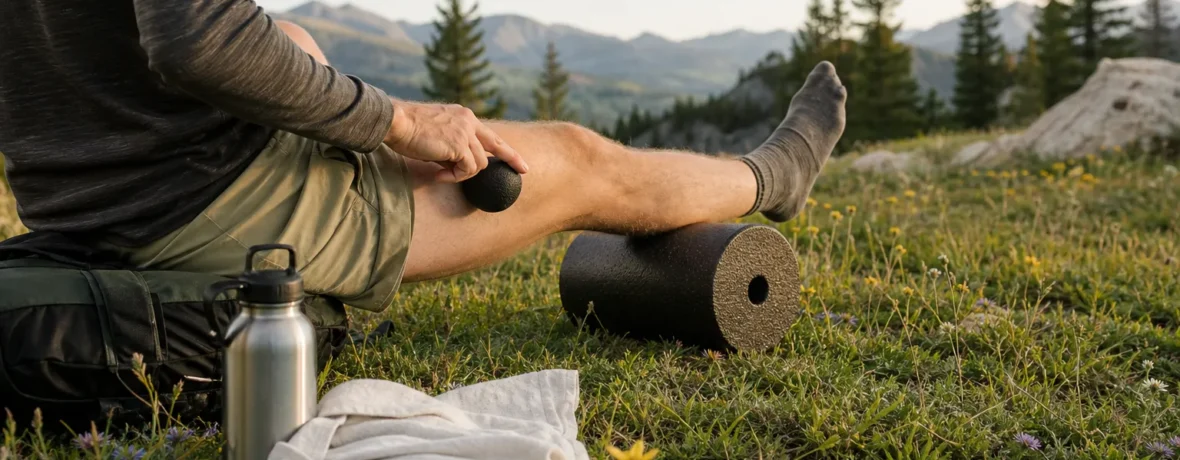
Use light to moderate pressure and roll slowly over large muscle groups: calves, quads, hamstrings, glutes, and outer hips. Spend 30-60 seconds per area. Avoid rolling directly over knees, ankles, bones, bruises, varicose veins, or sharp pain.
A better approach is to combine rolling with movement:
- Roll calves lightly for 30 seconds each.
- Do 10 ankle circles per side.
- Roll quads lightly for 30 seconds each.
- Do 8 slow bodyweight squats to a chair.
- Roll glutes for 30 seconds each.
- Walk for 5 minutes.
If foam rolling makes you limp afterward, you went too hard. Recovery work should make tomorrow better, not win today’s pain contest.
Should you take a rest day after a hard hike?
Yes, take at least one easy day after a hike that leaves you sore.
Rest does not mean lying motionless for 24 hours. It means no hard climbing, no heavy leg workout, no long run, and no loaded pack march while your stride is still stiff. Easy movement is fine if it improves how you feel.
Use this simple traffic-light rule:
- Green: Mild soreness, normal walking, stairs are fine. Do easy training.
- Yellow: Moderate soreness, stiff stairs, tender muscles. Walk, stretch gently, keep it light.
- Red: Sharp pain, limp, swelling, weakness, dark urine, fever, or worsening symptoms. Stop training and seek medical advice.
For future hikes, build downhill tolerance gradually. Add elevation loss in steps instead of jumping from flat local trails to a huge mountain descent. Trekking poles can also reduce some load on knees and quads during descents when used well.
When to see a doctor
Get medical help when pain is severe, unusual, worsening, or linked with whole-body symptoms.
Most post-hike soreness fades with time. Still, muscle pain is not always harmless. MedlinePlus notes that muscle aches can come from overuse or injury, but also from infections and other medical conditions. Do not try to diagnose yourself from internet checklists.
Seek urgent care or emergency help if you have:
- Confusion, fainting, slurred speech, or a very high body temperature after heat exposure
- Chest pain, severe shortness of breath, or weakness on one side
- Dark cola-colored urine after intense exertion
- Severe swelling, extreme weakness, or pain that feels out of proportion
- A limb that is numb, cold, pale, or difficult to move
- Severe pain after a fall, twist, or direct blow
Contact a health professional if soreness does not improve after several days, keeps getting worse, causes a limp, or comes with fever, rash, redness, warmth, or unexplained swelling. For heat cramps, the CDC recommends medical help if cramps last longer than 1 hour, or if you have heart problems or are on a low-sodium diet.
How can you prevent sore muscles on your next hike?
Train for the descent before the trail does it for you.
The best soreness fix is less soreness next time. You cannot remove every ache from hiking, and you should not expect to. But you can make your legs more ready for long climbs, rough footing, and downhill braking.
Add these habits 2-3 days per week:
- Step-downs from a low step to train downhill control
- Split squats or reverse lunges for quads and glutes
- Calf raises for climbs and descents
- Hip hinges or deadlifts for posterior-chain strength
- Side steps with a band for hip stability
- Loaded walks or stair sessions if you hike with a pack
Increase one thing at a time: distance, elevation gain, pack weight, or speed. If you increase all four in one weekend, your legs will file a complaint. Keep most hikes comfortable, then place harder hikes where you have time to recover.
During the hike, use small steps on descents, tighten your pack so it does not bounce, eat before you bonk, and take short breaks before your legs turn shaky. Shaky legs lead to sloppy footwork. Sloppy footwork leads to tweaks, slips, and very dramatic groaning near the car.
Related reading
- Sore Legs After Hiking: DOMS and Recovery
- Cardio Before or After Weights?
- What Muscles Does the StairMaster Work?
- What Muscles Does Hiking Work?
FAQ
Why are my thighs so sore after hiking downhill?
Your thighs are sore because your quads work like brakes on descents. That lengthening-under-load action is strongly linked with delayed-onset muscle soreness, especially if the downhill was longer or steeper than your usual training.
How long should muscle soreness last after hiking?
Typical post-hike soreness peaks within 24-72 hours and fades within 5-7 days. If pain worsens, causes a limp, stays sharp, or comes with swelling or dark urine, stop training and contact a medical professional.
Is walking good for sore legs after hiking?
Yes, easy walking can help sore legs feel less stiff. Keep it gentle, flat, and short; if walking makes you limp or increases sharp pain, rest and get medical guidance.
Should I hike again if my legs are still sore?
Do an easy hike only if soreness is mild and your stride is normal. Skip steep descents, heavy packs, and long mileage if stairs still hurt or you feel unstable.
Do sore muscles mean I had a good workout?
No, soreness only means your muscles faced stress they were not fully used to. A good hike or training session can build fitness without leaving you hobbling for days.
What is the fastest way to recover after a hard hike?
The fastest practical plan is easy movement, fluids, a protein-and-carb meal, gentle mobility, sleep, and no hard leg training until pain is fading. Cold can help fresh irritation, while heat often feels better for next-day stiffness.