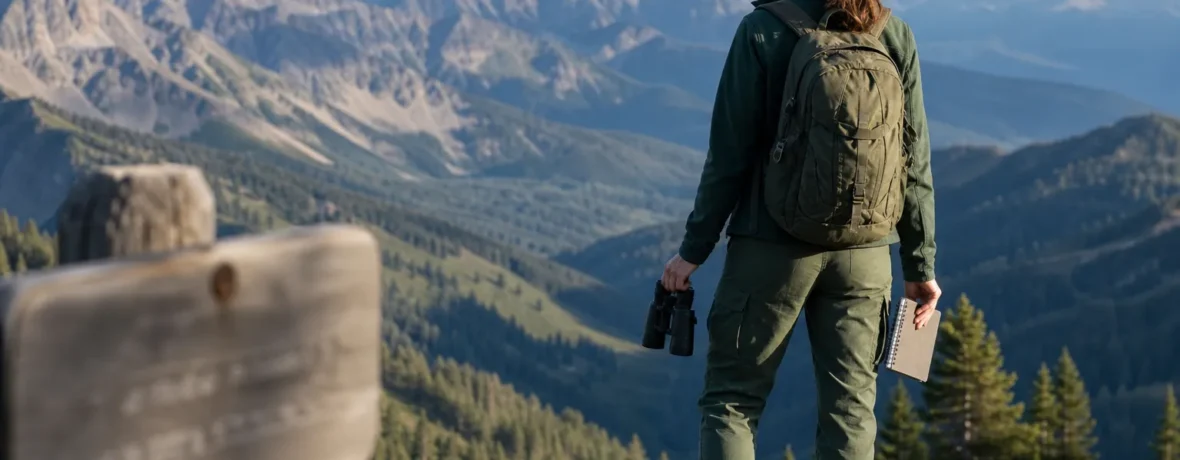
To become a wilderness ranger, start with trail-ready field skills, visitor-service experience, and a USAJOBS resume. Most federal entry jobs use education, experience, or both; a bachelor’s degree helps, but volunteer seasons, trail crews, internships, and certifications can also build a competitive path.
What does a wilderness ranger actually do?
A wilderness ranger protects designated wilderness and helps visitors travel safely with less impact.
The job is part educator, part patrol worker, part field observer, and part problem-solver. You may hike long days, talk with backpackers at trailheads, check campsites, clear minor trail issues, document resource damage, monitor permits, report hazards, help during search-and-rescue incidents, and explain Leave No Trace-style practices without sounding like a scold.
In many places, the work is not glamorous. You may pack out trash, count fire rings, clean human-waste problems, talk to tired visitors who are making poor choices, and write reports after a long day on your feet. You also get a front-row seat to wild country most people only visit for a weekend.
Common wilderness ranger duties include:
- Patrolling trails, lakes, passes, camps, and high-use basins.
- Talking with hikers, climbers, anglers, hunters, stock users, and backpackers.
- Checking permits where permits are required.
- Teaching low-impact camping, food storage, fire restrictions, and route safety.
- Recording campsite conditions, invasive plants, wildlife sightings, or trail damage.
- Helping trail crews with light maintenance, brushing, drainage, signs, and campsite cleanup.
- Assisting with emergency response within your training and agency policy.
- Writing clear field notes and incident reports.
How to become a wilderness ranger step by step?
Build outdoor skills first, then match your resume to the exact job announcement.
Here is the clean path. It is not the only path, but it is the one that keeps showing up in successful ranger careers.
- Get real trail experience. Backpack in different weather, learn map and compass, practice safe water crossings, and get comfortable carrying a loaded pack over rough ground. A wilderness ranger who can only hike on sunny Saturdays will struggle.
- Learn public-land basics. Read up on the Wilderness Act, land-management agencies, Leave No Trace practices, fire restrictions, food storage, and local permit systems. You do not need to be a walking law library, but you do need to speak the language.
- Gain visitor-service experience. Work at a campground, outdoor shop, nature center, ski area, park entrance station, guide service, youth camp, or trailhead program. Rangers spend much of the day talking to people.
- Stack field experience. Join a trail crew, conservation corps, invasive-plant crew, biological technician crew, backcountry volunteer patrol, search-and-rescue team, or youth conservation program.
- Choose a target agency. Wilderness ranger jobs may appear with the National Park Service, U.S. Forest Service, Bureau of Land Management, U.S. Fish and Wildlife Service, state parks, counties, tribes, and nonprofit partners.
- Build a federal-style resume. Include hours per week, start and end dates, supervisor information when requested, tools used, miles hiked, reports written, public contacts, permits checked, and backcountry nights worked. Federal resumes are longer than private-sector resumes.
- Apply early and often. Seasonal federal hiring moves on its own calendar. For National Park Service seasonal work, summer vacancies are generally accepted between October and February, and winter positions between July and August, as of November 2026, according to the NPS seasonal hiring guidance.
- Take the entry job that gets you closer. Park guide, fee technician, trail crew, recreation technician, campground host, biological technician, and volunteer ranger roles can all build the experience you need.
Do you need a degree to become a wilderness ranger?
No, a degree is not always required, but it can make the first federal rung easier to reach.
For federal Park Ranger Series 0025 jobs, the U.S. Office of Personnel Management lists education, specialized experience, or a combination of both as qualifying paths. For a GS-5 park ranger role, the education path is a 4-year course of study leading to a bachelor’s degree with 24 semester hours of related coursework, as of November 2026. Related fields can include natural resource management, natural sciences, earth sciences, park and recreation management, law enforcement, history, archeology, anthropology, social sciences, public administration, and similar subjects tied to park and resource management. See the official OPM Park Ranger Series 0025 qualification standard.
If you do not have that degree path, do not quit before you start. Experience can qualify you too, if it matches the announcement. Trail work, backcountry patrol, visitor contacts, resource monitoring, fire prevention, interpretation, public-land recreation, and enforcement-related work may help when described clearly.
Good majors for future wilderness rangers include:
- Natural resource management
- Forestry
- Recreation, parks, and tourism management
- Wildlife biology or ecology
- Environmental science
- Geography or GIS
- Outdoor education
- Public administration
- Criminal justice, if you are aiming at protection or law enforcement roles
What skills do wilderness ranger jobs look for?
Strong candidates can hike, communicate, observe, document, and stay calm when plans fall apart.
You need more than big calves. Wilderness ranger work rewards steady judgment. You may be alone, far from a road, dealing with heat, lightning, smoke, snow patches, swollen creeks, injured visitors, or a group that refuses to follow the posted rules. Your boss needs to trust your decisions when the radio crackles and the weather turns.
Build these skills before you apply:
- Backcountry travel: route finding, pacing, layering, water treatment, campsite selection, and safe travel on snow, talus, mud, and loose trail.
- Navigation: paper map, compass, GPS, digital maps, and the judgment to know when a screen is lying to you.
- Visitor contact: friendly greetings, clear explanations, conflict de-escalation, and firm direction when someone is damaging resources or putting others at risk.
- Writing: field notes, patrol logs, incident reports, campsite inventories, and emails that do not need three rounds of decoding.
- Resource knowledge: wildlife behavior, alpine plants, riparian zones, cultural sites, fire ecology, invasive species, and watershed basics.
- Tool use: hand saws, loppers, shovels, Pulaskis, radios, GPS units, tablets, and basic maintenance gear.
- Teamwork: living and working around small crews, shared housing, early mornings, and long drives on rough roads.
What is the difference between a park ranger and a wilderness ranger?
A wilderness ranger is usually a field-focused ranger working in designated wilderness or backcountry areas.
“Park ranger” is a broad title. It can mean interpretation, protection, education, fee collection, resource management, or general visitor services. “Wilderness ranger” is more specific: the work centers on wilderness character, primitive recreation, remote patrols, visitor contacts, campsite impacts, permits, and resource protection.
| Role | Main workplace | Typical focus |
|---|---|---|
| Interpretive park ranger | Visitor centers, trails, campgrounds, overlooks | Talks, tours, education, visitor questions |
| Protection ranger | Parks, roads, trails, frontcountry, backcountry | Law enforcement, emergency response, visitor and resource protection |
| Wilderness ranger | Backcountry, trailheads, designated wilderness | Patrols, permits, low-impact education, campsite and resource monitoring |
| Recreation technician | Forests, campgrounds, trail systems, wilderness areas | Field maintenance, signs, patrol support, visitor information |
Are wilderness rangers law enforcement officers?
Some are, but many wilderness ranger jobs are not law enforcement jobs.
This distinction matters when you apply. A wilderness ranger may educate visitors, check permits, document violations, and report problems without carrying a law-enforcement commission. A protection ranger or law enforcement ranger has different hiring, training, medical, and fitness requirements.
For National Park Service law enforcement ranger hiring, applicants may face pre-employment screening, including background investigation, physical fitness testing, drug screening, and medical evaluation. NPS states that prior attendance at a Park Ranger Law Enforcement Academy is not a prerequisite for consideration for certain law enforcement hiring paths, as of November 2026; check the official NPS law enforcement ranger page before making career decisions.
If you want a non-law-enforcement wilderness role, search for terms like wilderness ranger, wilderness technician, recreation technician, backcountry ranger, trailhead ranger, visitor use assistant, park guide, biological science technician, and forestry technician. Read the duties section line by line. The title alone will not tell you enough.
How do you get field experience before your first ranger job?
Volunteer, join a crew, or take a seasonal job that puts you outside with the public.
Hiring managers want proof. Not vibes. Proof that you can show up on time, hike with a pack, talk to strangers, follow policy, use tools safely, and finish paperwork after the fun part is over.
Good experience builders include:
- Conservation corps: trail building, saw work, camping with a crew, and public-land projects.
- Volunteer wilderness patrol: visitor contacts, trailhead education, campsite checks, and light maintenance.
- Trail crew: drainage work, tread repair, brushing, signs, and tool safety.
- Campground or fee work: permits, visitor questions, conflict management, and public contact.
- Outdoor education: teaching groups outside, managing risk, and explaining natural history.
- Search and rescue: teamwork, communications, patient packaging, navigation, and incident structure.
- Wildland fire support: physical standards, radio use, crew discipline, and public-land operations.
Volunteer time can count as qualifying experience for National Park Service seasonal hiring when you document the hours and duties, according to the NPS seasonal hiring FAQ, as of November 2026. Track dates, hours per week, supervisors, locations, tools used, and specific tasks. “Volunteered outdoors” is weak. “Completed weekly wilderness trailhead patrols, made visitor contacts, documented campsite impacts, and submitted patrol logs” is better.
What certifications help wilderness ranger applicants?
First aid, CPR, wilderness medicine, saw training, and Leave No Trace education can strengthen your application.
No single certification magically gets you hired. The best ones match the duties in the announcement. If the job mentions remote patrols, emergency response, visitor education, crosscut saws, pack stock, boats, or chainsaws, relevant training helps you look less risky to hire.
Useful credentials may include:
- CPR and basic first aid
- Wilderness First Aid or Wilderness First Responder
- Leave No Trace awareness or instructor training
- Chainsaw or crosscut saw certification where required by the agency
- Defensive driving or government vehicle experience
- Swiftwater, avalanche, or snow travel training for specific regions
- GIS, GPS, or field data collection training
- Incident Command System introductory courses for emergency-response settings
Match the cert to the landscape. Desert wilderness, Alaska river corridors, Sierra Nevada alpine basins, Appalachian forests, and Rocky Mountain snow routes do not ask the same things from a ranger.
How fit do you need to be for wilderness ranger work?
You need enough fitness to work safely for full days on uneven ground while carrying job gear.
Many wilderness ranger jobs involve hiking several miles, climbing and descending, stepping over blowdowns, bending to inspect campsites, carrying a radio and safety kit, and staying alert after a long day. Some positions may require specific physical tests; others use the job announcement to describe required duties. Read that announcement before you train for the wrong target.
A practical training base includes hiking, stairs, strength work, balance, and loaded carries. Use a gradual plan. The CDC recommends adults get 150 minutes of moderate-intensity aerobic activity each week plus 2 days of muscle-strengthening activity, as of November 2026; see the CDC adult physical activity guidance.
For ranger prep, train for the work itself:
- Walk or hike on dirt, rock, mud, sand, and snow when conditions allow.
- Build toward carrying a pack without wrecking your knees or back.
- Practice uphill and downhill movement, not just flat miles.
- Strengthen legs, hips, core, shoulders, and grip.
- Train in the footwear and socks you would use for field days.
- Practice eating, drinking, layering, and pacing while moving.
When to see a doctor
See a doctor before hard training if you have chest pain, fainting, unexplained shortness of breath, a heart condition, a recent injury, or a health condition that could affect exercise.
Do not use ranger prep as a dare. A medical professional can help you decide what level of exercise is safe, especially if you have been inactive, are recovering from injury, or take medications that affect heat, hydration, balance, or heart rate. This article cannot diagnose you or clear you for duty.
How do you apply for wilderness ranger jobs?
For federal jobs, apply through USAJOBS and tailor every application to that exact announcement.
Do not send a one-page private-sector resume and hope HR connects the dots. Federal applications are screened against the announcement. If the job asks for experience with wilderness patrols, visitor contacts, permit compliance, field data, and backcountry travel, your resume needs those words backed by real duties.
Use this application checklist:
- Search USAJOBS for “wilderness ranger,” “backcountry ranger,” “park ranger,” “recreation technician,” “forestry technician,” and “visitor services.”
- Filter by agency, location, work schedule, appointment type, and grade.
- Read “Duties,” “Requirements,” “Qualifications,” and “How You Will Be Evaluated.”
- Confirm whether the job is open to the public or limited to current federal employees or special hiring authorities.
- List exact dates, hours per week, employers, supervisors if requested, and detailed field duties.
- Upload transcripts, certifications, DD-214, SF-50, or other documents only when they apply.
- Submit before the closing time. NPS seasonal announcements close at 11:59 p.m. Eastern Time on the closing date, as of November 2026, according to NPS seasonal hiring guidance.
Apply broadly if you can. Famous parks and famous wilderness areas attract heavy competition. Smaller forests, remote districts, shoulder-season jobs, and less glamorous duty stations can be better first steps.
How long does it take to become a wilderness ranger?
You can land a seasonal entry role in one hiring cycle, but a permanent wilderness career usually takes several seasons.
The timeline depends on your starting point. A college student with conservation corps experience, wilderness medicine training, and a strong federal resume may compete quickly. Someone with outdoor enthusiasm but no documented field or public-contact experience should expect to build a season or two of proof first.
A realistic path can look like this:
- Season 1: volunteer patrol, trail crew, campground work, youth corps, or park guide role.
- Season 2: recreation technician, backcountry intern, wilderness trail crew, or seasonal ranger role.
- Season 3 and beyond: stronger seasonal ranger jobs, lead roles, permanent applications, or specialization in wilderness, resources, interpretation, trails, or protection.
Some people move faster. Some take longer. The shortcut is not luck; it is clean documentation of real experience, willingness to move, and applying for jobs that match your actual qualifications.
What should your wilderness ranger resume say?
Your resume should prove you can do the fieldwork, people work, and paperwork.
Write for the hiring panel and the HR reviewer. Use plain, specific statements. Avoid fluffy lines like “passionate outdoor enthusiast.” Replace them with duties and results.
Strong resume bullets look like this:
- Conducted backcountry patrols on foot while carrying radio, first-aid kit, maps, field forms, and overnight gear.
- Made visitor contacts at trailheads and campsites to explain permits, food storage, sanitation, and low-impact practices.
- Recorded campsite conditions, trail hazards, illegal fire rings, trash, and resource damage using field forms and GPS points.
- Maintained trail drainage, brushed corridor vegetation, removed small blowdowns, and installed signs using hand tools.
- Responded to visitor questions and conflicts with calm, clear communication.
- Worked safely in heat, thunderstorms, smoke, snow patches, and remote areas with limited supervision.
If you hiked 10 miles [16 km] in a day for work, say so. If you carried 40 pounds [18 kg] of tools and gear for a crew project, say so. If you contacted 60 visitors during a holiday weekend shift, say so only if that number is real and documented. Concrete beats poetic every time.
Related reading
- How to Become a Park Ranger: Education, Steps and Timeline
- How to Become a Forest Ranger
- How to Become a National Park Ranger (NPS)
- What Is a Wilderness First Responder?
FAQ
Can you become a wilderness ranger without college?
Yes, you can become a wilderness ranger without college if your experience meets the job qualifications. Trail crew, conservation corps, visitor services, volunteer patrol, outdoor education, and resource work can all help when documented with dates, hours, and duties.
What is the best first job for a future wilderness ranger?
The best first job is one that gives you field time and public contact. Trail crew, recreation technician, campground staff, park guide, conservation corps member, and volunteer wilderness patrol are all useful starts.
Do wilderness rangers carry guns?
Most non-law-enforcement wilderness rangers do not carry guns for enforcement. Law enforcement or protection rangers may carry duty equipment after meeting agency hiring, training, medical, fitness, and commission requirements.
Is wilderness ranger work seasonal?
Often, yes. Many wilderness ranger jobs are seasonal because backcountry visitation, snow conditions, and agency staffing needs change through the year. Permanent positions exist, but they are usually more competitive and often require several seasons of related experience.
Where are wilderness ranger jobs posted?
Federal wilderness ranger jobs are commonly posted on USAJOBS. Also check individual national forests, national parks, state park agencies, conservation corps, nonprofit partners, and local volunteer wilderness programs.
What is the fastest way to become a stronger applicant?
Get documented field experience with public contact. A season on a trail crew, recreation crew, volunteer patrol, or conservation corps can give you the skills, references, and resume language that ranger hiring managers want to see.