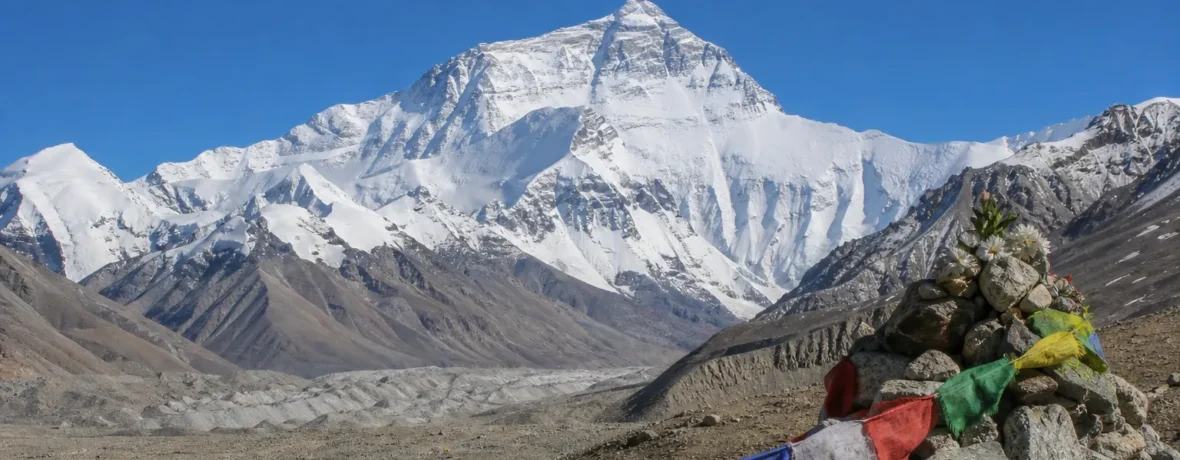
At least 344 people have died on Everest: 339 in the closed Himalayan Database through December 2025, plus five widely reported in spring 2026. Treat 344 as current but provisional until the next database release.
How many people have died on Everest?
The cleanest verified total is 339 deaths through December 2025, with 344 known deaths when 2026 reports are added.
The number changes because Everest statistics are not a live scoreboard. The most cited source is the Himalayan Database, the expedition archive built from Elizabeth Hawley’s records and still used by climbers, researchers, and expedition watchers. Its online tools include a peak-deaths report for Everest, listed under peak ID “EVER,” but the public online data can lag the newest climbing season. The Himalayan Database Online page says its online version is a subset of the full downloadable database and lists the Everest peak-deaths report among its available tools.
For a readable annual summary, Alan Arnette’s Himalayan Database-based Everest by the Numbers: 2026 Edition gives 339 deaths from 1921 through 2025: 229 on the Nepal side and 110 on the Tibet side, with 13,737 recorded summits in the same closed period.
| Count | What it means | Use it how |
|---|---|---|
| 339 | Closed Himalayan Database-based total through December 2025 | Best verified historical number |
| 344 | 339 plus five reported Everest deaths in spring 2026 | Best current working number as of November 2026 |
| Different online totals | Usually different cutoffs or counting rules | Check what the source includes |
Why do Everest death counts vary?
Counts vary because sources draw the line in different places.
One list might include base camp deaths. Another might count only deaths above base camp. Some include climbers who died later in hospitals after an evacuation. Others keep 2026 incidents separate until the database closes the season. That is why a single clean number can look slippery even when the recordkeeping is serious.
Here is the simple way to read any Everest death statistic:
- Check the cutoff date. Through 2025 is not the same as through spring 2026.
- Check the geography. Everest deaths are not the same as all Himalayan deaths.
- Check whether base camp is included.
- Check whether reported deaths have been folded into the finalized database.
- Check the denominator. Deaths per summit, deaths per attempt, and deaths per climber answer different questions.
Where do people die on Everest?
People die from base camp to the upper mountain, but the danger sharpens above Camp 4 and in exposed terrain.
The famous “death zone” starts above 26,247 ft [8,000 m], where the air is so thin that your body cannot recover well, judgment can slide, and small delays get serious fast. Still, not every fatality happens near the summit. Everest’s record includes deaths in the Khumbu Icefall, at base camp, on the Lhotse Face, near the South Col, on the Northeast Ridge, and during descent after a summit.
On the Nepal side, Everest lies within Sagarmatha National Park. The park office states that Sagarmatha National Park covers 443 sq mi [1,148 sq km] in the Khumbu region and was established on July 19, 1976, while UNESCO listed it as a World Heritage Site in 1979; that park information is verified on the official Sagarmatha National Park site, as of November 2026.
What usually kills climbers on Everest?
The main fatal patterns are altitude illness, falls, avalanches, exposure, exhaustion, and getting trapped high in bad conditions.
Everest is not one hazard. It is a stack of hazards. You have low oxygen, cold, crevasses, seracs, crowds, fixed-line delays, weather windows that close, and long summit pushes where climbers may spend too much time above 26,247 ft [8,000 m]. A strong climber can still get pinned by wind. A slow climber can run out of oxygen. A guide can be hit by ice while working the route before clients arrive.
- Altitude illness: Acute mountain sickness can progress to high-altitude cerebral edema or pulmonary edema.
- Falls: Steep snow, rock, ladders, fixed ropes, and fatigue all raise the risk.
- Avalanche and icefall collapse: The Khumbu Icefall and loaded slopes are persistent threats.
- Exposure: Cold, wind, and delay can turn a hard day into a survival fight.
- Exhaustion: Many deaths happen on descent, after the emotional high of the summit is over.
Do you need a permit to climb Everest?
Yes, you need official permission to climb Everest from Nepal.
Nepal’s Tourism Act says no mountaineering expedition team is entitled to climb Himalayan peaks without permission, and it requires teams to apply for mountaineering permission. It also says teams must use the route prescribed in the permit unless prior approval is obtained, as verified in the official Tourism Act and Mountaineering Expedition Regulation, as of November 2026.
The money is not small. The Nepal Department of Tourism’s updated royalty and insurance provisions list the foreign climber royalty for the Everest Normal Route at $15,000 per person in spring, $7,500 in autumn, and $3,750 in winter/summer, effective September 1, 2025 and verified as of November 2026. The same official page lists an Everest garbage-management deposit of $4,000 per expedition team.
Is Everest getting safer or more dangerous?
Everest is more supported than it used to be, but it is still a serious high-altitude climb where people die every season.
The long-term death rate has fallen as fixed ropes, weather forecasting, commercial logistics, supplemental oxygen, and rescue systems improved. But traffic has grown. That means the mountain can record fewer deaths per climber while still producing a grim annual toll. Both things can be true.
Your takeaway is simple: a lower rate does not make Everest safe. It makes Everest better managed than it was in the expedition era. You still need judgment, fitness, acclimatization, a strong operator, enough oxygen, and the humility to turn around.
What should hikers learn from Everest deaths?
The lesson is not “never climb high”; it is “respect altitude before it makes the decision for you.”
You do not need an Everest permit to learn from Everest. Any trip above 8,000 ft [2,438 m] can bring altitude symptoms, especially if you fly or drive high and start moving hard right away. That includes western US peaks, Andean treks, Kilimanjaro, Himalayan trekking routes, and high passes in the Rockies.
- Ascend gradually when your itinerary allows it.
- Build rest days into high trips.
- Do not ignore headache, nausea, dizziness, unusual fatigue, confusion, or shortness of breath at rest.
- Turn around before you are forced to.
- Travel with people who will speak up when your judgment fades.
When to see a doctor
See a doctor before high-altitude travel if you have heart disease, lung disease, sleep apnea, sickle cell trait, or another condition that could be affected by low oxygen.
The CDC’s High-Altitude Travel and Altitude Illness guidance says travelers with underlying medical conditions should consult a physician familiar with high-altitude medicine before the trip. During a trip, worsening symptoms at the same elevation are a red flag, and descent is the key move. Confusion, trouble walking, severe shortness of breath at rest, blue lips, coughing frothy sputum, or extreme weakness should be treated as an emergency.
No article can diagnose you on a mountain. If symptoms are severe, descend and get medical help.
Related reading
- How Many People Have Climbed Everest?
- How Many National Parks Are There in the US?
- Does Every State Have a National Park?
- Everest Permit Cost and New Rules
FAQ
How many bodies are still on Everest?
No official public count gives a verified number of bodies remaining on Everest. Many deceased climbers have been recovered, while others remain because recovery above high altitude is dangerous, expensive, and sometimes impossible.
What was the deadliest year on Everest?
Recent Himalayan Database-based summaries identify 2023 as a modern high-fatality season, with 18 deaths on Everest. Earlier disaster years, including 2014 and 2015, also dominate the record because single events killed many people.
Has anyone died on the summit of Everest?
Deaths have occurred very near the top, but most fatal incidents happen during ascent, descent, or in high camps rather than literally on the summit point. The descent is often more dangerous because climbers are exhausted, colder, and lower on oxygen.
Is climbing Everest allowed right now?
Yes, climbing Everest from Nepal is allowed with the required government permission and fees, as of November 2026. Nepal’s rules require an expedition permit, route compliance, and payment of the listed royalties and deposits.
What is the current best answer to how many people have died on Everest?
The best current working answer is 344 known deaths as of November 2026. The tighter verified historical number is 339 deaths through December 2025, before reported 2026 deaths are added.