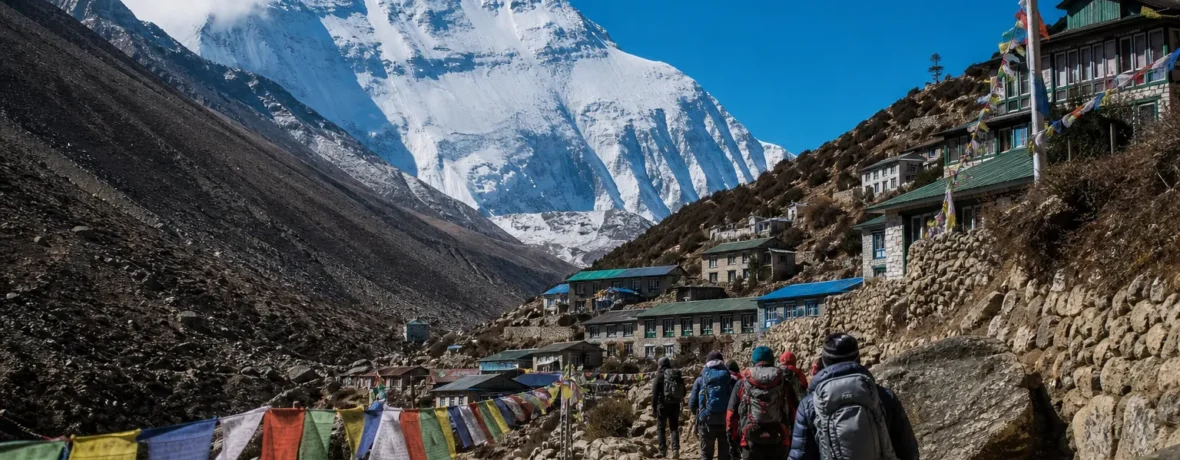
The Everest permit cost is USD $15,000 for a foreign climber on Everest’s normal Nepal route in spring, as of November 2026. Autumn costs USD $7,500, and winter/summer costs USD $3,750. Trekkers going only to Everest Base Camp do not buy an Everest climbing permit; they pay local and park entry permits instead.
Everest has two very different permit conversations. One is for climbers trying to stand on the summit at 29,032 feet [8,848.86 m]. The other is for hikers trekking through the Khumbu to places like Namche Bazaar, Tengboche, Gokyo, and Everest Base Camp. Mix those up and your budget gets silly fast.
How much is the Everest permit cost in 2026?
For a foreign climber, Everest’s Nepal-side climbing royalty is USD $15,000 in spring via the normal route, as of November 2026.
Nepal’s Department of Tourism lists the current mountaineering royalty schedule as effective from September 1, 2025. For foreign climbers on Everest’s normal route, the official rates are USD $15,000 in spring, USD $7,500 in autumn, and USD $3,750 in winter/summer. Everest “other route” royalties are lower: USD $10,000 in spring, USD $5,000 in autumn, and USD $2,500 in winter/summer, according to the Department of Tourism mountaineering fee page.
| Everest permit type | Spring | Autumn | Winter/Summer |
|---|---|---|---|
| Foreign climber, normal route | USD $15,000 | USD $7,500 | USD $3,750 |
| Foreign climber, other route | USD $10,000 | USD $5,000 | USD $2,500 |
| Nepali climber, normal route | NPR 150,000 | NPR 75,000 | NPR 37,500 |
That fee is not your whole expedition cost. Not even close. It is the government royalty for the climbing permit. Your operator fee, guide support, oxygen, food, tents, fixed-rope costs, insurance, flights, visas, gear, tips, and evacuation coverage sit on top of it.
Do you need an Everest climbing permit to trek to Base Camp?
No. Everest Base Camp trekkers do not need the Everest summit climbing permit.
If you are hiking to Base Camp and turning around, your paperwork is park-and-local entry paperwork, not a mountaineering expedition permit. The Sagarmatha National Park entry fee for foreigners is NPR 3,000 per person per entry, as of November 2026, according to the Nepal Tourism Board park entry fee page. The same official page lists SAARC nationals at NPR 1,500 and says children below 10 enter free.
You should also budget for the Khumbu Pasang Lhamu Rural Municipality trek card/local entry fee. The municipality’s official site has listed the service fee as NPR 3,000 for “other countries” and NPR 2,000 for SAARC countries and China, as of November 2026, on the Khumbu Pasang Lhamu Rural Municipality website. Bring cash in Nepalese rupees. Card machines and mountain Wi-Fi are not things to build a plan around.
What permits do you need for Everest Base Camp?
You normally need two local documents for the standard Everest Base Camp trek: the national park permit and the Khumbu local trek card.
- Sagarmatha National Park entry permit: Required to enter the park; foreigner fee is NPR 3,000 as of November 2026.
- Khumbu Pasang Lhamu local trek card: Local municipality entry paperwork; official municipal listings show NPR 3,000 for most foreign nationals as of November 2026.
- Nepal tourist visa: Separate from trekking permits. Check the Department of Immigration tourist visa page before you fly, since visa rules and payment systems can change.
- Restricted-area permit: Not needed for the classic Lukla-Namche-Everest Base Camp route, but ask your licensed operator if your itinerary strays toward restricted border areas.
Keep your passport handy at checkpoints. Take photos of your permits, too. Paper gets wet, torn, and stuffed into the wrong pocket when you are cold and hungry.
What new Everest rules should climbers know?
The big shift is simple: Nepal raised Everest royalties and tightened expedition staffing rules.
The current Department of Tourism fee schedule took effect on September 1, 2025. The updated rules sit inside Nepal’s mountaineering regulations, including the sixth amendment published by the Department of Tourism and the consolidated regulation page maintained by the Nepal Law Commission.
For climbers, the practical takeaways are punchy:
- The spring Everest normal-route royalty for foreign climbers is USD $15,000, as of November 2026.
- The Department of Tourism lists an Everest garbage management deposit of USD $4,000 or the equivalent in Nepalese rupees, as of November 2026.
- For Nepalese climbers, the Everest normal-route royalty is NPR 150,000 in spring, NPR 75,000 in autumn, and NPR 37,500 in winter/summer, as of November 2026.
- Expeditions are processed through official mountaineering systems and licensed operators, not casual walk-up arrangements.
There has also been a lot of public chatter about more skill screening, guide ratios, waste rules, and climber accountability. Treat social posts as noise until your operator confirms the rule against the Department of Tourism, the Nepal Law Commission, or the formal expedition permit system. Everest is not the place to learn that your paperwork was based on an old blog.
How do you get an Everest climbing permit?
You get an Everest climbing permit through a licensed expedition operator, not as a casual independent hiker.
- Choose a properly licensed expedition company. Ask who files the permit, who provides high-altitude staff, and who handles Department of Tourism reporting.
- Confirm the season and route. Spring normal route is the expensive classic. Autumn and winter/summer royalties are lower, but the mountain is still brutally serious.
- Send documents early. Your operator will tell you what passport copies, photos, insurance proof, forms, and expedition details are needed.
- Pay the official royalty and operator costs. Separate the government permit fee from the outfitter’s package price so you know what you are actually buying.
- Carry proof on the trip. Your team should have expedition paperwork available for checks before and during the climb.
Do not bargain-shop the permit process. A low expedition quote that gets vague about permits, staff insurance, waste deposits, or rescue planning is waving a red flag right in your face.
What else should you budget for besides the permit?
The permit is only one line item, and Everest stacks line items fast.
For a summit climb, expect government royalties, operator fees, Sherpa/high-altitude worker support, oxygen, tents, food, climbing gear, communications, insurance, flights, tips, and emergency coverage. For a Base Camp trek, your biggest costs are usually flights or ground transport, guide/porter support, teahouses, meals, park and local permits, insurance, and gear.
Here is the clean split:
| Trip goal | Main official paperwork | Cost anchor as of November 2026 |
|---|---|---|
| Everest summit climb | Department of Tourism mountaineering permit | USD $15,000 spring normal route for foreign climbers |
| Everest Base Camp trek | Sagarmatha park permit plus Khumbu local trek card | NPR 3,000 park fee for foreigners, plus local trek card fee |
Related reading
- How Much Does It Cost to Climb Mount Everest?
- Angels Landing Permit Lottery Explained
- How Many People Have Died on Everest?
- Yosemite Wilderness Permits: How to Get One
FAQ
How much does an Everest permit cost for foreigners?
The Everest permit cost for a foreign climber on Nepal’s normal route is USD $15,000 in spring, as of November 2026. Autumn is USD $7,500, and winter/summer is USD $3,750.
Is the Everest Base Camp permit the same as the Everest climbing permit?
No. Base Camp trekkers do not buy the Everest summit climbing permit. You usually need Sagarmatha National Park entry paperwork and the Khumbu Pasang Lhamu local trek card instead.
How much is the Sagarmatha National Park permit?
The Sagarmatha National Park fee for foreigners is NPR 3,000 per person per entry, as of November 2026. Nepal Tourism Board lists SAARC nationals at NPR 1,500 and children below 10 as free.
Can you climb Everest without a guide?
Plan on using a licensed expedition operator and official high-altitude support. Nepal’s current mountaineering system is built around permitted expedition teams, staffing, reporting, and Department of Tourism oversight.
Does the Everest permit include oxygen, guides, or rescue?
No. The climbing permit is a government royalty, not a full expedition package. Oxygen, guides, Sherpa support, evacuation insurance, food, tents, flights, and gear are separate costs.