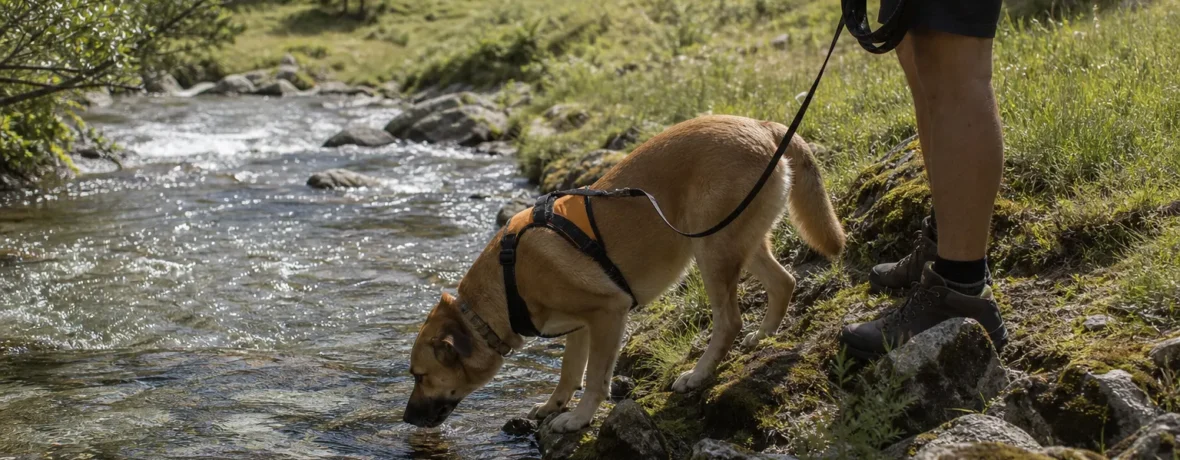
Dogs get Giardia on hikes by swallowing microscopic cysts from feces-contaminated water, mud, soil, grass, or fur. Yes, a creek, puddle, shared bowl, or dirty paw can be enough if infected poop has reached that spot. The risk rises in wet, crowded, dog-heavy, or wildlife-heavy areas.
What is Giardia in dogs?
Giardia is a tiny intestinal parasite that can cause diarrhea in dogs. The infective stage is a hardy cyst passed in poop, and those cysts can contaminate water, dirt, plants, gear, and a dog’s coat. Once swallowed, Giardia lives in the small intestine and may cause messy gastrointestinal trouble.
Some dogs look totally normal. Others get soft stool, watery diarrhea, mucus in the stool, gas, belly discomfort, low appetite, or weight loss. The CDC’s Giardia and pets guidance says pets may stop having diarrhea before they stop passing Giardia in their poop, which is one reason reinfection can be so frustrating.
How do dogs get giardia on the trail?
Dogs get it by swallowing Giardia cysts. On hikes, that usually happens in plain, ordinary dog ways: drinking, sniffing, licking, grooming, rolling, and eating things they should not eat.
The trail is full of contact points. Your dog noses along damp grass. Steps in muddy runoff. Drinks from a shallow pool below a busy campsite. Licks a paw after walking through a spot where another dog had diarrhea yesterday. That is the fecal-oral route, even if you never see the feces.
Common trail sources include:
- Creeks, lakes, ponds, puddles, and seeps contaminated by animal or human waste
- Mud around trailheads, campsites, picnic areas, and water crossings
- Shared dog bowls at parks, breweries, campgrounds, and shuttle stops
- Grass or soil where infected dogs, coyotes, beavers, raccoons, or other animals have pooped
- Your dog’s own rear, paws, or coat after contact with contaminated ground
- Food, treats, toys, or collapsible bowls dropped onto dirty soil
Can dogs get Giardia from creek water?
Yes, dogs can get Giardia from creek water if that water contains infected fecal material. Clear water is not automatically safe water.
A cold mountain stream can look perfect and still carry microscopic cysts. You cannot see, smell, or taste Giardia. Fast-moving water lowers some risks, but it does not create a force field. A dead-end puddle, cow pond, low creek in late summer, or busy campsite water source deserves even more suspicion.
Here is the straight trail comparison:
| Trail source | Risk level | Better move |
|---|---|---|
| Stagnant puddle or muddy rut | Higher | Keep your dog moving and offer packed water |
| Shared public dog bowl | Higher | Use your own bowl |
| Clear creek near heavy dog or livestock use | Moderate to higher | Do not treat it as clean just because it looks clean |
| Water you carried from home | Lower | Pack enough for you and your dog |
How soon do Giardia symptoms show up in dogs?
Giardia may show up in a dog’s stool 5 to 12 days after infection. That timing does not mean every dog gets sick on schedule.
According to VCA Hospitals’ veterinary overview of Giardia in dogs, the time from swallowing cysts to passing cysts in feces is 5 to 12 days in dogs. Symptoms can be mild, severe, on-and-off, or absent. Puppies, senior dogs, and dogs with weakened immune systems are more likely to get into trouble.
Watch for these trail-after signs:
- Soft stool that keeps returning
- Watery diarrhea
- Foul-smelling stool
- Mucus in the stool
- Gas or belly discomfort
- Low appetite
- Lethargy
- Weight loss after repeated diarrhea
Do not assume Giardia is the cause of every post-hike poop disaster. Diet changes, stress, heat, spoiled water, parasites, bacteria, and random “my dog ate trail garbage” events can look similar. Your vet can test a stool sample and decide what fits.
How do I keep my dog from getting Giardia while hiking?
You lower the risk by controlling what goes into your dog’s mouth. That is the whole game.
- Carry water for your dog. Pack more than you think you need, especially in heat or on dry ridges. A thirsty dog will make bad choices fast.
- Use your own bowl. Skip communal bowls. They are convenient, and they are also a traffic jam of saliva, dirt, and splashback.
- Block puddle drinking early. Do not wait until your dog has already planted all four paws in the muck. Use a leash, cue, or body position before the gulping starts.
- Pick up poop every time. Bag it and pack it out. Giardia spreads when feces reaches soil and water.
- Keep dogs away from mystery scat. Sniffing is normal. Licking, eating, or rolling in feces is a hard no.
- Wash or wipe paws after wet, muddy hikes. Pay attention to paw pads, rear fur, and the tail area.
- Clean bowls and gear at home. Wash collapsible bowls, leashes, towels, crates, and bedding after a muddy trip.
- Do not hike sick dogs in crowded areas. If your dog has diarrhea, choose rest and a vet call over a busy trailhead.
The Cornell College of Veterinary Medicine guide to Giardia in dogs recommends preventing dogs from ingesting potentially contaminated water, food, or soil, plus prompt feces disposal and hygiene.
Can I get Giardia from my dog after a hike?
Yes, but the risk is usually low because many Giardia types in dogs are different from the ones that commonly infect people. Still, low risk is not zero risk.
Wash your hands after picking up poop, cleaning muddy gear, bathing your dog, or touching the rear end and tail area of a dog with diarrhea. Keep kids from handling poop bags, dog bowls, and muddy towels. If someone in your home is pregnant, very young, older, or immunocompromised, be stricter with cleanup and call your veterinarian sooner.
For people, the CDC overview of Giardia infection says symptoms usually begin 1 to 2 weeks after infection and can include diarrhea, gas, stomach cramps, nausea, and dehydration. If you feel sick after exposure to untreated water or animal feces, do not guess your way through it.
What should I do if my dog has diarrhea after a hike?
Call your vet if diarrhea continues, worsens, or comes with other warning signs. Bring a fresh stool sample if your clinic asks for one.
Until you get guidance, keep things clean and boring. Do not take a dog with diarrhea to dog parks, daycare, group hikes, patios with dog bowls, or crowded campgrounds. Pick up poop immediately. Wash hands. Clean bedding. Rinse mud off paws and rear fur.
Do not use leftover medications or human anti-diarrhea drugs unless your veterinarian tells you to. Giardia treatment is prescription-based, and diarrhea has many possible causes. The right move is testing, treatment if needed, and environmental cleanup so your dog does not keep re-swallowing cysts from fur, bedding, or yard spots.
When to see a doctor
See a healthcare professional if you develop persistent diarrhea, dehydration signs, severe stomach cramps, fever, blood in stool, or symptoms after drinking untreated water. Tell them you hike with a dog and may have had exposure to natural water or animal feces.
The Mayo Clinic’s Giardia infection guidance advises contacting a healthcare professional when symptoms suggest Giardia risk. For your dog, contact a veterinarian if diarrhea does not resolve, your dog seems weak, cannot keep water down, is a puppy or senior, or has an existing health problem.
Related reading
- Can Humans Get Giardia From Dogs?
- Can Dogs Get Poison Ivy?
- Can Dogs Get Altitude Sickness?
- How to Get Rid of a Poison Ivy Rash Fast
FAQ
Can a dog get Giardia from sniffing poop?
Sniffing alone is less risky than licking or eating, but noses get wet and dogs lick their noses. If infected fecal material gets swallowed, Giardia can spread.
Does filtering my own water protect my dog?
Only if your dog drinks that treated water instead of natural water. Carry enough for both of you and offer water before creek crossings, hot climbs, and exposed sections.
Can Giardia live on my dog’s fur?
Yes, cysts can cling to fur, especially around the rear, tail, paws, and belly. That is why bathing or careful washing matters after muddy hikes or during treatment.
Should I cancel a hike if my dog has diarrhea?
Yes, skip the hike if your dog has active diarrhea. Rest protects your dog, and staying off busy trails helps keep other dogs from contacting contaminated feces.
Is there a Giardia vaccine for dogs?
No routine preventive Giardia vaccine is used for dogs in typical trail life. Prevention depends on clean water, poop control, hygiene, and keeping your dog from swallowing contaminated water, soil, or feces.