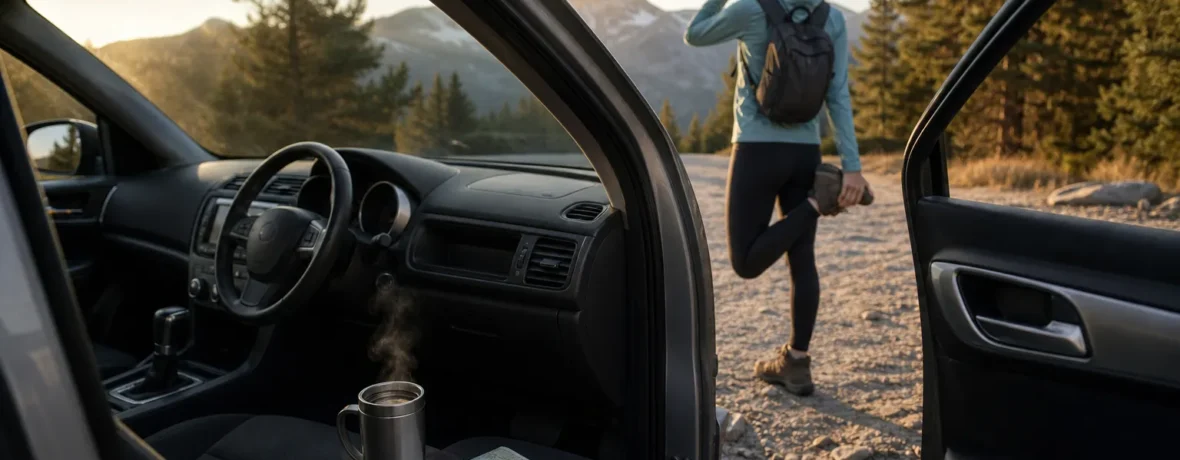
The best hiking podcasts for a trailhead drive are the ones that match the job: 20-40 minutes for local hikes, 60-90 minutes for mountain roads, and multi-episode shows for road trips. Pick one practical show, one story-driven show, and one quiet-ride option. Skip anything that makes you drive distracted.
What are the best hiking podcasts for the drive to the trailhead?
Start with shows that make you sharper before your boots hit dirt.
That is the line. A good trailhead podcast should put your head in the right place without turning the drive into homework. You want useful ideas, trail culture, better judgment, and maybe one story that reminds you not to wing it when the forecast turns ugly.
Here is the column take: the best hiking listening is not the loudest, scariest, funniest, or most famous feed. It is the feed that supports the day you are actually taking. A four-mile [6.4 km] after-work loop does not need a two-hour breakdown of a thru-hiker’s resupply strategy. A six-hour drive to a national forest trailhead probably does.
- Backpacker Radio — Best for thru-hiker culture, long-distance backpacking talk, and trail personalities. The show is produced by The Trek and describes itself as a podcast for long-distance backpackers, by long-distance backpackers. Listen when the drive is long enough to settle in. Backpacker Radio
- Backpacking & Blisters — Best for gear chatter, trail mistakes, and the practical side of backpacking. This is the one to queue when you are still mentally packing your kit and arguing with yourself over layers.
- Out Alive — Best for survival stories with actual lessons. Do not use it as fear fuel. Use it as a reminder that small decisions stack up fast outside.
- The Trail Show — Best for loose, funny, long-form trail culture. The tone is messy in the best way: more campfire than classroom. It works especially well when you need the drive to feel like the trip has already started. The Trail Show
- Trails Worth Hiking — Best for route inspiration. It is a strong pick when you want to hear the shape of a trail: the setting, the route, the character, the reason it sticks.
- Hike — Best for community stories and approachable hiking talk. It is a good fit for day hikers who want trail conversation without the thru-hiker arms race.
- Live Ultralight Podcast — Best for pack-weight obsessives and backpackers trying to make cleaner gear choices. Use it before a weekend trip, not when you are already second-guessing every item in the trunk.
- The Thru-Hiking Podcast — Best for long-trail planning and first-person hiker interviews. Queue it when you are thinking past today’s trailhead toward a section hike or full thru-hike.
- She Explores — Best as an archive of thoughtful outdoor stories, creativity, and women’s voices in the outdoors. It is not the feed for hot takes on stove weights. It is the feed for remembering that hiking is also identity, art, confidence, grief, and joy. She Explores
- The Sharp End — Best for accident stories from climbing and mountain travel that still carry hiking lessons. Not every episode is a hiking episode, but the decision-making lessons travel well.
Which hiking podcast should you listen to for a short drive?
Pick a single-topic episode under 45 minutes.
Short drive, short leash. If the trailhead is 25 minutes away, do not start a sprawling interview that hits the good part as you pull into the parking lot. You will either sit in the car finishing it, rush your gear check, or walk away irritated. Bad start.
For local hikes, choose episodes with obvious value in the title: layering, water treatment, dogs on trail, beginner mistakes, winter footing, ticks, navigation, or trail etiquette. The goal is not entertainment only. The goal is to arrive a little more tuned in.
Good short-drive choices:
- A gear-focused segment from Backpacking & Blisters
- A community interview from Hike
- A single route episode from Trails Worth Hiking
- A short practical episode from Live Ultralight Podcast
If the episode is still running when you park, kill it. The trail gets your attention now. This is where many hikers get sloppy: one ear still in the story, one hand grabbing snacks, brain already halfway up the climb. Before you step away from the car, check the map, weather, water, layers, headlamp, keys, and route plan. The National Park Service’s Hike Smart guidance is plain on this point: plan your route, know your limits, and pay attention to conditions.
What hiking podcasts are best for long trailhead drives?
Use long-form shows when the road is part of the trip.
A long drive changes the assignment. Now you can let a conversation breathe. You can handle a 90-minute trail interview, a multi-part survival story, or a wandering show that feels like sitting at a picnic table after dinner.
This is where Backpacker Radio shines. Long-distance hiking has its own language: trail names, town stops, shakedowns, hiker hunger, weird injuries, generous strangers, and the particular madness of walking day after day. Even if you are heading out for a weekend, that world can be useful. It stretches your thinking. It reminds you that trails are not just workouts with trees.
The Trail Show also belongs here. It is less polished and more chaotic, which is the point. If Backpacker Radio can feel like a long trail-town conversation, The Trail Show can feel like the table next to it after the second round. That tone will not fit every listener. Good. Not every podcast should be sanded smooth.
For drives longer than two hours, build a queue instead of trusting the algorithm:
- First 30 minutes: a practical episode to get your head on straight.
- Middle stretch: a long interview or trail-culture show.
- Final 20 minutes: quiet, music, or nothing.
- Parking lot: no podcast, no scrolling, no “one more minute.” Gear check only.
That final quiet stretch matters. Trailhead arrivals can be hectic: rough road, full lot, sketchy shoulder parking, permit box, bathroom line, barking dogs, weather moving in. Do not roll in with your brain still inside someone else’s story.
Are survival podcasts good before a hike?
Yes, if they make you calmer and more prepared.
Survival shows can help or hurt. The good ones teach humility. The bad ones turn the outdoors into a haunted house and leave you jumpy, distracted, and convinced every snapped twig is a warning sign.
Out Alive works because the best episodes focus on sequence. What changed? What did the person miss? Which decision narrowed the options? Where did luck help, and where did skill help? That is useful for hikers because most outdoor trouble does not arrive as a lightning bolt. It arrives as a chain: late start, thin water, wrong turn, dead phone, cotton hoodie, no headlamp, pride.
Listen for patterns, not drama:
- People often get in trouble after changing plans without telling anyone.
- Weather becomes dangerous when hikers treat the forecast as a suggestion.
- Minor injuries become major problems when the group has no extra time, warmth, or light.
- Navigation mistakes compound when hikers refuse to stop and confirm their location.
- Fatigue makes smart people bargain with bad choices.
But here is the hard opinion: do not listen to a grim survival episode if it makes you drive aggressively, catastrophize, or start the hike tense. Fear is not preparedness. Preparedness is a charged phone, offline map, realistic turnaround time, layers, water, food, headlamp, first-aid basics, and the willingness to bail.
What should you listen to on the way home from a hike?
Choose something calmer than your pre-hike queue.
The drive home is not the place for high-adrenaline stories if you are tired. You have already spent your focus for the day. Your knees are humming. Your feet are dusty. Your snack bag contains three almonds and a wrapper. This is when you need a soft landing.
She Explores is a strong post-hike choice because it has a different emotional gear. The archive includes outdoor stories with room for reflection, art, identity, and belonging. That can match the after-hike mood better than another debate over tents.
Route-based shows also work well on the way home because they let your brain wander toward the next trip. Trails Worth Hiking can turn a tired drive into low-pressure dreaming. That is useful. Hikers need future trails. They are cheaper than therapy and more reliable than most motivational posters.
Keep the ride-home queue simple:
- If you are tired: quiet narrative, mellow interviews, or silence.
- If you are wired: trail culture or a funny backpacking show.
- If conditions were rough: skip accident shows and decompress first.
- If you still have a long drive: stop, stretch, eat, and reset before starting another episode.
How do you compare hiking podcasts before you subscribe?
Judge by usefulness, tone, episode length, and trail relevance.
A podcast can be popular and still wrong for your drive. Some shows are gear-heavy. Some are interview-heavy. Some are polished enough to feel like radio. Others sound like friends recording from a garage full of damp packs. None of those formats is automatically better.
Use this quick comparison before you fill your app with 30 feeds you will never open.
| Podcast style | Best for | Skip it when | Good drive length |
|---|---|---|---|
| Thru-hiker interviews | Long-trail culture, motivation, planning | You need quick, local advice | 60-120 minutes |
| Gear and skills talk | Packing, layering, food, water, shelter choices | You are already overthinking your kit | 20-60 minutes |
| Survival stories | Risk awareness and decision-making | You are anxious or driving at night | 45-90 minutes |
| Outdoor narrative | Reflection, inspiration, post-hike listening | You need concrete route beta | 30-75 minutes |
The sneaky test is this: after 10 minutes, do you feel more ready for the trail or less? If a show makes you calmer, smarter, or more curious, keep it. If it makes you irritated, rushed, or weirdly competitive, dump it. You do not owe a podcast your ears.
Can you listen to podcasts while hiking?
You can, but the trail deserves first claim on your attention.
This is where the column gets blunt. Podcasts are excellent for the drive. They are optional on the trail. Sometimes they are a poor choice.
There are hikes where audio is harmless: a wide, familiar rail trail; a solo training walk on a safe local loop; a dull gravel approach road; a long climb where one earbud helps you keep a steady rhythm. Fine. Nobody gets a medal for purity.
But if the trail is exposed, icy, crowded, remote, full of bikes, known for wildlife, or tricky to follow, take the earbuds out. You need to hear people, water, wind, rockfall, hooves, bikes, thunder, and your own breathing. You also need to hear your hiking partner say, “Wait, this is the wrong turn.”
And no speakers. That should not be controversial. Leave No Trace’s soundscape guidance tells recreationists to reduce their noise footprint, use headphones if listening to human-created audio, or turn the volume down. The better rule is simpler: do not export your playlist, podcast, or comedy special into someone else’s hike.
If you do listen on trail, use this checklist:
- Use one earbud, not two, when you need awareness.
- Keep the volume low enough to hear footsteps behind you.
- Pause at junctions, crossings, scrambles, and wildlife encounters.
- Remove earbuds when passing hikers, riders, or horses.
- Never use a speaker on shared trails.
- Stop listening if the trail gets technical or weather changes.
How should you build a trailhead podcast queue?
Build it before you leave home.
Do not make your podcast app another thing to fiddle with at 65 mph [105 km/h]. Download episodes on Wi-Fi, line them up in order, and make the queue match the drive. That is boring advice. It is also the difference between a clean morning and a distracted one.
Here is a simple system that works:
- Check the drive time. Choose episodes that end before the last few miles [kilometers] of rough road or parking-lot hunting.
- Match the mood to the hike. Big objective? Choose practical and calm. Easy social hike? Choose funny or conversational.
- Download offline. Trailhead roads are where cell service goes to die.
- Put safety first in the queue. Weather, route, road conditions, and messages to your contact beat entertainment.
- Leave a quiet buffer. Give yourself 10-20 minutes before arrival with no dense audio.
- Save one mellow episode for the ride home. Future-you will appreciate it.
The strongest hiking podcast habit is restraint. You are not trying to consume every outdoor show in the app. You are setting the tone for a better day outside.
What makes a hiking podcast actually good?
A good hiking podcast changes what you notice.
That is the standard. Not perfect audio. Not a celebrity guest. Not a host who has walked every long trail on the continent. A good show changes what you notice when you step onto dirt.
Maybe you notice that your turnaround time is too vague. Maybe you finally understand why your shoulders ache under a poorly packed load. Maybe you catch yourself before saying, “We can probably make it before dark.” Maybe you remember that the person moving slowly uphill has the right to set their pace without your impatience breathing down their neck.
Good hiking podcasts do at least one of these jobs:
- They teach. You leave with one practical idea.
- They warn. You see how ordinary mistakes become serious.
- They connect. You hear voices from outside your own hiking bubble.
- They entertain. The drive feels shorter without making you careless.
- They inspire. You add a trail to the list for a real reason, not just a pretty photo.
The weak ones do the opposite. They flatten the outdoors into gear shopping, suffering contests, or inspirational fog. You do not need that. You need voices that make the trail feel bigger, not your ego.
Related reading
- Type 2 Fun: Why Hard Hikes Feel Good Later
- The Seven Summits Explained
- What Is Geocaching?
- What Is Hiking, Really? A Definition Worth Arguing About
FAQ
What is the best hiking podcast for beginners?
The best beginner choice is a practical show with clear episode topics. Start with gear, safety, trail etiquette, and day-hiking episodes before moving into thru-hiking interviews or survival stories.
Are hiking podcasts useful for backpacking trips?
Yes, especially before the trip. Gear shows, long-distance hiking interviews, and route-based podcasts can help you think through food, pack weight, pacing, and mistakes to avoid.
Should I listen to podcasts on the trail or only in the car?
The car is the better default. On trail, use one earbud at low volume only when conditions are simple, and remove it near junctions, hazards, wildlife, horses, bikes, or other hikers.
What kind of podcast is best before a hard hike?
Choose calm, practical audio before a hard hike. Skip anything that raises your anxiety or distracts you from checking weather, route, water, layers, daylight, and turnaround time.
How many hiking podcasts should I subscribe to?
Subscribe to three to five. Keep one practical show, one interview show, one story-driven show, one mellow show for the ride home, and one wildcard if it consistently earns its spot.