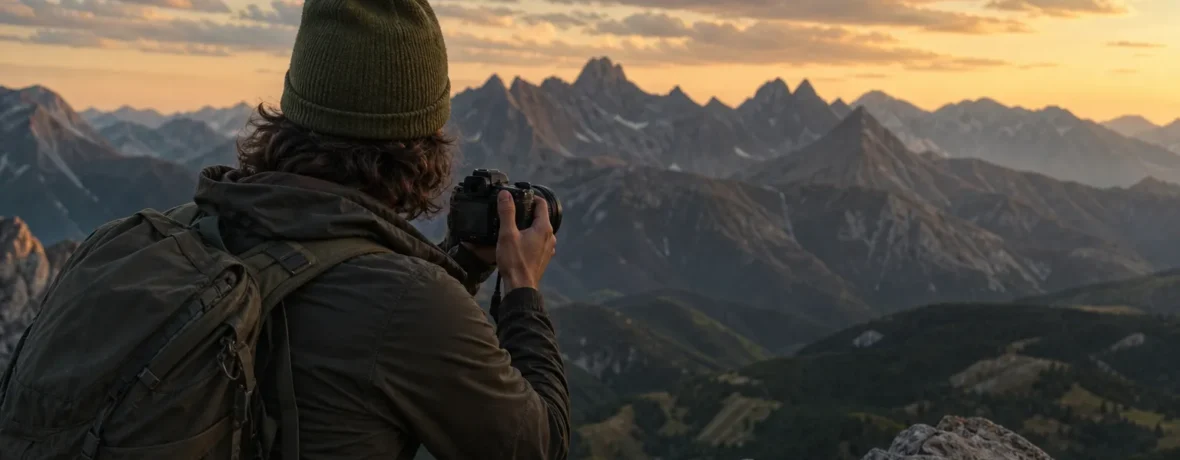
The best hiking influencers to follow are creators who show real trail skills, honest limits, and respect for public lands. Start with 10 to 12 creators across thru-hiking, day hiking, gear, food, safety, and film, then treat their content as inspiration—not a substitute for maps, permits, and local conditions.
Which hiking influencers are worth following right now?
Follow creators who help you hike better, not just scroll longer.
Some hiking accounts sell a fantasy: perfect hair, empty overlooks, and a sunrise that apparently waited for the drone. Skip that. The creators below have built useful bodies of work around trail life, backpacking systems, public-land manners, food, route planning, storytelling, or visual inspiration. They are not all the same. Good. Your feed should not be one endless montage of identical alpine lakes.
-
Jessica “Dixie” Hawkins — Homemade Wanderlust
Dixie is one of the most useful follows for long-distance hiking. Her official bio says her documented treks include the Appalachian Trail, Pacific Crest Trail, Continental Divide Trail, Camino de Santiago, Florida Trail, West Highland Way, Arizona Trail, and more than 10,000 miles [16,093 km] of adventures through Homemade Wanderlust. Follow her if you want practical thru-hike talk, beginner-friendly backpacking lessons, and a creator who has turned hard miles into clear advice.
-
Nic “Darwin” Rakestraw — Darwin onthetrail
Darwin is a long-distance “Triple Crown” hiker, adventure cyclist, and outdoor filmmaker based in northern Arizona, according to his site. His best lane is stripped-down backpacking: lighter kits, trail systems, simple camp routines, and the thinking behind gear choices. He is a strong follow if you are trying to reduce clutter without pretending discomfort is a personality trait.
-
Miranda Goes Outside
Miranda makes hiking, camping, and backpacking feel human. The official Miranda Goes Outside site describes a career built around sharing hiking, backpacking, and camping, with a team behind the channel. Follow for approachable trip prep, gear conversations, silly-but-useful trail energy, and content that does not act like you must already own the perfect kit before you sleep outside.
-
Kathleen Neves — The Hungry Hiker
Kathleen Neves, creator of The Hungry Hiker, focuses on women’s confidence outdoors, solo hiking, beginner backpacking, safety, preparedness, and practical gear guidance. Her content is direct and educational. Follow her if you want help turning “I want to go” into a packed bag, a trail plan, and the nerve to start.
-
Renee Miller and Tim Beissinger — Thruhikers
Renee and Tim are excellent for trail food, long-distance systems, and non-motorized adventure. Their site lists major trips including the Pacific Crest Trail, Continental Divide Trail, a 2,700-mile [4,345 km] Pacific Northwest Circuit by foot and canoe, and hiking in Germany. If you have ever stared at a pile of dehydrated ingredients and wondered how that becomes dinner, follow them.
-
Kraig Adams
Kraig Adams is the follow for quiet hiking films. His site says he films long walks in the mountains, mostly alone, and writes about the films, trips, and tools behind them. Expect slow pacing, big scenery, and route-focused travel films. Follow when you want a calm screen, not another creator yelling into a windscreen at 11,000 feet [3,353 m].
-
Harmen Hoek
Harmen Hoek is a filmmaker, solo explorer, and long-distance trekker who shares silent stories from wild places. His work leans cinematic: fewer talking-head lectures, more weather, terrain, footfalls, and scale. Follow if you like hiking films that let the land do most of the talking.
-
Jupiter Hikes
Jupiter Hikes is a strong follow for ultralight backpacking and long trails. His trail list includes the Appalachian Trail, Pacific Crest Trail, Florida Trail twice, Arizona Trail, Long Trail, Tahoe Rim Trail, Superior Hiking Trail, and more. Follow for gear minimalism, route notes, and the kind of trail repetition that teaches judgment.
-
Jenny Bruso — Unlikely Hikers
Jenny Bruso founded Unlikely Hikers to challenge the narrow image of who “belongs” outdoors. REI describes her as a writer and hiker whose work centers diversity, inclusion, representation, and the @UnlikelyHikers community. Follow if your feed has too much sameness and not enough real people taking up space on trail.
-
Adventure Archives
Adventure Archives describes itself as a YouTube channel about camping, hiking, and bushcraft through the backcountry. This is a good follow for longer, story-driven trips with a slower rhythm than short-form reels. Watch when you want route atmosphere, camp life, and the feeling of moving through a landscape with friends.
-
Kyle Hates Hiking
Kyle Hates Hiking is not your classic pretty-trail account. His channel description centers outdoor mysteries and stories told with compassion, and he also has long-distance hiking experience. Follow for cautionary tales, trail culture, and the darker side of outdoor decision-making. Do not use mystery videos as route research. Use them as reminders to stay humble.
-
Cam Honan — The Hiking Life
Cam Honan’s site, The Hiking Life, is packed with trail guides, gear notes, and backpacking tips. His official about page says that, as of 2026, he has hiked more than 77,000 miles [123,919 km] in 68 countries and six continents. Follow for deep hiking knowledge, old-school trip detail, and writing that respects both preparation and dirtbag simplicity.
What hiking YouTube channels are best for trip planning?
The best channels for trip planning are the ones that show decisions, not just scenery.
A trail film can inspire you, but a useful hiking video also shows the boring parts: water carries, foot care, weather pivots, gear failures, route timing, food math, and what happens when morale gets ugly. For actual planning, look for creators who explain why they made a choice.
| Creator | Best for | Use their content for |
|---|---|---|
| Dixie / Homemade Wanderlust | Thru-hiking basics and long-trail stories | Understanding daily trail life before committing months |
| Darwin onthetrail | Minimalist backpacking systems | Trimming gear and thinking through pack weight |
| Thruhikers | Backpacking food and trail routines | Meal ideas, dehydration, and long-distance logistics |
| Kraig Adams or Harmen Hoek | Cinematic route inspiration | Getting a visual feel for terrain and weather mood |
Here is the line you should not cross: do not copy a creator’s itinerary without checking current conditions. Fires, floods, snowpack, road closures, permits, bear rules, shuttle changes, and trail damage can turn last year’s “easy” plan into a mess. Use videos to build questions. Use official land managers, maps, weather forecasts, and recent trail reports to answer them.
Which hiking Instagram accounts are good for quick inspiration?
The best hiking Instagram accounts give you a nudge without pretending a reel is a guidebook.
Instagram is good for sparks: a new trail idea, a packing reminder, a meal trick, a shoulder-season clothing combo, a small confidence boost. It is weak for depth. Captions get skimmed. Locations get flattened. Risk disappears behind a trending audio clip.
For quick inspiration, follow a mix:
- One thru-hiker for big-route ambition: Dixie, Darwin, Jupiter Hikes, or Thruhikers.
- One educator for useful reminders: The Hungry Hiker or Miranda Goes Outside.
- One visual storyteller for beauty without constant noise: Kraig Adams or Harmen Hoek.
- One community-focused account that broadens your view of who hikes: Unlikely Hikers.
- One local creator in your region, because local snow, mud, bugs, and access matter more than national hype.
Do not chase every geotag. A fragile alpine basin does not need 40 people showing up because the light looked good on Tuesday. If a creator withholds an exact location, take the hint. Some places stay wild because people use restraint.
How do you choose hiking creators you can actually trust?
Trust creators who show process, limits, and corrections.
A good hiking creator does not need to be perfect. They do need to be honest. You want people who say when a route was harder than expected, when they packed the wrong layer, when a water source was dry, when they turned around, and when conditions changed. That kind of content teaches judgment.
Use this quick trust check before taking advice from any hiking account:
- They separate inspiration from instruction. A beautiful reel is not a route plan.
- They disclose partnerships. Gear advice changes when money enters the frame.
- They talk about tradeoffs. Every tent, shoe, pack, and stove has downsides.
- They respect land rules. No trampling meadows for a shot. No feeding wildlife. No illegal campfires.
- They avoid fake certainty. Trail conditions shift. A smart creator leaves room for that.
- They send you to primary sources. Maps, ranger stations, land agencies, official trail groups, and current alerts beat comments every time.
As of November 2026, the National Park Service still frames the Ten Essentials as 10 systems for outdoor travel, including navigation, sun protection, insulation, illumination, first aid, fire, repair kit and tools, nutrition, hydration, and emergency shelter. A creator who makes those basics sound optional is not being edgy. They are being careless.
Do hiking influencers give reliable trail advice?
Sometimes, but you still need to verify anything that affects safety, legality, or access.
Creators can be excellent at lived experience. They can show what a 20-mile [32 km] day looks like, how a pack rides after five days of food, how exposed a ridge feels, or how miserable a bad shoe choice becomes. That is valuable. It is not the same as current official information.
Use this order when planning:
- Start with official land manager pages. Check the park, forest, wilderness area, state land agency, or trail association.
- Read current alerts. Look for closures, fire restrictions, washed-out bridges, permit changes, bear canister rules, and seasonal road access.
- Check maps. Use a real map source, not only a screenshot from a video.
- Compare recent reports. Look for patterns, not one dramatic post.
- Use creators for texture. Watch how the route feels, where people struggle, and what gear decisions mattered.
As of November 2026, Leave No Trace lists seven core principles: plan ahead and prepare, travel and camp on durable surfaces, dispose of waste properly, leave what you find, minimize campfire impacts, respect wildlife, and be considerate of others. If an account repeatedly ignores those principles for content, unfollow. Your attention is a vote.
What should brands look for in hiking creators?
Brands should look for trail credibility before audience size.
Big numbers are tempting. They are also blunt. A million passive viewers may do less for an outdoor brand than 40,000 people who actually backpack, hike in rain, read captions, ask gear questions, and buy based on trust. The best outdoor partnerships feel like they grew out of real use, not a product slapped onto a summit photo.
Before partnering with a hiking creator, brands should check:
- Terrain match: A desert hiker, Appalachian hiker, alpine backpacker, and weekend state-park hiker test different things.
- Audience intent: Are followers planning trips, buying gear, learning skills, or just watching pretty clips?
- Disclosure habits: Clean sponsorship disclosure protects everyone.
- Ethics: Public-land behavior matters. Bad trail manners can stick to a brand fast.
- Long-form depth: A creator with blog posts, YouTube videos, newsletters, or guides can explain nuance better than a single reel.
As of November 2026, the American Hiking Society’s hiking etiquette guidance still emphasizes respect for the land and other hikers, including packing out trash, yielding appropriately, controlling pets, not feeding wildlife, and staying on trail. Brands should want creators who model that without needing a script.
How can you follow hiking creators without loving places to death?
Follow for skills first and locations second.
This is where you, the viewer, have power. Algorithms reward attention. If you only click secret lakes, risky stunts, illegal camps, and “nobody knows this place” hooks, more of that shows up. If you reward education, restraint, cleanup, honest turnarounds, and creators who blur fragile locations, your feed gets better.
Try this:
- Save posts about packing, layering, water treatment, navigation, and food.
- Do not ask for exact coordinates on sensitive-location posts.
- Share official trail pages instead of viral geotags.
- Compliment creators who model good behavior, not just big views.
- Mute accounts that normalize trash, shortcutting switchbacks, drone misuse, wildlife harassment, or campfire rule-breaking.
Pretty places are not content props. They are habitats, watersheds, cultural landscapes, and shared public resources. The best hiking influencers make you want to protect the trail, not just stand in the same spot wearing the same jacket.
Related reading
- A Walk in the Woods: Bill Bryson's AT Story vs Reality
- Kids' Hiking Boots: How to Size and When to Buy
- Mountain Porters: The People Who Carry Expeditions
- Teaching Leave No Trace to Kids
FAQ
Who is the best hiking influencer to follow for beginners?
Miranda Goes Outside and The Hungry Hiker are strong beginner follows. They keep the tone approachable and focus on practical hiking, backpacking, confidence, and preparation without making the outdoors feel like a private club.
Who should I follow for thru-hiking advice?
Start with Homemade Wanderlust, Darwin onthetrail, Jupiter Hikes, and Thruhikers. Together, they cover long-trail life, gear systems, food, mileage, and the mental grind that does not always show up in short clips.
Are hiking influencers reliable for gear reviews?
Some are reliable, but no single review should make the decision for you. Look for creators who explain conditions, body type, pack weight, sponsorships, long-term use, and what failed.
Should I copy a hiking creator’s exact route?
No, not without checking current official information first. Trail access, permits, weather, water, snow, fire restrictions, and closures can change after a creator publishes a post or video.
What makes a hiking creator worth unfollowing?
Unfollow creators who damage fragile areas, hide sponsorships, harass wildlife, promote unsafe choices as bravery, or treat public lands like a backdrop they do not have to respect. Your feed gets better fast when you stop rewarding bad trail behavior.