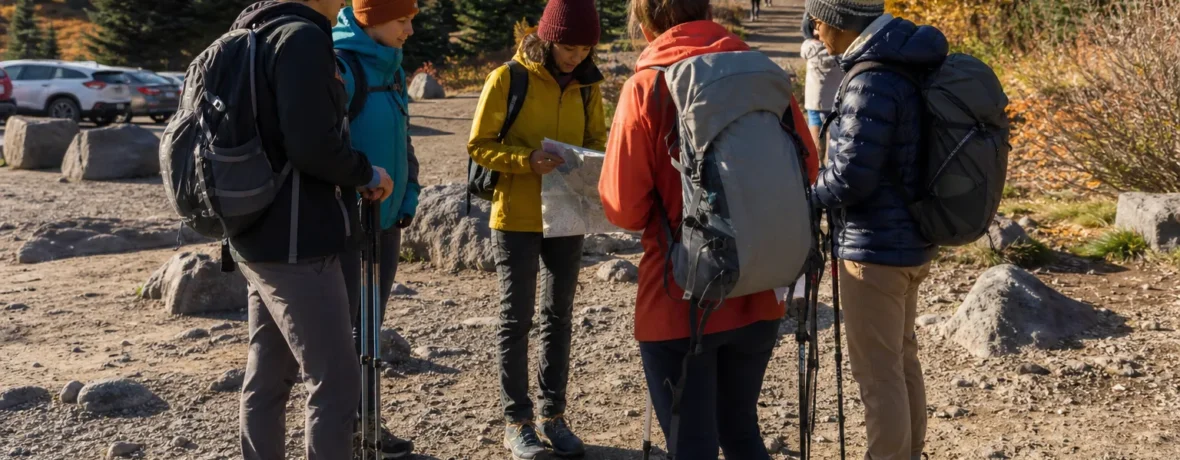
To find a hiking club, search local trail organizations, Meetup, Facebook groups, gear shops, conservation nonprofits, and park event calendars. Pick one that matches your pace, distance, schedule, and safety habits. Join by reading the rules, registering for a beginner-friendly hike, asking one smart question, and showing up prepared.
How do you find a hiking club near you?
Start with local trail groups, then widen the search.
A good hiking club is not always the loudest one online. Some of the best groups are run by volunteers who post a plain calendar, answer email once a week, and know every muddy switchback within 50 miles [80 km]. Search both formal clubs and casual groups, because they can feel very different on the trail.
- Search your city plus “hiking club.” Try “Denver hiking club,” “Asheville hiking group,” or “Phoenix beginner hikes.”
- Check national and regional organizations. The American Hiking Society hiking resources page points hikers toward trail groups, hiking clubs, land trusts, and related organizations.
- Look at conservation groups. The Sierra Club Outings program and local Sierra Club chapters often list hikes, service trips, and outdoor events.
- Ask at independent gear shops. Staff usually know which clubs welcome beginners, which groups move fast, and which hikes fill up early.
- Scan park and public-land calendars. City parks, state parks, national parks, and land trusts may host ranger-led walks, volunteer trail days, and seasonal hikes.
- Use Meetup and Facebook with care. These can be useful, but read the event description, leader notes, cancellation policy, and comments before you commit.
- Check bulletin boards. Libraries, community centers, colleges, gyms, breweries, and outdoor stores still post local outings.
Use a tight search radius at first. A club 12 miles [19 km] away is easier to try than one that meets across the state. After you know what kind of group you like, then stretch farther for bigger objectives.
What types of hiking clubs can you join?
You can join casual, fitness-focused, skills-based, social, conservation, or identity-based hiking groups.
The name “hiking club” covers everything from slow wildflower walks to sunrise peak hikes with serious elevation gain. Pick the type that matches what you want right now, not the hiker you think you should be.
| Club type | Best for | What to check before joining |
|---|---|---|
| Beginner hiking group | Learning trail basics, meeting people, building confidence | Pace, distance, bathroom access, gear expectations |
| Fitness hiking club | Fast hikes, hill training, longer mileage | Minimum pace, elevation gain, regrouping policy |
| Backpacking or mountaineering club | Overnights, navigation, snow travel, bigger routes | Prerequisites, required classes, trip screening |
| Trail stewardship group | Giving back, meeting local hikers, learning trail systems | Tools provided, training, work-day difficulty |
| Social hiking group | Making friends, easy weekends, post-hike food | Group size, carpool norms, alcohol policy after hikes |
If you are new, choose a short hike first: 2 to 4 miles [3.2 to 6.4 km] with modest elevation gain. That gives you room to learn the group’s style without turning the day into a sufferfest.
How do you know if a hiking club is a good fit?
A good fit is clear, safe, welcoming, and honest about difficulty.
Read the event page like a trail map. The best clubs tell you where to meet, how far you will hike, how much elevation you will gain, what pace to expect, whether dogs are allowed, what happens in bad weather, and who is leading. Vague listings are not always unsafe, but they make your first hike harder to judge.
Look for these green flags:
- Named hike leader or host
- Clear route, distance, and elevation gain
- Start time and expected finish window
- Guidance on footwear, water, snacks, and layers
- Stated pace, such as slow, moderate, brisk, or conditioning
- Plan for regrouping at junctions
- Cancellation notes for storms, smoke, ice, heat, or closures
- Respectful comments from past participants
Now check for red flags:
- No leader named
- No route details
- Pressure to keep up at all costs
- Mocking beginners in the comments
- Huge group size on a narrow or fragile trail
- No mention of weather, water, or safety
- Unclear meeting point or last-minute location changes
The right club should make you feel alert, not anxious. A little nervous before your first group hike is normal. Feeling confused before you even pack your bag is a sign to ask questions or choose another outing.
How do you join a hiking club for the first time?
Register for one easy hike, then treat it like a low-pressure trial.
You do not need to pledge your weekends forever. You need one well-chosen outing. The first hike tells you more than a club description ever will: how the leader communicates, how the group handles different speeds, how people treat newcomers, and whether the vibe suits you.
- Pick a hike below your limit. If you can comfortably hike 5 miles [8 km], choose 3 miles [4.8 km] for your first club outing.
- Read the full event listing. Check distance, elevation, surface, weather notes, gear, pets, and cancellation policy.
- Register if required. Some clubs cap group size to protect trails and keep logistics sane.
- Message the leader once. Ask one direct question, such as “Is this hike suitable for someone comfortable with 3 miles [4.8 km] on uneven trail?”
- Arrive early. Ten to 15 minutes gives you time to park, use the restroom, adjust layers, and introduce yourself.
- Tell the leader you are new. Keep it simple: “First hike with this group.” A good leader will appreciate knowing.
- Start near the middle. Not right behind the fastest hiker, not far off the back before you know the group rhythm.
- Notice how you feel afterward. Energized, safe, and included? Go again. Drained by the people, not the trail? Try a different club.
What should you bring to your first group hike?
Bring enough gear to be self-sufficient for the listed hike.
Do not rely on the leader for basics. A hiking club gives you company and structure, not a personal support crew. Pack for the weather, the route, and one small delay.
- Daypack
- Water in bottles or a reservoir
- Snacks with salt and calories
- Comfortable hiking shoes or trail runners
- Weather-appropriate layers
- Rain shell if storms are possible
- Sun hat, sunglasses, and sunscreen
- Small first-aid kit
- Headlamp, even for daytime hikes that may run late
- Map app with the route downloaded, plus a backup power plan for longer hikes
- ID, emergency contact, and any personal medical items you normally carry
- Trash bag or zip bag for wrappers and used tissues
The National Park Service’s Hike Smart guidance is a solid baseline: plan the trip, know the trail, check conditions, and prepare for changing weather. Club hikes work better when every person carries their share.
What are the unspoken rules of hiking with a club?
Stay with the plan, respect the pace, and make the leader’s job easier.
Group hiking has its own manners. Most of them are simple. Be on time. Do not disappear. Do not turn the hike into your private speed workout unless the event is built for that. Do not bring a dog, guest, child, or drone unless the listing says it is allowed.
- Arrive ready to walk. Shoes tied, water packed, restroom handled.
- Tell the leader if you leave early. Never peel off silently at a junction.
- Regroup at turns. If you are ahead, wait where the route could become confusing.
- Share the trail. Step aside for uphill hikers, horses, runners, and other users as conditions allow.
- Keep music private. Use earbuds at low volume if the club allows them.
- Pack out trash. Orange peels, pistachio shells, and “biodegradable” scraps still do not belong beside the trail.
- Read the room. Some groups love nonstop chatter. Others enjoy quiet miles. Match the tone.
- Thank the leader. Volunteer leaders spend time planning, checking conditions, answering questions, and watching the group all day.
If you are faster than the group, practice patience or choose harder hikes next time. If you are slower, speak up early rather than waiting until you are cooked. Good clubs can adjust. They cannot read minds.
Is it safe to join a hiking club alone?
Yes, if you choose a transparent group and use normal personal-safety judgment.
Many people join hiking clubs alone. That is part of the appeal. You get a built-in group without having to beg friends to wake up at 6 a.m. Still, treat the first outing like meeting any new group of people.
- Choose a public, listed event rather than a private invitation from a stranger.
- Send the hike link, route, meeting point, and expected return time to someone you trust.
- Drive yourself or arrange transportation that lets you leave if needed.
- Keep your own water, food, layers, and phone with you.
- Trust discomfort. If something feels off before the hike starts, leave.
For the first outing, pick a daylight hike on a known trail with a clear leader and several registered participants. Save remote routes, night hikes, and long carpools for after you know the club.
How much does a hiking club cost?
Costs range from free informal hikes to paid memberships, classes, permits, and trip fees.
Do not assume a paid club is better or a free club is casual. Some volunteer groups run tight, safe outings at no charge. Some paid trips are guided instruction with formal risk management. The cost should match what you receive: leadership, training, insurance, permits, lodging, transportation, or special access.
Before you pay, ask what the money covers. Look for plain answers on:
- Annual membership
- Per-hike registration
- Trip deposits
- Refunds and cancellations
- Required classes
- Carpool gas sharing
- Parking passes or trailhead permits
For rules, permits, closures, and trailhead access, always check the land manager’s official page before the hike. Club posts can lag behind storm damage, fire restrictions, parking changes, and seasonal closures.
When to see a doctor
Get medical help fast for severe symptoms, worsening symptoms, or an injury that limits normal movement.
Group hikes are not medical clinics. Leaders may carry first-aid supplies, but they cannot diagnose you. If heat is a factor, the CDC’s heat and health guidance lists warning signs such as confusion, dizziness, heavy sweating, weakness, nausea, and high body temperature. Treat those signs seriously, especially on exposed trails.
For sprains, the Mayo Clinic’s sprain first-aid guidance says to seek emergency help if you heard a popping sound, cannot use the joint, or have a fever with a hot, painful area. Call a healthcare professional if a sprain does not improve after two or three days.
If you have chest pain, trouble breathing, fainting, confusion, signs of stroke, severe allergic reaction, or a head injury, call emergency services. Do not try to “tough it out” because the group is still moving.
How do you keep going after your first hiking club outing?
Go again soon, but change only one variable at a time.
If your first hike went well, register for another within 2 to 3 weeks. Momentum matters. Pick a similar distance with a little more variety: a new park, a different leader, or slightly more elevation gain. Do not jump from a 3-mile [4.8 km] creek walk to a 12-mile [19.3 km] ridge hike because the photos look good.
After three hikes, you will know more. You will know who sets a pace you like. You will know if the club waits at junctions. You will know if the post-hike coffee crowd is your kind of crowd. That is when membership starts to make sense.
If the first club was not right, do not write off group hiking. Try another. Hiking clubs have personalities. Some are chatty. Some are disciplined. Some are peak-bagging machines. Some stop for every mushroom. The point is to find the people who make you want to lace up again next weekend.
Related reading
- How to Start a Hiking Club
- A Walk in the Woods: Bill Bryson's AT Story vs Reality
- Kids' Hiking Boots: How to Size and When to Buy
- Mountain Porters: The People Who Carry Expeditions
FAQ
Do I need experience to join a hiking club?
No, not if you choose a beginner-friendly hike. Start with a short, clearly described outing and tell the leader you are new to the group.
Can I join a hiking club if I am slow?
Yes, if the club offers easy or moderate hikes and states a relaxed pace. Avoid conditioning hikes, peak hikes, and “fast pace” listings until you know your trail speed.
What should I ask before my first group hike?
Ask whether the hike matches your current ability. A good question is: “I’m comfortable hiking 3 miles [4.8 km] on uneven trails; is this outing a good fit?”
Are hiking clubs good for making friends?
Yes, because repeated hikes create easy conversation without forced small talk. You will usually connect faster if you attend the same club several times instead of sampling a new group every weekend.
Should I bring my dog to a hiking club event?
Only bring a dog if the listing clearly says dogs are allowed. Some trails ban dogs, some clubs prohibit them, and some hikes are too crowded, hot, rocky, or wildlife-sensitive for pets.
What if I cannot keep up with the group?
Tell the leader early. A responsible club will have a plan, such as slowing the pace, regrouping, assigning a sweep, or helping you turn back safely if the route allows it.