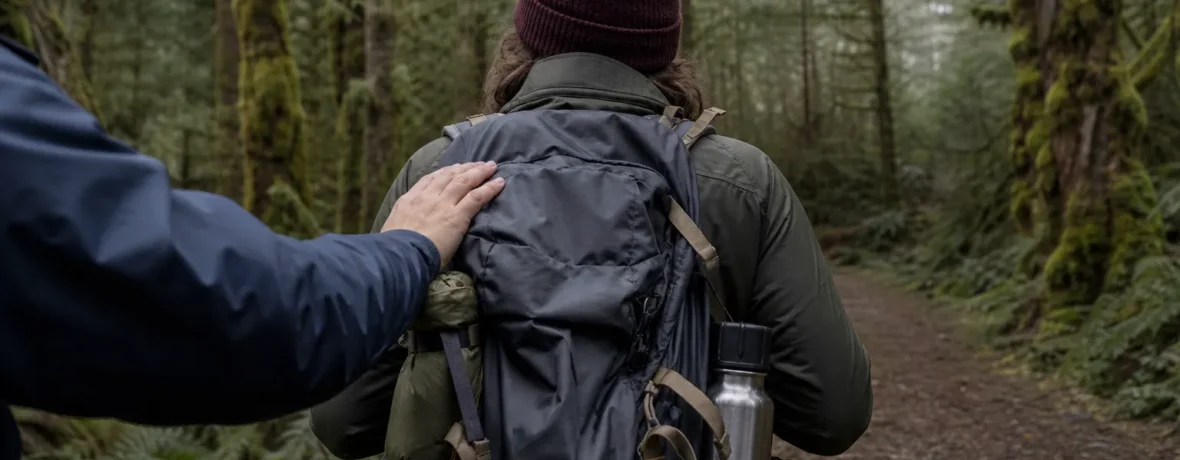
Hiking anxiety is real, and yes, you can hike with it if your symptoms are manageable, you start small, and you have a turn-around plan. Give yourself 10 minutes or 0.5 mile [0.8 km] before deciding. If panic, chest pain, fainting, or unsafe weather shows up, turn back.
Here’s the straight answer: the first mile is often the loudest mile. Not the hardest. The loudest. Your brain is scanning for bears, blisters, wrong turns, social judgment, darkness, injury, and the terrible possibility that you forgot the headlamp sitting on the kitchen counter.
My position is simple: trailhead anxiety should not get veto power over your hike. It gets a vote. You listen to the useful part, fix what can be fixed, and start walking. Anxiety is information, not a command.
There is a difference between fear that protects you and fear that cages you. If thunderheads are stacking over a ridge, turn around. If you forgot water, don’t start. If the “danger” is a jittery stomach in the parking lot because the trail looks steeper than the map promised, that is the first mile doing what the first mile does.
What is hiking anxiety?
Hiking anxiety is anxiety that flares before or during a hike.
It can look like second-guessing the route, feeling watched at a busy trailhead, worrying you are too slow, fearing wildlife, checking the weather 14 times, or feeling your heart pound and deciding that the pounding itself is dangerous. The National Institute of Mental Health describes anxiety disorders as conditions where symptoms can interfere with daily life and routine activities, but you do not need a diagnosis for trail nerves to feel very real.
The mistake is treating anxiety as proof that you should stay home. Sometimes it is proof that you need a better plan. Sometimes it is proof that your body is revving before effort. Sometimes it is simply proof that you care.
| Signal | What it may mean | Trail response |
|---|---|---|
| Forgot water, map, layers, or light | Real preparation gap | Fix it before starting or choose a shorter hike |
| Storms, smoke, heat, ice, or closures | Real trail hazard | Change plans without apology |
| Racing thoughts but gear and route are solid | Anticipatory anxiety | Start with a 10-minute commitment |
| Chest pain, fainting, severe shortness of breath | Potential medical issue | Stop and seek medical help |
Why do I feel anxious before a hike?
You feel anxious because your brain is rehearsing risk before your body has proof that it can handle the day.
A trailhead is a weird place. You move from climate-controlled life into uneven ground, variable weather, patchy cell service, strangers, animals, elevation, and physical effort. Your brain likes certainty. Trails offer none.
That does not make trails reckless. It makes them honest. You cannot control every mile, but you can control the next action: tie your shoes, shoulder the pack, check the sign, walk to the first bend.
The first mile also carries the weight of identity. You may be asking questions that have nothing to do with dirt: Am I fit enough? Do I belong here? Will my partner be annoyed if I slow down? What if I quit? Anxiety loves a blank screen, and the trailhead gives it a massive one.
So shrink the screen. Do not ask, “Can I finish this whole hike?” Ask, “Can I walk for 10 minutes and reassess?” That is a fair question. Usually, the answer is yes.
How do I stop feeling anxious at the trailhead?
You do not need to stop anxiety before you start; you need to start in a way that makes anxiety less convincing.
- Name the plan out loud. Say the trail name, distance, turn-around point, and expected daylight window. Anxiety hates specifics.
- Set a tiny contract. Walk 10 minutes or 0.5 mile [0.8 km], then decide again. No drama. No lifelong verdict.
- Use a body cue. Relax your jaw, drop your shoulders, and take slower breaths for 60 seconds. Mayo Clinic lists rapid breathing, sweating, trembling, and a fast heart rate among common anxiety symptoms, so do not treat every body sensation as an emergency by default; treat it as a cue to slow down and assess.
- Cut the route if needed. A 2-mile [3.2 km] loop you actually hike beats an 8-mile [12.9 km] plan you dread for three days and cancel.
- Put your phone away after the safety check. Take the map screenshot, confirm the route, then stop feeding the worry machine.
- Walk before you negotiate. The parking lot is a bad courtroom. Get moving, then reassess from the trail.
This is not toxic toughness. It is clean decision-making. The question is not “Am I fearless?” The question is “Am I prepared enough to take the next safe step?”
Can hiking help anxiety?
Yes, hiking can help some people feel less anxious, but it is not a replacement for medical care when symptoms are severe or persistent.
The CDC says a single session of moderate-to-vigorous physical activity can reduce feelings of anxiety in adults. Hiking is not magic. It is movement, sunlight, rhythm, scenery, breathing, and a clear task under your feet. That combination can be powerful.
But the trail should not become another perfection contest. If you turn every hike into proof of your worth, you have only moved the anxiety outdoors. Better goal: finish with a nervous system that trusts you a little more than it did in the parking lot.
That trust grows through repetition. Same trail. Same first 0.5 mile [0.8 km]. Same calm turn-around option. You are teaching your brain a dull but useful lesson: we can feel uncomfortable and still act wisely.
What should I pack if I get anxious while hiking?
Pack items that reduce real risk and limit spiraling.
- Water and snacks you know your stomach tolerates
- Printed map or saved offline map
- Headlamp, even for day hikes
- Layer for wind or cooling temperatures
- Basic first-aid kit
- Whistle
- Simple route card left with someone you trust
- Small grounding item: mint, bandana, smooth stone, or note with your plan
- Medication only if prescribed to you and carried according to your clinician’s instructions
Do not pack fear in the shape of extra junk. A 35-pound [15.9 kg] daypack full of “what if” gear can make a 3-mile [4.8 km] hike feel like a punishment. Carry the essentials for the route, weather, and season. Leave the panic inventory at home.
What do I do if I have a panic attack on trail?
Stop, get safe, slow the situation down, and decide whether to continue only after symptoms ease.
Move off the trail tread if other hikers need to pass, sit or stand where you are stable, and loosen tight straps. Use short sentences: “This is panic. I am safe right now. I can turn around.” Mayo Clinic says panic attacks can include symptoms such as chest pain, shortness of breath, rapid heartbeat, trembling, and sweating; those symptoms can also resemble medical problems, so take severe or unusual symptoms seriously.
Try this field reset:
- Look: name 5 things you can see.
- Touch: press your feet into the ground and feel the tread under each shoe.
- Breathe: lengthen the exhale without forcing a giant inhale.
- Reduce input: step away from cliffs, crowds, heat, or noise if you can do that safely.
- Choose the conservative option: if you feel shaken, turn back with care.
The Wilderness Medical Society has discussed the need for better recognition and response to mental health crises in backcountry settings. That matters because panic on trail is not a character flaw. It is a real field problem, and field problems deserve calm procedures.
Is it safer to hike alone or with someone if I have anxiety?
Hike with someone if your anxiety affects your judgment, causes panic, or makes you avoid basic safety decisions.
Solo hiking can be steadying for some people. No pace pressure. No performance. No one asking, “Are you okay?” every four minutes. For others, being alone makes every sound a threat and every body sensation bigger.
There is no moral prize for going alone. Pick the format that makes you safer and more likely to hike well.
- Choose solo for familiar, well-marked, lower-commitment trails when you have a clear plan.
- Choose a partner for new terrain, longer distances, exposed routes, winter conditions, or recent panic episodes.
- Choose a group if social accountability helps, but avoid groups that treat pace like a personality test.
A good hiking partner does not mock nerves. They help you make clean decisions. They also respect a turn-around without turning it into a courtroom scene.
When to see a doctor
See a doctor or mental health professional when anxiety is frequent, intense, worsening, or interfering with normal life.
Talk with a clinician if you avoid hikes you want to do, have repeated panic attacks, feel anxious outside the trail context, rely on alcohol or substances to cope, or cannot sleep because of worry. The NIMH says treatment options for generalized anxiety disorder can include psychotherapy, medication, or both, and cognitive behavioral therapy is commonly used.
Seek urgent medical help if you have chest pain, fainting, severe shortness of breath, symptoms that feel different from past anxiety, or thoughts of harming yourself. Do not diagnose yourself in a trailhead parking lot. If the symptoms are serious, stop hiking and get care.
How do I build confidence after a bad hike?
Rebuild confidence with smaller hikes, repeated routes, and honest post-hike notes.
After a scary day, people often make one of two bad moves: quit for months or plan a huge “redemption” hike. Skip both. Pick a trail that feels almost too easy. Repeat it until boring. Boring is medicine for a jumpy brain.
Use a three-line debrief after each hike:
- What was the fear?
- What actually happened?
- What will I do the same or differently next time?
That third line is where confidence lives. Not in pretending you were brave. Not in scolding yourself. Confidence is evidence gathered one plain, imperfect outing at a time.
Related reading
- Type 2 Fun: Why Hard Hikes Feel Good Later
- The Seven Summits Explained
- What Is Geocaching?
- What Is Hiking, Really? A Definition Worth Arguing About
FAQ
Is hiking anxiety normal?
Yes, some nervousness before a hike is normal. It becomes a bigger concern when it repeatedly stops you from hiking, causes panic, or leads you to ignore safety basics.
Should I turn around if I feel anxious?
Turn around if anxiety is affecting your judgment, your symptoms feel severe, or real conditions are unsafe. If the trail, weather, gear, and body signals are manageable, try walking 10 minutes before deciding.
Can beginners get hiking anxiety?
Yes, beginners often feel anxious because everything is new: gear, pace, maps, terrain, and trail etiquette. Start with short, marked trails under 3 miles [4.8 km] and build from there.
What is the best trail for hiking anxiety?
The best trail is familiar, well-marked, close to help, and easy to shorten. Loops can feel cleaner than out-and-backs for some hikers, but an out-and-back gives you full control over when to turn around.
Can I hike if I have panic attacks?
Maybe, but plan conservatively and talk with a health professional if panic attacks are recurring. Hike with a trusted partner, choose low-commitment routes, and stop if symptoms are severe or unusual.
What should I tell my hiking partner?
Tell them what helps before you are anxious. A simple script works: “If I get panicky, I need short sentences, a few minutes to breathe, and no pressure if I decide to turn around.”