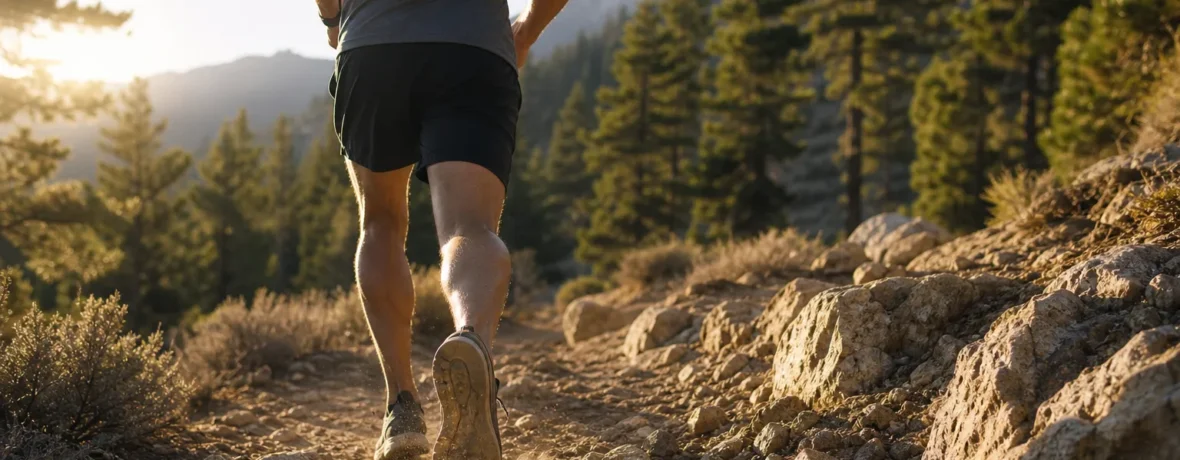
Yes. They can be, for dry day hikes under 8–10 miles [13–16 km], groomed trails, light packs under 15 lb [7 kg], and hikers with stable ankles. Skip them for snow, deep mud, sharp talus, off-trail travel, or heavy backpacking loads.
Can you wear running shoes for hiking?
Yes, you can wear running shoes for hiking if the trail is moderate and your shoes match the terrain.
Running shoes feel familiar. They flex easily, breathe well, and weigh less than most hiking shoes or boots. That lower weight matters because every step lifts your foot, not just your pack. On smooth dirt, gravel paths, rail trails, desert washes, and mellow forest routes, a good running shoe can feel fast and natural.
But the trail changes the job. Pavement is predictable. Trail surfaces are not. Roots twist your foot. Loose gravel rolls under your heel. Wet slabs punish smooth outsoles. A running shoe built for sidewalks may have soft foam, shallow tread, and a thin upper that gets chewed up fast on rock.
If you already own road running shoes, use them cautiously on easy trails. If you want one shoe for regular hiking, look harder at trail running shoes. They split the difference: lighter than boots, but with more traction and protection than road shoes.
Are running shoes good for hiking?
Running shoes are good for some hikes, not all hikes.
The clean answer: road running shoes work best on dry, maintained trails with low consequences. Trail running shoes work on a much wider range of hikes because they usually add lugged rubber, tougher uppers, and sometimes a rock plate underfoot.
| Shoe type | Best use | Main tradeoff |
|---|---|---|
| Road running shoes | Paved paths, packed dirt, short dry trails | Weak traction and less durability |
| Trail running shoes | Day hikes, fast hiking, maintained mountain trails | Less ankle coverage than boots |
| Hiking shoes | Rocky trails, wet routes, heavier day packs | Stiffer and heavier |
| Hiking boots | Backpacking, snow, off-trail, rough terrain | Hotter, bulkier, slower to dry |
The biggest mistake is treating all running shoes the same. A cushy road shoe with a slick outsole is not equal to a trail runner with deep lugs and a secure heel cup. If the trail has loose dirt, mud, wet leaves, or rock steps, traction moves from “nice to have” to “keeps you upright.”
Can I use running shoes for hiking if I’m new?
Yes, you can use running shoes for hiking as a beginner, but choose your first routes carefully.
Start with a short loop, not a ridge scramble. Pick a maintained trail with clear footing, low mileage, and an easy bailout. Your feet and calves may work harder than they do on sidewalks because trails force constant micro-adjustments. That is normal. Sharp pain is not.
- Choose a dry trail under 5 miles [8 km] for the first test.
- Wear hiking socks, not thin cotton gym socks.
- Lace the heel snug so your foot does not slide on descents.
- Carry blister care: tape, a small bandage, and a clean dressing.
- Turn around if your toes jam, arches ache, or traction feels sketchy.
One more thing: do not test brand-new shoes on a long hike. Walk in them around town first. Then try a short trail. Your feet will tell you the truth quickly.
What actually changes when you hike in running shoes?
The trail asks more from traction, stability, protection, and fit.
On pavement, your stride repeats. On trail, every step is different. Running shoes with soft midsoles can feel comfortable at mile 1, then sloppy on sidehills by mile 6 [10 km]. A tall foam stack can also feel tippy when you step on angled rock or roots.
Protection changes too. Hiking shoes and trail runners often shield the toe box, sidewalls, and sole better than road shoes. That matters when you kick a rock, edge across granite, or land on a pointed stone under the ball of your foot.
Water is another difference. Waterproof shoes keep shallow splashes out, but they also dry slower once soaked from the top. Breathable mesh running shoes wet out fast and dry fast. In warm weather, that can be a fair trade. In cold weather, wet feet can become a safety problem. The CDC lists shivering, exhaustion, confusion, slurred speech, and drowsiness as warning signs of hypothermia; cold rain and sweat can both contribute to dangerous chilling, not just freezing air. Read the CDC guidance on recognizing hypothermia before cold, wet hikes.
When should you not hike in running shoes?
Do not hike in running shoes when the terrain demands more grip, structure, or weather protection than the shoe can give.
Leave the road runners at home for steep mud, snow, icy trails, talus fields, thorny desert routes, long scree descents, and backpacking trips with a heavy load. If your pack is over 25 lb [11 kg], your feet will usually appreciate a more stable platform.
Running shoes are also a poor match if you need edge support. On rough mountain trails, soft foam can fold around rocks instead of holding shape. That makes your feet work harder and can make descents feel loose.
- Choose hiking shoes or boots for snow, ice, or cold rain.
- Choose trail runners for fast dry hikes with moderate terrain.
- Choose road runners only for smooth, dry, low-angle trails.
- Choose stiffer footwear if your ankles roll often.
- Choose a rock plate or firmer sole for sharp, rocky trails.
Do running shoes cause blisters on hikes?
They can, but fit and moisture usually matter more than the shoe label.
Blisters come from friction, pressure, heat, and moisture. Running shoes may help because they flex and breathe. They may hurt because they allow your foot to slide on steep descents. The danger zone is heel lift, toe jamming, and side rubbing near the forefoot.
Your sock choice matters. Use wool or synthetic hiking socks that manage sweat. Avoid cotton for longer hikes because wet cotton stays wet and increases friction. Stop at the first hot spot. Waiting until a blister forms is the rookie move.
A simple blister kit should include:
- Medical tape or blister tape
- Hydrocolloid blister bandages
- A small alcohol wipe for cleaning skin around the area
- A spare pair of dry socks
- A tiny trash bag for used wrappers and dressings
Are trail running shoes better than regular running shoes for hiking?
Yes, trail running shoes are usually better than regular running shoes for hiking.
Trail runners are built for uneven ground. They usually have grippier rubber, deeper lugs, reinforced toe caps, stronger uppers, and a more secure fit through the midfoot. Many also have a rock plate or firmer foam to reduce the sting from sharp stones.
Road running shoes still win on pavement comfort and smooth trail cruising. But once the surface gets loose, rocky, or wet, trail runners pull ahead. They also dry faster than many waterproof hiking shoes, which is useful on warm-weather creek crossings.
If you want one pair for gym days, dog walks, and one-mile [1.6 km] nature paths, road shoes are fine. If you want one pair for real hiking, trail runners are the better bet.
How should running shoes fit for hiking?
Your toes need room, and your heel needs to stay locked.
Fit hiking footwear with descent in mind. On downhills, your feet slide forward. If your toes already touch the front while standing on flat ground, they will bang the toe box on the trail. Aim for a thumb’s width of space in front of your longest toe, with no heel lift when you walk uphill.
Try shoes on with the socks you hike in. Feet swell during long efforts, hot days, and sustained descents. If you are between sizes, the hiking choice is often the larger size, as long as you can lock the heel with lacing.
Use the runner’s loop if your heel lifts. That extra eyelet near the ankle is not decoration. It can snug the collar without crushing your toes.
When to see a doctor
See a doctor if pain, swelling, numbness, or skin damage does not settle quickly after the hike.
Foot soreness after a new trail is common. Pain that changes your stride is a warning. Mayo Clinic says to contact a healthcare professional if you have ankle pain and swelling and think you may have a sprain; seek urgent care for severe pain, deformity, numbness, or signs the ankle is not getting blood flow. See Mayo Clinic’s guidance on sprained ankle symptoms and ankle pain.
Get medical help for blisters that show spreading redness, warmth, pus, fever, or worsening pain. For heat stress, stop hiking, cool down, and take symptoms seriously. The CDC describes heat stroke as the most serious heat-related illness and lists confusion, loss of consciousness, and very high body temperature as emergency signs; review the CDC page on heat-related illnesses before hot-weather hikes.
Related reading
- Are Trail Running Shoes Good for Hiking? Pros, Cons and When to Switch
- Are Hiking Shoes Good for Everyday Walking?
- Are Merrell Hiking Shoes Good? Moab and Beyond Reviewed
- Are Oboz Good Hiking Shoes? Fit, Footbeds and Durability
FAQ
Can I hike in Nike or Brooks running shoes?
Yes, if the shoes fit well and the trail is dry, smooth, and moderate. For rocky or muddy hikes, choose a trail model instead of a road model.
Are running shoes better than hiking boots?
Running shoes are better for light, fast, dry hikes. Hiking boots are better for heavy packs, snow, rough off-trail travel, and situations where ankle coverage or underfoot stiffness matters.
Can I wear running shoes on a mountain hike?
Yes, on maintained mountain trails in dry conditions. Avoid road running shoes on steep scree, wet rock, snowfields, and routes where a slip has serious consequences.
Do I need waterproof running shoes for hiking?
No, not for most warm-weather hikes. Breathable shoes often dry faster, while waterproof shoes help more in cold rain, shallow mud, wet grass, and chilly shoulder-season conditions.
What socks should I wear with running shoes for hiking?
Wear wool or synthetic hiking socks. Choose thinner socks for hot dry trails and cushioned socks for longer days, but keep the fit snug enough that your heel does not slide.