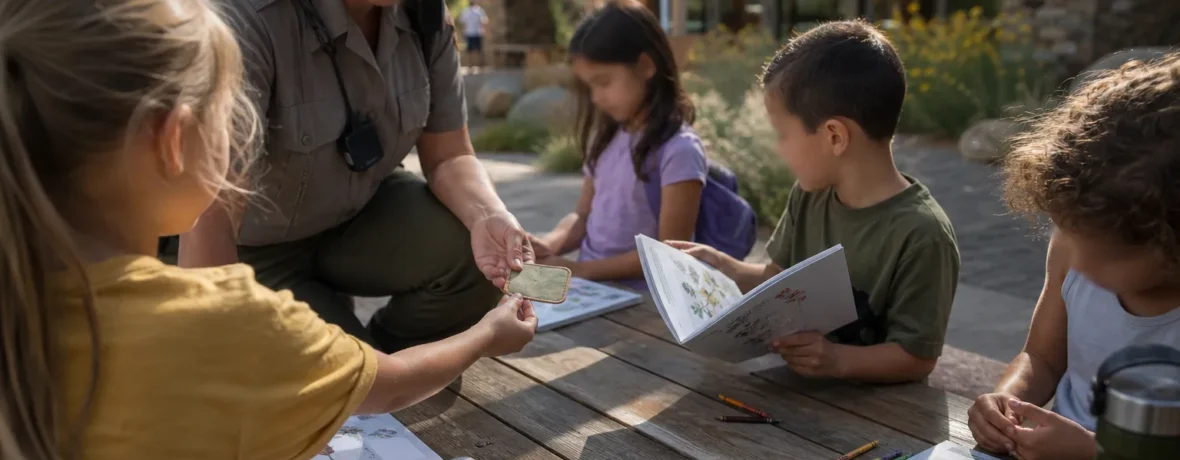
The junior ranger program is a hands-on National Park Service activity for kids and families. At most participating parks, a child picks up an activity booklet, completes age-based tasks, shows the finished work to a ranger, says a short pledge, and receives a badge or keepsake.
What is the junior ranger program?
It is a park-based learning program that turns kids into active explorers, not backseat passengers. The National Park Service Junior Ranger page says Junior Ranger programs connect families with the places, stories, wildlife, history, and stewardship work of NPS sites.
That can mean spotting animal tracks, reading a trail sign, drawing a fossil, interviewing a ranger, visiting a historic building, or finding answers in a visitor center exhibit. The exact tasks change from park to park, which is part of the fun. A desert park, a battlefield, a seashore, and a cave system will not hand your kid the same mission.
As of November 2026, the National Park Service says there are more than 400 NPS sites across the United States, and most parks have Junior Ranger programs. These are not limited to the famous “national parks.” National monuments, national historic sites, national seashores, national battlefields, national preserves, and national trails may have them too.
How do kids earn a junior ranger badge?
Kids earn a junior ranger badge by completing the park’s required activities and checking in with a ranger. At many sites, the badge comes after a short review and a pledge.
- Stop at the visitor center first. Ask for the Junior Ranger booklet at the front desk. Some parks also post printable booklets online.
- Check the age section. Many booklets split tasks by age, so a 6-year-old may complete fewer pages than a 12-year-old.
- Explore the park with the booklet open. Exhibits, trail signs, ranger talks, films, and overlooks often hold the answers.
- Let the kid do the work. Help with reading, safety, and pacing, but resist turning it into homework you finish for them.
- Return to a ranger. A ranger or volunteer usually looks over the booklet and asks the child what they learned.
- Say the pledge. The child promises to learn, protect parks, stay safe, and share what they know.
- Receive the badge. The reward may be a plastic badge, wooden badge, patch, sticker badge, certificate, or similar keepsake, depending on the park.
Rules are park-specific. For example, Bryce Canyon National Park’s Junior Ranger instructions say, as of November 2026, kids complete two tasks: learn through the museum, ranger program, hike, or park movie, then finish an age-appropriate number of booklet activities. The park tells families to complete as many activities as the child’s age.
What ages can do Junior Ranger activities?
All ages can participate at many parks. The NPS says Junior Ranger programs are designed for kids and families, and people of all ages and abilities are welcome.
That said, the sweet spot is usually elementary school through early teens. Younger kids can draw, match pictures, count objects, and answer simple scavenger-hunt prompts. Older kids may tackle maps, timelines, species identification, Leave No Trace choices, short writing prompts, and geology or history questions.
Adults can join in without making it weird. If a grandparent wants a badge, many rangers will smile and hand over a booklet. The point is not age policing. The point is attention. You slow down, notice the place, and leave knowing more than when you walked in.
How long does it take to earn a Junior Ranger badge?
Plan on 30 minutes to 2 hours for most in-park booklets. Bigger parks, longer hikes, ranger programs, or crowded visitor centers can stretch that time.
| Visit style | Best plan | Time pressure |
|---|---|---|
| Quick roadside stop | Ask if the park has a short booklet or visitor-center-only version | High |
| Half-day visit | Start the booklet first, then complete pages during exhibits and one short trail | Medium |
| Full-day visit | Add a ranger talk, film, picnic stop, and one longer walk | Low |
| Multi-day trip | Let the kid work in chunks and save the ranger check-in for the final day | Very low |
Here is the parent move: get the booklet before you hike. Not after. If you wait until the final 20 minutes, you turn a fun badge into a parking-lot sprint with a dull pencil and a cranky child.
Can you earn Junior Ranger badges online?
Yes, some parks and NPS theme programs offer online or printable Junior Ranger activities. The NPS Junior Ranger Online page lists virtual activities families can use before a trip, after a trip, or from home.
Online programs are not identical. Some parks offer a printable booklet and a digital badge. Some allow completed work to be emailed. Some may mail a badge if staffing and supplies allow. Others reserve physical badges for in-person visitors.
As of November 2026, the NPS says most parks are only able to provide Junior Ranger badges to in-person participants. If a badge was lost, the park ran out, or your family missed visitor center hours, NPS recommends contacting that specific park through its official nps.gov page.
What should you bring for a Junior Ranger day?
Bring the same things you would bring for a kid-paced park visit, plus a few booklet-friendly extras. Small stuff saves the day.
- Pencil with an eraser
- Backup pencil or small pen
- Clipboard or stiff folder
- Water bottles
- Snacks with protein and salt
- Sun hat and sunglasses
- Rain shell if weather may shift
- Comfortable walking shoes
- Junior Ranger booklet
- Park map
- Small zip bag for the finished badge
For hikes, keep the mileage realistic. A 1-mile [1.6 km] nature trail with signs, shade, and time to poke around can beat a 6-mile [9.7 km] forced march every time. The badge works best when the kid still has fuel in the tank at the ranger desk.
How do you keep Junior Ranger activities fun instead of forced?
Let the badge guide the visit, not control it. A booklet should add curiosity, not turn the park into a worksheet factory.
Try giving your kid choices: “Do you want to finish the wildlife page first or the map page?” Choice changes the mood fast. So does movement. If a page asks for three facts from an exhibit, read one sign, walk ten steps, read another, then step outside for air.
For younger kids, read prompts out loud and let them answer in their own words. Spelling is not the mission. For older kids, hand over the map and make them the trip leader for one stop. Ask them which trail, overlook, or exhibit will help finish the next page.
And do not chase perfection. Rangers see every kind of booklet: neat ones, muddy ones, half-colored ones, pages with backward letters, and pages with snack grease. A child who can explain one thing they noticed has done the work.
Are Junior Ranger programs only at national parks?
No. Many National Park Service units beyond national parks offer Junior Ranger programs, and some state parks, forests, museums, refuges, and historic sites run similar youth badge or patch programs.
Inside the NPS system, check the park’s “Kids & Youth” or “Things To Do” pages before you go. Outside the NPS system, look for family programs, explorer packs, discovery booklets, or ranger-led youth activities. The name may change, but the pattern is familiar: explore, answer prompts, talk to staff, earn a keepsake.
If your trip includes federal public lands beyond NPS sites, check the managing agency. The U.S. Forest Service and U.S. Fish and Wildlife Service both manage public lands with visitor centers, trails, education programs, and family-friendly activities, though badge availability varies by site.
Related reading
- How to Become a Park Ranger: Education, Steps and Timeline
- What Does a Park Ranger Do? A Day in the Job
- The Park Ranger Hat: History of the Flat Hat
- How to Become a Forest Ranger
FAQ
Do Junior Ranger badges cost money?
Often, no extra fee is charged for the booklet and badge at NPS visitor centers, but pricing and supplies can vary by park. As of November 2026, check the specific park’s official nps.gov page before you promise a free badge to your kid.
Can my child earn more than one Junior Ranger badge?
Yes. Kids can earn badges at different parks, and many families collect them across multiple trips. Each park sets its own activities, so a badge from Yellowstone will not feel the same as one from a battlefield or seashore.
What if the visitor center is closed?
Start by checking the park’s official website for printable or online options. If your child completes the booklet but cannot meet a ranger, contact the park directly and ask what they allow for missed hours, since NPS says mail options vary by site.
Can a toddler become a Junior Ranger?
Yes, if the park allows all ages and the activity level fits. A toddler may need an adult to read prompts, write answers, and choose simple tasks like drawing an animal, finding a sign, or picking up safe litter with help.
Are online Junior Ranger badges real?
They are real program activities when offered through an official park or NPS page. The reward may be digital, printable, mailed, or in-person only, so read the instructions before your child starts.
What is the Junior Ranger pledge?
It is a short promise said after the booklet is reviewed. The wording changes by park, but the core idea is the same: learn from parks, protect them, stay safe, and share what you learned.