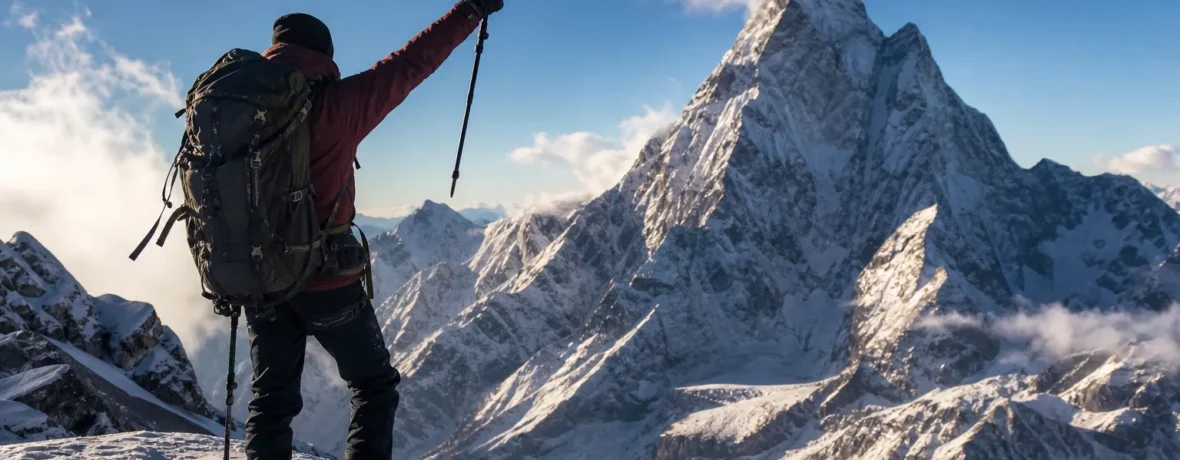
The oldest person to climb Everest is Yuichiro Miura of Japan, who reached the summit on May 23, 2013, at 80 years and 223 days old. The oldest woman is Tamae Watanabe of Japan, who summited on May 19, 2012, at 73 years and 180 days old, as of November 2026.
Who is the oldest person to climb Everest?
Yuichiro Miura is the oldest person to climb Everest. According to Guinness World Records, Miura reached the top of Mount Everest from Nepal on May 23, 2013, at 80 years and 223 days old.
That number matters. Everest is 29,031.69 ft [8,848.86 m] high, using the official height published by Nepal and China and listed by Nepal’s Department of Tourism in its Mountaineering in Nepal facts and figures. At that elevation, the summit sits deep in the “death zone,” where the body cannot acclimatize in the normal way and every hour burns through reserves.
Miura was not a one-off novelty act. He had already held the record twice before, summiting Everest in 2003 and again in 2008. In 2013, he took it back for the third time. Guinness also records that he was helicoptered from Camp 2 to Kathmandu during the descent for medical reasons, after reaching the summit under his own power.
Who is the oldest woman to climb Mount Everest?
Tamae Watanabe is the oldest woman to climb Mount Everest. Guinness lists Watanabe, also from Japan, as summiting on May 19, 2012, at 73 years and 180 days old.
Her record is easy to undersell if you only look at the age. Don’t. A 73-year-old standing on the highest point on Earth is not a gentle “senior adventure” story. It means weeks of climbing through the Khumbu Icefall, fixed lines, high camps, brutal wind, cold nights, and a summit push where every step can feel like lifting a loaded pack uphill through sand.
Watanabe had already become the oldest woman to summit Everest in 2002. Ten years later, she came back and raised her own mark. The Guinness female Everest record page still lists her 2012 climb as the women’s record, as of November 2026.
How do the oldest Everest records compare?
The current age records are split by category. Here is the clean version for the names most people search first.
| Record | Climber | Age at summit | Summit date |
|---|---|---|---|
| Oldest man / oldest overall | Yuichiro Miura, Japan | 80 years, 223 days | May 23, 2013 |
| Oldest woman | Tamae Watanabe, Japan | 73 years, 180 days | May 19, 2012 |
| Former men’s record holder | Min Bahadur Sherchan, Nepal | 76 years, 340 days | May 25, 2008 |
| Oldest American listed by Himalayan Database | Arthur Bennett Muir, USA | 75 | 2021 spring season |
The Himalayan Database oldest summiters list is useful because it shows the broader pattern: many of the oldest high-altitude summiters used supplemental oxygen, and several of the oldest Everest names are Japanese climbers. That does not make the climb easy. It means the climb was supported in the modern Himalayan style.
Did the oldest Everest climbers use supplemental oxygen?
Yes, the oldest Everest record climbs listed by the Himalayan Database used supplemental oxygen. Miura, Sherchan, Watanabe, and Muir are all shown with oxygen on the database’s oldest-summiters report.
That detail matters because oxygen changes the margin. It does not turn Everest into a hike. You still have ladders over crevasses, fixed ropes, exposed ridges, traffic, weather windows, frostbite risk, and a summit day that can run long enough to break strong younger climbers. But bottled oxygen can help climbers function higher on the mountain.
For regular hikers, the lesson is simple: age is not the only number. Acclimatization history, cardiovascular health, cold tolerance, balance, footwork, team support, and decision-making all count. On Everest, ego is cheap. Turning around is expensive emotionally, but it keeps people alive.
What does it take to climb Everest at 70 or 80?
It takes years of mountain experience, medical screening, patient acclimatization, and a strong support team. Raw fitness helps, but it is not enough by itself.
An older climber aiming at Everest needs more than weekend grit. The mountain asks for a deep résumé: glacier travel, crampon work, fixed-line technique, cold-weather camping, altitude experience, and the discipline to move slowly when everything in your head wants the summit now.
A realistic path usually looks like this:
- Build a long hiking base. Start with steady days on trail, then stack back-to-back long days with elevation gain and a pack.
- Learn snow and glacier skills. Crampons, ice axe use, rope systems, crevasse rescue, and fixed-line movement are not optional skills on big peaks.
- Climb lower high-altitude peaks first. Mountains in the 14,000- to 22,000-ft [4,267- to 6,706-m] range teach pacing, cold management, and how your body handles thin air.
- Test yourself on expedition peaks. Before Everest, climbers often step up to longer, colder objectives where summit day is only one piece of a multi-week problem.
- Get medical clearance. Older athletes can be strong and still carry hidden risk factors. A doctor who understands high-altitude travel should be part of the plan.
- Choose partners carefully. Everest is no place for a bargain-bin team. Guides, Sherpa support, weather calls, oxygen logistics, and evacuation planning all matter.
Is age the biggest risk on Everest?
No, age alone is not the biggest risk on Everest. The bigger risk is age combined with poor preparation, fast ascent, existing medical problems, bad weather, crowding, and summit fever.
The CDC’s Yellow Book guidance on high-altitude travel says any unacclimatized traveler sleeping at 8,000 ft [2,450 m] or higher can develop altitude illness. Everest Base Camp in Nepal sits near 17,700 ft [5,400 m], before the technical climb even begins.
Older climbers also need to respect the boring stuff because the boring stuff becomes serious up high: hydration, sleep, appetite, balance, medication management, recovery time, and honest symptom reporting. The mountain punishes denial. Fast.
When to see a doctor
See a doctor before any high-altitude expedition if you have heart, lung, sleep, blood, or circulation issues. The CDC specifically recommends medical consultation for travelers with conditions such as coronary artery disease, chronic pulmonary disease, low oxygen levels, obstructive sleep apnea, or sickle cell trait before high-altitude travel.
Get urgent medical help during a trip if you or a teammate develops severe headache, confusion, loss of coordination, breathlessness at rest, chest tightness, a worsening cough, blue lips, collapse, or symptoms that do not improve with rest and descent. The Wilderness Medical Society altitude illness guidelines emphasize prevention, early recognition, and descent when serious altitude illness is suspected.
Do not self-diagnose your way through a Himalayan expedition. If the plan involves Everest, Denali, Aconcagua, Kilimanjaro, or even a fast trip to high Colorado huts, talk to a clinician who understands altitude before you go.
What can hikers learn from the oldest people to climb Everest?
The best lesson is patience. Miura and Watanabe did not beat Everest because they ignored age; they managed it with training, support, pacing, and mountain judgment.
If you are building your own big objective, steal the useful parts of their stories without copying the danger. You do not need Everest to prove you are tough. You need a goal that stretches you without wrecking you.
Use this checklist before chasing a bigger peak:
- Can you hike uphill for hours without your pace falling apart?
- Can you descend safely when tired, cold, and hungry?
- Have you slept above 10,000 ft [3,048 m] and learned how your body reacts?
- Do you know when to turn around without bargaining with yourself?
- Have you trained with the gear you will actually use?
- Have you talked with a doctor about altitude, medications, and personal risk factors?
Related reading
- Tenzing Norgay and Edmund Hillary: The First Everest Summit
- Junko Tabei: The First Woman to Climb Everest
- Can You Climb Everest Without a Sherpa?
- How Many People Have Climbed Everest?
FAQ
Who is the oldest person to climb Everest?
Yuichiro Miura of Japan is the oldest person to climb Everest. He reached the summit on May 23, 2013, at 80 years and 223 days old, according to Guinness World Records.
Who is the oldest woman to summit Everest?
Tamae Watanabe of Japan is the oldest woman to summit Everest. She reached the top on May 19, 2012, at 73 years and 180 days old.
Did Yuichiro Miura climb Everest more than once?
Yes. Miura summited Everest in 2003, 2008, and 2013, setting or reclaiming the oldest-climber record each time.
Did the oldest Everest climbers use oxygen?
Yes. The oldest Everest summiters listed by the Himalayan Database, including Miura and Watanabe, used supplemental oxygen on their record climbs.
Can a normal hiker train to climb Everest at an older age?
Possibly, but only with years of progressive training and real mountaineering experience. A strong hiking background is a start, not a complete Everest résumé.
Is Everest Base Camp safer than climbing Everest?
Yes, trekking to Everest Base Camp is far less technical than climbing Everest, but it still reaches serious altitude near 17,700 ft [5,400 m]. You still need acclimatization, fitness, travel insurance, and a plan for altitude symptoms.