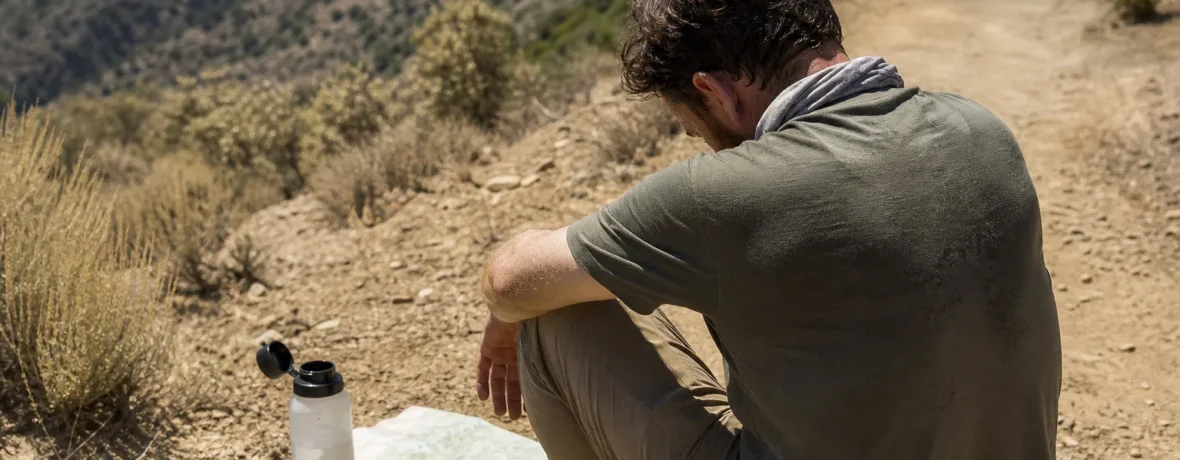
What does dehydration feel like? On trail, it often starts as thirst, dry mouth, darker urine, headache, fatigue, dizziness, or muscle cramps. If you stop sweating, feel confused, faint, vomit, or symptoms last longer than 1 hour after rest and fluids, get medical help.
What does dehydration feel like on the trail?
Dehydration usually feels like your body is working harder than the hike should require.
You may feel thirsty first. Then your mouth gets sticky, your pace drops, and a climb that looked easy on the map starts to feel rude. Your head may ache. Your legs may feel heavy. You might get cranky, foggy, or weirdly unmotivated to eat or drink.
The NIH MedlinePlus guide to dehydration lists adult symptoms such as thirst, dry mouth, urinating less, dark urine, dry skin, tiredness, dizziness, and confusion. On a hike, those signs can sneak up because sweat evaporates fast, especially in wind, dry air, and high elevation.
A good trail check is simple: are you peeing at normal intervals, and is your urine light yellow? The CDC heat and health guidance says light yellow or clear urine usually means you are drinking enough water.
What are the early signs of dehydration while hiking?
The early signs are thirst, dry mouth, darker urine, headache, fatigue, dizziness, and muscle cramps.
Do not wait for dramatic symptoms. Early dehydration often feels boring before it feels scary. You just slow down. You stop talking. You fumble with straps. You tell yourself the next shade patch is close enough.
- Thirst: your first obvious signal, but not a perfect gauge.
- Dry mouth or sticky saliva: a common early trail clue.
- Darker urine or fewer bathroom stops: a sign you may be behind on fluids.
- Headache: especially when paired with heat, sun, or hard effort.
- Lightheadedness: more concerning if it happens when you stand up.
- Muscle cramps: often tied to heat, hard work, sweat loss, and electrolyte loss.
- Unusual fatigue: the “why is this so hard?” feeling.
The Mayo Clinic dehydration overview also flags extreme thirst, less frequent urination, dark-colored urine, fatigue, dizziness, and confusion as adult signs.
How can you tell dehydration from heat exhaustion?
Dehydration is fluid loss; heat exhaustion is your body struggling under heat stress, often with dehydration in the mix.
They overlap. That is what makes trail decisions tricky. You do not need to name the problem perfectly before acting. If you feel worse in heat, stop, cool down, and drink small amounts if you can swallow normally.
| What you notice | More like dehydration | More like heat exhaustion |
|---|---|---|
| Thirst and urine | Strong thirst, dry mouth, dark urine, peeing less | May also be present |
| Energy | Tired, slow, headache, lightheaded | Weak, dizzy, possibly faint, hard to keep moving |
| Sweating and skin | Sweaty or dry depending on conditions | Heavy sweating, cool or clammy skin can happen |
| Stomach | Low appetite, mild nausea possible | Nausea or vomiting is more concerning |
The CDC lists heavy sweating, weakness, dizziness, headache, nausea or vomiting, muscle cramps, and fainting among heat exhaustion symptoms, and advises getting medical help if symptoms worsen, vomiting occurs, or symptoms last longer than 1 hour.
What should you do at the first signs of dehydration?
Stop early, cool your body, and drink steadily rather than chugging.
Small corrections work best when you make them soon. If you push for one more summit, one more overlook, one more switchback, you can turn an easy fix into a bad day.
- Stop hiking. Get out of direct sun if you can. Sit on your pack, a rock, or the ground.
- Cool down. Loosen tight clothing, take off your pack, wet a bandana, and use shade, breeze, or creek-cooled cloths if available.
- Drink in small pulls. Sip water or an electrolyte drink. Do not force huge amounts at once.
- Eat something salty if you can. Crackers, pretzels, trail mix, jerky, or a salty bar can help replace what sweat took out.
- Watch your symptoms for 30 to 60 minutes. If you are improving, keep resting until you feel steady. If you are getting worse, change the plan.
- Turn around if needed. A summit is optional. Walking out safely is not.
The Wilderness Medical Society heat illness guideline recommends oral fluid replacement as first-line care for mild and moderate dehydration linked with heat illness, and supports a drink-to-thirst approach during activity that prevents losing more than 2% of body weight.
How much water should you drink while hiking?
Drink to thirst, then adjust for heat, effort, sweat rate, elevation, and trail length.
Rigid water rules can backfire. A cool forest walk and a steep desert climb are different animals. So are a 120 lb [54 kg] hiker and a 220 lb [100 kg] hiker carrying a loaded pack.
Instead of chasing one magic number, build a simple trail rhythm:
- Start hydrated before you leave the trailhead.
- Carry enough water for the full route, plus a margin for delays.
- Drink when thirsty, and sooner if your mouth is dry or your pace suddenly drops.
- Use electrolytes or salty foods on hot, sweaty, or long hikes.
- Check urine color when you can: pale yellow is a useful sign.
- Do not overdrink until your stomach sloshes or you feel bloated.
More water is not always better. Drinking far beyond thirst without replacing salt can contribute to low blood sodium, a separate medical problem that can also cause headache, nausea, confusion, and weakness. If someone is confused, vomiting, fainting, or getting worse, treat it as urgent rather than guessing.
Who gets dehydrated faster on a hike?
You get dehydrated faster when heat, sweat, illness, alcohol, poor fitness, or limited water access stack up.
Some days drain you. Full sun, humidity, dry wind, steep grades, and heavy packs all raise fluid loss. So does starting the hike already behind because of travel, poor sleep, alcohol, diarrhea, vomiting, or too much coffee without enough water.
Be more conservative if any of these apply:
- You are hiking in high heat or exposed desert terrain.
- You are new to the climate or not heat-acclimated.
- You sweat heavily or see salt crust on your shirt, hat, or pack straps.
- You are hiking at altitude, where dry air and faster breathing increase fluid loss.
- You have had vomiting or diarrhea recently.
- You have a medical condition that affects fluid balance.
- You take medications that affect sweating, urination, blood pressure, or heat tolerance.
If you have a heart, kidney, endocrine, or blood pressure condition, ask a clinician how to handle fluids on hot hikes. Trail advice cannot replace personalized medical guidance.
When to see a doctor
Get medical help when symptoms are severe, worsening, or not improving with rest, cooling, and fluids.
Call emergency services if a hiker has confusion, fainting, seizure, hot skin with altered behavior, chest pain, severe shortness of breath, or cannot keep fluids down. Do not try to “walk it off.” Move the person to shade, cool them, and get help.
Seek prompt medical care if dehydration symptoms come with ongoing vomiting or diarrhea, if the person is elderly, pregnant, a child, or has a chronic medical condition, or if symptoms do not improve after stopping and rehydrating. The CDC’s heat illness guidance says to get medical help right away for heat exhaustion symptoms that worsen, include vomiting, or last longer than 1 hour.
This article helps you recognize warning signs on trail. It does not diagnose dehydration, heat exhaustion, heat stroke, low sodium, or any other condition.
Related reading
- What Does a Sprained Ankle Feel Like? Sprain vs Break
- What Does Poison Ivy Look Like? Leaves of Three and Lookalikes
- What Does a Tick Bite Look Like? Photos and Warning Signs
- Can Dehydration Cause High Blood Pressure?
FAQ
Can you be dehydrated even if you are not thirsty?
Yes. Thirst is useful, but it can lag behind fluid loss, especially during hard effort, cold weather, high elevation, or distraction on trail. Check your energy, urine color, headache, dizziness, and how often you are drinking.
What does mild dehydration feel like?
Mild dehydration can feel like thirst, dry mouth, headache, fatigue, darker urine, and a slower hiking pace. You may still be able to walk and talk normally, which is why it is easy to ignore.
Can dehydration cause chills while hiking?
Yes, chills can happen with fluid loss, heat stress, exhaustion, or a sudden stop after heavy sweating. Chills with confusion, weakness, vomiting, or worsening symptoms should be treated as a red flag.
Should you drink plain water or electrolytes?
Plain water is fine for many short, moderate hikes. For long, hot, sweaty hikes, electrolytes or salty snacks can help replace sodium lost in sweat.
How fast can dehydration happen on a hike?
It can start within hours when heat, sun, steep climbing, and limited drinking line up. The faster your shirt gets soaked or salt-streaked, the more closely you should watch your fluid and food intake.
What is the biggest warning sign to stop hiking?
Stop hiking if you feel dizzy, faint, confused, nauseated, severely weak, or unable to drink. Rest in shade, cool down, sip fluids if safe, and get medical help if symptoms are severe, worsening, or last longer than 1 hour.