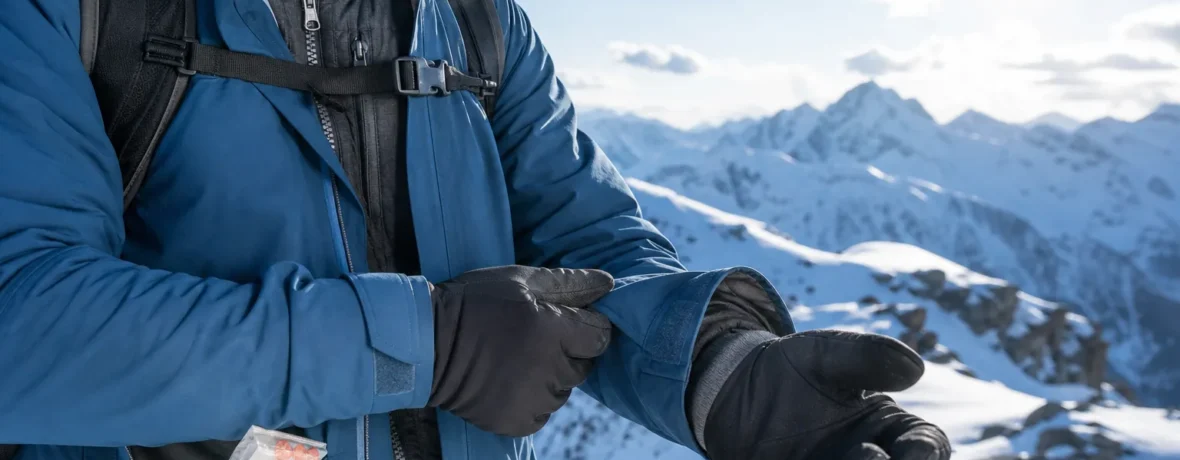
How to prevent frostbite on winter hikes: keep skin covered, stay dry, protect fingers, toes, ears, nose, cheeks, and chin, and shorten or cancel hikes when wind chill makes exposed skin freeze in 30 minutes or less. Yes, you can hike in freezing weather if your layers, pace, and turnaround plan keep you warm.
What is frostbite and why does it happen on winter hikes?
Frostbite is the freezing of skin and the tissue underneath it.
It usually starts where your body is hardest to keep warm: toes, fingers, ears, cheeks, chin, and the tip of your nose. The CDC’s frostbite guidance lists numbness, a white or grayish-yellow skin area, and skin that feels unusually firm or waxy as warning signs. Redness or pain can show up first, before numbness takes over.
On a winter hike, frostbite risk climbs when three things line up: cold air, wind, and moisture. Wind strips heat from exposed skin. Sweat chills you from the inside of your clothing. Snow sneaks into boots and gloves. Then your body does what it is built to do: it protects the core first. Blood flow to hands, feet, and face drops, and those parts cool fast.
Frostbite can happen quietly. That is the nasty part. Numb skin does not send a loud alarm. You may think your toes are simply “cold” while they are sliding into trouble.
How cold does it have to be to get frostbite?
Frostbite needs skin-level temperatures below freezing, but wind can make that happen much faster.
NOAA explains that wind chill is based on heat loss from exposed skin, not just the thermometer reading. At 0°F [-18°C] with a 15 mph [24 km/h] wind, the wind chill is -19°F [-28°C], and exposed skin can freeze in 30 minutes, according to the NOAA wind chill chart. At lower wind chills, the window can shrink to 10 minutes or 5 minutes.
Do not use the air temperature alone. A calm 12°F [-11°C] morning can be manageable with good layers. The same 12°F [-11°C] on an exposed ridge with hard wind is a different animal.
| Trail condition | What it means for you | Smart move |
|---|---|---|
| Below 32°F [0°C], calm air | Frostbite is possible on exposed skin, especially during long stops. | Cover skin and keep breaks short. |
| Wind chill near 0°F [-18°C] | Cold injuries become easier when gloves, socks, or face layers get wet. | Check fingers, toes, and face often. |
| Wind chill near -20°F [-29°C] | Exposed skin may freeze in 30 minutes. | Cover all skin or turn around. |
| Wind chill near -40°F [-40°C] | Severe frostbite risk can arrive in minutes. | Skip the exposed hike unless you have serious cold-weather experience and backup. |
How to prevent frostbite before you leave the trailhead?
Plan the hike around the wind chill, not your calendar.
A winter hike is not safer because it is familiar. A short loop can turn ugly if the summit is windy, your gloves wet out, or your boots are too tight. Build your plan before you step onto snow.
- Check the forecast for temperature, wind, gusts, and wind chill. Look at the high point of the route, not only the town at the trailhead.
- Pick a conservative route. Forested trails, lower elevations, and routes with easy bailouts beat open ridges in bitter wind.
- Set a turnaround trigger. Examples: numb toes that do not warm after 10 minutes of moving, wet insulation, worsening wind, or slower-than-planned travel.
- Tell someone your route and return time. Cold makes small problems bigger. A late return matters.
- Pack dry backups. Bring spare socks, liner gloves, warm mittens, a dry hat, and a face covering in a waterproof bag.
- Eat before you get cold. Your body needs fuel to make heat. Do not wait until your hands are clumsy.
- Start a little cool, not sweaty. If you are hot in the parking lot, you will soak your base layer on the first climb.
What is the best prevention for frostbite?
The best prevention for frostbite is staying warm, dry, fueled, and fully covered before numbness starts.
That answer sounds simple because it is. The hard part is doing it while climbing, sweating, stopping, and getting blasted by wind. The National Weather Service cold-weather FAQ recommends several loose-fitting layers, water-repellent outerwear, mittens, and staying dry and out of the wind. For hikers, that means managing moisture as aggressively as you manage temperature.
Use the “warm and dry” rule from the ground up:
- Feet: Wear winter boots with room to wiggle your toes. Tight boots reduce warmth and can restrict blood flow.
- Socks: Choose wool or synthetic socks. Carry a dry pair. Do not stack so many socks that your boots squeeze your feet.
- Hands: Use liner gloves for tasks and insulated mittens for warmth. Mittens usually hold heat better than gloves.
- Face: Cover cheeks, nose, chin, and ears with a buff, balaclava, face mask, hood, or a mix of those.
- Core: Keep your torso warm enough that your body does not clamp down blood flow to your hands and feet.
What should you wear to prevent frostbite while hiking?
Wear loose layers that trap warm air, block wind, and let sweat escape.
Your clothing system should shift as you move. Climbing hard? Vent before you sweat. Stopping for lunch? Add insulation before you chill. Waiting until you are cold is too late.
Base layer
Pick wool or synthetic fabric. Skip cotton. Cotton holds moisture against your skin, and wet fabric pulls heat from your body when you slow down.
Midlayer
Use fleece, wool, or synthetic insulation. This is your working warmth. In mild winter conditions, one midlayer may be enough. In deep cold, carry a warmer piece.
Shell
A windproof or weather-resistant shell protects the heat you already made. Wind can chew through a fleece on an exposed ridge.
Puffy jacket
Pack an insulated jacket for breaks, emergencies, and slow travel. Put it on before you get chilled. Standing around in a sweaty base layer is how winter hikes turn mean.
Hands and face
Bring more hand protection than you think you need. A good winter setup often includes thin liner gloves, waterproof or wind-resistant mittens, and chemical warmers as backup. For your face, carry a balaclava or buff even if you start bare-faced.
How do you keep your feet and toes from getting frostbite?
Keep your feet dry, warm, and uncompressed.
Toes are frequent troublemakers because they sit far from your core, ride inside damp boots, and stop moving much when you are hiking steadily. Once they go numb, you may not feel the problem getting worse.
- Use winter boots with insulation and enough volume for toe movement.
- Loosen laces slightly over the forefoot if your toes feel squeezed.
- Change into dry socks if your feet sweat heavily or snow gets inside.
- Use gaiters in deep snow to keep cuffs and socks dry.
- Move your toes during breaks and before long descents.
- Do not ignore one cold foot. Uneven cold can mean a boot fit, sock, or circulation problem.
If your toes become numb and do not warm with movement, extra insulation, and getting out of wind, turn around. A summit photo is not worth a preventable cold injury.
How can you spot early frostbite symptoms on the trail?
Look for redness, pain, numbness, pale skin, waxy skin, or skin that feels hard.
Early frostbite can feel like a cold sting, then a deep ache, then nothing. Nothing is bad. Numbness is not a sign that your body “got used to it.” It can mean the warning system is shutting down.
Use buddy checks in real winter cold. Look at each other’s noses, cheeks, and ears every time you stop. Ask direct questions: “Can you feel all ten toes?” “Can you pinch your fingertips?” “Is your face numb?” Keep it blunt.
Common warning signs include:
- Skin that turns red, pale, white, grayish-yellow, or blotchy
- Numb fingers, toes, ears, nose, cheeks, or chin
- Skin that feels firm, waxy, or wooden
- Clumsy hands, dropped gear, or trouble working zippers
- Pain that appears during rewarming
What should you do if frostbite may be starting?
Get out of the cold, protect the area, and do not rub it.
The Mayo Clinic frostbite first-aid guidance says mild frostbite, often called frostnip, may be treated with self-care, but other frostbite needs medical attention. On trail, your job is not to prove how bad it is. Your job is to stop it from getting worse.
- Stop and shield the area from wind. Step into trees, behind a boulder, or into a shelter if you have one.
- Add dry insulation. Put on mittens, a dry hat, a face layer, a puffy jacket, or dry socks.
- Remove wet clothing touching the area. Wet gloves and socks are heat thieves.
- Use body heat for mild cold injury. Fingers can go into armpits. A cold nose or cheek can be covered with a warm, dry gloved hand.
- Do not rub or massage the skin. The CDC warns that rubbing frostbitten skin can cause more damage.
- Do not use direct heat. Fires, stoves, heaters, hot rocks, and car vents can burn numb skin.
- Do not thaw the area if it may refreeze. The Wilderness Medical Society frostbite guidelines strongly warn against refreezing after thawing because it can worsen tissue injury.
- Turn around early. If the area stays numb or looks pale, waxy, or hard, the hike is over.
What mistakes make frostbite more likely?
The biggest mistakes are sweating, tight gear, exposed skin, and waiting too long to turn back.
Winter punishes delay. You can be moving well and still be losing the small battle in your fingers or toes.
- Starting overdressed: Sweat freezes your comfort later. Vent or remove a layer before you soak it.
- Wearing tight boots: Tight footwear reduces warm air space and can restrict circulation.
- Using thin gloves for too long: Fine motor tasks need dexterity, but your hands need mittens again fast.
- Leaving cheeks exposed: A windy ridge can frostnip facial skin before you feel real pain.
- Sitting on snow during breaks: Use a sit pad or pack. Keep breaks short.
- Drinking alcohol: Alcohol can impair judgment and is listed by Mayo Clinic as something to avoid in frostbite first aid.
- Ignoring medical risk factors: Conditions or medications that affect circulation can raise cold-injury risk. Ask a clinician before cold hikes if that applies to you.
When to see a doctor
Seek medical care for any suspected frostbite beyond mild frostnip.
Get urgent help if skin stays numb after warming, becomes hard or waxy, blisters, turns black or blue-gray, or if pain is intense after rewarming. Also treat possible hypothermia as an emergency. Warning signs can include intense shivering, confusion, drowsiness, slurred speech, fumbling hands, or trouble walking.
If you are on trail and someone has possible frostbite plus hypothermia signs, call for rescue if you cannot get them safely to warmth. Do not try to “walk it off” when judgment, speech, or coordination is slipping.
What should you pack for frostbite prevention?
Pack the gear that keeps skin covered and dry after your first plan fails.
Winter safety is built on backups. A glove dropped in a creek. A sock soaked by sweat. A wind that was not in the parking-lot forecast. Pack for the version of the hike that gets colder.
- Insulated mittens plus liner gloves
- Spare dry socks in a waterproof bag
- Warm hat and backup buff or balaclava
- Windproof shell and insulated jacket
- Gaiters for snow
- Hand warmers and toe warmers
- Foam sit pad for breaks
- Hot drink in an insulated bottle
- High-energy snacks that will not freeze into bricks
- Headlamp, map, power bank, and emergency communication plan
- Small first-aid kit and emergency blanket or bivy
Related reading
- What Does Frostbite Look Like? Stages and First Aid
- How to Prevent Tick Bites While Hiking
- How to Prevent Altitude Sickness
- How Long Does It Take to Get Frostbite?
FAQ
Can you get frostbite through gloves or socks?
Yes, frostbite can happen under gloves or socks if they are wet, too thin, too tight, or overwhelmed by cold and wind. Numb fingers or toes need action right away: add insulation, get dry, move, and turn around if feeling does not return.
Is frostnip the same as frostbite?
No, frostnip is a milder cold injury that does not freeze deeper tissue. It is still a warning shot, and you should warm the area and protect it before it becomes more serious.
Should you rub frostbitten skin with snow?
No, never rub frostbitten skin with snow or massage it. Rubbing can damage already injured tissue, and snow adds more cold.
Can wind chill cause frostbite above 32°F [0°C]?
No, frostbite requires actual skin-level freezing, and the National Weather Service says frostbite on exposed skin requires air temperature below freezing. Hypothermia can still happen above freezing if you are wet, exposed, or out long enough.
When should you turn around to prevent frostbite?
Turn around when numbness does not improve quickly, when gloves or socks are wet, when wind chill makes exposed skin unsafe, or when anyone starts acting confused or clumsy. The trail will be there later; your fingers and toes need to come home today.