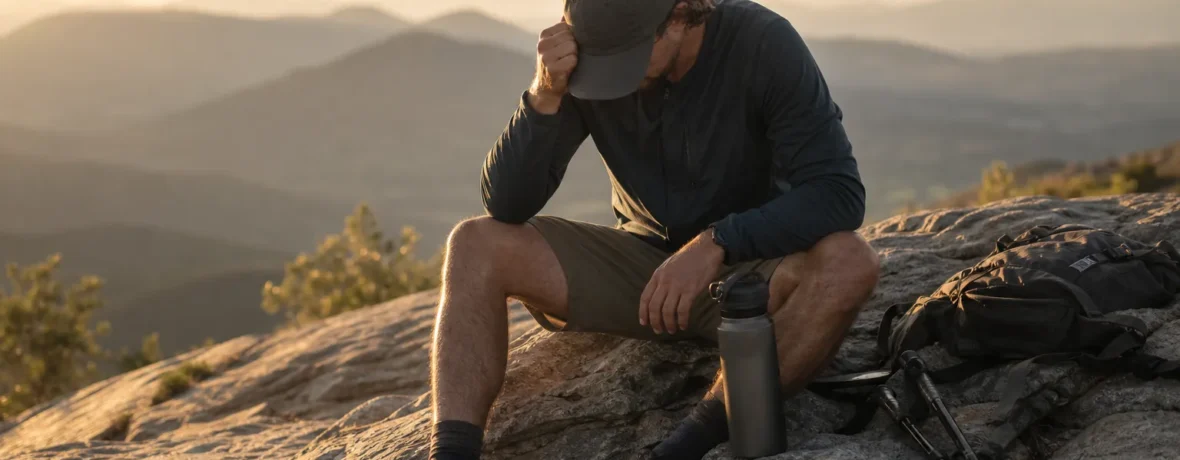
It can, especially when sweat loss, heat, altitude, vomiting, diarrhea, or skipped fluids leave you low on fluid and electrolytes. A dehydration headache often comes with thirst, dry mouth, dizziness, dark urine, fatigue, or decreased urination; severe confusion, fainting, or no urine needs urgent care.
Can dehydration cause headaches while hiking?
Yes, and hiking stacks the deck against you.
You’re sweating. You’re breathing harder. You may be under direct sun, carrying a pack, climbing uphill, eating salty snacks, and rationing water because the next source is miles away. That mix can shrink your fluid reserve faster than you think.
MedlinePlus, from the National Library of Medicine, describes dehydration as losing more fluid than you take in, leaving your body without enough fluid to work properly. Adult symptoms include thirst, dry mouth, less urination, dark urine, dry skin, tiredness, and dizziness.
On trail, a headache can be one of the first signs that your day is sliding sideways. It does not prove dehydration by itself. Headaches can also come from heat illness, altitude, low food intake, caffeine withdrawal, tight hat straps, glare, illness, migraine, or poor sleep. But if the headache shows up with thirst, dark urine, dry mouth, dizziness, or a sagging pace, dehydration belongs high on the suspect list.
What does a dehydration headache feel like?
It often feels like a dull, tight, heavy ache that gets worse when you keep moving.
Some hikers feel it across the forehead. Others feel pressure behind the eyes or a whole-head throb. It may build slowly over an hour or two instead of striking like lightning. You might also notice your legs feel dead, your pace drops, and the climb that looked easy on the map suddenly feels rude.
Common trail clues include:
- Thirst that keeps nagging at you
- Dry or sticky mouth
- Dark yellow urine or very little urine
- Dizziness when you stand or turn quickly
- Fatigue out of proportion to the terrain
- Nausea or low appetite
- Muscle cramps, especially in heat
- Irritability, foggy thinking, or poor coordination
That last line matters. If your thinking changes, the problem may be bigger than a simple headache.
How can you tell dehydration from heat exhaustion or altitude sickness?
You can’t always tell cleanly in the field.
Symptoms overlap. A hot climb can cause dehydration and heat illness at the same time. A high pass can bring altitude symptoms even if you drank well. Treat the situation, not your ego.
| Condition | Typical clues | Trail move |
|---|---|---|
| Dehydration | Thirst, dry mouth, dark urine, dizziness, fatigue, headache | Stop, shade up, sip fluids, eat salty food if tolerated |
| Heat exhaustion | Headache, nausea, dizziness, weakness, thirst, heavy sweating, elevated body temperature, decreased urine | Cool the person, give fluids if alert, seek medical evaluation if symptoms persist or worsen |
| Altitude illness | Headache with nausea, poor sleep, unusual fatigue, dizziness, or shortness of breath after gaining elevation | Stop ascending; descend if symptoms worsen or do not improve |
The CDC’s heat illness guidance lists headache, nausea, dizziness, weakness, thirst, heavy sweating, elevated body temperature, and decreased urine output as heat exhaustion symptoms. It also says heat stroke is an emergency, especially with confusion, altered mental status, slurred speech, loss of consciousness, seizures, or very high body temperature.
The Wilderness Medical Society heat illness guidelines describe dehydration during activity in heat as a fluid deficit that can occur from sweat loss, with losses greater than 2% of body weight used in the guideline’s definition. That does not mean you need a scale in your pack. It means steady sweat loss has real consequences.
What should you do if a headache hits on trail?
Stop early, before a mild problem turns into a rescue problem.
- Get out of the sun. Sit in shade, loosen tight layers, and take your pack off.
- Check your body. Ask: Am I thirsty? Dizzy? Nauseated? Confused? Still sweating? Have I peed recently?
- Sip, don’t chug. Take small, steady drinks. If you gulp a full bottle at once, your stomach may revolt.
- Add electrolytes or salty food if you’ve been sweating hard. Pretzels, broth, an electrolyte drink, or a salty snack can help replace more than plain water alone.
- Cool your skin. Wet a bandana, splash your face and neck, fan your shirt, or sit near moving air.
- Eat simple calories. A headache can be dehydration plus low fuel. Try a snack you can tolerate.
- Reassess after 15 to 30 minutes. If you feel better, continue gently or turn around. If you feel worse, stop pushing.
Mayo Clinic’s dehydration treatment guidance says the way to treat dehydration is to replace lost fluids and electrolytes, with severe dehydration needing immediate treatment by emergency workers or in a hospital.
How much water should you carry to prevent a dehydration headache?
Carry enough for the route, weather, water sources, and your sweat rate.
There is no perfect bottle-per-mile rule. A cool forest walk is not a sun-baked desert climb. A 120 lb [54 kg] hiker moving slowly in shade will not need the same fluid plan as a 210 lb [95 kg] hiker grinding uphill with a loaded pack.
Use this practical trail system:
- Start hydrated. Do not begin the hike already thirsty.
- Carry more in heat, humidity, exposed terrain, and long climbs.
- Know your refill points. A “seasonal creek” on a map is not a promise.
- Bring treatment. Filter, purifier, tablets, or another safe method if you plan to use natural water.
- Watch urine color. Pale yellow usually points in the right direction; dark urine means you need to pay attention.
- Pair water with food. All water and no sodium during a long, sweaty effort can create a different problem.
Do not force huge amounts of water. Overdrinking can dilute blood sodium during long endurance efforts, a condition called exercise-associated hyponatremia. The safer habit for most day hikers is steady drinking, salty snacks when sweating, and honest attention to thirst, urine, heat, and pace.
Can electrolytes help with dehydration headaches?
They can help when the headache follows heavy sweating or poor food intake.
Electrolytes are minerals such as sodium and potassium that help your body manage fluid balance and muscle and nerve function. If you hike hard for hours in hot weather, plain water may not cover what you lose in sweat. Food helps too. You do not need a neon drink for every stroll, but on hot, long, or steep days, sodium in snacks or drinks earns its place.
Skip salt tablets unless a clinician has told you to use them. They can irritate your stomach, and they are not a magic fix for heat illness.
When to see a doctor
Get medical help fast when symptoms are severe, strange, or not improving.
Call 911 or seek emergency care if you or your hiking partner has confusion, fainting, seizure, slurred speech, loss of consciousness, hot skin with altered mental status, rapid breathing, rapid heartbeat, no urination, or symptoms that keep worsening. Do not try to “walk it off” with someone who is confused or collapsing.
Get same-day medical advice if the headache is new and severe, follows a head injury, comes with fever or stiff neck, appears with repeated vomiting or diarrhea, or does not improve after rest, cooling, fluids, and food. This article can help you think through trail decisions, but it cannot diagnose the cause of your headache.
Related reading
- Can Dehydration Cause High Blood Pressure?
- Can Dehydration Cause Dizziness?
- Can Dehydration Cause a Fever?
- Can Dehydration Cause Chest Pain?
FAQ
Can dehydration cause a headache without thirst?
Yes, it can. Thirst can lag behind fluid loss, especially when you are distracted, cold, older, or pushing hard uphill.
How long does a dehydration headache take to go away?
A mild one may ease within 30 to 60 minutes after rest, cooling, fluids, and food. If it gets worse or comes with confusion, fainting, repeated vomiting, or no urination, get medical help.
Can drinking too much water cause a headache?
Yes, overdrinking during long exertion can contribute to low blood sodium, which may cause headache, nausea, weakness, confusion, or worse. Drink steadily, include electrolytes or salty food on sweaty days, and avoid forcing water far beyond thirst.
Is coffee bad if I’m worried about dehydration?
Moderate caffeine is not automatically a trail-day villain. Still, coffee is not a full hydration plan; carry water, eat, and be careful with caffeine if it upsets your stomach or makes you skip fluids.
Should I keep hiking if my headache improves?
Maybe, but turn the volume down. If the headache improves after rest and fluids, continue only if you feel clear, steady, and able to drink; if symptoms return, turn around.