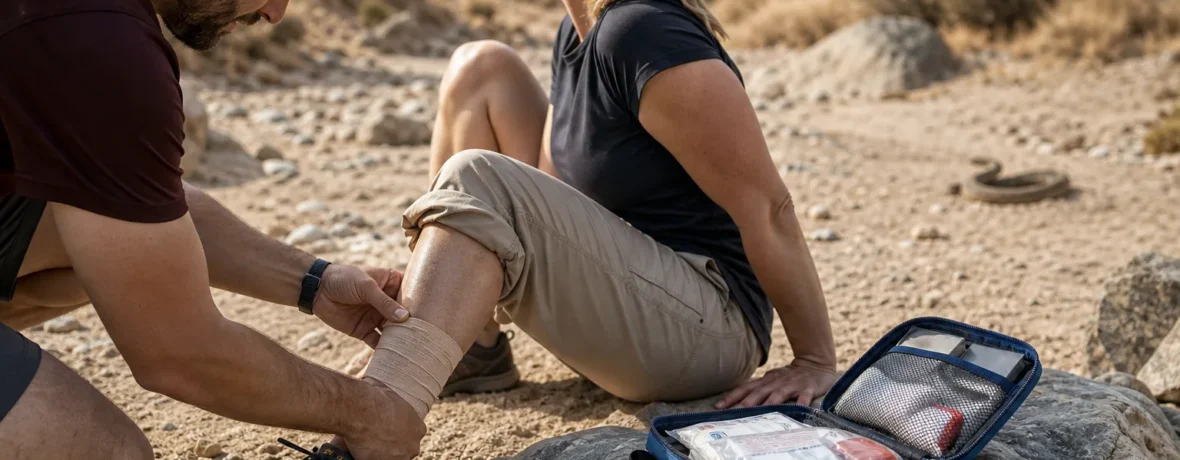
How to treat a snake bite in the wild: get away from the snake, call 911 or trigger SOS immediately, keep the bitten limb still at heart level, remove tight items within 1 minute, wash and loosely cover the bite, and evacuate. Do not cut, suck, ice, tourniquet, or chase the snake.
How do you treat a snake bite in the wild step by step?
Start with safety, then speed: protect yourself, call for help, keep the person still, and get to medical care.
Snakebite first aid is not about heroics. It is about buying time without making tissue damage worse. The only definitive treatment for a dangerous venomous snakebite is medical care, often including antivenom when a clinician decides it is needed. The CDC/NIOSH venomous snake first aid guidance says to seek emergency medical attention as soon as possible, keep calm, remove rings and watches before swelling starts, wash the bite, cover it with a clean dry dressing, and mark swelling with the time.
- Move away from the snake. Back up slowly. Get at least 20 ft [6 m] away if terrain allows. Do not throw rocks, poke it with trekking poles, or try to kill it. A dead or decapitated venomous snake can still bite by reflex.
- Call 911 or activate your SOS device. Do this before tinkering with bandages. If you have cell service, give your exact location, trail name, nearest junction, symptoms, time of bite, and whether you can walk out safely. If you carry a satellite messenger, send the SOS and keep the device with the patient.
- Stop unnecessary movement. Sit or lie down. Keep the bitten arm or leg still. Movement can help venom move through lymphatic flow, and panic burns time and energy.
- Position the limb at heart level. Current North American pit viper guidance from the Wilderness Medical Society recommends loose immobilization and keeping the limb at heart level while evacuation is prioritized.
- Remove tight items fast. Take off rings, watches, bracelets, boots, gaiters, tight socks, knee sleeves, and compression clothing on the affected limb. Swelling can turn normal gear into a problem.
- Clean and cover the bite. If you can do it without delaying evacuation, wash with soap and water. Cover with a clean, dry dressing. Keep it loose. You are protecting the wound, not squeezing it.
- Mark swelling and tenderness. Use a pen to mark the leading edge of swelling or tenderness and write the time beside the mark. Repeat every 15 to 30 minutes if you are waiting for rescue. This helps responders see whether symptoms are spreading.
- Get out by the safest fast route. If the person is dizzy, weak, vomiting, confused, having trouble breathing, or the terrain is rough, wait for rescue if you can communicate. If walking out is the only realistic choice and symptoms are mild, move slowly, take frequent stops, and keep the bitten limb as still as possible.
The hard part is resisting the old campfire tricks. Most of them do nothing. Some make the injury worse.
What should you not do after a snake bite?
Do not cut, suck, ice, shock, tourniquet, drink alcohol, or try to catch the snake.
Bad first aid can turn a survivable bite into a mangled limb. The Mayo Clinic snakebite first aid page says to treat an unknown snakebite as potentially dangerous and get medical care right away. It also warns against actions that delay care or damage tissue.
| Do this | Do not do this | Why it matters |
|---|---|---|
| Call 911 or SOS | Wait for symptoms to “prove” it is venomous | Some serious symptoms can develop after a delay. |
| Remove rings, watches, tight clothing | Leave tight gear on | Swelling can trap items and reduce circulation. |
| Use a loose, clean dressing | Apply a tourniquet or tight wrap | Tight constriction can worsen local injury. |
| Take a photo from a safe distance only | Catch, kill, or carry the snake | More people can get bitten, and treatment should not wait. |
- No cutting. A knife adds trauma and infection risk.
- No suction. Mouth suction and commercial suction kits do not solve the problem.
- No ice. Ice can worsen tissue injury.
- No electric shock. It is dangerous and not useful.
- No alcohol. It clouds judgment and can complicate the situation.
- No pain pills unless a medical professional tells you to take them. Some medicines can be a poor fit after a venomous bite.
How do you know if a snake bite is venomous?
You cannot reliably know in the field, so treat every unknown snakebite as potentially dangerous.
Forget the neat little diagrams that say two fang marks mean venom and a horseshoe of tiny teeth means harmless. Real bites are messy. Fang marks may be hidden, incomplete, smeared, or absent. Shoes, socks, gaiters, dirt, blood, and swelling can hide details.
Signs that raise concern include spreading pain, swelling, bruising, tingling, weakness, dizziness, nausea, vomiting, trouble breathing, drooping eyelids, bleeding, or a metallic taste. A rattlesnake, copperhead, cottonmouth, or coral snake sighting also matters. Still, no sign is perfect. A bite can look mild early and become serious later.
If you saw the snake and can take a photo safely from distance, do it. Use zoom. Do not move closer. A blurry photo is better than a second bite.
Should you walk out after a snake bite on a trail?
Walk out only if it is clearly the safest way to reach care and symptoms are not severe.
The best evacuation choice depends on distance, terrain, weather, communication, and the person’s condition. A flat 0.5-mile [0.8 km] walk to a road is different from a hot, exposed 6-mile [9.7 km] climb with loose rock and no shade.
If the bitten person has trouble breathing, faintness, confusion, rapidly spreading swelling, severe weakness, or vomiting, do not turn the hike into a forced march. Call for rescue and keep them still. If you must move, go slowly and use the strongest hiker to carry the pack, manage navigation, and communicate with responders.
If the bite is on a hand or arm, remove trekking pole straps and let another hiker handle poles. If the bite is on a foot or leg, loosen footwear before swelling increases, but do not remove a boot if doing so would make evacuation impossible. Think. Then move.
Should you use a tourniquet or pressure bandage for a snake bite?
For typical North American snakebites, do not use a tourniquet or tight pressure bandage.
This is where advice gets muddy because snakebite first aid varies by region and snake type. In the United States, most venomous snakebites are from pit vipers: rattlesnakes, copperheads, and cottonmouths. The Wilderness Medical Society’s 2026 update says suction devices, cutting, electrotherapy, cryotherapy, tourniquets, and pressure immobilization have not shown benefit for North American snakebite care and may cause harm.
The American Heart Association and American Red Cross first aid guidelines also state that antivenom is the definitive treatment and that a person bitten by a venomous or possibly venomous snake should seek prompt medical attention.
A loose splint or gentle immobilization is different from a pressure wrap. You can reduce movement with clothing, a foam pad, a sleeping pad strip, or a SAM-style splint if you have one. Keep it loose enough that fingers or toes stay warm and normally colored.
When to see a doctor
See a doctor immediately after any bite from a venomous or unidentified snake.
Do not wait to see if swelling “gets bad enough.” Emergency departments can monitor progression, check for venom effects, manage pain, update wound care, and decide whether antivenom is needed. The NIH MedlinePlus snake bite first aid guidance also recommends calling emergency services and avoiding tourniquets, ice, cutting, and suction.
Get emergency help right away if any of these happen:
- The snake may have been venomous.
- The species is unknown.
- Pain, swelling, redness, or bruising spreads.
- The person feels faint, weak, sweaty, confused, or short of breath.
- There is nausea, vomiting, numbness, tingling, drooping eyelids, or trouble speaking.
- The bite is on the face, neck, torso, hand, or near a major joint.
- The patient is a child, older adult, pregnant, or has significant medical conditions.
If you reach a trailhead by private vehicle, the bitten person should not drive. Snakebite can cause dizziness, fainting, weakness, and poor decision-making. Have another person drive or wait for EMS.
What should be in a hiking first aid kit for snake bites?
Your best snakebite kit is communication, wound supplies, and an evacuation plan.
Skip the suction kit. Pack items that help you do the few things that actually matter: call for help, keep the bite clean, track swelling, and move safely.
- Fully charged phone in a waterproof case
- Satellite messenger or personal locator beacon for remote routes
- Permanent marker for marking swelling and times
- Clean gauze pads and roller gauze
- Small bottle of clean water or wound rinse
- Soap or cleansing wipes for skin around the bite
- Elastic wrap for loose support only, not tight pressure
- Lightweight splint or foam pad section
- Emergency contact card and medical information
- Headlamp, because evacuations get slow after dark
Also carry the boring stuff that prevents bad choices: enough water, sun protection, insulation, and navigation. A calm patient is easier to evacuate than a dehydrated, overheated, shivering one.
How can you prevent snake bites while hiking?
Give snakes space, watch where you step, and keep your hands out of blind spots.
Most trail encounters end with the snake leaving and you getting a good story. Trouble starts when people step too close, reach where they cannot see, or try to move the animal. Snakes do not need your help crossing the trail.
- Stay on trail when possible, especially in brushy or rocky country.
- Look before stepping over logs, rocks, and ledges.
- Place hands carefully when scrambling. Check cracks and holds first.
- Use a trekking pole to move light brush, not your fingers.
- Wear boots and long pants in snake habitat.
- Use a headlamp at dusk, dawn, and night.
- Keep camp clean so rodents do not draw snakes near your tent.
- Do not sleep directly beside rock piles, wood piles, or heavy brush.
- Never handle a snake, even if it looks dead.
If you see a snake on the trail, stop. Back up. Wait. Most snakes will move when they feel safe. If it refuses, give it a wide berth. A detour of 30 ft [9 m] is better than a helicopter ride.
What information should you give 911 or rescuers?
Give location, time of bite, symptoms, patient condition, and your safest evacuation option.
Clear details save time. Before calling, if you can do it quickly, assign one person to care for the patient and one person to gather information. Keep the phone or satellite device where it has the best signal.
- Exact location: trail name, GPS coordinates, mile marker, junction, landmark, or map grid
- Time of bite
- Where the bite is on the body
- Current symptoms and whether they are spreading
- Patient age range and general condition
- Known allergies or major medical issues if the patient can share them
- Photo or description of the snake, only if collected safely
- Weather, daylight remaining, and terrain hazards
- Number of people in your group and available gear
Keep updates short and useful. “Swelling has moved 2 in [5 cm] past the first pen mark in 20 minutes” is better than “it looks worse.”
Related reading
- What Does a Snake Bite Look Like? Venomous vs Dry Bites
- How Fast Is a Venomous Snake Bite Dangerous?
- What Does a Tick Bite Look Like? Photos and Warning Signs
- When to Worry About a Tick Bite
FAQ
Can you survive a snake bite in the wild?
Yes, many people survive snakebites, especially when they get medical care quickly. Your job in the wild is to avoid extra harm, slow the day down, call for help, and evacuate safely.
How long do you have after a venomous snake bite?
There is no safe countdown. Symptoms can change fast or build over hours, so treat the bite as urgent from minute one and contact emergency services immediately.
Should you suck out snake venom?
No. Do not suck the wound with your mouth or a suction device. It does not reliably remove venom and can delay the care that matters.
Should you keep a snake bite above or below the heart?
For North American pit viper bites, keep the limb still and at heart level. Do not hold it high overhead or let it dangle while you wait for help.
What if the bite does not hurt?
Still get medical care if the snake was venomous or unidentified. A painless or mild-looking bite does not prove the bite is harmless, and symptoms can develop later.
Can you treat a snake bite without going to the hospital?
No, not safely if the snake could be venomous. Field care is only a bridge to professional evaluation, monitoring, and treatment when needed.