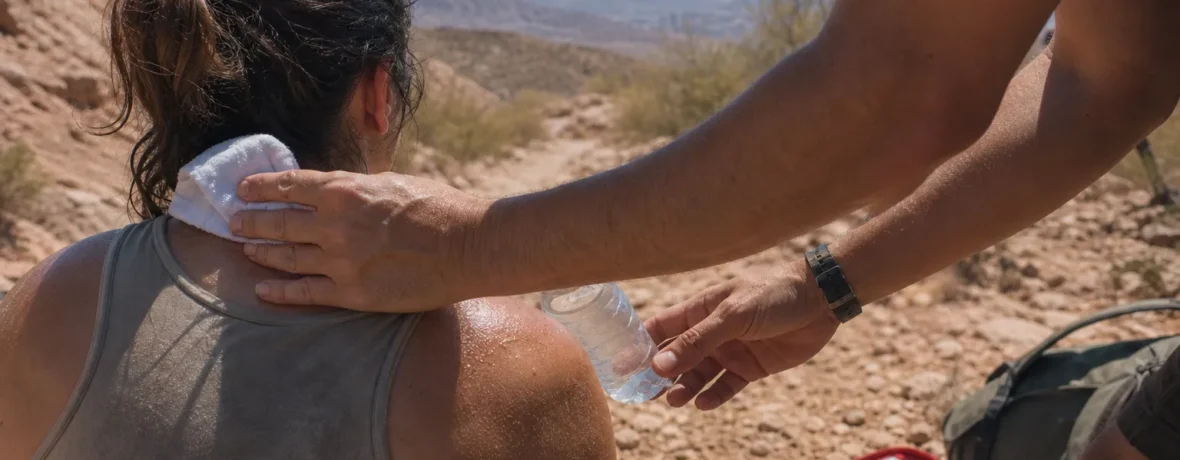
Heat exhaustion vs heat stroke comes down to danger level: heat exhaustion is serious and needs cooling, fluids, and rest now; heat stroke is life-threatening and needs 911. Confusion, slurred speech, seizures, passing out, or a body temperature near 104°F [40°C] means treat it as heat stroke.
Hot trail days do not give you much room for pride. One minute you are sweating through a climb, the next your hiking partner is pale, wobbly, and snapping at everyone over nothing. Or worse, they stop making sense. That is your cue to stop moving and act.
This guide is not a diagnosis. It is a practical field guide for hikers: how to tell the difference, what to do first, when to call for help, and how to cut your odds of getting cooked in the first place.
Heat exhaustion vs heat stroke: what is the difference?
Heat exhaustion is a warning; heat stroke is an emergency.
Both are heat illnesses, but they are not the same beast. Heat exhaustion happens when your body is overheating and struggling to keep up, often after heavy sweating, hard effort, sun exposure, humidity, poor hydration, or a pack-heavy climb with no shade. You may feel awful, but you are usually still thinking clearly.
Heat stroke means the body’s cooling system is failing and the brain is involved. The big red flag is altered mental status: confusion, strange behavior, slurred speech, collapse, seizure, or loss of consciousness. The CDC/NIOSH heat illness guidance lists heat stroke symptoms such as confusion, altered mental status, slurred speech, seizures, very high body temperature, and loss of consciousness.
| What you see | Heat exhaustion | Heat stroke |
|---|---|---|
| Mental state | Usually alert, maybe anxious, weak, irritable, or foggy from fatigue | Confused, irrational, slurring words, seizing, fainting, or unconscious |
| Skin and sweat | Heavy sweating; skin may feel cool, pale, or clammy | Skin may be hot, red, dry, or damp; sweating can still happen |
| Common symptoms | Headache, dizziness, nausea, weakness, thirst, cramps, fast weak pulse | Severe overheating plus brain symptoms, strong fast pulse, collapse, seizure |
| First move | Stop, cool down, sip fluids if fully alert, monitor closely | Call 911, cool aggressively, do not delay evacuation |
The tricky part: heat exhaustion can turn into heat stroke. On trail, do not wait for a perfect label. If there is any sign the person is not mentally right, treat it like heat stroke.
What are the first signs of heat exhaustion on a hike?
The first signs are usually heavy sweating, weakness, dizziness, headache, nausea, thirst, and muscle cramps.
Heat exhaustion often creeps in before it clobbers you. The hiker may slow down, stumble more than usual, complain about a pounding head, or stop talking. They may feel chilled or clammy even though the day is hot. Their shirt may be soaked. Their hands may shake when they reach for a bottle.
The CDC heat-related illness chart lists heat exhaustion signs including heavy sweating, cold pale clammy skin, nausea or vomiting, muscle cramps, tiredness or weakness, dizziness, headache, fainting, and a fast weak pulse.
On a hike, watch for these field clues:
- A strong hiker suddenly cannot keep pace.
- They are sweating hard but look pale or gray.
- They complain of nausea or stop eating.
- They get dizzy when standing after a break.
- They become unusually quiet, cranky, or shaky.
- They stop urinating, or urine is very dark.
- They get muscle cramps during a hot climb.
None of these signs should be brushed off as “just tired.” Heat exhaustion is your body pulling the emergency brake. Listen to it.
What are the warning signs of heat stroke?
The warning sign that matters most is a change in mental status.
Heat stroke can look dramatic, but it can also look weird. A hiker may insist they are fine while walking in circles. They may answer simple questions incorrectly. They may become combative when you tell them to sit down. They may collapse without much warning.
Red flags for heat stroke include:
- Confusion or disorientation
- Slurred speech
- Strange behavior that does not fit the person
- Loss of coordination or repeated stumbling
- Fainting or loss of consciousness
- Seizure
- Very hot skin, with or without sweating
- A body temperature around 104°F [40°C] or higher, if you can measure it safely
The NIH MedlinePlus heat illness overview describes heat stroke as life-threatening and says body temperature may rise above 106°F [41°C] in minutes. You do not need a thermometer to call 911. If the brain is acting wrong in the heat, call.
One more thing hikers get wrong: dry skin is not required. A person with exertional heat stroke can still be sweating. Do not let “but they’re sweaty” talk you out of taking action.
Can heat exhaustion turn into heat stroke?
Yes, heat exhaustion can progress to heat stroke if the person keeps generating or absorbing heat.
That can happen fast on exposed trail: long switchbacks, reflective slickrock, no wind, dark clothing, a heavy pack, high humidity, and a group pushing for the summit. The body keeps producing heat from exertion while the environment blocks cooling. Sweat helps only if it can evaporate. In muggy air, it sits on your skin and soaks your shirt.
Once symptoms start, every extra uphill step can make the problem worse. This is where hikers get trapped by goal thinking. The trailhead is “only” 2 miles [3.2 km] away. The shade is “just around the bend.” The summit is “right there.” None of that matters if someone is overheating.
Stop early. Cool early. Turn around early if symptoms do not improve. A bruised ego weighs less than a rescue litter.
What should you do for heat exhaustion on the trail?
Stop hiking and start cooling the person immediately.
Heat exhaustion care is simple, but you need to be firm. The goal is to reduce body heat, replace fluid only if the person can drink safely, and prevent the slide into heat stroke.
- Stop all exertion. No “slow hiking.” No “just to the next viewpoint.” Stop now.
- Move to shade or the coolest spot available. Use trees, a boulder shadow, a tarp, an umbrella, or the shadow from packs.
- Remove extra heat traps. Loosen the hip belt, open the shirt, take off a hat if it is trapping heat, remove unnecessary layers, and get the pack off.
- Cool the skin. Wet the shirt, neck, head, and arms. Fan the person. Put cool wet cloths on the neck, armpits, and groin if you can.
- Let them sip fluids if fully alert. Small sips are better than chugging. Use water or an electrolyte drink if available.
- Monitor closely for 1 hour. Symptoms should improve with rest and cooling. If they worsen or do not improve, get medical help.
- Do not restart the hike as planned. Once someone has heat exhaustion, the day’s objective is over. The new plan is safe exit.
The CDC recommends medical help if heat exhaustion symptoms get worse, vomiting occurs, or symptoms last longer than 1 hour. That is a clean field rule for hikers: if they are not clearly improving after cooling and rest, escalate.
What should you do if you suspect heat stroke?
Call 911 and cool the person as fast as you can.
Heat stroke is not a “wait and see” problem. Call emergency services or trigger your satellite messenger SOS if you are out of cell range. Send someone for help only if you can do it without leaving the patient alone and unsafe.
- Call 911 or activate SOS. Give your exact location, trail name, nearest landmark, symptoms, and whether the person is conscious.
- Move them out of direct sun. Shade is good. A creekside spot may be better if it is safe.
- Strip off excess clothing and gear. Remove the pack, open clothing, take off pads or anything holding heat.
- Cool aggressively. Douse with water, fan hard, soak clothing, use snow if safely available, or place wet cloths on the head, neck, armpits, and groin.
- Use immersion if practical and safe. If there is a safe creek, tub, stock tank, or collapsible rescue setup, cooling the body in cold water can be powerful. Protect the airway and do not create a drowning risk.
- Do not give fluids to someone confused, seizing, vomiting, or unconscious. They can choke.
- Keep cooling until help takes over or the person is clearly recovering under medical guidance. Do not stop just because they look a little better.
The Wilderness Medical Society heat illness guidelines describe heat stroke as severe heat illness with core temperature above 104°F [40°C] and central nervous system abnormalities such as altered mental status, seizure, or coma. For hikers, the field translation is blunt: hot person plus brain symptoms equals emergency cooling and rescue.
Should you give water during heat stroke?
No, not if the person is confused, vomiting, seizing, fainting, or not fully alert.
This feels wrong because heat illness and dehydration often travel together. But a person with heat stroke may not be able to swallow safely. If they inhale fluid, you have made a terrible day worse.
For heat exhaustion, small sips can help when the person is awake, alert, sitting up, and able to swallow normally. For suspected heat stroke, cooling comes first. Emergency help comes first. If the person is mentally altered, skip the bottle and focus on getting heat out of the body.
When to see a doctor
Get medical help right away for heat stroke signs or heat exhaustion that does not improve.
Call 911 immediately if a hiker has confusion, slurred speech, seizure, collapse, loss of consciousness, or strange behavior in the heat. Those are heat stroke warning signs, and trail treatment should not delay evacuation.
Seek medical care urgently if heat exhaustion symptoms get worse, vomiting starts, fainting occurs, symptoms last longer than 1 hour after cooling and rest, or the person has heart disease, kidney disease, diabetes, is pregnant, is an older adult, is a child, or takes medications that can affect heat tolerance. The Mayo Clinic heat exhaustion treatment guidance also stresses cooling measures and medical evaluation when symptoms are severe or do not improve.
After any significant heat illness, do not jump straight back into hard hiking, running, or backpacking. Talk with a healthcare professional about return to activity, especially after collapse, emergency care, or suspected heat stroke.
How do you prevent heat exhaustion and heat stroke while hiking?
Prevent heat illness by reducing heat load before your body is in trouble.
Do not treat prevention as a vibe. Build it into the plan. Heat risk climbs when high temperature, humidity, sun exposure, low wind, steep terrain, poor sleep, alcohol, illness, dehydration, or hard pacing stack together.
Use this hot-weather hiking checklist:
- Start early. Put the climb in the coolest part of the day and avoid exposed uphill pushes during peak heat.
- Choose shade and water. Forested trails, canyon routes with safe water access, and shorter loops beat exposed ridgelines on hot days.
- Cut the objective. Shorten mileage, lower the pace, or skip the summit when heat is high.
- Wear light, breathable clothing. A sun hoodie or loose long sleeves can beat bare skin in brutal sun.
- Use a wide-brim hat or shade cap. Keep sun off your face and neck without trapping too much heat.
- Drink steadily. Do not save all your water for later. Later may be when you are already in trouble.
- Replace salt through food or electrolyte drinks. Sweaty hikes burn through more than water.
- Take cooling breaks before symptoms start. Sit in shade, wet your shirt, soak a bandana, and slow your heart rate.
- Watch your group. Heat illness can make people stubborn, quiet, or irrational. Buddy checks matter.
- Carry a way to call for help. Cell service is not a plan in canyons, desert basins, or deep forest.
Also respect acclimatization. If you flew from a cool climate to a hot desert, your body has not magically adapted because your itinerary says so. The first hot hike should be easier than your ego wants.
Who is most at risk for heat illness on trail?
Anyone can get heat illness, but some hikers have less margin.
Fit people get heat stroke. New hikers get heat stroke. Young hikers get heat stroke. The common thread is heat stress outrunning the body’s ability to cool itself.
Risk is higher for:
- Older adults and children
- People who are sick, sleep-deprived, or recovering from illness
- Hikers taking medications that affect sweating, fluid balance, alertness, or heart rate
- People with heart, kidney, endocrine, or neurologic conditions
- Hikers carrying heavy packs or pushing hard uphill
- Anyone not acclimated to heat
- People who drank alcohol recently
- Solo hikers with no partner to spot behavior changes
If that sounds like your group, plan a cooler route. There is no trophy for pretending biology does not apply to you.
What should you pack for hot-weather hiking?
Pack gear that helps you cool, drink, rest, and call for help.
You do not need a full ambulance kit for a day hike, but you do need more than one tiny bottle and hope. For hot routes, carry:
- Enough water for the route, plus a backup plan for delay
- Electrolyte drink mix or salty snacks
- A water filter or purifier when natural sources are reliable
- A sun hat, sunglasses, and sunscreen
- A light long-sleeve layer or sun hoodie
- A bandana or small towel for soaking and cooling
- An emergency bivy or reflective sheet that can also create shade
- A map and navigation app or GPS device
- A satellite messenger or personal locator beacon for remote routes
- A small thermometer only if you know how to use it without delaying care
The best item is the one you use early. A soaked bandana at 10 a.m. beats a satellite rescue at 2 p.m.
How do you make the call to turn around?
Turn around when cooling and rest become more urgent than the destination.
That line arrives sooner than many hikers admit. If someone has heat exhaustion symptoms, the hike has already changed. If they improve quickly, you still need the easiest safe exit, not the original plan. If they do not improve, you need help.
Use these no-argument turnaround triggers:
- Any confusion, slurred speech, collapse, or seizure
- Vomiting in the heat
- Fainting or near-fainting
- Symptoms that continue after cooling and rest
- Water supply no longer matches the remaining heat exposure
- No shade ahead and the group is already struggling
- A hiker stops sweating and becomes hot, weak, or mentally off
The mountain will not care that you came back another day. Your people will.
Related reading
- Heat Stroke Symptoms on the Trail
- How to Treat Heat Exhaustion While Hiking
- Picaridin vs DEET for Hiking
- Deer Tick vs Dog Tick: How to Tell
FAQ
What is worse, heat exhaustion or heat stroke?
Heat stroke is worse. Heat exhaustion is serious, but heat stroke is life-threatening because the brain and vital organs can be injured without rapid cooling and emergency care.
Can you have heat stroke without dry skin?
Yes. A person with exertional heat stroke can still be sweating, especially during or after hard hiking. Mental status changes matter more than whether the skin is dry.
How long does heat exhaustion last?
Mild symptoms may improve within an hour after stopping, cooling, and drinking fluids if the person is alert. If symptoms last longer than 1 hour, get worse, or include vomiting or fainting, seek medical help.
Should I keep hiking after heat exhaustion symptoms improve?
No, not as planned. Once heat exhaustion shows up, switch to the safest exit, keep the pace easy, take shade breaks, and watch for returning symptoms.
What temperature causes heat stroke?
There is no single air temperature that guarantees heat stroke. Risk depends on heat, humidity, sun, effort, clothing, hydration, acclimatization, medical factors, and how long you keep pushing.
When should I call 911 for heat illness?
Call 911 for confusion, slurred speech, seizure, collapse, loss of consciousness, or any severe heat illness signs. Also get urgent help if heat exhaustion symptoms worsen, vomiting occurs, or symptoms do not improve after cooling and rest.