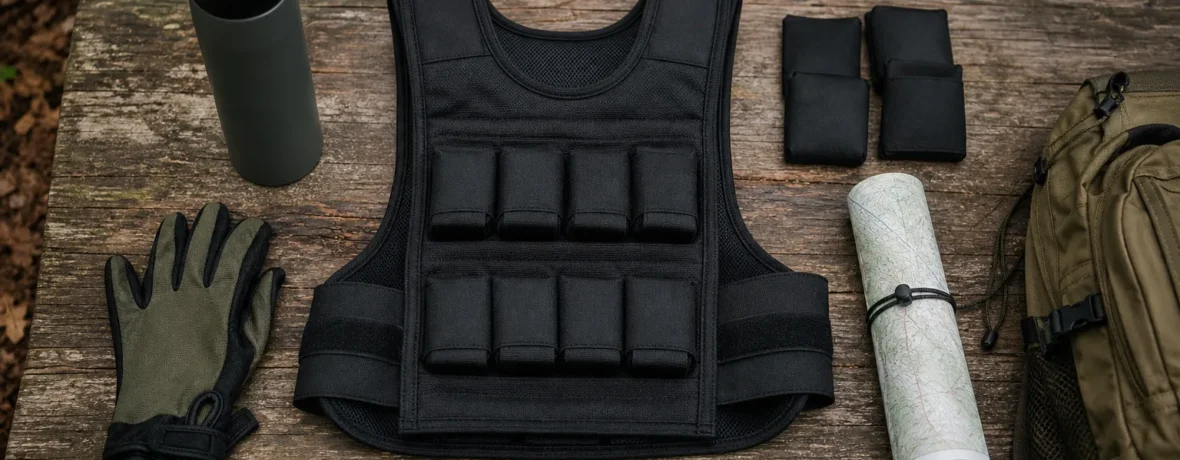
Weighted vest benefits for hikers include stronger legs and hips, better uphill conditioning, higher walking intensity, and more specific training for carrying a pack. Start with 5% of body weight, stay on easy terrain at first, and use it 1–2 times per week so your joints and tendons can adapt.
What are the weighted vest benefits for hikers?
The main benefit is simple: you make an ordinary walk feel more like trail work.
A weighted vest adds load close to your torso, so your calves, quads, glutes, hips, trunk, and postural muscles have to do more with every step. For hikers, that matters. Climbing, descending, stepping over rocks, and carrying a daypack all require strength under fatigue.
The best weighted vest benefits show up when you use the vest as training, not punishment. You are adding just enough resistance to raise the demand without wrecking your stride.
- Better uphill engine: More load means your heart and legs work harder on the same hill.
- Stronger hiking muscles: Your glutes, quads, calves, and core get trail-relevant resistance.
- Pack-carrying practice: The extra weight prepares your body for loaded miles before a bigger trip.
- Time-efficient conditioning: A 30-minute walk can become a focused strength-endurance session.
- Bone-loading stimulus: Weight-bearing movement supports musculoskeletal health, and the CDC recommends adults do muscle-strengthening activity 2 days per week.
Is hiking with weighted vest a good idea?
Yes, if you keep the load modest and choose mellow terrain.
Hiking with weighted vest makes sense for training hikes, neighborhood hill walks, stairs, and short trail sessions. It makes less sense on technical descents, icy paths, loose scree, long hot climbs, or any route where balance is already the main challenge.
A vest is not magic. It is just load. Used well, it builds capacity. Used badly, it turns your knees, feet, and lower back into the complaint department.
| Training tool | Best use | Watch-outs |
|---|---|---|
| Weighted vest | Hill walking, short hikes, stair sessions, aerobic strength | Can stress knees, feet, hips, and back if too heavy |
| Loaded backpack | Trip-specific prep for backpacking | Can pull shoulders back and change posture |
| Bodyweight walking | Base miles, recovery days, long easy efforts | Less strength stimulus than loaded walking |
If your goal is backpacking, still train with the pack you plan to use. A vest spreads weight differently than a backpack. That can be useful, but it is not a perfect stand-in for shoulder straps, hip belts, water weight, food weight, and the awkward little shifts that happen on real trail.
Does walking with a weighted vest burn more calories?
Yes, walking with a weighted vest burns more calories than walking the same speed and grade without one.
The reason is physics, not hype. You are moving more total mass. A PubMed-indexed study on metabolic costs of walking with weighted vests examined how vest load affects standing and walking energy use, and another PubMed-indexed study found that weighted vest use increased oxygen uptake and energy expenditure during walking and running tasks.
So, does walking with a weighted vest burn more calories? Yes. The exact number depends on your body weight, vest weight, pace, grade, fitness, temperature, and terrain. A 10 lb [4.5 kg] vest on flat pavement is a different workout than a 20 lb [9.1 kg] vest on a 12% grade.
For hikers, the smarter target is not “maximum calorie burn.” Aim for durable legs, steady breathing, and clean form. If you finish every vest walk cooked, you are training fatigue more than trail fitness.
How heavy should a weighted vest be for hiking training?
Start with 5% of your body weight.
For a 160 lb [72.6 kg] hiker, that means an 8 lb [3.6 kg] vest. For a 200 lb [90.7 kg] hiker, that means 10 lb [4.5 kg]. That may feel too light in your living room. Good. The trail will fix that.
Use this progression:
- Weeks 1–2: Wear 5% of body weight for 20–30 minutes on flat ground.
- Weeks 3–4: Keep the same load and add gentle hills.
- Weeks 5–6: Increase to 7–8% if your joints feel good the next day.
- Weeks 7 and beyond: Cap most sessions at 10% unless a coach or clinician has cleared a heavier plan.
Do not add weight and distance in the same week. Pick one lever. If you add 2–5 lb [0.9–2.3 kg], keep the walk shorter. If you add time, keep the load the same.
How should a weighted vest fit for walking and hiking?
The vest should sit snugly without bouncing or pinching your breathing.
A good hiking-training vest keeps weight close to your center of mass. If it swings, slides, or thumps against your ribs, it will annoy you first and change your gait second. Neither helps.
- The vest should not ride up into your throat on climbs.
- You should be able to take a full breath while walking uphill.
- The load should feel balanced front to back and side to side.
- Your arm swing should stay natural.
- No rubbing at the neck, armpits, lower ribs, or hip belt area.
If you plan to wear a daypack too, test the combo at home first. Vest plus pack straps can create hot spots fast.
What is the best weighted vest workout for hikers?
The best workout is a short hill walk with steady form.
You do not need fancy drills. You need repeatable work that builds legs and lungs without turning every session into a sufferfest.
- Warm up: Walk 10 minutes without rushing.
- Climb: Walk uphill 3 minutes at a firm but controlled pace.
- Recover: Walk easy downhill or on flat ground for 3 minutes.
- Repeat: Do 4–6 rounds.
- Cool down: Walk 5–10 minutes easy.
Keep your steps short on climbs. Stand tall. Let your arms swing. If your lower back starts doing all the work, reduce the load or end the session.
When should you not use a weighted vest?
Skip the vest when pain, poor balance, or recovery problems are already on the table.
Weighted walking raises the demand on your cardiovascular system, muscles, joints, and connective tissue. The CDC encourages adults to build activity gradually, and that advice fits weighted vest training perfectly.
Leave the vest at home if you have:
- New knee, hip, back, ankle, or foot pain
- A recent sprain, stress fracture, surgery, or fall
- Unsteady balance on flat ground
- Sharp pain while walking downhill
- Unusual shortness of breath during easy activity
- Extreme soreness that changes your stride the next day
When to see a doctor
See a doctor before using a weighted vest if you have a heart, lung, bone, joint, balance, or chronic medical condition.
Stop exercising and seek medical care if you feel chest pain, pressure, faintness, severe shortness of breath, or pain that spreads to the jaw, neck, shoulder, or arm. Mayo Clinic lists chest, jaw, neck, or arm discomfort and dizziness or faintness as warning signs during exercise that need prompt attention: Mayo Clinic exercise safety guidance.
This is training advice, not a diagnosis. If a weighted vest makes a known issue flare up, get individualized guidance from a qualified clinician.
How do you start weighted vest training without overdoing it?
Use the smallest useful dose first.
Your first goal is not to prove toughness. It is to wake up the right muscles, learn how the vest changes your stride, and finish feeling like you could have done more.
- Start: 5% body weight.
- Frequency: 1–2 sessions per week.
- Duration: 20–40 minutes per session.
- Terrain: Flat paths first, gentle hills second, rough trails later.
- Rule: No running in the vest unless you already run pain-free and have a plan.
Use normal hikes, strength training, mobility work, and easy walks around vest days. The vest is one tool. Your feet still need miles, your hips still need strength, and your lungs still need easy aerobic time.
Related reading
- Weighted Vest vs Rucksack: Which Is Better?
- Hiking With a Weighted Vest: Benefits and Risks
- Foam Rolling for Hikers: Benefits and Routine
- What Are the Benefits of Hiking? The Evidence for Body and Mind
FAQ
Are weighted vests good for hiking?
Yes, weighted vests are good for hiking training when the load is light and the terrain is controlled. They help build strength-endurance for climbs, pack carrying, and long days on foot.
Can I wear a weighted vest on every walk?
No, not at first. Start with 1–2 weighted walks per week so your joints, feet, calves, and back can adapt between sessions.
Is a weighted vest better than a backpack?
Not better, just different. A vest keeps weight close to your torso, while a backpack better matches real backpacking loads and strap pressure.
How heavy should a weighted vest be for beginners?
Start with 5% of your body weight. If you weigh 180 lb [81.6 kg], begin with 9 lb [4.1 kg] and build only after several pain-free sessions.
Will a weighted vest help me hike uphill faster?
It can help, if you use it consistently and recover well. Hill walking with a vest trains your legs and cardiovascular system to handle greater demand, which can carry over to stronger climbing.
Should older hikers use a weighted vest?
Some older hikers can use one safely, but the starting load should be conservative. If you have osteoporosis, balance problems, joint replacements, heart disease, or recent falls, talk with a clinician first.