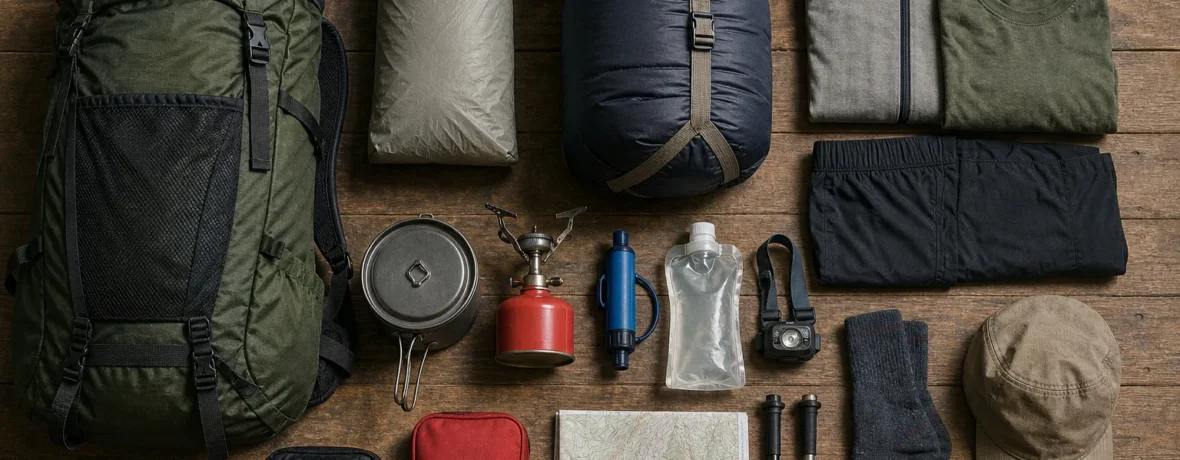
For a first backpacking overnight, pack the 10 essentials, a 50–65 L pack, tent or hammock, 20–30°F [-7 to -1°C] sleep system, stove, 2–3 liters [2–3 L] water capacity, water treatment, 1.5–2.5 lb [0.7–1.1 kg] of food per day, rain layer, insulation, first-aid kit, headlamp, map, and permit if required.
What do I need to go backpacking for the first time?
You need the gear that keeps you sheltered, warm, fed, hydrated, oriented, and safe overnight.
Backpacking is not car camping with a longer walk. Every item rides on your back, so the goal is not to pack for every possible inconvenience. The goal is to pack for the real risks: cold, wet weather, darkness, injury, dehydration, getting turned around, and not having enough food.
The National Park Service’s Ten Essentials are a smart base for any backcountry packing list: navigation, sun protection, insulation, illumination, first aid, fire, repair tools, nutrition, hydration, and emergency shelter. For backpacking, you add overnight systems: shelter, sleep, cooking, food storage, and a pack that carries it all.
For a first trip, keep the route short and the kit simple. One night. Established trail. Reliable water. Mild weather. A campsite you can legally use. That gives you room to learn without turning a gear mistake into a suffer-fest.
What to pack for backpacking: the complete first-trip checklist
Pack these core items before you start adding comfort extras.
1. Backpack
- 50–65 L backpack for most beginner overnight trips
- Rain cover or pack liner
- Hip belt pockets or shoulder pouch for snacks, phone, and lip balm
- Trash bag or waterproof liner to protect your sleep system
A pack should fit your torso first and your gear second. If the hip belt rides on your stomach instead of your hip bones, you will feel every mile. Load the pack at home and walk stairs or blocks before the trip. A squeak, rub, or slipping shoulder strap is easier to fix in your hallway than 4 miles [6.4 km] from the trailhead.
2. Shelter
- Tent, tarp, or hammock system
- Rainfly
- Stakes
- Guylines
- Groundsheet or footprint if your shelter uses one
For a first backpacking trip, a freestanding or semi-freestanding tent is the easiest shelter to manage. Practice pitching it once before you leave. Not twice if you love homework. Once. You need to know which pole goes where, how the rainfly attaches, and how the door faces the wind.
3. Sleep system
- Sleeping bag or quilt rated for expected low temperatures
- Sleeping pad with insulation
- Inflation sack or pump if needed
- Small pillow or stuff sack filled with extra clothing
- Sleep clothes kept dry
A warm sleeping bag does not work well if the ground is stealing your heat. Bring an insulated pad, not a pool float, yoga mat, or mystery foam slab from the garage. If nighttime lows are predicted near 40°F [4°C], a 20–30°F [-7 to -1°C] bag gives a more forgiving margin for a beginner.
4. Kitchen and food
- Backpacking stove
- Fuel canister or fuel bottle that matches the stove
- Lighter plus backup matches or fire starter
- Cooking pot
- Spoon or spork
- Mug if you drink coffee, tea, or cocoa
- Food bag or bear canister where required
- Odor-proof bags if useful for your area
- Small sponge or cloth
- Trash bag
Choose meals you will actually eat when tired. That usually means oatmeal, instant coffee, tortillas, nut butter, hard cheese, salami, ramen, couscous, instant rice, tuna packets, dehydrated meals, bars, candy, nuts, and salty snacks. Fancy trail cooking can wait until you know your appetite after hiking with a loaded pack.
5. Water and treatment
- 2–3 liters [2–3 L] total water capacity
- Filter, purifier, chemical treatment, or UV purifier
- Backup treatment tablets or drops
- Collapsible dirty-water bag if your filter uses one
Do not assume clear water is safe water. The CDC’s backcountry water treatment guidance explains that treatment methods vary by what they remove or kill. For most beginner backpacking in the US, a squeeze filter plus backup chemical treatment is simple and light.
6. Clothing
- Moisture-wicking hiking shirt
- Hiking pants or shorts
- Warm insulating layer, such as fleece or puffy jacket
- Rain jacket
- Rain pants for wet, cold, or exposed routes
- Wool or synthetic socks, plus one dry spare pair
- Underwear
- Beanie or warm hat
- Sun hat or cap
- Light gloves in cool weather
Leave cotton at home for cold or wet trips. Cotton holds moisture and dries slowly, which is miserable at best and risky in low temperatures. Wool and synthetics are the safe, boring, reliable choices. Boring wins in the backcountry.
7. Footwear
- Broken-in hiking shoes, trail runners, or boots
- Wool or synthetic hiking socks
- Blister tape or pads
- Camp shoes only if your pack weight allows
You do not need huge leather boots for every backpacking trip. You need footwear that fits, grips the trail, and does not chew your heels. If your shoes are new, wear them on several hikes before the overnight.
8. Safety and repair kit
- Map and compass
- Downloaded offline map on your phone
- Headlamp
- Extra batteries or power bank
- First-aid kit
- Knife or multitool
- Repair tape
- Needle and thread or gear repair patch
- Whistle
- Emergency blanket or bivy
- Fire starter
- Sunscreen and sunglasses
- Insect repellent
Your phone is useful. It is not a full navigation plan by itself. Batteries die, screens crack, and cold weather drains power fast. Carry a paper map or printed route, and know the names of your trailhead, campsite, bail-out trail, and nearest road.
9. Hygiene and bathroom kit
- Toothbrush and toothpaste
- Hand sanitizer
- Toilet paper in a plastic bag
- Trowel where catholes are allowed
- Waste bags where pack-out is required
- Menstrual products if needed
- Small quick-dry towel or bandana
- Biodegradable soap used away from water sources
Pack out trash. All of it. That includes food wrappers, used toilet paper where required, hygiene products, and tiny bits of meal packaging. Follow the Leave No Trace Seven Principles and check the local land manager’s bathroom rules before you go.
What to bring backpacking if you want to keep your pack light?
Bring fewer duplicates and choose gear that does one job well.
A beginner’s loaded pack often gets heavy because of fear, not need. Extra pants. Three knives. A hardcover book. A lantern. A full-size tube of toothpaste. A cast-iron skillet, if someone in the group has chaotic energy. Cut those first.
| Category | Smart first-trip choice | Skip for most first trips |
|---|---|---|
| Shelter | One reliable tent split between partners | Extra tarp unless weather demands it |
| Cooking | Stove, one pot, one spoon | Plates, pans, full spice kit |
| Clothing | One hiking set, one dry sleep layer, insulation, rain shell | Fresh outfit for every day |
| Electronics | Phone, headlamp, small power bank | Speakers, large camera kit, tablet |
Use this simple target: your pack should feel manageable on the first uphill mile, not just while standing in the parking lot. For many beginners, a loaded pack in the 25–35 lb [11–16 kg] range is a reasonable first overnight goal, including food and water. Smaller hikers, younger hikers, and anyone with knee, hip, or back issues may need less.
If you own heavy gear already, do not panic-buy a full ultralight kit. Borrow, rent, or upgrade one piece at a time. The big weight savings usually come from the “big three”: pack, shelter, and sleep system.
How do you pack a backpack for an overnight trip?
Pack heavy items close to your back and keep rain gear, snacks, and safety items easy to reach.
- Line the inside of your pack. Use a pack liner or trash compactor bag to protect your sleeping bag, sleep clothes, and insulation.
- Put soft, bulky gear low. Sleeping bag, sleep clothes, and extra layers can fill the bottom of the pack.
- Place dense gear near your spine. Food, stove, fuel, and shelter body ride best in the middle of the pack, close to your back.
- Fill gaps. Stuff socks, soft clothing, and small bags into dead space so the load does not shift.
- Keep wet items outside dry zones. Rainfly, wet socks, or a damp towel should not touch your sleeping bag.
- Put daily-use items on top. Rain jacket, water treatment, first-aid kit, bathroom kit, warm layer, and lunch should be reachable without unpacking everything.
- Balance side pockets. Water on one side and tent poles on the other can work, but the pack should not pull sideways.
- Tighten straps in order. Hip belt first, shoulder straps second, load lifters third, sternum strap last.
A backpack should ride on your hips, not hang from your shoulders. After 10 minutes of walking, stop and adjust. Tiny strap changes can turn a grumpy day into a decent one.
How much food and water should you carry backpacking?
Carry 1.5–2.5 lb [0.7–1.1 kg] of food per day and enough water capacity for the driest stretch of your route.
Food is personal. Some hikers lose appetite on hard climbs; others become snack goblins by 10 a.m. For a beginner overnight, pack dinner, breakfast, lunch if needed, and enough snacks to eat every 60–90 minutes while hiking. Add one extra no-cook meal or several high-calorie snacks in case the day runs long.
A simple overnight food plan looks like this:
- Breakfast: oatmeal, granola, instant coffee, tea, or breakfast bars
- Lunch: tortillas, tuna packet, cheese, salami, hummus powder, or nut butter
- Dinner: dehydrated meal, ramen with extras, couscous, instant potatoes, or rice pouch
- Snacks: trail mix, bars, dried fruit, jerky, candy, crackers, chips, or nuts
- Backup: one extra meal or 500–800 calories of shelf-stable snacks
For water, study your route before you leave. Mark every reliable stream, spring, lake, and seasonal source. If the map says “seasonal,” do not bet the trip on it. In hot, dry terrain, you may need to carry more than 3 liters [3 L]. In wet mountain terrain with frequent streams, you may carry less at one time, but you still need treatment.
What clothes should you wear backpacking?
Wear layers that move sweat, block weather, and keep you warm when you stop.
Think in systems, not outfits. Your hiking shirt and pants handle movement. Your fleece or puffy handles rest breaks and camp. Your rain shell handles wind and rain. Your dry sleep layer is sacred. Keep it dry, even if everything else gets ugly.
For a three-season beginner trip, pack this clothing system:
- Hiking layer: synthetic or wool shirt, hiking pants or shorts, hiking socks
- Warm layer: fleece or lightweight puffy jacket
- Weather layer: rain jacket; rain pants for cold rain or exposed terrain
- Sleep layer: dry base layer top and bottom, dry socks
- Accessories: sun hat, beanie, light gloves, sunglasses
Do not pack clothing for town standards. Pack clothing for temperature swings, sweat, wind, and sleep. One spare pair of socks is more useful than an entire second hiking outfit.
Do you need permits, bear canisters, or special gear?
Maybe; check the specific land manager before you pack.
Permit rules, campsite systems, food-storage requirements, fire restrictions, and group-size limits change by park, forest, wilderness area, and season. As of November 2026, Recreation.gov permits is a common federal portal for many US backpacking permits, but not every public-land agency uses it. Always confirm on the official site for the exact trail, date, and campsite zone.
Food storage deserves special attention. In bear country, and in many areas with bold rodents, scented items need secure storage. That means food, trash, toothpaste, sunscreen, lip balm, wrappers, and cookware with food residue. The National Park Service says not to store food in your tent or backpack while backpacking in bear country; see its bear food storage guidance before you go.
Fire rules also vary. Some places allow stoves but ban campfires. Some ban open flames during dry conditions. Some require specific fuel types. If you cannot verify the rule before leaving service, plan to cook on a backpacking stove and skip the campfire.
What should you leave at home on your first backpacking trip?
Leave anything that adds weight without solving a real backcountry problem.
- Full-size toiletries
- Extra shoes unless you truly need camp shoes
- Large lanterns
- Heavy books
- Multiple knives or multitools
- Bulky cotton hoodies
- Canned food
- Glass bottles
- Bluetooth speakers
- Large pillows
- Duplicate cookware
- Fresh clothes for every day
Comfort matters, but earned comfort feels better than carried clutter. If one small luxury makes the trip better, bring it. A tiny chocolate bar, inflatable pillow, or dry camp socks can boost morale. Just make the choice on purpose.
When to see a doctor
Seek medical care fast for severe symptoms, worsening symptoms, or anything that affects thinking, breathing, walking, or hydration.
Backpacking first aid is not a substitute for medical care. Turn around, call for help, or evacuate if someone has confusion, fainting, chest pain, trouble breathing, uncontrolled bleeding, suspected broken bone, severe allergic reaction, severe dehydration, persistent vomiting, or a head injury with worsening symptoms.
Heat illness can become dangerous quickly. The CDC Yellow Book states that heat stroke with mental status changes is a medical emergency; read the CDC’s heat and cold illness guidance before hot or cold trips. For ticks, the CDC recommends watching for rash or fever in the weeks after a tick bite and seeking care if symptoms appear; review the CDC’s tick bite prevention advice before hiking in brushy or wooded areas.
If you manage asthma, diabetes, severe allergies, heart conditions, seizure disorders, or other medical conditions, talk with a clinician before your trip and carry your prescribed supplies in a waterproof, easy-to-reach place.
Related reading
- Camping Checklist: What to Bring
- What Is Backpacking? Backpacking vs Hiking vs Camping
- How to Start Backpacking: First Overnight Trip Guide
- Can You Bring Hiking Poles on a Plane? Carry-On vs Checked
FAQ
What is the most forgotten backpacking item?
The most forgotten useful item is often a headlamp. Beginners pack the big gear, then forget that camp chores, bathroom trips, and late arrivals get miserable fast without hands-free light.
How heavy should my backpack be for a first overnight?
A practical first-trip target is 25–35 lb [11–16 kg] fully loaded, including food and water. The right weight depends on your body size, fitness, route, weather, and how much water you must carry.
Can I go backpacking without a stove?
Yes, you can go stoveless if your food does not need cooking and conditions are mild. Bring ready-to-eat meals and enough calories, and remember that hot drinks and hot meals can be a major morale boost in cold weather.
Do I need hiking boots for backpacking?
No, not always. Trail runners, hiking shoes, or boots can all work if they fit well, have enough traction, and support your feet under a loaded pack.
What should I pack for a one-night backpacking trip?
Pack shelter, sleep system, food, water treatment, stove if cooking, clothing layers, navigation, headlamp, first aid, repair items, hygiene kit, and required permits or food storage. Keep extras minimal because one night is the perfect chance to learn what you truly use.
Where should I put food at night while backpacking?
Store food according to local rules. In many bear areas, that means a bear canister, locker, approved bag system, or required hang, and scented items should never stay in your tent.